
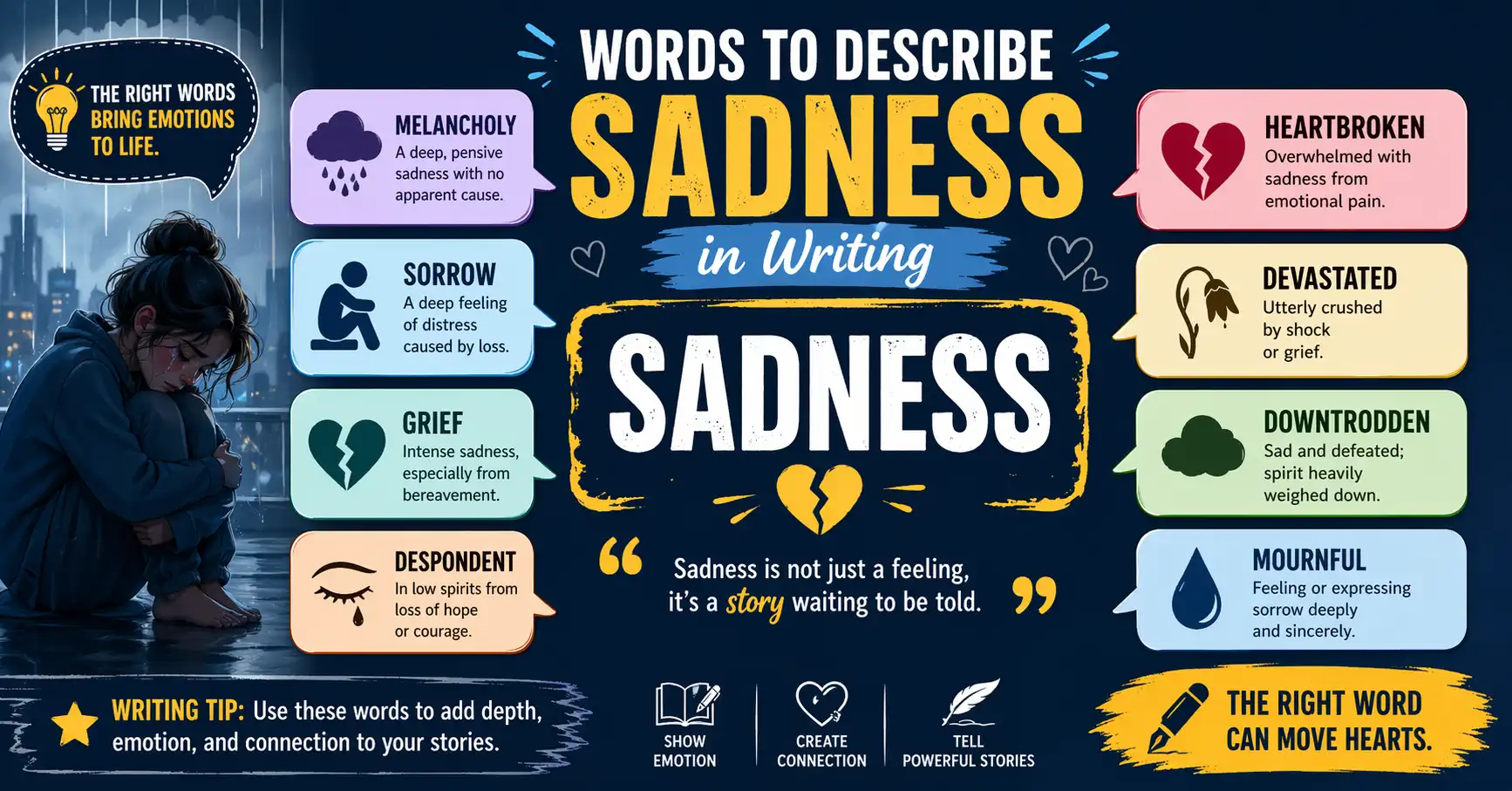
Have you ever read a book that made you cry? Maybe you felt a deep ache in your chest as the main character lost their favorite pet. Showing real feelings on a page can be very hard. If you only use the word “sad,” your story might feel a bit flat. That is why finding descriptive words to describe sadness in writing is so important.
When we talk about these terms, we mean expressive words that paint a clear picture of pain, grief, or sorrow. Learning new words to describe sadness in writing helps everyone. Students can write better school essays. Bloggers and content writers can make readers feel deeper emotions. Even daily English users can share their feelings more clearly in chat. Let us look at fifty great words you can use today!
1. Gloomy
Meaning: This word describes a dark, dim, or unhappy feeling.
Examples:
- The cloudy weather made me feel very gloomy.
- He sat in the gloomy room without saying a word.
2. Blue
Meaning: This is an informal word for feeling down or slightly sad.
Examples:
- I felt a bit blue after my best friend moved away.
- Rainy days always make her feel blue.
3. Sorrowful
Meaning: This word means full of deep sadness or regret.
Examples:
- The dog gave us a sorrowful look when we left the house.
- She sang a sorrowful song about a lost home.
4. Melancholy
Meaning: This describes a gentle, quiet feeling of sadness that lasts a long time.
Examples:
- He fell into a melancholy mood as he looked at old photos.
- The soft piano music had a sweet, melancholy sound.
5. Downcast
Meaning: This means looking down because you feel sad or discouraged.
Examples:
- The boy had downcast eyes after he lost the game.
- Her downcast face showed that she did not get the job.
6. Heavy-hearted
Meaning: This means feeling a lot of sadness as if your heart is heavy.
Examples:
- We made a heavy-hearted trip to say goodbye.
- He walked home with a heavy-hearted sigh.
7. Somber
Meaning: This describes a very serious and sad mood or atmosphere.
Examples:
- The mood at the meeting was very somber.
- He wore a somber black suit to the church.
8. Woeful
Meaning: This word means full of grief, pain, or bad luck.
Examples:
- She told a woeful story about losing her keys.
- The poor cat let out a woeful cry in the rain.
9. Dejected
Meaning: This means feeling sad and giving up hope because you failed.
Examples:
- The player sat on the bench looking very dejected.
- He gave a dejected shrug when his plan did not work.
10. Desolate
Meaning: This describes feeling completely alone, empty, and very sad.
Examples:
- She felt desolate when her family went on a trip without her.
- The empty playground looked desolate in the winter cold.
11. Glum
Meaning: This means looking silent, dark, and unhappy.
Examples:
- Why do you have such a glum look on your face?
- The children were glum because the picnic was canceled.
12. Heartbroken
Meaning: This means feeling crushed by great grief or lost love.
Examples:
- She was heartbroken when her old toy broke.
- The heartbroken man cried for his lost puppy.
13. Mournful
Meaning: This describes a sad feeling linked to death or loss.
Examples:
- We heard a mournful cry from the wild owl at night.
- The mournful music made everyone in the room quiet.
14. Despondent
Meaning: This means losing all hope that things will get better.
Examples:
- He grew despondent after searching for a job for months.
- She felt despondent when her garden did not grow.
15. Disconsolate
Meaning: This describes being so sad that nothing can make you feel better.
Examples:
- The disconsolate child would not stop crying for his mother.
- She sat disconsolate in the corner after she dropped her ice cream.
16. Dreary
Meaning: This means dull, dark, and making you feel low.
Examples:
- We spent a dreary afternoon stuck inside the house.
- The grey walls gave the office a dreary look.
17. Tearful
Meaning: This means crying or being very close to crying.
Examples:
- She gave her dad a tearful hug before she got on the bus.
- His voice became tearful as he spoke about his grandmother.
18. Grim
Meaning: This describes a cold, harsh, and joyless feeling.
Examples:
- The doctor had a grim look on his face.
- He faced the grim truth that his team had lost.
19. Crestfallen
Meaning: This means feeling sad and disappointed when something goes wrong.
Examples:
- He was crestfallen when he saw his low test score.
- The kids were crestfallen when the theme park was closed.
20. Forlorn
Meaning: This means feeling sad, lonely, and left behind.
Examples:
- A forlorn dog sat waiting by the empty house.
- She cast a forlorn glance at the last slice of cake.
21. Depressed
Meaning: This means feeling sad, hopeless, and inactive for a long time.
Examples:
- The bad news made him feel depressed for a week.
- She felt depressed when she could not play outside.
22. Low
Meaning: This is a simple word for having very little energy or joy.
Examples:
- My spirits were very low after a long day at work.
- She has been feeling low since her friend left.
23. Bleak
Meaning: This describes a cold, empty, and hopeless situation.
Examples:
- The winter landscape looked bleak and grey.
- His future looked bleak after he lost his savings.
24. Dismal
Meaning: This means very bad, sad, and full of gloom.
Examples:
- The team played a dismal game and lost by many points.
- We walked home through the dismal, wet streets.
25. Grieved
Meaning: This means feeling deep pain because of a sad event.
Examples:
- He grieved the loss of his old neighborhood.
- She was deeply grieved by the bad news.
26. Downhearted
Meaning: This means feeling low in spirits and less confident.
Examples:
- Do not be downhearted just because you made a mistake.
- The downhearted team walked slowly back to the locker room.
27. Morose
Meaning: This describes a bad-tempered, sad, and silent mood.
Examples:
- He became morose and did not want to talk to anyone.
- She sat in a morose silence during the long car ride.
28. Sullen
Meaning: This means being silent and angry because you are unhappy.
Examples:
- The sullen boy refused to eat his dinner.
- She gave a sullen look when she was told to clean her room.
29. Miserable
Meaning: This means feeling very unhappy, sick, or uncomfortable.
Examples:
- The cold rain made us feel wet and miserable.
- He had a miserable toothache all night long.
30. Wretched
Meaning: This describes a very poor, sad, and bad state of being.
Examples:
- I felt wretched after eating that bad food.
- The homeless cat looked wretched in the cold wind.
31. Doleful
Meaning: This means looking or sounding very sad and full of grief.
Examples:
- The pup had doleful eyes as it watched us eat.
- He spoke in a doleful voice during the sad play.
32. Brokenhearted
Meaning: This means overwhelmed by grief because someone left or died.
Examples:
- She was brokenhearted when her sweet cat ran away.
- The brokenhearted boy sat alone on the stairs.
33. Devastated
Meaning: This means feeling completely crushed and shocked by bad news.
Examples:
- He was devastated when his house was damaged in the storm.
- The family was devastated by the loss of their grandfather.
34. Crushed
Meaning: This means feeling your spirit or hope has been destroyed.
Examples:
- She felt crushed when she did not win the prize.
- His kind heart was crushed by her mean words.
35. Distressed
Meaning: This means feeling great pain, worry, or sadness.
Examples:
- The mother was distressed when she lost her child in the shop.
- We were distressed to hear about the big fire.
36. Sorrowed
Meaning: This means feeling pain or regret over a sad event.
Examples:
- He sorrowed over the old trees that were cut down.
- Her sorrowed heart slowly began to heal.
37. Teary-eyed
Meaning: This means having eyes full of tears because you are sad.
Examples:
- The movie had a teary-eyed ending that made us all cry.
- He grew teary-eyed as he said goodbye to his classmates.
38. Gloomed
Meaning: This describes feeling dark or sad about a situation.
Examples:
- The bad news gloomed over our weekend plans.
- His face gloomed when he saw the dark clouds.
39. Pain-stricken
Meaning: This describes being deeply hurt by physical or mental pain.
Examples:
- The pain-stricken boy could barely stand up.
- She had a pain-stricken look after she fell.
40. Grief-stricken
Meaning: This means feeling extreme sadness after a big loss.
Examples:
- The grief-stricken family stood together in silence.
- He was grief-stricken when his favorite tree fell down.
41. Despairing
Meaning: This means showing that you have lost all hope.
Examples:
- She let out a despairing cry when the boat sailed away.
- He gave a despairing look at his broken phone.
42. Heavy
Meaning: This describes a sad feeling that weighs down your mind.
Examples:
- There was a heavy silence in the room after they argued.
- She walked with a heavy step after she heard the news.
43. Weary
Meaning: This means feeling tired and sad because of too much trouble.
Examples:
- His weary eyes closed as soon as he sat down.
- She grew weary of the constant bad news.
44. Empty
Meaning: This describes a sad feeling of having no joy or purpose.
Examples:
- He felt empty inside after his best friend moved.
- The big house felt empty without the kids.
45. Hurt
Meaning: This means feeling pain in your mind because of someone else.
Examples:
- She felt hurt when they did not invite her to the party.
- His hurt feelings made him want to stay home.
46. Down
Meaning: This is a short word for feeling sad or less happy.
Examples:
- He has been a bit down since he lost his watch.
- Do not let the rainy weather get you down.
47. Low-spirited
Meaning: This means having very little hope, joy, or energy.
Examples:
- The low-spirited group walked slowly through the rain.
- He was low-spirited after his plans failed.
48. Spiritless
Meaning: This describes having no energy, excitement, or happiness.
Examples:
- The team played a spiritless game and did not try.
- She spoke in a flat, spiritless voice.
49. Cheerless
Meaning: This means dark, cold, and lacking any happy feelings.
Examples:
- We stayed in a cheerless hotel room with no windows.
- The grey sky made it a cheerless winter day.
50. Joyless
Meaning: This means completely without any fun, smiles, or happiness.
Examples:
- He lived a quiet and joyless life in the old cabin.
- The task felt joyless and took a very long time.
Conclusion
Using different words to describe sadness in writing is a great way to improve your writing, blogging, and speaking. When you use diverse words, your communication becomes much stronger and more emotional. We encourage you to practice these fifty words in your next emails, essays, and daily conversations. The more you use them, the easier it will be to express yourself. Keep practicing!

Michael Turner is a published fiction writer and creative writing tutor with over a decade of experience helping writers find the words that make their stories breathe ( Biography ).