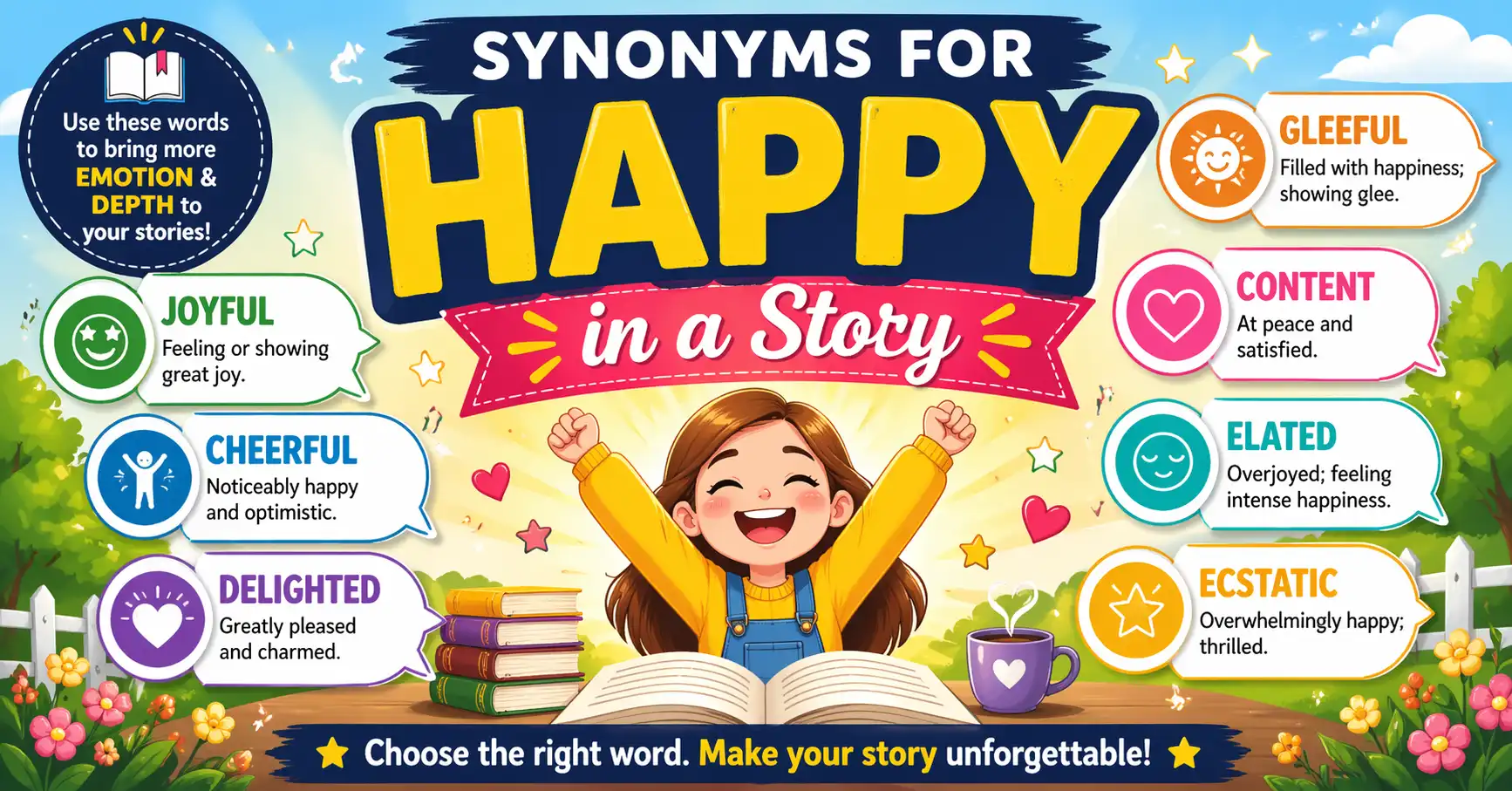
Have you ever read a book where a character wins a big game and the writer just says they felt “happy”? It feels a bit boring, right? Imagine a little girl opening a giant birthday gift with a huge smile on her face. That wonderful, bright feeling is what we mean by happy. But using the exact same simple word over and over can make your creative tales feel dull. That is why finding great synonyms for happy in a story is so important.
When you learn different synonyms for happy in a story, your writing comes to life. Students can get better grades on creative essays. Bloggers and content writers can make readers feel real joy. Even daily English users can share their feelings in a brighter way. Let us look at fifty amazing synonyms for happy in a story to make your words shine!
1. Joyful
Meaning: This describes a deep and beautiful feeling of gladness in your heart.
Examples:
- The joyful children ran through the sprinklers on a hot day.
- She sang a joyful song as she walked home.
2. Cheerful
Meaning: This describes being bright, pleasant, and full of good feelings.
Examples:
- The cheerful teacher greeted us at the classroom door.
- He gave me a cheerful wave from across the street.
3. Glad
Meaning: This is a simple feeling of being pleased or satisfied with something.
Examples:
- I am so glad you came to my party today.
- The dog was glad to see his owner come home.
4. Delighted
Meaning: This means feeling very high levels of pleasure and satisfaction.
Examples:
- The baby was delighted by the shiny red balloon.
- We were delighted to hear the wonderful news.
5. Thrilled
Meaning: This is a sudden wave of sharp excitement and happiness.
Examples:
- He was thrilled to win first place in the race.
- She felt thrilled when she got the movie ticket.
6. Gleeful
Meaning: This describes being full of loud, giggling fun and excitement.
Examples:
- The gleeful kids chased each other around the yard.
- He gave a gleeful laugh when he found the hidden treasure.
7. Jolly
Meaning: This describes a happy, friendly person who loves to laugh.
Examples:
- The jolly baker always gave out free cookies.
- We had a jolly time telling stories around the campfire.
8. Merry
Meaning: This means feeling cheerful, bright, and full of festive fun.
Examples:
- The guests shared a merry feast at the long table.
- They wished everyone a merry day with bright smiles.
9. Elated
Meaning: This is when you feel extremely proud and happy about a big win.
Examples:
- She was elated when she passed her difficult driving test.
- The elated team lifted their trophy high into the air.
10. Ecstatic
Meaning: This means you are so happy that you feel like jumping up and down.
Examples:
- The crowd was ecstatic when their favorite band walked on stage.
- He was ecstatic to find his lost puppy in the park.
11. Content
Meaning: This is a peaceful feeling of being happy with what you have.
Examples:
- The cat was content to sleep in the sunny window.
- He felt content sitting quietly with his favorite book.
12. Peaceful
Meaning: This is a calm and quiet kind of happiness with no worries.
Examples:
- We spent a peaceful afternoon resting by the quiet lake.
- Her mind felt peaceful after the long talk.
13. Radiant
Meaning: This describes a person who looks so happy that they seem to shine.
Examples:
- The bride looked radiant as she walked down the aisle.
- He had a radiant smile when he saw his family.
14. Beaming
Meaning: This is when your face shows a very wide and bright smile.
Examples:
- She was beaming with pride after her dance show.
- His beaming face showed how much he loved the gift.
15. Sunny
Meaning: This describes a personality or mood that is always bright and happy.
Examples:
- She has a sunny outlook on life even on rainy days.
- His sunny mood made everyone in the room feel better.
16. Overjoyed
Meaning: This is when you have too much happiness to keep inside.
Examples:
- They were overjoyed when their new baby was born.
- He was overjoyed to see his best friend after three years.
17. Blissful
Meaning: This is a perfect, complete happiness that feels like a dream.
Examples:
- They spent a blissful week resting on the warm beach.
- She fell into a blissful sleep after a long day.
18. Lighthearted
Meaning: This describes feeling cheerful and free from any heavy thoughts.
Examples:
- We had a lighthearted chat about our favorite movies.
- His lighthearted jokes made the whole class laugh.
19. Carefree
Meaning: This means having no worries, troubles, or duties to think about.
Examples:
- The children enjoyed a carefree summer of playing outside.
- He felt carefree as he rode his bike down the hill.
20. Jubilant
Meaning: This is a loud, shouting kind of happiness after a big success.
Examples:
- The jubilant crowd cheered when the goal was scored.
- We heard jubilant music playing in the town square.
21. Chipper
Meaning: This describes feeling very active, happy, and ready for the day.
Examples:
- He sounded very chipper during our early morning call.
- The chipper little bird sang on the tree branch.
22. Perky
Meaning: This means being bright, bouncy, and full of happy energy.
Examples:
- She felt perky after drinking a cold glass of juice.
- The perky puppy wagged its tail at everyone.
23. Tickled
Meaning: This is an informal way to say you are very amused and pleased.
Examples:
- He was tickled pink by the funny card she sent.
- She felt tickled to receive a nice letter from her grandmother.
24. Grateful
Meaning: This is a warm happiness that comes from thanking someone for their help.
Examples:
- I am very grateful for your help with my homework.
- The grateful traveler thanked the kind family for the warm food.
25. Satisfied
Meaning: This is feeling pleased because you got exactly what you wanted.
Examples:
- He felt satisfied after eating a large, delicious dinner.
- She gave a satisfied sigh when she finished her painting.
26. Upbeat
Meaning: This means being positive and hopeful about the future.
Examples:
- The team stayed upbeat even when they were losing.
- She gave an upbeat speech to start the school year.
27. Festive
Meaning: This is a fun, party-like happiness shared with many people.
Examples:
- The brightly lit streets put everyone in a festive mood.
- We enjoyed a festive dinner with our relatives.
28. Warm
Meaning: This is a gentle and kind happiness that makes you feel safe.
Examples:
- She gave me a warm hug when I felt sad.
- His kind words left a warm feeling in my chest.
29. Giddy
Meaning: This is when you feel so happy and excited that you feel silly.
Examples:
- The girls grew giddy as they talked about the trip.
- He felt giddy with excitement before the school field trip.
30. Mirthful
Meaning: This describes being full of laughter, jokes, and amusement.
Examples:
- The room was filled with mirthful sounds during the game.
- He told a mirthful story that made us all giggle.
31. Serene
Meaning: This is a very calm, quiet, and peaceful state of mind.
Examples:
- The serene lake looked like a giant blue mirror.
- She had a serene smile as she sat in the garden.
32. Glowing
Meaning: This is when your face looks bright because you are so happy.
Examples:
- Her face was glowing when she talked about her hobby.
- He looked glowing and healthy after his long holiday.
33. Sparkling
Meaning: This describes a happy person who is full of life and energy.
Examples:
- She has a sparkling personality that draws people in.
- His sparkling eyes showed that he was planning a fun trick.
34. Lively
Meaning: This is a high-energy happiness that makes you want to move.
Examples:
- The band played a lively tune that made us want to dance.
- We had a lively discussion about our favorite books.
35. Playful
Meaning: This is a fun, teasing happiness that loves to play games.
Examples:
- The playful kitten chased the yarn across the carpet.
- He gave her a playful nudge as they walked together.
36. Proud
Meaning: This is happiness that comes from doing a very good job.
Examples:
- Her parents were proud when she graduated from school.
- He felt proud of the wooden birdhouse he built himself.
37. Comforted
Meaning: This is a happy feeling of being safe and free from pain.
Examples:
- The crying child felt comforted by his mother’s soft voice.
- She felt comforted sitting by the warm fireplace.
38. Cozy
Meaning: This is a warm, small, and comfortable kind of happiness.
Examples:
- We felt cozy wrapped in our soft winter blankets.
- The small cabin was warm and cozy in the snow.
39. Excited
Meaning: This is when you are happy because something fun is about to happen.
Examples:
- The excited children could not sleep before the trip to the zoo.
- She was excited to open her holiday gifts.
40. Untroubled
Meaning: This means your mind is completely free from any sad or bad thoughts.
Examples:
- He lived an untroubled life in a small country house.
- Her untroubled sleep lasted all through the night.
41. Blessed
Meaning: This is a deep happiness that comes from feeling very lucky.
Examples:
- She felt blessed to have such a supportive family.
- They lived a blessed life surrounded by good friends.
42. Euphoric
Meaning: This is an incredibly strong feeling of floating on cloud nine.
Examples:
- The runner felt euphoric as she crossed the finish line.
- He was in a euphoric state after winning the big prize.
43. Exultant
Meaning: This describes showing great joy and excitement over a big triumph.
Examples:
- The exultant fans ran onto the field to celebrate.
- She let out an exultant shout when she found her ring.
44. Exuberant
Meaning: This means being filled with lively, happy, and bouncing energy.
Examples:
- The exuberant puppy leaped up to lick my face.
- Her exuberant laugh could be heard all over the house.
45. Cheery
Meaning: This is a bright and happy way of looking or speaking.
Examples:
- The room was decorated in cheery yellow and white colors.
- He sent a cheery text message to wish me luck.
46. Grinning
Meaning: This is when you show a very big smile that shows your teeth.
Examples:
- He was grinning from ear to ear after his success.
- She could not stop grinning when she saw the puppy.
47. Bright
Meaning: This is a happy and smart feeling that brings light to others.
Examples:
- She gave me a bright smile to cheer me up.
- He has a bright attitude that makes hard work easy.
48. Rapt
Meaning: This is being so happy and interested that you forget everything else.
Examples:
- The kids listened with rapt attention to the exciting story.
- She had a rapt look on her face during the concert.
49. Victorious
Meaning: This is the proud happiness you feel after winning a battle or game.
Examples:
- The victorious army marched back into the city.
- He felt victorious after completing the hard puzzle.
50. Pleased
Meaning: This means feeling happy and satisfied with a job well done.
Examples:
- The boss was very pleased with our hard work today.
- She looked pleased when she saw her clean room.
Conclusion
Learning new synonyms for happy in a story is an easy way to make your English much stronger. When you use different words, your writing becomes exciting to read. We hope you will practice these fifty words in your next school essays, work emails, and daily conversations. The more you use them, the easier it will be to speak and write beautifully. Start using them today and watch your vocabulary grow!

Michael Turner is a published fiction writer and creative writing tutor with over a decade of experience helping writers find the words that make their stories breathe ( Biography ).