
Introduction
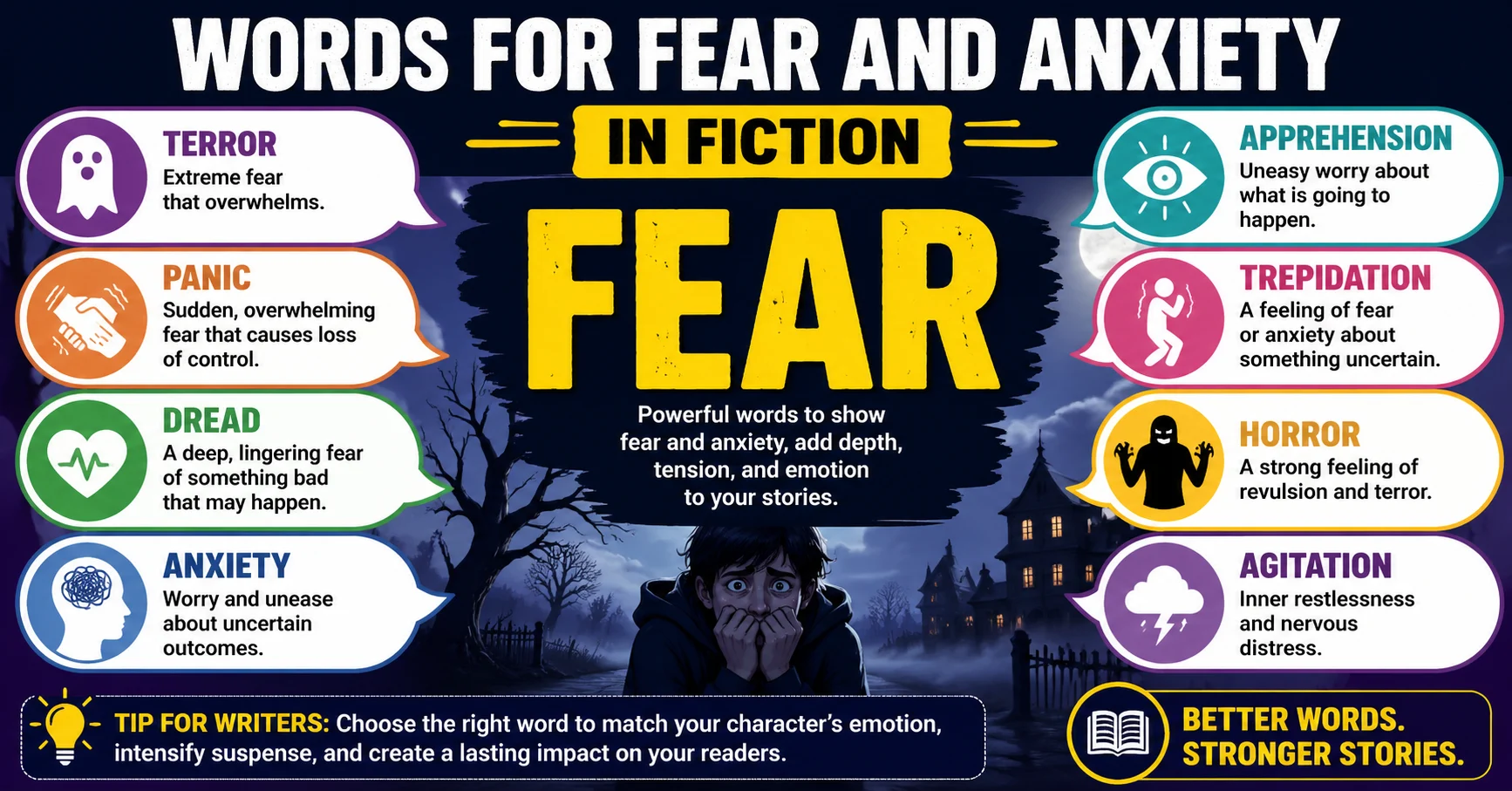
When you write stories, you need the right words for fear and anxiety in fiction to make your readers feel the action. Using strong words for fear and anxiety in fiction helps your story come alive. Finding these words for fear and anxiety in fiction can turn a boring scene into a scary masterpiece. If you keep using the same basic words like “scared” or “afraid” over and over, your writing becomes dry. By exploring different creative terms, you can choose words that match your character’s exact feeling of terror.
Think of a quiet house at night. A tiny creak sounds from the dark hallway. If you only write that the character “was scared,” your story feels flat. But if you describe how a cold chill ran down their back, your reader will hold their breath in anticipation. For instance, think of a little girl who hears a loud thunderclap. Instead of writing that she was afraid, a skilled author might say she was “petrified” under her heavy blankets. This small change in vocabulary makes the scene highly realistic.
These terms are very helpful for different people:
- Students: You can make your school essays look smart and get higher marks.
- Bloggers: You can keep your readers excited so they stay on your page longer.
- Content Writers: You can describe products and stories in a way that makes people want to buy or read them.
- Daily English Users: You can speak with more power and look confident to your friends.
“A great word can turn a simple shadow on the wall into a terrifying monster.”
“The best writers do not just tell you a character is afraid; they make you feel the fear yourself.”
Linguistic Details of “Fear and Anxiety”
To understand these words deeply, let us look at their linguistics in a simple way.
- Connotative Meaning: “Fear” and “anxiety” carry feelings of coldness, darkness, rapid heartbeats, and a strong urge to run or hide. They feel heavy, tense, and unsafe.
- Etymology:
- Fear comes from the Old English word fær, which means sudden danger, disaster, or terror.
- Anxiety comes from the Latin word anxietas, which means trouble, worry, or choking of the mind.
- Fiction comes from the Latin word fictio, which means a shaping, creating, or pretending.
- Pronunciation:
- Fear: US:
/fɪr/| UK:/fɪə(r)/ - Anxiety: US:
/æŋˈzaɪ.ə.t̬i/| UK:/æŋˈzaɪ.ə.ti/ - Fiction: US:
/ˈfɪk.ʃən/| UK:/ˈfɪk.ʃən/
- Fear: US:
- Syllables: fear (1 syllable), anx-i-e-ty (4 syllables), fic-tion (2 syllables)
- Affixation Pattern: Root words with basic Germanic and Latin forms.
“Tension in a story is built piece by piece, using words that hit the heart.”
Comparison Table
Here is a quick guide to help you choose the best word for your writing.
| Keyword | Meaning | Usage Type | Context |
|---|---|---|---|
| Dread | Great fear of a future event. | Emotional | Waiting for bad news |
| Terror | Sudden and extreme fear. | Emotional / Casual | Monster movies, scary events |
| Panic | Sudden fear that causes wild action. | Casual / Professional | Emergencies, busy scenes |
| Anxiety | A constant feeling of worry. | Emotional / Professional | Hard exams, long waits |
| Unease | A soft feeling of worry or dislike. | Casual / Formal | Quiet rooms, strange sounds |
| Horror | Strong fear mixed with shock or disgust. | Casual / Emotional | Scary stories, disasters |
50 Words for Fear and Anxiety in Fiction
Here is the ultimate list of 50 words you can use to describe fear and anxiety in your stories.
1. Dread
- Pronunciation: US:
/dred/| UK:/dred/ - Meaning: A very strong feeling of fear about something bad that will happen.
- Examples:
- She felt a deep dread as she walked into the dark basement.
- The cold rain filled him with dread about the long walk home.
2. Terror
- Pronunciation: US:
/ˈter.ɚ/| UK:/ˈter.ə/ - Meaning: Very great fear that makes your heart beat fast.
- Examples:
- The loud scream in the woods filled the campers with terror.
- He looked at the wild dog with pure terror in his eyes.
3. Panic
- Pronunciation: US:
/ˈpæn.ɪk/| UK:/ˈpæn.ɪk/ - Meaning: A sudden and strong fear that makes you act without thinking.
- Examples:
- The sudden fire alarm caused panic in the crowded school.
- She tried to calm her panic and find the door keys.
4. Anxiety
- Pronunciation: US:
/æŋˈzaɪ.ə.t̬i/| UK:/æŋˈzaɪ.ə.ti/ - Meaning: A feeling of worry or unease about what might happen next.
- Examples:
- His deep anxiety grew as the big test day got closer.
- Drinking warm tea helps her reduce her daily anxiety.
5. Apprehension
- Pronunciation: US:
/ˌæp.rəˈhen.ʃən/| UK:/ˌæp.rəˈhen.ʃən/ - Meaning: A quiet worry that something bad is about to happen.
- Examples:
- The dark storm clouds filled the sailors with heavy apprehension.
- She opened the old letter with a sense of apprehension.
6. Trepidation
- Pronunciation: US:
/ˌtrep.əˈdeɪ.ʃən/| UK:/ˌtrep.ɪˈdeɪ.ʃən/ - Meaning: A shaking feeling of fear or worry about a future event.
- Examples:
- He stepped onto the tall stage with a lot of trepidation.
- The cold wind added to her trepidation about the trip.
7. Horror
- Pronunciation: US:
/ˈhɔːr.ɚ/| UK:/ˈhɒr.ə(r)/ - Meaning: A strong feeling of fear and shock caused by something extremely bad.
- Examples:
- The kids watched the scary spider movie in total horror.
- She turned away from the car crash in deep horror.
8. Unease
- Pronunciation: US:
/ʌnˈiːz/| UK:/ʌnˈiːz/ - Meaning: A light feeling of worry that makes you feel uncomfortable.
- Examples:
- A strange sense of unease filled the quiet empty office.
- He felt some unease when the new dog started growling.
9. Nervousness
- Pronunciation: US:
/ˈnɝː.vəs.nəs/| UK:/ˈnɜː.vəs.nəs/ - Meaning: A feeling of being worried, excited, or easily scared.
- Examples:
- Her shaking hands showed her nervousness before the long speech.
- He ate a sweet candy to hide his growing nervousness.
10. Dismay
- Pronunciation: US:
/dɪˈsmeɪ/| UK:/dɪˈsmeɪ/ - Meaning: A feeling of shock and sadness when things go wrong.
- Examples:
- To her dismay, the front door of the house was wide open.
- He looked at his broken toy car with deep dismay.
11. Consternation
- Pronunciation: US:
/ˌkɑːn.stɚˈneɪ.ʃən/| UK:/ˌkɒn.stəˈneɪ.ʃən/ - Meaning: A feeling of worry and shock that makes you confused.
- Examples:
- The sudden bad news caused great consternation among the team.
- She stared at the empty safe in silent consternation.
12. Fright
- Pronunciation: US:
/fraɪt/| UK:/fraɪt/ - Meaning: A sudden and quick feeling of fear.
- Examples:
- The loud bark of the dog gave her a quick fright.
- He jumped up in fright when the door slammed shut.
13. Worry
- Pronunciation: US:
/ˈwɝː.i/| UK:/ˈwʌr.i/ - Meaning: A feeling of thinking about problems or bad things that might happen.
- Examples:
- She tried to sleep, but deep worry kept her awake.
- His face was pale and full of worry for his sick friend.
14. Agitation
- Pronunciation: US:
/ˌædʒ.əˈteɪ.ʃən/| UK:/ˌædʒ.ɪˈteɪ.ʃən/ - Meaning: A state of feeling highly worried, upset, or restless.
- Examples:
- He walked up and down the hallway in great agitation.
- Her fast talking showed her inner agitation during the call.
15. Alarm
- Pronunciation: US:
/əˈlɑːrm/| UK:/əˈlɑːm/ - Meaning: A sudden feeling of fear that there is danger nearby.
- Examples:
- The sound of breaking glass filled them with sudden alarm.
- She looked out the window in alarm at the orange flames.
16. Foreboding
- Pronunciation: US:
/fɔːrˈboʊ.dɪŋ/| UK:/fɔːˈbəʊ.dɪŋ/ - Meaning: A strong feeling that something evil or bad is coming soon.
- Examples:
- The cold, empty castle gave him a sense of foreboding.
- She felt a strange foreboding when the phone rang late.
17. Misgiving
- Pronunciation: US:
/ˌmɪsˈɡɪv.ɪŋ/| UK:/ˌmɪsˈɡɪv.ɪŋ/ - Meaning: A feeling of doubt or worry about a plan or person.
- Examples:
- He had many misgivings about walking into the deep cave.
- She ignored her misgivings and signed the work paper.
18. Suspense
- Pronunciation: US:
/səˈspens/| UK:/səˈspens/ - Meaning: A tense feeling of waiting to see what will happen next.
- Examples:
- The clever story kept the young readers in great suspense.
- Do not keep me in suspense; tell me who won the game!
19. Tension
- Pronunciation: US:
/ˈten.ʃən/| UK:/ˈten.ʃən/ - Meaning: A tight feeling in your body and mind caused by stress or fear.
- Examples:
- You could feel the heavy tension in the quiet room.
- A warm bath helped him release the tension in his neck.
20. Hysteria
- Pronunciation: US:
/hɪˈster.i.ə/| UK:/hɪˈstɪə.ri.ə/ - Meaning: A state of extreme, wild fear that you cannot control.
- Examples:
- The loud lightning storm caused pure hysteria among the kids.
- She had to calm her hysteria before she could call for help.
21. Petrified
- Pronunciation: US:
/ˈpet.rə.faɪd/| UK:/ˈpet.rɪ.faɪd/ - Meaning: So scared that you cannot move or speak.
- Examples:
- He stood petrified as the massive black bear walked closer.
- She was petrified of looking down from the tall building.
22. Terrified
- Pronunciation: US:
/ˈter.ə.faɪd/| UK:/ˈter.ɪ.faɪd/ - Meaning: Extremely scared of someone or something.
- Examples:
- The terrified little boy hid behind his mother’s coat.
- She was terrified of getting lost in the deep woods.
23. Jumpy
- Pronunciation: US:
/ˈdʒʌm.pi/| UK:/ˈdʒʌm.pi/ - Meaning: Feeling nervous and easily startled by quick movements or sounds.
- Examples:
- Loud fireworks always make the young puppy very jumpy.
- He had too much coffee and felt jumpy all morning.
24. Edgy
- Pronunciation: US:
/ˈedʒ.i/| UK:/ˈedʒ.i/ - Meaning: Feeling nervous, tense, and ready to get angry or scared.
- Examples:
- She felt edgy as she waited for the doctor to call.
- The late hour made the small group feel very edgy.
25. Scared
- Pronunciation: US:
/skerd/| UK:/skeəd/ - Meaning: Feeling fear or worry about a clear danger.
- Examples:
- The small cat was too scared to climb down the tree.
- He felt scared when the house lights went out.
26. Frightened
- Pronunciation: US:
/ˈfraɪ.tənd/| UK:/ˈfraɪ.tənd/ - Meaning: Feeling sudden fear or worry because of something scary.
- Examples:
- A frightened deer ran across the quiet forest road.
- She looked frightened when she heard the loud knock.
27. Spooked
- Pronunciation: US:
/spuːkt/| UK:/spuːkt/ - Meaning: Suddenly scared and wanting to run away.
- Examples:
- The brown horse got spooked by a flying plastic bag.
- Do not make loud noises, or you will get the birds spooked.
28. Trembling
- Pronunciation: US:
/ˈtrem.blɪŋ/| UK:/ˈtrem.blɪŋ/ - Meaning: Shaking with quick movements because you are cold or scared.
- Examples:
- Her trembling hand could barely hold the small pen.
- He stood in the cold wind, trembling from head to toe.
29. Quivering
- Pronunciation: US:
/ˈkwɪv.ɚ.ɪŋ/| UK:/ˈkwɪv.ər.ɪŋ/ - Meaning: Shaking slightly with a soft, quick movement because of nervousness.
- Examples:
- The little puppy had a quivering nose when it was cold.
- She spoke with a quivering voice during the sad play.
30. Shivering
- Pronunciation: US:
/ˈʃɪv.ɚ.ɪŋ/| UK:/ˈʃɪv.ər.ɪŋ/ - Meaning: Shaking with small movements because you feel cold or highly anxious.
- Examples:
- He was shivering under his thin jacket in the snow.
- She sat shivering on the bench, waiting for her ride.
31. Paralyzed
- Pronunciation: US:
/ˈpær.ə.laɪzd/| UK:/ˈpær.ə.laɪzd/ - Meaning: Unable to move your body because of extreme fear.
- Examples:
- She was paralyzed with fear when she saw the big snake.
- The mouse stood paralyzed as the shadow fell over it.
32. Horrified
- Pronunciation: US:
/ˈhɔːr.ə.faɪd/| UK:/ˈhɒr.ɪ.faɪd/ - Meaning: Feeling very shocked and scared by a bad sight or news.
- Examples:
- He was horrified to see his new kitchen covered in mud.
- She looked horrified when the glass bowl fell and broke.
33. Distressed
- Pronunciation: US:
/dɪˈstrest/| UK:/dɪˈstrest/ - Meaning: Feeling very sad, worried, or in pain.
- Examples:
- The distressed bird kept flying around its broken nest.
- He was deeply distressed by the loss of his gold ring.
34. Overwhelmed
- Pronunciation: US:
/ˌoʊ.vɚˈwelmd/| UK:/ˌəʊ.vəˈwelmd/ - Meaning: Feeling like you have too many feelings or tasks to handle.
- Examples:
- She felt overwhelmed by the high amount of homework.
- He was overwhelmed with joy and fear at the same time.
35. Frozen
- Pronunciation: US:
/ˈfroʊ.zən/| UK:/ˈfrəʊ.zən/ - Meaning: Staying completely still like ice because you are so scared.
- Examples:
- He sat frozen in his seat as the car went very fast.
- The rabbit stood frozen in the bright car lights.
36. Startled
- Pronunciation: US:
/ˈstɑːr.təld/| UK:/ˈstɑː.təld/ - Meaning: Surprised and scared for a quick moment by a sudden noise.
- Examples:
- The startled deer leaped over the low wood fence.
- She let out a startled cry when the balloon popped.
37. Shocked
- Pronunciation: US:
/ʃɑːkt/| UK:/ʃɒkt/ - Meaning: Feeling very surprised and upset by something unexpected.
- Examples:
- We were shocked to find the back door unlocked.
- He looked shocked when he saw the massive bill.
38. Suspicious
- Pronunciation: US:
/səˈspɪʃ.əs/| UK:/səˈspɪʃ.əs/ - Meaning: Feeling like you cannot trust someone or that something is wrong.
- Examples:
- The old guard was suspicious of the late visitors.
- She cast a suspicious look at the locked black box.
39. Timid
- Pronunciation: US:
/ˈtɪm.ɪd/| UK:/ˈtɪm.ɪd/ - Meaning: Shy and easily scared by other people or new things.
- Examples:
- The timid kitten hid under the soft blue sofa.
- He gave a timid knock on the big wooden office door.
40. Cowering
- Pronunciation: US:
/ˈkaʊ.ɚ.ɪŋ/| UK:/ˈkaʊ.ər.ɪŋ/ - Meaning: Bending down and shrinking back because you are afraid.
- Examples:
- The poor dog was cowering under the table during the storm.
- He saw the kids cowering in the corner from the loud wind.
41. Shaken
- Pronunciation: US:
/ˈʃeɪ.kən/| UK:/ˈʃeɪ.kən/ - Meaning: Feeling highly upset, shocked, and unsteady after a scary event.
- Examples:
- She was deeply shaken after the minor car accident.
- He sat down to calm his shaken nerves with some water.
42. Paranoid
- Pronunciation: US:
/ˈpær.ə.nɔɪd/| UK:/ˈpær.ə.nɔɪd/ - Meaning: Feeling a strange worry that people want to hurt you.
- Examples:
- The dark forest made him feel paranoid about being watched.
- She grew paranoid that she had left the stove turned on.
43. Restless
- Pronunciation: US:
/ˈrest.ləs/| UK:/ˈrest.ləs/ - Meaning: Unable to sit still or relax because you are worried.
- Examples:
- He spent a restless night tossing and turning in bed.
- The long wait made the children very restless and noisy.
44. Panicky
- Pronunciation: US:
/ˈpæn.ɪ.ki/| UK:/ˈpæn.ɪ.ki/ - Meaning: Feeling a sudden, sharp fear that makes you want to run.
- Examples:
- She had a panicky feeling when she could not see her bag.
- His voice sounded panicky as the water started to rise.
45. Unnerved
- Pronunciation: US:
/ʌnˈnɝːvd/| UK:/ʌnˈnɜːvd/ - Meaning: Feeling weak and losing your confidence because of fear.
- Examples:
- The strange silence of the old town unnerved him.
- She was unnerved by the way the shadow moved on the wall.
46. Haunting
- Pronunciation: US:
/ˈhɑːn.t̬ɪŋ/| UK:/ˈhɔːn.tɪŋ/ - Meaning: Staying in your mind for a long time in a sad or scary way.
- Examples:
- He could not forget the haunting look on her face.
- A haunting melody played softly from the dark radio.
47. Looming
- Pronunciation: US:
/ˈluː.mɪŋ/| UK:/ˈluː.mɪŋ/ - Meaning: Appearing large and scary as if it might fall on you.
- Examples:
- The looming shadow of the old tree fell over the yard.
- She felt stressed with the looming work deadline.
48. Chilling
- Pronunciation: US:
/ˈtʃɪl.ɪŋ/| UK:/ˈtʃɪl.ɪŋ/ - Meaning: Making you feel very cold and scared inside.
- Examples:
- The old man told us a chilling story about the woods.
- She heard a chilling laugh come from the attic.
49. Spooky
- Pronunciation: US:
/ˈspuː.ki/| UK:/ˈspuː.ki/ - Meaning: Strange and scary in a way that makes you feel uneasy.
- Examples:
- We walked past the spooky old graveyard at night.
- The green glow gave the dark room a spooky look.
50. Creepy
- Pronunciation: US:
/ˈkriː.pi/| UK:/ˈkriː.pi/ - Meaning: Making you feel cold, scared, and uncomfortable.
- Examples:
- A creepy bug crawled slowly across his warm desk.
- She did not like the creepy music playing in the shop.
Antonyms of “Fear and Anxiety”
If you do not want your characters to feel fear or anxiety, they might feel the opposite. Here are the main antonyms for these terms:
- Confidence: Feeling safe, strong, and sure of yourself.
- Calmness: A quiet and peaceful state of mind with no worries.
- Courage: The bravery to face danger without running away.
- Security: A safe feeling that nothing can hurt you.
- Peace: A gentle and relaxed state where everything is quiet.
Prototype Meaning and Categorization
In the world of language, fear and anxiety fit under the main category of Self-Preservation.
- Core Meaning (Prototype): The direct mental and physical reaction to a threat or danger to keep yourself alive.
- Semantic Category: Emotional States / Involuntary Responses.
- Cognitive Frame: A threat appears (the trigger), which causes a person (the subject) to feel highly tense and want to flee, fight, or freeze.
FAQs
1. What is the most common word for fear in stories?
The most common words are scared and terrified. They are simple, direct, and very easy for any reader to understand quickly.
2. Can I use “dread” to mean “anxiety” in my school essays?
Yes! When you talk about waiting for bad news or a future event, “dread” is a fantastic and strong replacement that sounds very professional.
3. Is “trepidation” a formal or casual word?
“Trepidation” is a formal and professional word. It is great for smart essays, books, and formal business letters.
4. What is the difference between “fear” and “anxiety”?
“Fear” happens when there is a clear and immediate danger right in front of you. “Anxiety” is the worry about something bad that might happen in the future.
5. Why should I use different synonyms for fear and anxiety in fiction?
Using different words keeps your stories from sounding flat. It helps you paint a beautiful, detailed, and emotional picture for your readers.
6. How does “looming” relate to fear?
“Looming” describes something large and scary that is coming closer, which naturally causes a character to feel fear or panic.
Conclusion
Learning different words for fear and anxiety in fiction is a great way to boost your writing power. When you use different words, you keep your readers interested and make them feel the tension. This is true whether you are writing an essay, blogging online, speaking on stage, or communicating with friends.
We encourage you to practice these terms every day. Try using one new word in your next email to a friend. Put a fresh synonym in your school essay. Use them when you talk to your family about a scary movie. You will soon see that your English sounds much more professional and natural!
“Words are the paints we use to build the worlds of our minds.”
“To write with power, you must master the words that make the heart race.”

Michael Turner is a published fiction writer and creative writing tutor with over a decade of experience helping writers find the words that make their stories breathe ( Biography ).