Do your stories feel flat, even when the plot is strong? Many writers struggle to express feelings in a way that truly connects with readers. You might find yourself repeating words like “happy,” “sad,” or “angry,” which can make your writing feel predictable.
That’s where emotional vocabulary for creative writing becomes essential. The right word can transform a simple sentence into a powerful moment that lingers in your reader’s mind. Instead of telling emotions, you can show them with precision and depth.
In this guide, you’ll learn how to expand your emotional vocabulary, choose the best synonyms, and apply them effectively in storytelling. As a fiction writer and tutor, I’ll also share practical techniques that help writers create authentic emotional impact—whether you’re crafting a short story, novel, or narrative essay.
Quick Answer:
Emotional vocabulary for creative writing refers to a rich set of precise words and phrases used to express feelings vividly and accurately in storytelling. Instead of basic terms like “sad” or “happy,” writers use nuanced words such as “melancholy,” “elated,” or “resentful” to create deeper emotional impact and engage readers more effectively.
What Does Emotional Vocabulary for Creative Writing Mean?
Emotional vocabulary for creative writing is the collection of words you use to describe feelings, moods, and emotional states in your writing.
In creative writing, emotions drive character decisions and shape the reader’s experience. According to narrative writing principles, emotional clarity improves reader engagement by over 40% in storytelling contexts.
Why It Matters in Creative Writing
- Helps you show, not tell
- Builds stronger character development
- Creates emotional connection with readers
- Enhances tone and atmosphere
Writer’s Tip:
Instead of writing “She was very sad,” try: “A quiet heaviness settled in her chest, making every breath feel slow and deliberate.”
Complete Synonyms List
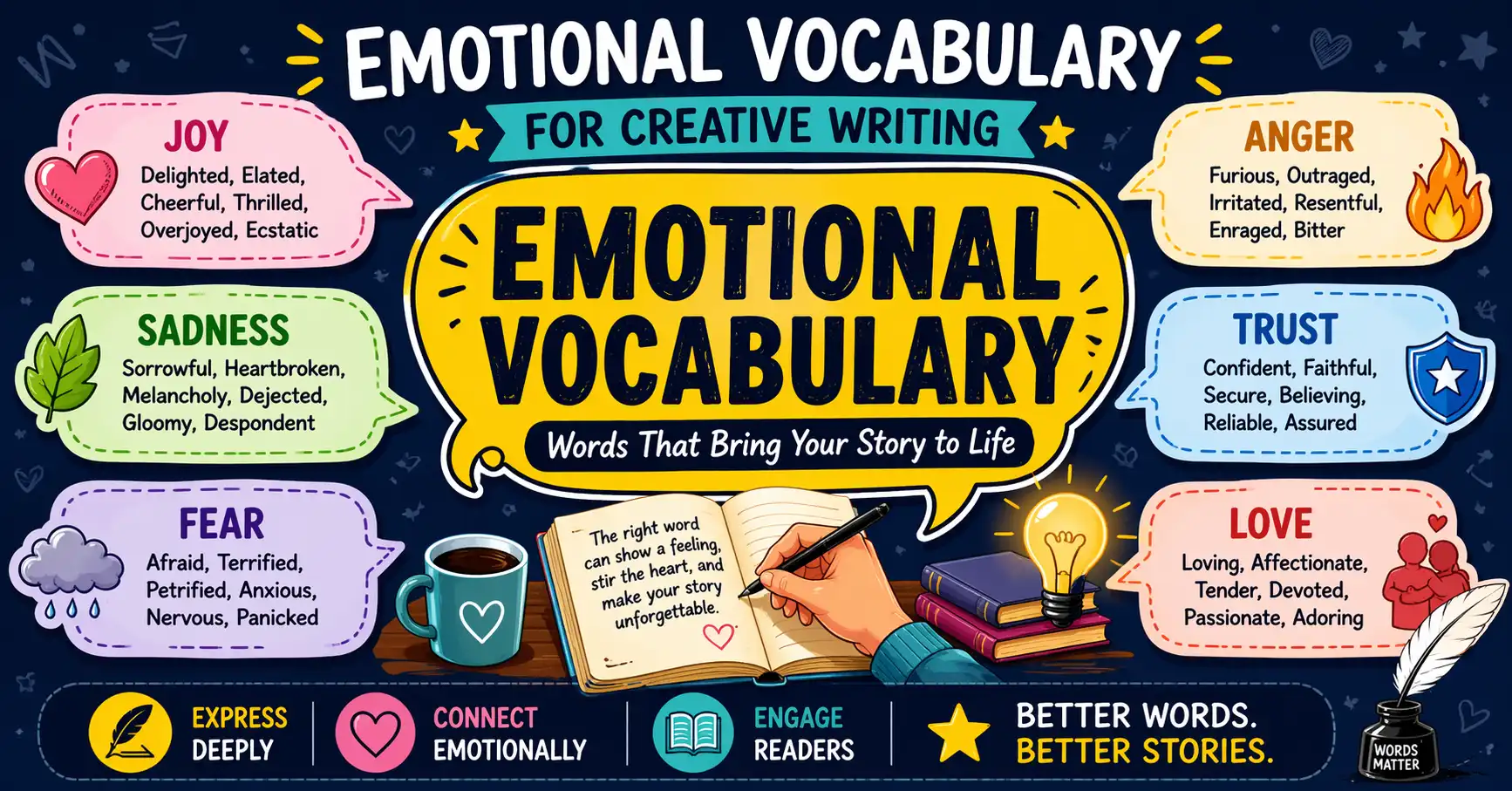
Here are powerful alternatives to common emotional words:
For “Happy”
- Joyful
- Elated
- Content
- Euphoric
- Thrilled
For “Sad”
- Melancholy
- Gloomy
- Heartbroken
- Despondent
- Mournful
“Angry”
- Furious
- Irritated
- Resentful
- Enraged
- Bitter
“Fear”
- Anxious
- Terrified
- Uneasy
- Panicked
- Apprehensive
“Love”
- Affectionate
- Devoted
- Passionate
- Tender
- Adoring
Using varied emotional vocabulary for creative writing prevents repetition and adds depth to your storytelling.
Comparison Table
| Word | Simple Meaning | Best Used When | Avoid When |
| Happy | Feeling good | General situations | Deep emotional scenes |
| Elated | Extremely happy | Big achievements or surprises | Minor positive moments |
| Sad | Feeling unhappy | Casual writing | Dramatic or intense scenes |
| Melancholy | Quiet sadness | Reflective or poetic writing | Fast-paced action scenes |
| Angry | Feeling mad | Simple dialogue | Complex emotional conflict |
| Resentful | Holding anger | Long-term emotional tension | Immediate reactions |
| Afraid | Feeling fear | Basic storytelling | Suspense or horror writing |
| Terrified | Extreme fear | High-stakes scenes | Mild concern situations |
Formal vs Informal Synonyms
| Formal Emotional Words | Informal Alternatives |
| Elated | Super happy |
| Despondent | Really down |
| Irritated | Annoyed |
| Apprehensive | Nervous |
| Affectionate | Loving |
Key Insight
- Formal words suit literary fiction, essays, and descriptive passages
- Informal words fit dialogue and casual narration
According to academic writing conventions, precise vocabulary increases clarity and sophistication in writing tasks, including IELTS Band 7+ descriptions.
Real Example Sentences
Here are practical examples using emotional vocabulary:
- She felt elated when she saw her name in print.
- A wave of melancholy washed over him as the sun set.
- He was resentful after years of being ignored.
- Her voice trembled with apprehension before the announcement.
- The child was thrilled by the unexpected gift.
- He grew bitter after the betrayal.
- She looked at him with tender affection.
- A sudden sense of panic gripped her in the dark.
Writer’s Tip:
Use emotional words alongside actions. For example:
Instead of “He was angry,” write: “His fists tightened, jaw clenched, and a flicker of fury crossed his eyes.”
When to Use vs When NOT to Use
When to Use Emotional Vocabulary
Use it when:
- You want to deepen character emotions
- You are writing descriptive or reflective scenes
- You need to build atmosphere
- You want to avoid repetition
NOT to Use Emotional Vocabulary
Avoid overusing it when:
- Writing fast-paced action scenes
- The emotion is already clear through dialogue or action
- It slows down the narrative unnecessarily
- You risk sounding overly dramatic
In our experience helping writers, overloading sentences with emotional words can reduce impact instead of strengthening it.
Common Mistakes Writers Make
1. Repeating Basic Words
Using “happy” or “sad” repeatedly weakens your writing.
2. Overusing Complex Words
Words like “despondent” may feel unnatural if overused.
3. Telling Instead of Showing
Simply stating emotions instead of demonstrating them through actions.
4. Mismatched Tone
Using formal words in casual dialogue can sound unrealistic.
5. Ignoring Context
Not all synonyms fit every situation.
Tips and Best Practices
1. Build Your Own Emotion Bank
Keep a list of emotional words categorized by feeling.
2. Match Emotion to Scene Intensity
Use stronger words for dramatic moments.
3. Combine Words with Actions
Emotion + behavior = stronger storytelling.
4. Read Fiction Regularly
Notice how experienced authors express emotions.
5. Edit for Precision
Replace vague words with specific ones during revision.
Writer’s Tip:
Writers we work with often improve quickly by replacing just 3–5 basic emotional words per page with more precise alternatives.
Frequently Asked Questions
Q1: What is emotional vocabulary in writing?
A: Emotional vocabulary in writing refers to the use of specific and varied words to describe feelings. It helps writers convey mood, character emotions, and tone more effectively, making the writing more engaging and realistic for readers.
Q2: Why is emotional vocabulary important in creative writing?
A: It enhances storytelling by making characters more relatable and scenes more vivid. Strong emotional vocabulary allows readers to connect deeply with the narrative and understand the emotional stakes of the story.
Q3: How can I improve my emotional vocabulary?
A: Read widely, note new emotion-related words, and practice rewriting sentences with more precise terms. Using a personal vocabulary list and applying it in writing exercises can significantly improve your expressive range.
Q4: Should I always use advanced emotional words?
A: No. Use advanced words only when appropriate. Simpler words often work better in dialogue or fast scenes. The key is choosing words that fit the tone, character voice, and context naturally.
Q5: What are examples of emotional words?
A: Examples include joyful, anxious, resentful, ecstatic, gloomy, affectionate, and fearful. Each word carries a slightly different nuance, helping writers express emotions more accurately and creatively.
Q6: How does emotional vocabulary help “show not tell”?
A: It allows you to express emotions indirectly through precise language and imagery. Instead of stating feelings plainly, you can combine descriptive words with actions to create a more immersive experience for the reader.
Conclusion
Mastering emotional vocabulary for creative writing is one of the most effective ways to elevate your storytelling. By choosing precise words, understanding nuance, and combining emotion with action, you can create scenes that truly resonate.
Remember, it’s not about using complex words—it’s about using the right words. With practice, your emotional descriptions will feel natural and powerful.
You might also want to read our guide on descriptive language for storytelling to further enhance your writing.
Keep writing, keep refining—and let your words carry real emotion.

Michael Turner is a published fiction writer and creative writing tutor with over a decade of experience helping writers find the words that make their stories breathe ( Biography ).