
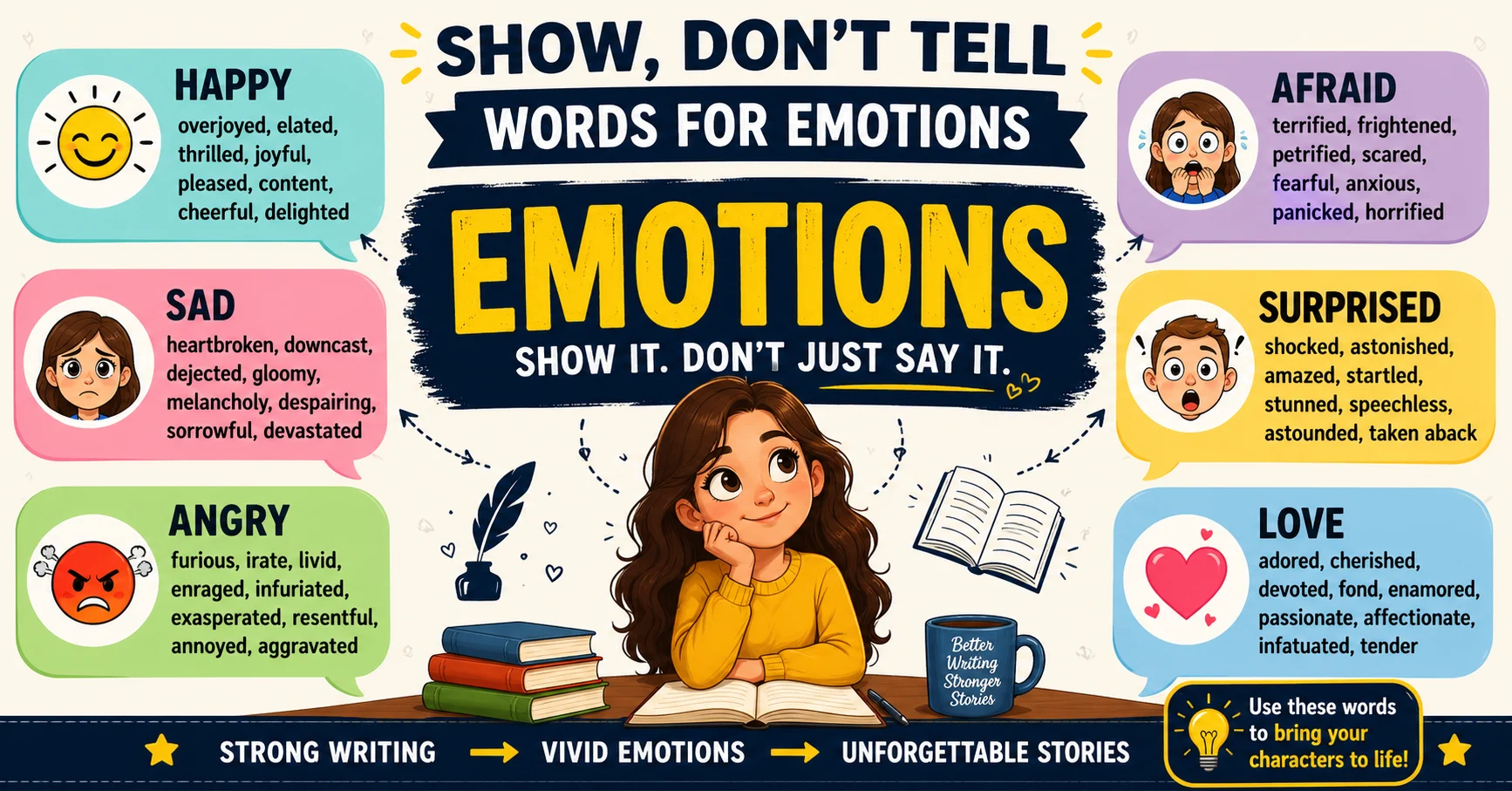
Do your stories feel flat when you describe emotions? If you keep writing “she was sad” or “he felt angry,” your readers won’t feel much. That’s the problem many writers face. You know what the character feels—but you’re telling, not showing.
This guide gives you a complete show don’t tell words for emotions list so you can transform basic emotional descriptions into vivid, engaging writing. You’ll learn how to replace weak emotion words with powerful alternatives, understand when to use them, and see real examples in action.
Whether you’re writing fiction, essays, or preparing for creative exams, mastering emotional expression is key. In our experience helping writers, the difference between average and compelling writing often comes down to how emotions are conveyed.
Let’s fix that—starting now.
Quick Answer:
A “show don’t tell words for emotions list” includes vivid, descriptive alternatives like “trembled,” “glared,” “beamed,” or “clenched fists” instead of basic words like “sad,” “angry,” or “happy.” These words help readers see and feel emotions through actions, body language, and sensory details rather than direct statements.
What Does “Show Don’t Tell Words for Emotions” Mean?
“Show, don’t tell” is a core principle in creative writing. Instead of directly stating emotions, you reveal them through:
- Actions
- Dialogue
- Body language
- Sensory details
For example:
- Telling: She was nervous.
- Showing: Her hands trembled as she fumbled with the keys.
In the context of creative writing, this technique matters because it creates emotional immersion. Readers don’t just understand emotions—they experience them.
According to modern storytelling standards, including creative writing rubrics and narrative assessment criteria, vivid emotional expression increases reader engagement and improves writing quality significantly.
Complete Synonyms List (Show Don’t Tell Words for Emotions)
Here’s a powerful show don’t tell words for emotions list you can use immediately:
For Happiness
- Beamed
- Glowed
- Laughed freely
- Sparkled
- Grinned
For Sadness
- Slumped
- Trembled
- Wept
- Stared blankly
- Dragged footsteps
Anger
- Glared
- Clenched fists
- Snapped
- Seethed
- Slammed
Fear
- Froze
- Shivered
- Heart raced
- Backed away
- Whispered shakily
Love
- Held tightly
- Softened gaze
- Brushed gently
- Smiled warmly
- Leaned closer
Writer’s Tip:
Instead of replacing one word with another, think in actions and physical reactions. Emotions live in movement, not labels.
Comparison Table
| Word (Tell) | Simple Meaning | Best Used When | Avoid When |
| Happy | Feeling good | Quick summary | Writing vivid scenes |
| Sad | Feeling down | Informal narration | Emotional storytelling |
| Angry | Feeling mad | Dialogue tags | Descriptive passages |
| Nervous | Feeling anxious | Basic explanation | High-tension scenes |
| Scared | Feeling fear | Simple writing | Suspense scenes |
Formal vs Informal Synonyms
| Emotion | Formal Expression | Informal / Creative Expression |
| Happiness | Delighted | Beaming, glowing |
| Sadness | Distressed | Slumped, teary-eyed |
| Anger | Irritated | Snapped, glared |
| Fear | Apprehensive | Trembling, frozen |
| Love | Affectionate | Leaned in, held close |
According to academic writing conventions, formal terms suit essays, while creative writing thrives on vivid, sensory language.
Real Example Sentences
Here are show don’t tell examples using emotional words effectively:
- He clenched his jaw, refusing to speak.
- She beamed, her eyes sparkling with excitement.
- His hands trembled as he opened the letter.
- She slumped into the chair, staring at the floor.
- He glared across the room, fists tightening.
- Her voice shook, barely above a whisper.
- She laughed freely, throwing her head back.
- He backed away slowly, eyes wide with fear.
Writer’s Tip:
Writers we work with often improve quickly when they pair actions with emotions. For example: “He clenched his fists and looked away.” This shows both anger and avoidance.
When to Use vs When NOT to Use
When to Use:
- In storytelling scenes
- When building emotional tension
- In character-driven writing
- During dialogue and action sequences
NOT to Use:
- In academic essays requiring neutral tone
- When clarity matters more than style
- In short summaries
- When over-description slows pacing
Being selective is important. Not every sentence needs dramatic detail.
Common Mistakes Writers Make
Even experienced writers struggle here. Watch out for these:
1. Overusing One Emotion Style
Repeating “he clenched his fists” becomes predictable.
2. Mixing Too Many Actions
Too many details can confuse readers instead of helping them.
3. Using Clichés
Examples:
- “Heart skipped a beat”
- “Butterflies in the stomach”
These feel overused and lack originality.
4. Ignoring Context
A “smile” can mean happiness, sarcasm, or discomfort. Always match the situation.
5. Telling After Showing
Example:
- She trembled. She was scared.
The second sentence is unnecessary.
Tips and Best Practices
Here’s how to master the show don’t tell words for emotions list effectively:
1. Focus on Body Language
- Hands, eyes, posture reveal emotions instantly.
2. Use Sensory Details
- Sounds, textures, and movement add realism.
3. Keep It Natural
- Avoid forcing dramatic actions into calm scenes.
4. Combine Dialogue with Action
Example:
- “I’m fine,” she said, avoiding eye contact.
5. Read Your Work Aloud
This helps you catch unnatural phrasing.
Writer’s Tip:
In our experience helping writers, the biggest improvement comes when you replace just one weak emotion per paragraph. Small changes create strong impact.
Frequently Asked Questions
Q: What is a show don’t tell words for emotions list?
A: It’s a collection of descriptive words and actions used to express emotions indirectly. Instead of stating feelings, you show them through behavior, body language, and sensory cues, making writing more engaging and immersive for readers.
Q: Why is “show don’t tell” important in writing?
A: It helps readers experience emotions instead of just understanding them. This increases engagement, improves storytelling quality, and aligns with modern creative writing standards where vivid imagery and realism are highly valued.
Q: Can I still use basic emotion words like “happy” or “sad”?
A: Yes, but sparingly. These words work in summaries or simple narration. However, for impactful scenes, replacing them with descriptive actions creates stronger emotional connections with readers.
Q: How do I practice show don’t tell effectively?
A: Start by rewriting simple sentences. Replace one emotion word with a physical action or reaction. Practice regularly, and study how authors describe emotions in novels to build your skills naturally over time.
Q: Is show don’t tell useful for exams like IELTS?
A: For IELTS essays, clarity matters more than creativity. However, in descriptive or narrative tasks, using controlled “showing” techniques can improve lexical resource scores and make your writing more engaging.
Q: What are the best examples of showing emotions?
A: Strong examples include actions like “clenched fists” for anger or “voice trembling” for fear. These are clear, relatable, and easy for readers to visualize, making them effective in most storytelling situations.
Conclusion
Mastering a show don’t tell words for emotions list can transform your writing from basic to powerful. Instead of simply naming emotions, you bring them to life through actions, details, and vivid imagery.
You’ve learned synonyms, examples, common mistakes, and practical techniques. Now it’s your turn to apply them. Start small—replace one weak sentence today.
You might also want to read our guide on strong descriptive verbs for writing to further improve your storytelling.
Keep writing, keep refining—and let your readers feel every word.

Michael Turner is a published fiction writer and creative writing tutor with over a decade of experience helping writers find the words that make their stories breathe ( Biography ).