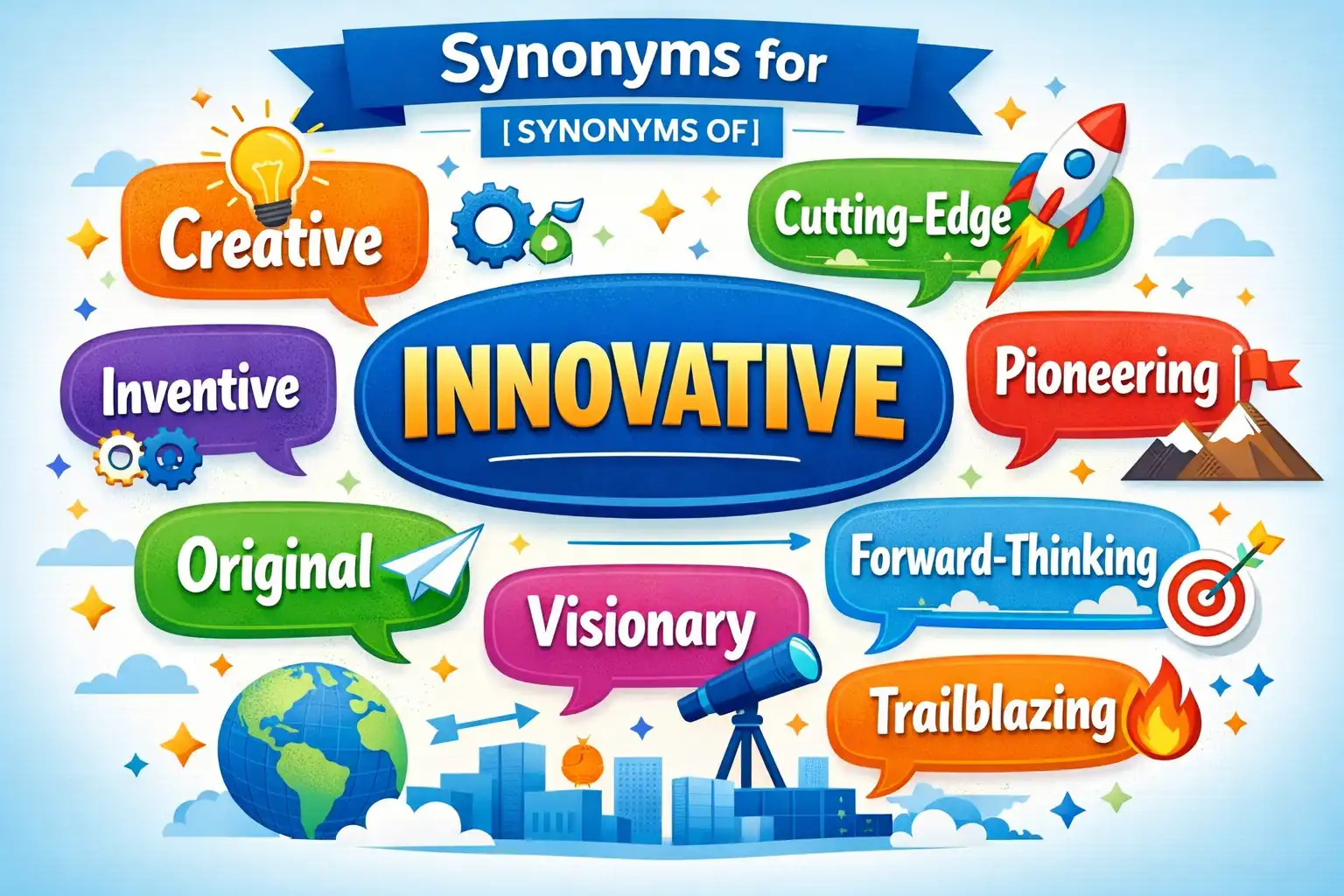
When you write, finding the right words is like choosing the best tools to build a house. If you want to make your work sound fresh, using different synonyms of innovative can make a huge difference. Learning these synonyms of innovative helps you avoid repeating the same word over and over again. By exploring these synonyms of innovative, you will easily find exciting new ways to describe fresh ideas, modern technology, and creative projects.
Imagine you are sharing your brand-new business idea with a group of managers. If you keep saying your idea is “new,” people might get bored. But if you call it “game-changing” or “cutting-edge,” everyone sits up and listens. Think of how companies talk about the newest smart device; they do not just call it a new phone, they call it a breakthrough.
Using different words for “innovative” means finding words that show how something is creative, fresh, and smart.
For students, these words make essays sound smart. For bloggers and content writers, they grab the reader’s attention and improve search engine rankings, For daily English users, they help you share your thoughts with more confidence.
“Words have the power to change how people see your ideas instantly.”
“A fresh vocabulary is the key to unlocking creative thinking.”
Linguistic Profile of “Innovative”
- Connotative Meaning: Highly positive, suggesting progress, cleverness, high energy, and forward-looking success.
- Etymology:
- Originates from the Latin verb innovare, which means “to renew or change.”
- Comes from in- (into) + novus (new).
- First recorded in English in the mid-1600s.
- Pronunciation (US & UK):
- US IPA:
/ˈɪnəˌveɪtɪv/ - UK IPA:
/ˈɪnəvətɪv/
- US IPA:
- Syllables: In-no-va-tive (4 syllables)
- Affixation Pattern:
- Prefix: None (though in- is historically a bound prefix).
- Root: nov (meaning new).
- Suffix: -ative (an adjective suffix meaning “tending to” or “performing an action”).
Comparison of Key Synonyms
“Choosing the right word is like picking the perfect tool for a masterpiece.”
| Keyword | Meaning | Usage Type | Context |
|---|---|---|---|
| Innovative | Creating or using new ideas | Professional / Formal | Workplace, technology, school projects |
| Creative | Having good and unusual ideas | Casual / Friendly | Art, hobbies, daily conversations |
| Groundbreaking | Breaking new ground to start a trend | Professional / Strong | Science, medicine, massive industries |
| Novel | New and not like anything else | Formal / Literary | Books, scientific discoveries, laws |
| Ingenious | Very smart and clever | Emotional / Casual | Solving puzzles, handy repairs, life hacks |
| Avant-garde | Way ahead of its time | Creative / Professional | Art, fashion, indie music, design |
50 Synonyms of Innovative
1. Creative
- Pronunciation: US:
/kriˈeɪtɪv/| UK:/kriˈeɪtɪv/ - Meaning: Having or showing good, new, and unusual ideas.
- Examples:
- She has a very creative way of painting flowers.
- We need some creative solutions to fix this issue fast.
2. Groundbreaking
- Pronunciation: US:
/ˈɡraʊndˌbreɪkɪŋ/| UK:/ˈɡraʊndˌbreɪkɪŋ/ - Meaning: Making a very new and important discovery.
- Examples:
- The hospital is doing groundbreaking research on health.
- This is a groundbreaking app for learning languages.
3. Novel
- Pronunciation: US:
/ˈnɑːvl/| UK:/ˈnɒvl/ - Meaning: New and different from anything seen before.
- Examples:
- He came up with a novel way to clean his room.
- The toy was a novel idea that kids loved.
4. Ingenious
- Pronunciation: US:
/ɪnˈdʒiːniəs/| UK:/ɪnˈdʒiːniəs/ - Meaning: Very smart, clever, and skillful.
- Examples:
- He made an ingenious tool out of old paperclips.
- That is an ingenious plan to save money on food.
5. Revolutionary
- Pronunciation: US:
/ˌrevəˈluːʃəneri/| UK:/ˌrevəˈluːʃənəri/ - Meaning: Causing a giant, exciting change in how things are done.
- Examples:
- The new engine is a revolutionary design.
- This drug had a revolutionary effect on medicine.
6. Avant-garde
- Pronunciation: US:
/ˌævɑːntˈɡɑːrd/| UK:/ˌævɒ̃ˈɡɑːd/ - Meaning: Being ahead of all current trends and fashions.
- Examples:
- The museum shows a lot of avant-garde art.
- She loves wearing avant-garde clothes to parties.
7. Modern
- Pronunciation: US:
/ˈmɑːdərn/| UK:/ˈmɒdn/ - Meaning: Using the newest styles, designs, or ideas.
- Examples:
- Our new kitchen has a very modern look.
- They study modern ways to grow big vegetables.
8. Futuristic
- Pronunciation: US:
/ˌfjuːtʃəˈrɪstɪk/| UK:/ˌfjuːtʃəˈrɪstɪk/ - Meaning: Looking like it belongs to the future.
- Examples:
- The city built a futuristic train station.
- I love reading stories about futuristic worlds.
9. Inventive
- Pronunciation: US:
/ɪnˈventɪv/| UK:/ɪnˈventɪv/ - Meaning: Good at thinking of new things to make or do.
- Examples:
- The chef is very inventive with spicy foods.
- She is an inventive child who makes her own toys.
10. Original
- Pronunciation: US:
/əˈrɪdʒənl/| UK:/əˈrɪdʒənl/ - Meaning: Created directly by a person without copying others.
- Examples:
- Your story has a very original ending.
- We want to buy some original art for our office.
11. Pioneering
- Pronunciation: US:
/ˌpaɪəˈnɪrɪŋ/| UK:/ˌpaɪəˈnɪərɪŋ/ - Meaning: Going first into a new field or space.
- Examples:
- She did pioneering work in space science.
- The brand is pioneering safe ways to pack boxes.
12. Cutting-edge
- Pronunciation: US:
/ˌkʌtɪŋˈedʒ/| UK:/ˌkʌtɪŋˈedʒ/ - Meaning: Using the most advanced tools and ideas.
- Examples:
- The lab uses cutting-edge tools to test water.
- This computer company is truly cutting-edge.
13. State-of-the-art
- Pronunciation: US:
/ˌsteɪtəvðiˈɑːrt/| UK:/ˌsteɪtəvðiˈɑːt/ - Meaning: The absolute best and newest level of development.
- Examples:
- They built a state-of-the-art gym in town.
- This school has a state-of-the-art science room.
14. Fresh
- Pronunciation: US:
/freʃ/| UK:/freʃ/ - Meaning: New, clear, and not used before.
- Examples:
- We need a fresh pair of eyes to check this paper.
- She shared a fresh idea during our team chat.
15. Radical
- Pronunciation: US:
/ˈrædɪkl/| UK:/ˈrædɪkl/ - Meaning: Extremely new and very different from the usual way.
- Examples:
- They made a radical change to the website.
- His radical ideas surprised the whole school.
16. Unprecedented
- Pronunciation: US:
/ʌnˈpresɪdentɪd/| UK:/ʌnˈpresɪdentɪd/ - Meaning: Never done or known before.
- Examples:
- The company saw unprecedented growth this year.
- The warm winter weather was unprecedented.
17. Pathbreaking
- Pronunciation: US:
/ˈpæθˌbreɪkɪŋ/| UK:/ˈpɑːθˌbreɪkɪŋ/ - Meaning: Showing a totally new way to do something.
- Examples:
- The writer won an award for her pathbreaking novel.
- They are doing pathbreaking work with solar panels.
18. Progressive
- Pronunciation: US:
/prəˈɡresɪv/| UK:/prəˈɡresɪv/ - Meaning: Moving forward with modern and active ideas.
- Examples:
- Our town has a progressive plan for clean parks.
- They use progressive ways to teach math.
19. Imaginative
- Pronunciation: US:
/ɪˈmædʒɪnətɪv/| UK:/ɪˈmædʒɪnətɪv/ - Meaning: Showing great imagination and fancy thoughts.
- Examples:
- The book is full of imaginative fairy tales.
- He came up with an imaginative game for the party.
20. Advanced
- Pronunciation: US:
/ədˈvænst/| UK:/ədˈvɑːnst/ - Meaning: Ahead of others in progress or age.
- Examples:
- The country uses advanced systems to clean water.
- She is taking an advanced class in computer coding.
21. Bold
- Pronunciation: US:
/boʊld/| UK:/bəʊld/ - Meaning: Brave, strong, and not afraid to try new paths.
- Examples:
- They made a bold choice to change the logo.
- His bold new plan surprised all of us.
22. New-age
- Pronunciation: US:
/ˌnuːˈeɪdʒ/| UK:/ˌnjuːˈeɪdʒ/ - Meaning: Modern, spiritual, or alternative in style.
- Examples:
- The clinic offers new-age health care.
- They listen to peaceful, new-age music.
23. Disruptive
- Pronunciation: US:
/dɪsˈrʌptɪv/| UK:/dɪsˈrʌptɪv/ - Meaning: Changing an industry so much that it replaces old ways.
- Examples:
- Smartphones were a disruptive technology.
- This small company has a disruptive business model.
24. Resourceful
- Pronunciation: US:
/rɪˈsɔːrsfl/| UK:/rɪˈsɔːsfl/ - Meaning: Good at finding quick and clever ways to solve problems.
- Examples:
- He is a resourceful builder who uses recycled wood.
- She was resourceful enough to fix the car with wire.
25. Inspired
- Pronunciation: US:
/ɪnˈspaɪərd/| UK:/ɪnˈspaɪəd/ - Meaning: Showing sudden, wonderful, and creative ideas.
- Examples:
- The baker made an inspired cake with fresh lavender.
- The team played with inspired energy today.
26. Visionary
- Pronunciation: US:
/ˈvɪʒəneri/| UK:/ˈvɪʒənəri/ - Meaning: Having clear, bright ideas about the future.
- Examples:
- The CEO is a visionary leader who sees trends early.
- We bought a visionary plan for our forest protection.
27. Forward-thinking
- Pronunciation: US:
/ˌfɔːrwərdˈθɪŋkɪŋ/| UK:/ˌfɔːwədˈθɪŋkɪŋ/ - Meaning: Planning actively for the future with modern ideas.
- Examples:
- The school has a forward-thinking view on computers.
- They are very forward-thinking in how they save energy.
28. Leading-edge
- Pronunciation: US:
/ˌliːdɪŋˈedʒ/| UK:/ˌliːdɪŋˈedʒ/ - Meaning: At the very front of new developments.
- Examples:
- The firm builds leading-edge tools for farms.
- They do leading-edge work in the car industry.
29. Next-gen
- Pronunciation: US:
/ˌnekstˈdʒen/| UK:/ˌnekstˈdʒen/ - Meaning: Short for next-generation; representing the immediate future.
- Examples:
- We are testing a next-gen video game player.
- This is the next-gen system for shipping boxes.
30. Unorthodox
- Pronunciation: US:
/ʌnˈɔːrθədɑːks/| UK:/ʌnˈɔːθədɒks/ - Meaning: Different from what is usually accepted or expected.
- Examples:
- The coach used an unorthodox way to train players.
- She got the job using an unorthodox resume.
31. Out-of-the-box
- Pronunciation: US:
/ˌaʊtəvðəˈbɑːks/| UK:/ˌaʊtəvðəˈbɒks/ - Meaning: Thinking in a highly unusual and creative way.
- Examples:
- We need some out-of-the-box thoughts for the holiday party.
- Her out-of-the-box style of teaching keeps kids happy.
32. Lateral
- Pronunciation: US:
/ˈlætərəl/| UK:/ˈlætərəl/ - Meaning: Thinking sideways to find creative solutions.
- Examples:
- We used lateral thinking to solve the hard puzzle.
- His lateral approach helped us save time.
33. Clever
- Pronunciation: US:
/ˈklɛvər/| UK:/ˈklɛvə/ - Meaning: Quick to learn, understand, and make smart moves.
- Examples:
- That was a clever way to open the locked box.
- She is a clever girl who can fix anything.
34. Non-traditional
- Pronunciation: US:
/ˌnɑːntrəˈdɪʃənl/| UK:/ˌnɒntrəˈdɪʃənl/ - Meaning: Not following old customs or ways of doing things.
- Examples:
- They had a non-traditional wedding in a forest.
- The teacher uses a non-traditional grading system.
35. Trendsetting
- Pronunciation: US:
/ˈtrendˌsetɪŋ/| UK:/ˈtrendˌsetɪŋ/ - Meaning: Starting a new fashion or popular movement.
- Examples:
- The designer is known for her trendsetting shoes.
- The city has many trendsetting coffee shops.
36. High-tech
- Pronunciation: US:
/ˌhaɪˈtek/| UK:/ˌhaɪˈtek/ - Meaning: Using highly advanced electronic systems.
- Examples:
- The pilot sits in a high-tech cockpit.
- This is a very high-tech vacuum cleaner.
37. Artistic
- Pronunciation: US:
/ɑːrˈtɪstɪk/| UK:/ɑːˈtɪstɪk/ - Meaning: Showing skill in art, design, or beauty.
- Examples:
- She has an artistic way of setting the table.
- The building design is highly artistic.
38. Experimental
- Pronunciation: US:
/ɪkˌsperɪˈmentl/| UK:/ɪkˌsperɪˈmentl/ - Meaning: Trying out new ideas to see if they work.
- Examples:
- The band plays experimental music in small clubs.
- They are testing an experimental flight suit.
39. Conceptual
- Pronunciation: US:
/kənˈseptʃuəl/| UK:/kənˈseptʃuəl/ - Meaning: Based on mental concepts or fresh ideas.
- Examples:
- The artist drew a conceptual map of the park.
- They made a conceptual car that runs on water.
40. Unique
- Pronunciation: US:
/juˈniːk/| UK:/juˈniːk/ - Meaning: Being the only one of its kind.
- Examples:
- Each snowflake has a unique shape.
- He has a unique way of telling jokes.
41. Distinctive
- Pronunciation: US:
/dɪˈstɪŋktɪv/| UK:/dɪˈstɪŋktɪv/ - Meaning: Having a special quality that is easy to notice.
- Examples:
- The coffee has a distinctive taste of honey.
- She wears a distinctive blue hat everywhere.
42. Offbeat
- Pronunciation: US:
/ˌɔːfˈbiːt/| UK:/ˌɒfˈbiːt/ - Meaning: Unusual, different, and slightly strange in a fun way.
- Examples:
- They watched an offbeat movie about a talking cat.
- She has an offbeat sense of humor that I love.
43. Dynamic
- Pronunciation: US:
/daɪˈnæmɪk/| UK:/daɪˈnæmɪk/ - Meaning: Full of energy, force, and active change.
- Examples:
- We need a dynamic plan to sell these toys.
- He is a dynamic speaker who keeps you awake.
44. Transformative
- Pronunciation: US:
/trænsˈfɔːrmətɪv/| UK:/trænsˈfɔːmətɪv/ - Meaning: Causing a deep and wonderful change for the better.
- Examples:
- Going to college was a transformative event for her.
- This software had a transformative effect on our work.
45. Unconventional
- Pronunciation: US:
/ˌʌnkənˈvenʃənl/| UK:/ˌʌnkənˈvenʃənl/ - Meaning: Not bound by rules, habits, or normal standards.
- Examples:
- He uses an unconventional method to dry fish.
- Her painting style is highly unconventional but pretty.
46. Astute
- Pronunciation: US:
/əˈstuːt/| UK:/əˈstjuːt/ - Meaning: Very clever and quick to see how to gain an advantage.
- Examples:
- The businesswoman made an astute deal today.
- His astute eyes noticed the tiny error on the map.
47. Smart
- Pronunciation: US:
/smɑːrt/| UK:/smɑːt/ - Meaning: Bright, quick, and highly intelligent.
- Examples:
- That is a smart way to pack a suitcase.
- The kid gave a very smart answer to the teacher.
48. Modernistic
- Pronunciation: US:
/ˌmɑːdərˈnɪstɪk/| UK:/ˌmɒdəˈnɪstɪk/ - Meaning: Styled with modern, high-tech features.
- Examples:
- They bought a modernistic house made of glass.
- The chair has a sleek, modernistic design.
49. Front-line
- Pronunciation: US:
/ˌfrʌntˈlaɪn/| UK:/ˌfrʌntˈlaɪn/ - Meaning: Being in the most active and advanced position.
- Examples:
- The clinic uses front-line methods to stop germs.
- He is doing front-line work in AI systems.
50. Game-changing
- Pronunciation: US:
/ˈɡeɪmˌtʃeɪndʒɪŋ/| UK:/ˈɡeɪmˌtʃeɪndʒɪŋ/ - Meaning: Completely changing the way something is done or thought about.
- Examples:
- The new electric car is a game-changing product.
- Her advice was a game-changing moment for my business.
Antonyms of Innovative
To understand a word fully, it helps to know its opposites. Here are the most common antonyms:
- Traditional: Following old customs or beliefs instead of new ideas.
- Outdated: No longer useful, modern, or fashionable.
- Stagnant: Not moving, growing, changing, or developing.
- Unoriginal: Copied from something else and not fresh or exciting.
- Conventional: Following accepted standards or normal behavior closely.
- Old-fashioned: Belonging to a past time and not modern.
Prototype Meaning and Categorization
To truly master this word family, we must look at how it fits into the English language structure.
- Core Prototype Meaning: The central idea of “innovative” is deliberately creating or introducing something new and significantly better than what existed before. It is not just about making something “different”; it must bring value and progress.
- Categorization:
- Part of Speech: Adjective (modifies nouns).
- Semantic Field: Cognitive, Technical, and Creative Intelligence.
- Grammatical Family:
- Innovate (Verb)
- Innovation (Noun)
- Innovator (Noun – Person)
- Innovatively (Adverb)
Frequently Asked Questions
1. What is the best synonym of innovative for a resume?
The best synonyms for a resume are pioneering, groundbreaking, and forward-thinking. These words show employers that you can take the lead and bring active, valuable growth to their company.
2. Is “creative” the exact same as “innovative”?
Not exactly. Being creative means having imaginative and unusual ideas. Being innovative means taking those creative ideas and actually building or using them to make a real-life difference.
3. What does “avant-garde” mean?
Avant-garde is a French term used in English to describe ideas, art, or fashion that are very wild, unusual, and way ahead of current trends.
4. Can I use “cutting-edge” to describe a person?
No, cutting-edge is usually used to describe technology, systems, tools, or ideas. If you want to describe a person with these traits, it is better to call them a visionary or a pioneering leader.
5. What is the opposite of innovative?
The direct opposite is stagnant or unoriginal. These words describe things that are stuck in old ways and do not show any new growth or creative changes.
Conclusion
Expanding your vocabulary is one of the easiest ways to improve your daily life. When you learn different synonyms of innovative, you instantly elevate your writing, blogging, speaking, and daily communication skills. It shows people that you think deeply and care about how you share your thoughts.
Instead of relying on the same simple words in your next email, school essay, or chat with a friend, try using a fresh term like “resourceful” or “game-changing.” When you practice these words in your everyday conversations, you will notice that people listen more closely to what you have to say. It builds your confidence and makes your messages much more exciting to read.
“The limits of my language mean the limits of my world.”
“Speak clearly, use fresh words, and your ideas will conquer the world.”

Michael Turner is a published fiction writer and creative writing tutor with over a decade of experience helping writers find the words that make their stories breathe ( Biography ).