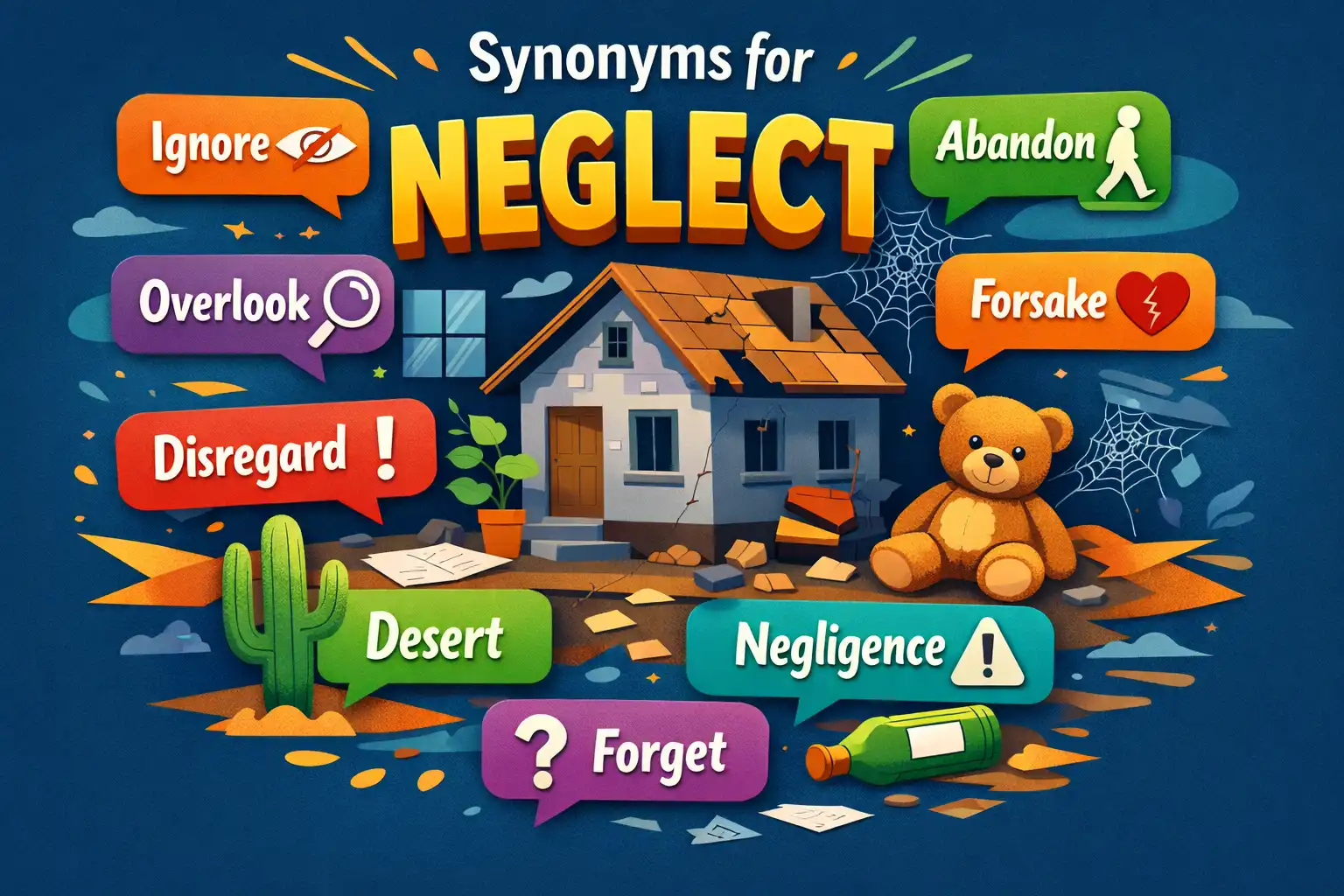
When you want to improve your writing, finding the right words is very important. Learning synonyms for neglect helps you speak and write much better. If you use the same words over and over, your readers will get bored, so knowing different synonyms for neglect gives you fresh choices. These synonyms for neglect let you express your thoughts with perfect clarity.
Imagine a small green plant on a window sill. At first, you water it every day. Then, you get too busy. You forget to water it for weeks. The leaves turn dry and brown. This sad story shows what it means to neglect something. To neglect means to fail to care for something or someone.
“Neglect is like a silent rust that eats away the strongest metal.”
Students can use these words to make their school essays much stronger. Bloggers and content writers can use them to keep readers happy and hooked. Even in daily conversations, changing your words keeps your speech interesting.
“To ignore the small things is to invite the collapse of the big things.”
Linguistic Profile of “Neglect”
Before we explore the list, let us look at how the word neglect is built, pronounced, and understood.
Connotative Meaning
While the denotative meaning of neglect is to fail to care for something, its connotations evoke feelings of sadness, isolation, decay, regret, and coldness. It suggests a slow, quiet failure to act.
Etymology
- Origin: Latin neglectus (meaning “undone” or “disregarded”)
- Latin Root: neglegere (made of nec- which means “not” + legere which means “to choose” or “to gather”)
Pronunciation & Properties
- US Pronunciation (IPA): /nɪˈɡlekt/
- UK Pronunciation (IPA): /nɪˈɡlekt/
- Syllables: neg-lect (2 syllables)
- Affixation Pattern: Root word neglect (comes from Latin prefix nec- + root legere).
Word Comparison Table
This comparison table shows how different words related to neglect fit into different situations.
| Keyword | Meaning | Usage Type | Context |
|---|---|---|---|
| Neglect | To fail to care for something. | Professional / Daily Use | Work, relationships, home |
| Ignore | To pay no attention on purpose. | Casual | Conversations, rules, messages |
| Overlook | To miss something by accident. | Professional / Casual | Errors, details, proofreading |
| Abandon | To leave something behind forever. | Emotional / Casual | Pets, empty houses, projects |
| Shirk | To avoid a duty or job because of laziness. | Professional | Office work, daily chores |
| Slight | To treat someone as if they are not important. | Emotional | Friendships, social events |
| Gloss over | To treat a serious mistake too lightly. | Professional | Reports, news, meetings |
“Care heals the world, while neglect tears it apart piece by piece.”
50 Powerful Synonyms for Neglect
1. Ignore
- Pronunciation: US: /ɪɡˈnɔːr/ | UK: /ɪɡˈnɔː/
- Meaning: To pay no attention to someone or something on purpose.
- Examples:
- Do not ignore my text messages.
- He chose to ignore the warning sign.
2. Disregard
- Pronunciation: US: /ˌdɪs.rɪˈɡɑːrd/ | UK: /ˌdɪs.rɪˈɡɑːd/
- Meaning: To treat something as if it does not matter.
- Examples:
- You can disregard that old email.
- She chose to disregard his advice.
3. Overlook
- Pronunciation: US: /ˌoʊ.vɚˈlʊk/ | UK: /ˌəʊ.vəˈlʊk/
- Meaning: To fail to notice or see something.
- Examples:
- Try not to overlook any spelling mistakes.
- We cannot overlook this big problem.
4. Abandon
- Pronunciation: US: /əˈbæn.dən/ | UK: /əˈbæn.dən/
- Meaning: To leave something or someone behind completely.
- Examples:
- Never abandon your pets when you move.
- The crew had to abandon the old ship.
5. Bypass
- Pronunciation: US: /ˈbaɪ.pæs/ | UK: /ˈbaɪ.pɑːs/
- Meaning: To go around something to avoid it.
- Examples:
- Let us bypass the busy city streets.
- He tried to bypass the standard rules.
6. Skip
- Pronunciation: US: /skɪp/ | UK: /skɪp/
- Meaning: To leave out a step or a part.
- Examples:
- I decided to skip breakfast today.
- Do not skip the introduction of the book.
7. Shirk
- Pronunciation: US: /ʃɝːk/ | UK: /ʃɜːk/
- Meaning: To avoid a duty or job because you are lazy.
- Examples:
- She will never shirk her home chores.
- Do not shirk your job duties.
8. Slight
- Pronunciation: US: /slaɪt/ | UK: /slaɪt/
- Meaning: To treat someone without respect.
- Examples:
- He did not mean to slight your family.
- She felt hurt by his cold slight.
9. Evade
- Pronunciation: US: /ɪˈveɪd/ | UK: /ɪˈveɪd/
- Meaning: To escape or avoid something by using tricks.
- Examples:
- The thief tried to evade the police.
- Do not evade my simple questions.
10. Omit
- Pronunciation: US: /oʊˈmɪt/ | UK: /əʊˈmɪt/
- Meaning: To leave something out of a list or plan.
- Examples:
- You can omit the last paragraph.
- Please do not omit his name.
11. Dismiss
- Pronunciation: US: /dɪˈsmɪs/ | UK: /dɪˈsmɪs/
- Meaning: To decide that something is not worth thinking about.
- Examples:
- Do not dismiss my plan so fast.
- The boss will dismiss those bad ideas.
12. Reject
- Pronunciation: US: /rɪˈdʒekt/ | UK: /rɪˈdʒekt/
- Meaning: To refuse to accept or believe something.
- Examples:
- The bank will reject the bad check.
- He had to reject the job offer.
13. Spurn
- Pronunciation: US: /spɝːn/ | UK: /spɜːn/
- Meaning: To reject something with anger or hate.
- Examples:
- She chose to spurn his cheap gift.
- They will spurn any bad advice.
14. Brush off
- Pronunciation: US: /brʌʃ ɑːf/ | UK: /brʌʃ ɒf/
- Meaning: To refuse to listen to someone in a rude way.
- Examples:
- He tried to brush off my worries.
- Do not brush off your best friend.
15. Cold-shoulder
- Pronunciation: US: /ˌkoʊldˈʃoʊl.dɚ/ | UK: /ˌkəʊldˈʃəʊl.də/
- Meaning: To behave in an unfriendly way to someone.
- Examples:
- Why did you cold-shoulder her at the party?
- He will cold-shoulder anyone who lies.
16. Forget
- Pronunciation: US: /fɚˈɡet/ | UK: /fəˈɡet/
- Meaning: To unable to remember a fact or deal.
- Examples:
- Do not forget to lock the door.
- I always forget where my keys are.
17. Slide past
- Pronunciation: US: /slaɪd pæst/ | UK: /slaɪd pɑːst/
- Meaning: To ignore a fact and move on quickly.
- Examples:
- We cannot let this error slide past us.
- She tried to slide past the main issue.
18. Sidestep
- Pronunciation: US: /ˈsaɪd.step/ | UK: /ˈsaɪd.step/
- Meaning: To avoid answering a difficult question.
- Examples:
- The leader tried to sidestep the problem.
- Do not sidestep your primary tasks.
19. Shelve
- Pronunciation: US: /ʃelv/ | UK: /ʃelv/
- Meaning: To put off a plan for a long time.
- Examples:
- We must shelve the project for now.
- The team decided to shelve the program.
20. Table
- Pronunciation: US: /ˈteɪ.bəl/ | UK: /ˈteɪ.bəl/
- Meaning: To postpone a discussion until a later date.
- Examples:
- Let us table this debate until tomorrow.
- They voted to table the new rule.
21. Pigeonhole
- Pronunciation: US: /ˈpɪdʒ.ən.hoʊl/ | UK: /ˈpɪdʒ.ən.həʊl/
- Meaning: To put a plan away and forget about it.
- Examples:
- Do not pigeonhole my creative report.
- They will pigeonhole the idea if we wait.
22. Overpass
- Pronunciation: US: /ˌoʊ.vɚˈpæs/ | UK: /ˌəʊ.vəˈpɑːs/
- Meaning: To pass over without giving attention.
- Examples:
- We must not overpass these small errors.
- He chose to overpass the minor details.
23. Slack off
- Pronunciation: US: /slæk ɑːf/ | UK: /slæk ɒf/
- Meaning: To do your work with less effort than before.
- Examples:
- Do not slack off during class time.
- The team began to slack off late today.
24. Gloss over
- Pronunciation: US: /ɡlɑːs ˈoʊ.vɚ/ | UK: /ɡlɒs ˈəʊ.və/
- Meaning: To treat a major fault as if it is tiny.
- Examples:
- Do not gloss over your mistakes.
- She tried to gloss over the bad news.
25. Lose track of
- Pronunciation: US: /luːz træk ʌv/ | UK: /luːz træk ɒv/
- Meaning: To fail to keep updated on something.
- Examples:
- I often lose track of the time.
- Do not lose track of your main goals.
26. Turn your back on
- Pronunciation: US: /tɜːrn jɔːr bæk ɑːn/ | UK: /tɜːn jɔː bæk ɒn/
- Meaning: To refuse to help someone in deep need.
- Examples:
- Never turn your back on your family.
- She will not turn her back on the poor.
27. Leave alone
- Pronunciation: US: /liːv əˈloʊn/ | UK: /liːv əˈləʊn/
- Meaning: To stop touching or bothering something.
- Examples:
- Please leave the cat alone now.
- You should leave that broken box alone.
28. Drop the ball
- Pronunciation: US: /drɑːp ðə bɔːl/ | UK: /drɒp ðə bɔːl/
- Meaning: To make a mistake by being careless.
- Examples:
- I cannot afford to drop the ball.
- He did drop the ball on that deal.
29. Undervalue
- Pronunciation: US: /ˌʌn.dɚˈvæl.juː/ | UK: /ˌʌn.dəˈvæl.juː/
- Meaning: To think that something is worth very little.
- Examples:
- Do not undervalue your own hard work.
- Many people undervalue a good sleep.
30. Depreciate
- Pronunciation: US: /dɪˈpriː.ʃi.eɪt/ | UK: /dɪˈpriː.ʃi.eɪt/
- Meaning: To lower the value or price of something.
- Examples:
- The car will depreciate over the years.
- Do not depreciate her artistic effort.
31. Starve
- Pronunciation: US: /stɑːrv/ | UK: /stɑːv/
- Meaning: To fail to feed a living thing.
- Examples:
- Do not starve the plants of water.
- The cold winter will starve the wild birds.
32. Ruin
- Pronunciation: US: /ˈruː.ɪn/ | UK: /ˈruː.ɪn/
- Meaning: To spoil or destroy something completely.
- Examples:
- Wet rain will ruin your new paper.
- Do not ruin the surprise party plan.
33. Waste
- Pronunciation: US: /weɪst/ | UK: /weɪst/
- Meaning: To use something in a bad or careless way.
- Examples:
- Please do not waste your fresh water.
- I do not want to waste my time.
34. Mislay
- Pronunciation: US: /ˌmɪsˈleɪ/ | UK: /ˌmɪsˈleɪ/
- Meaning: To put something down and forget where it is.
- Examples:
- I always mislay my reading glasses.
- Be careful not to mislay your train ticket.
35. Pass over
- Pronunciation: US: /pæs ˈoʊ.vɚ/ | UK: /pɑːs ˈəʊ.və/
- Meaning: To ignore someone when choosing for a job.
- Examples:
- They might pass over him for the promotion.
- Do not pass over this important step.
36. Scant
- Pronunciation: US: /skænt/ | UK: /skænt/
- Meaning: To provide a very small amount of care.
- Examples:
- He will scant his duties if unsupervised.
- Do not scant the milk in this recipe.
37. Skimp
- Pronunciation: US: /skɪmp/ | UK: /skɪmp/
- Meaning: To spend too little time or money on something.
- Examples:
- Do not skimp on the safety gear.
- They had to skimp on their lunch budget.
38. Disesteem
- Pronunciation: US: /ˌdɪs.ɪˈstiːm/ | UK: /ˌdɪs.ɪˈstiːm/
- Meaning: To regard someone with very low respect.
- Examples:
- He holds his lazy cousin in disesteem.
- We should not disesteem honest labor.
39. Scorn
- Pronunciation: US: /skɔːrn/ | UK: /skɔːn/
- Meaning: To show strong dislike for something.
- Examples:
- They will scorn any foolish rules.
- She chose to scorn his late apology.
40. Disdain
- Pronunciation: US: /dɪsˈdeɪn/ | UK: /dɪsˈdeɪn/
- Meaning: To look down on something as worthless.
- Examples:
- The proud king will disdain simple food.
- He showed disdain for our honest efforts.
41. Blink at
- Pronunciation: US: /blɪŋk æt/ | UK: /blɪŋk æt/
- Meaning: To close your eyes to a bad act on purpose.
- Examples:
- The guard did blink at the small crime.
- You cannot blink at these clear violations.
42. Shrug off
- Pronunciation: US: /ʃrʌɡ ɑːf/ | UK: /ʃrʌɡ ɒf/
- Meaning: To treat something as if it is not important.
- Examples:
- He will shrug off your critical remarks.
- She tried to shrug off her growing pain.
43. Let slide
- Pronunciation: US: /let slaɪd/ | UK: /let slaɪd/
- Meaning: To let a bad situation continue without fixing it.
- Examples:
- We cannot let our work standards slide.
- The teacher decided to let his lateness slide.
44. Slough off
- Pronunciation: US: /slʌf ɑːf/ | UK: /slʌf ɒf/
- Meaning: To get rid of something that is not needed.
- Examples:
- He will slough off his old habits.
- Try to slough off all your negative thoughts.
45. Flout
- Pronunciation: US: /flaʊt/ | UK: /flaʊt/
- Meaning: To break a rule with no fear or shame.
- Examples:
- Do not flout the school speed limit.
- They chose to flout the building laws.
46. Desert
- Pronunciation: US: /dɪˈzɝːt/ | UK: /dɪˈzɜːt/
- Meaning: To leave a person or a post in a bad way.
- Examples:
- A true friend will never desert you.
- He decided to desert his army post.
47. Forsake
- Pronunciation: US: /fɔːrˈseɪk/ | UK: /fɔːˈseɪk/
- Meaning: To give up a habit, a friend, or a belief.
- Examples:
- I will never forsake my life goals.
- Do not forsake your friends in need.
48. Disown
- Pronunciation: US: /dɪsˈoʊn/ | UK: /dɪsˈəʊn/
- Meaning: To say that you have no connection to someone.
- Examples:
- The father threatened to disown his bad son.
- She had to disown those incorrect views.
49. Discard
- Pronunciation: US: /dɪˈskɑːrd/ | UK: /dɪˈskɑːd/
- Meaning: To throw away something that is not useful.
- Examples:
- Discard any old papers on your desk.
- You can discard that cracked glass.
50. Cast aside
- Pronunciation: US: /kæst əˈsaɪd/ | UK: /kɑːst əˈsaɪd/
- Meaning: To throw something away because you do not want it.
- Examples:
- Never cast aside your childhood dreams.
- She chose to cast aside her old coat.
Antonyms of “Neglect”
If you want to know what the opposite of neglect is, here is a quick list of antonyms:
- Nurture: To feed and help something grow.
- Cherish: To love and protect something with care.
- Attend: To pay close attention and help.
- Maintain: To keep something in good condition.
- Protect: To keep something safe from harm.
Prototype Meaning and Categorization of “Neglect”
In linguistics, the prototype of neglect is the physical act of leaving a garden or house uncared for until it falls apart.
- Grammatical Category: Verb and Noun.
- Semantic Domain: Care, Attention, Abandonment, and Duty.
- Syntactic Patterns: Subject + Verb + Object (e.g., “They neglect the old house”).
Frequently Asked Questions
1. What is the most common synonym for neglect?
The most common synonym is ignore. It is used in daily talk to mean not paying attention to a person or thing.
2. Is “ignore” the exact same as “neglect”?
No. Ignore means you pay no attention on purpose. Neglect means you fail to care for something that is your duty to look after.
3. What is a professional word for neglect on a resume?
On a resume, avoid negative words. But if you want to talk about fixing a bad state, use terms like reformed, restored, or reorganized.
4. Can neglect be used as a noun?
Yes. Neglect can be a noun. For example: “The empty garden fell into a state of neglect.”
5. What is the emotional opposite of neglect?
The emotional opposite of neglect is cherish or nurture. These words mean to care for someone with deep love.
6. Why do writers use synonyms for neglect?
Writers use different words to keep their stories fresh. It prevents the reader from getting bored of the same terms.
Conclusion
Learning different synonyms for neglect is a great way to boost your writing, blogging, speaking, and everyday communication. Using a variety of words keeps your readers interested and makes your ideas clear. Instead of writing the word “neglect” three times in one paragraph, you can now use “disregard,” “shirk,” or “abandon.”
We encourage you to practice these new terms when you write your next email, work on a school essay, or chat with your friends. Substituting boring words with rich vocabulary is the fastest way to sound like a native English expert!
“Our words are seeds; when we ignore them, our minds become a wild forest.”
“Speak with precision, choose your words with care, and let no thought go unattended.”

Michael Turner is a published fiction writer and creative writing tutor with over a decade of experience helping writers find the words that make their stories breathe ( Biography ).