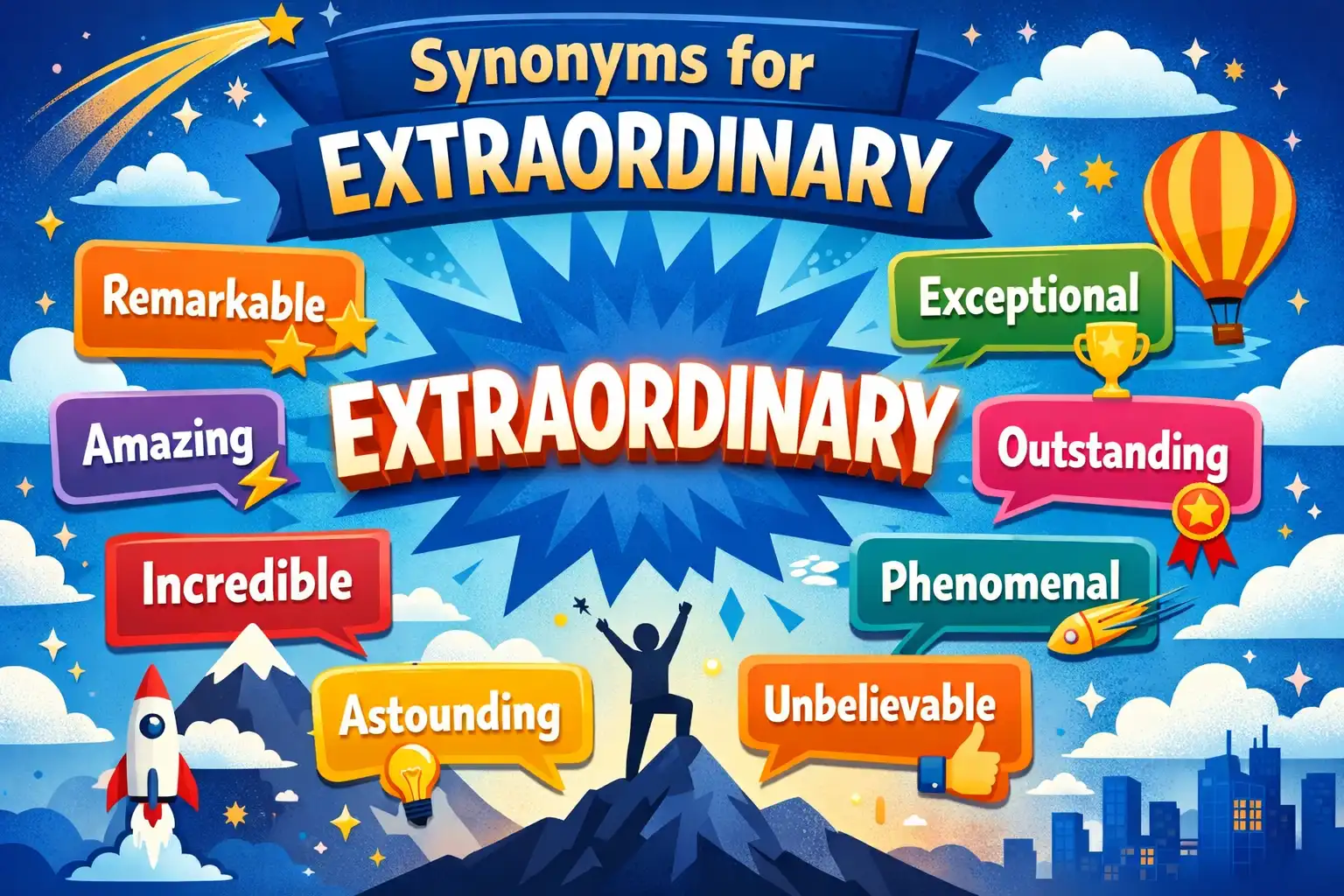
When you want to describe something that goes far beyond the average, finding the right synonyms of extraordinary can completely transform your writing. Exploring various synonyms of extraordinary helps you avoid repetitive language and express your thoughts with high precision. By learning different synonyms of extraordinary, you can easily capture your reader’s attention and paint a more vivid picture with your words.
Imagine standing on the edge of a high cliff as the sun begins to set. The sky bursts into a wild canvas of deep oranges, glowing pinks, and rich purples. You want to share this beautiful moment with a close friend, but the only word that comes to your mind is “good.” It feels frustrating when your vocabulary cannot match the beauty of real life. This is exactly where expanding your word choice becomes a true superpower.
In simple terms, “extraordinary” means something that is not normal because it is much better, greater, or more unusual than everyday things. It is simply the opposite of ordinary.
For students, using these fresh words makes academic essays stand out to teachers and examiners. Bloggers and content writers can use them to keep readers glued to their screens and improve search engine rankings. If you use English in your daily life, having these words ready makes your stories exciting, clear, and highly professional.
“The limits of my language mean the limits of my world.”
“Words have energy and power with the ability to help, to heal, to hinder, to hurt, to harm, and to humiliate.”
Linguistic Profile of “Extraordinary”
To truly master this word, it helps to understand its structure, origin, and how we speak it.
1. Connotative Meaning
While the literal definition means “out of the ordinary,” the word extraordinary almost always carries a highly positive, awe-inspiring connotation. It suggests something that is not just different, but wonderfully superior or deeply impressive.
2. Etymology of Extraordinary
- Latin Origin: Derived from the Latin word extraordinarius.
- Prefix: extra- (meaning “outside” or “beyond”).
- Root Word: ordinarius (meaning “regular,” “orderly,” or “customary”).
- Historical Usage: First recorded in English during the 15th century to describe things outside the common order.
3. Pronunciation
- US IPA: /ɪkˈstrɔːrdəneri/
- UK IPA: /ɪkˈstrɔːdɪnri/ or /ˌekstrəˈuːdɪnri/
4. Syllables
The word has 6 syllables: ex-traor-di-nar-y.
5. Affixation Pattern
- Prefix: extra- (beyond)
- Base Word: ordinary (common)
Quick Comparison of Key Synonyms
| Keyword | Meaning | Usage Type | Context |
|---|---|---|---|
| Extraordinary | Far beyond what is ordinary or expected | Professional & Formal | Workplace, academic papers, and grand stories |
| Phenomenal | Extremely outstanding or impressive | Emotional & Casual | Friendly chats, sports commentary, and achievements |
| Stellar | Exceptionally high quality; star-like | Professional & Casual | Performance reviews, school grades, and entertainment |
| Breathtaking | So beautiful or exciting that it takes your breath away | Emotional | Travel blogging, nature descriptions, and art |
| Unorthodox | Unusual and different from traditional ways | Professional | Business strategies, scientific research, and problem-solving |
| Mind-blowing | Highly surprising, shocking, or amazing | Casual | Movies, technology releases, and magic tricks |
50 Powerful Synonyms of Extraordinary
Here is a curated list of exactly 50 alternative words you can use to replace “extraordinary” in your writing and speech.
1. Exceptional
Pronunciation: US: /ɪkˈsepʃənəl/ | UK: /ɪkˈsepʃənl/
Meaning: Much better than the average.
Examples: * She has an exceptional talent for playing the piano.
- The restaurant is known for its exceptional customer service.
2. Outstanding
Pronunciation: US: /ˌaʊtˈstændɪŋ/ | UK: /ˌaʊtˈstændɪŋ/
Meaning: Extremely good and standing out from others.
Examples: * His outstanding performance won him the employee of the month award.
- We need to address the outstanding issues in our project.
3. Phenomenal
Pronunciation: US: /fəˈnɑːmɪnl/ | UK: /fəˈnɒmɪnl/
Meaning: Very remarkable or extraordinary.
Examples: * The new movie achieved phenomenal success in its first weekend.
- The young athlete has shown phenomenal growth this season.
4. Incredible
Pronunciation: US: /ɪnˈkredəbəl/ | UK: /ɪnˈkredəbl/
Meaning: Impossible or very difficult to believe.
Examples: * The view from the mountain top was absolutely incredible.
- It is incredible how fast kids grow up these days.
5. Amazing
Pronunciation: US: /əˈmeɪzɪŋ/ | UK: /əˈmeɪzɪŋ/
Meaning: Causing great surprise or wonder.
Examples: * You did an amazing job on this school project.
- The magician performed some amazing tricks.
6. Astonishing
Pronunciation: US: /əˈstɑːnɪʃɪŋ/ | UK: /əˈstɒnɪʃɪŋ/
Meaning: Very surprising and difficult to believe.
Examples: * She ran the marathon with astonishing speed.
- The museum has an astonishing collection of ancient art.
7. Marvelous
Pronunciation: US: /ˈmɑːrvələs/ | UK: /ˈmɑːvələs/
Meaning: Causing great wonder and joy.
Examples: * We had a marvelous time at the family reunion.
- The weather today is absolutely marvelous.
8. Fantastic
Pronunciation: US: /fænˈtæstɪk/ | UK: /fænˈtæstɪk/
Meaning: Extremely good, bright, or creative.
Examples: * That is a fantastic idea for a new business.
- He did a fantastic job cleaning the garage.
9. Wonderful
Pronunciation: US: /ˈwʌndərfəl/ | UK: /ˈwʌndəfl/
Meaning: Extremely good and pleasant.
Examples: * It is wonderful to see you again after so long.
- We watched a wonderful play at the local theater.
10. Stupendous
Pronunciation: US: /stuːˈpendəs/ | UK: /stjuːˈpendəs/
Meaning: So large or great that it amazes you.
Examples: * The team made a stupendous effort to win the championship game.
- She built a stupendous house overlooking the ocean.
11. Spectacular
Pronunciation: US: /spekˈtækjələr/ | UK: /spekˈtækjʊlə/
Meaning: Very exciting or grand to look at.
Examples: * The fireworks display last night was truly spectacular.
- They enjoyed a spectacular view of the valley.
12. Mind-blowing
Pronunciation: US: /ˈmaɪndˌbloʊɪŋ/ | UK: /ˈmaɪndˌbləʊɪŋ/
Meaning: Extremely exciting, surprising, or shocking.
Examples: * The plot twist at the end of the book was mind-blowing.
- He has a mind-blowing amount of knowledge about space.
13. Unbelievable
Pronunciation: US: /ˌʌnbɪˈliːvəbəl/ | UK: /ˌʌnbɪˈliːvəbl/
Meaning: Too good or unusual to be true.
Examples: * The food at the new cafe was of unbelievable quality.
- She won the race with unbelievable ease.
14. Miraculous
Pronunciation: US: /mɪˈrækjələs/ | UK: /mɪˈrækjʊləs/
Meaning: Like a miracle and completely unexpected.
Examples: * The patient made a miraculous recovery from the illness.
- He escaped the car crash with only miraculous scratches.
15. Singular
Pronunciation: US: /ˈsɪŋɡjələr/ | UK: /ˈsɪŋɡjʊlə/
Meaning: Very unusual, unique, or special.
Examples: * She has a singular focus on achieving her dreams.
- The artist has a singular style that cannot be copied.
16. Unique
Pronunciation: US: /juːˈniːk/ | UK: /juːˈniːk/
Meaning: Being the only one of its kind.
Examples: * Every snowflake has a unique pattern.
- He has a unique voice that is easy to recognize.
17. Rare
Pronunciation: US: /rer/ | UK: /reə/
Meaning: Not happening or found very often.
Examples: * It is rare to see him without his favorite book.
- This museum holds a very rare collection of stamps.
18. Unprecedented
Pronunciation: US: /ʌnˈpresɪdentɪd/ | UK: /ʌnˈpresɪdentɪd/
Meaning: Never having happened or existed before.
Examples: * The company experienced unprecedented growth this year.
- The city received an unprecedented amount of rain.
19. Uncommon
Pronunciation: US: /ʌnˈkɑːmən/ | UK: /ʌnˈkɒmən/
Meaning: Not seen or happening very often.
Examples: * It is uncommon to find wild roses in this dry area.
- He showed uncommon bravery during the rescue.
20. Sensational
Pronunciation: US: /senˈseɪʃənəl/ | UK: /senˈseɪʃənl/
Meaning: Causing great public excitement or interest.
Examples: * The singer gave a sensational performance last night.
- She wrote a sensational article that went viral online.
21. Prodigious
Pronunciation: US: /prəˈdɪdʒəs/ | UK: /prəˈdɪdʒəs/
Meaning: Extremely great in size, force, or quality.
Examples: * The young scholar has a prodigious memory for history dates.
- He consumed a prodigious amount of food after the hike.
22. Astounding
Pronunciation: US: /əˈstaʊndɪŋ/ | UK: /əˈstaʊndɪŋ/
Meaning: So surprising that it leaves you silent.
Examples: * The news of their sudden wedding was astounding.
- The cost of repairs was simply astounding.
23. Awesome
Pronunciation: US: /ˈɔːsəm/ | UK: /ˈɔːsəm/
Meaning: Causing feelings of great admiration or respect.
Examples: * The rocket launch was an awesome sight to watch.
- That is an awesome jacket you are wearing today.
24. Magnificent
Pronunciation: US: /mæɡˈnɪfɪsənt/ | UK: /mæɡˈnɪfɪsnt/
Meaning: Extremely beautiful, elegant, or impressive.
Examples: * The king lived in a magnificent palace on the hill.
- We saw a magnificent eagle fly over the lake.
“True ease in writing comes from art, not chance, as those move easiest who have learn’d to dance.”
25. Splendid
Pronunciation: US: /ˈsplendɪd/ | UK: /ˈsplendɪd/
Meaning: Excellent, beautiful, and very impressive.
Examples: * The garden looks splendid with all the fresh flowers.
- He made a splendid speech at the wedding dinner.
26. Superb
Pronunciation: US: /suːˈpɜːrb/ | UK: /suːˈpɜːb/
Meaning: Of the highest quality or excellence.
Examples: * The actor did a superb job portraying the hero.
- This kitchen serves superb food at a low price.
27. Sublime
Pronunciation: US: /səˈblaɪm/ | UK: /səˈblaɪm/
Meaning: So beautiful or good that it elevates your mind.
Examples: * The music created a sublime atmosphere in the room.
- The apple pie has a sublime taste.
28. Breathtaking
Pronunciation: US: /ˈbreθteɪkɪŋ/ | UK: /ˈbreθteɪkɪŋ/
Meaning: So surprising or beautiful that it makes you gasp.
Examples: * The view of the mountains at dawn was breathtaking.
- She wore a breathtaking dress to the annual gala.
29. Striking
Pronunciation: US: /ˈstraɪkɪŋ/ | UK: /ˈstraɪkɪŋ/
Meaning: Attracting attention because of being unusual or beautiful.
Examples: * There is a striking similarity between the two brothers.
- The dark painting created a striking contrast against the white wall.
30. Noteworthy
Pronunciation: US: /ˈnoʊtwɜːrði/ | UK: /ˈnəʊtwɜːði/
Meaning: Deserving to be noticed or remembered.
Examples: * There are several noteworthy events happening this week.
- His contribution to the charity was highly noteworthy.
31. Memorable
Pronunciation: US: /ˈmemərəbəl/ | UK: /ˈmemərəbl/
Meaning: Easy to remember because of being special.
Examples: * Our summer trip to the beach was highly memorable.
- He gave a memorable performance in his first school play.
32. Unparalleled
Pronunciation: US: /ʌnˈpærəleld/ | UK: /ʌnˈpærəleld/
Meaning: Having no equal or match.
Examples: * The luxury hotel offers unparalleled levels of comfort.
- She has an unparalleled record of success in sports.
33. Matchless
Pronunciation: US: /ˈmætʃləs/ | UK: /ˈmætʃləs/
Meaning: Better than all others of the same kind.
Examples: * The museum holds the matchless beauty of ancient glass art.
- His skills as a master chef are matchless.
34. Peerless
Pronunciation: US: /ˈpɪrləs/ | UK: /ˈpɪələs/
Meaning: Having no equal; better than any other.
Examples: * The poet was celebrated for his peerless writing style.
- She showed peerless determination during the tournament.
35. Unequalled
Pronunciation: US: /ʌnˈiːkwəld/ | UK: /ʌnˈiːkwəld/
Meaning: Better than any other person or thing.
Examples: * The company boasts an unequalled reputation for safety.
- His speed on the track remains unequalled to this day.
36. Nonpareil
Pronunciation: US: /ˌnɑːnpəˈrel/ | UK: /ˌnɒnpəˈreɪl/
Meaning: Better than any other, with no equal.
Examples: * He is a nonpareil storyteller who keeps everyone listening.
- The designer is considered a nonpareil talent in fashion.
37. Out-of-this-world
Pronunciation: US: /ˌaʊt əv ðɪs ˈwɜːrld/ | UK: /ˌaʊt ɒv ðɪs ˈwɜːld/
Meaning: Extremely good, beautiful, or impressive.
Examples: * The chocolate cake they serve here is out-of-this-world.
- She has an out-of-this-world imagination when writing sci-fi.
38. Stellar
Pronunciation: US: /ˈstelər/ | UK: /ˈstelə/
Meaning: Exceptionally good or outstanding.
Examples: * The young programmer did a stellar job on the app.
- The actor has a stellar reputation in the film industry.
39. First-class
Pronunciation: US: /ˌfɜːrst ˈklæs/ | UK: /ˌfɜːst ˈklɑːs/
Meaning: Of the best quality or highest standard.
Examples: * The hotel provides first-class service to all its guests.
- She wrote a first-class essay on global trade.
40. Supreme
Pronunciation: US: /suːˈpriːm/ | UK: /suːˈpriːm/
Meaning: Highest in rank, quality, or importance.
Examples: * It requires supreme effort to climb Mount Everest.
- The court holds the supreme authority over legal matters.
41. Flawless
Pronunciation: US: /ˈflɔːləs/ | UK: /ˈflɔːləs/
Meaning: Without any mistakes, marks, or weaknesses.
Examples: * She delivered a flawless speech in front of the crowd.
- The diamond has a flawless cut and shine.
42. Exemplary
Pronunciation: US: /ɪɡˈzempləri/ | UK: /ɪɡˈzempləri/
Meaning: Serving as a perfect model or example.
Examples: * The student showed exemplary behavior in the classroom.
- His dedication to community service is exemplary.
43. Mind-boggling
Pronunciation: US: /ˈmaɪndˌbɑːɡəlɪŋ/ | UK: /ˈmaɪndˌbɒɡəlɪŋ/
Meaning: Extremely surprising or difficult to understand.
Examples: * The sheer size of the universe is mind-boggling.
- They spent a mind-boggling amount of money on the party.
44. Great
Pronunciation: US: /ɡreɪt/ | UK: /ɡreɪt/
Meaning: Large in size or much better than average.
Examples: * We had a great time playing games in the park.
- He is a great leader who listens to his team.
45. Special
Pronunciation: US: /ˈspeʃəl/ | UK: /ˈspeʃl/
Meaning: Better or more important than normal things.
Examples: * Today is a very special day because it is my birthday.
- She has a special place in her heart for animals.
46. Curious
Pronunciation: US: /ˈkjʊriəs/ | UK: /ˈkjʊəriəs/
Meaning: Strange, unusual, or unexpected.
Examples: * There was a curious sound coming from the old closet.
- It is curious that she left without saying goodbye.
47. Peculiar
Pronunciation: US: /pɪˈkjuːljər/ | UK: /pɪˈkjuːliə/
Meaning: Strange, odd, or unusual in an interesting way.
Examples: * The fruit has a peculiar smell but tastes very sweet.
- He has a peculiar habit of humming while he works.
48. Unorthodox
Pronunciation: US: /ʌnˈɔːrθədɑːks/ | UK: /ʌnˈɔːθədɒks/
Meaning: Different from what is usually done or accepted.
Examples: * The coach used an unorthodox strategy to win the match.
- Her painting style is highly unorthodox but beautiful.
49. Offbeat
Pronunciation: US: /ˌɔːfˈbiːt/ | UK: /ˌɒfˈbiːt/
Meaning: Unusual, unconventional, or quirky.
Examples: * The store sells offbeat gifts that you cannot find elsewhere.
- I really enjoy his offbeat sense of humor.
50. Mind-stretching
Pronunciation: US: /ˈmaɪndˌstretʃɪŋ/ | UK: /ˈmaɪndˌstretʃɪŋ/
Meaning: Making you think deeply or in new creative ways.
Examples: * Reading this science book is a mind-stretching experience.
- They had a mind-stretching discussion about the future of AI.
Antonyms of Extraordinary
If you want to describe the exact opposite of extraordinary, you can use these simple antonyms:
- Ordinary: Usual, normal, or average.
- Common: Found or happening very often.
- Typical: Showing the characteristics expected of a specific group.
- Run-of-the-mill: Very ordinary and not exciting.
- Mediocre: Average or low in quality; not very good.
- Unremarkable: Not interesting or special enough to be noticed.
Prototype Meaning and Categorization
At its core, extraordinary represents a major departure from established norms. We can categorize this word under three main prototype classes:
- The Superiority Prototype (Quality): When something is vastly superior to others. (e.g., exceptional, stellar, superb)
- The Wonder Prototype (Emotion): When something causes shock, surprise, or joy. (e.g., breathtaking, astounding, mind-blowing)
- The Unusual Prototype (Uniqueness): When something is rare or strange. (e.g., peculiar, singular, unorthodox)
Frequently Asked Questions (FAQs)
1. What is the most common synonym of extraordinary?
The most common and widely understood synonym is exceptional. It is perfect to use in both formal and casual situations when someone or something performs better than average.
2. Can “extraordinary” be used to describe bad things?
Yes, although it is usually positive. In a literal sense, it means “highly unusual.” For example, you can say, “The company faced extraordinary challenges this year,” which means the challenges were far larger and more difficult than normal.
3. How do you pronounce “extraordinary” in British English?
In British English, the word is pronounced as /ɪkˈstrɔːdɪnri/. The “a” and “o” in the middle are compressed, making it sound shorter than the US pronunciation.
4. What is the difference between “extraordinary” and “unbelievable”?
“Extraordinary” implies high quality or something unusual but completely real. “Unbelievable” is more dramatic and suggests that something is so shocking it is hard for the mind to accept as truth.
5. Why should writers avoid using the word “very extraordinary”?
“Extraordinary” is already an extreme (non-gradable) adjective. Adding “very” is redundant because the word itself already means “extremely ordinary-defying.” Instead of “very extraordinary,” simply use words like unparalleled or stellar.
Conclusion
Expanding your command over the synonyms of extraordinary is one of the fastest ways to take your English communication skills to the next level. By choosing the perfect word for your specific situation, you can write articles that capture readers, construct essays that impress your teachers, and tell stories that captivate your friends.
When you replace basic words with rich, descriptive alternatives, you immediately sound more professional and confident. Try practicing these words by including them in your daily emails, academic essays, and casual conversations. Soon, you will find your voice becoming more colorful and impactful.
“By words the mind is excited and the spirit is alleviated.”
“A different language is a different vision of life.”

Michael Turner is a published fiction writer and creative writing tutor with over a decade of experience helping writers find the words that make their stories breathe ( Biography ).