Micro Introduction:
The word region use to describe an area or part of a larger space, whether it’s geographical, political, or social. Learning synonyms for region can help make your speech and writing clearer, richer, and more diverse. This guide covers a variety of alternatives based on context and formality levels.
Understand the Importance of Synonyms for Region in 2026
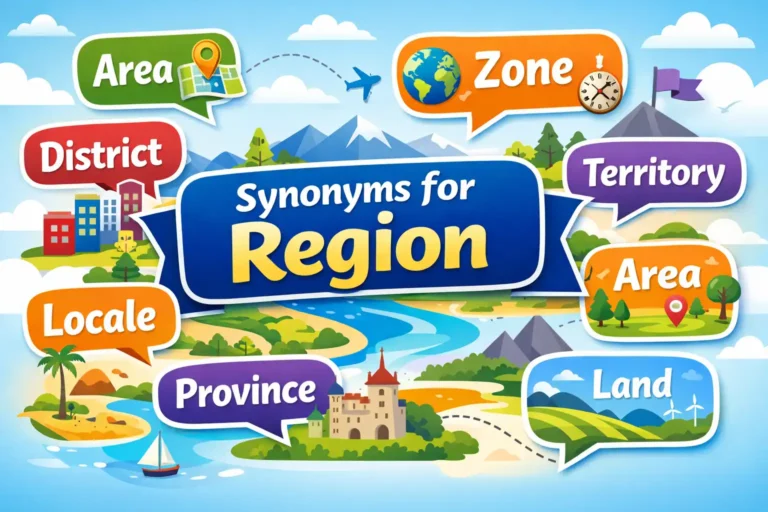
Region refers to an area or space, and there are many synonyms to describe it depending on the context. Below is a list of common synonyms:
- Area
- Zone
- Territory
- District
- Sector
- Locale
- Division
- Province
- Landscape
Meaning of Region:
In simple terms, a region is an area that shares common characteristics or is part of a larger place. It can refer to a specific geographical area, such as a country or part of a city, or even social or economic zones.
Example Sentence:
The region around the lake is known for its beautiful scenery.
Synonyms for Region: Physical, Social, and Administrative Contexts
Synonyms for region can be grouped into categories based on context and meaning. Here are some types:
- Physical Geography: These synonyms describe actual geographical spaces or areas.
- Social or Economic Areas: These synonyms refer to areas defined by social or economic factors.
- Administrative Divisions: These synonyms are used in formal or political contexts, like regions within countries or states.
Synonyms Table:
| Word | Simple Meaning | Example Sentence |
| Area | A part of space or land | The area around the park is filled with trees. |
| Zone | A specific region or section of land | They live in a residential zone of the city. |
| Territory | A region controlled or owned by someone | The territory of the tribe extends over several miles. |
| District | A defined geographical region | The district has excellent schools and parks. |
| Sector | A part of a larger organization or area | This sector of the economy is growing rapidly. |
| Locale | A specific location or place | The locale for the wedding was a beautiful beach. |
| Division | A part of a larger group or structure | The company expanded to a new division in Asia. |
| Province | A large administrative division | They moved to a province in the northern part of the country. |
| Landscape | A large visible area of land | The landscape of the countryside is very peaceful. |
Master Synonyms List (Grouped by Level)
Beginner / Simple:
- Area: A region or space.
Example Sentence: The area is known for its historical landmarks.
Formality: Informal. - Zone: A specific region with defined boundaries.
Example Sentence: The shopping zone is busy all week.
Formality: Informal. - Sector: A part of a larger area, often in business or society.
Example Sentence: The technology sector is booming.
Formality: Informal.
Intermediate:
- District: A region of a city or country.
Example Sentence: She lives in a quiet district near the park.
Formality: Neutral. - Locale: A particular place, often used in storytelling or location-based contexts.
Example Sentence: The event took place in a beautiful locale by the lake.
Formality: Neutral.
Advanced / Formal:
- Province: A region or division of a country, especially in formal contexts.
Example Sentence: The province is known for its rich cultural heritage.
Formality: Formal. - Territory: A defined area, especially one controlled by a particular entity.
Example Sentence: The territory was contested by neighboring nations.
Formality: Formal. - Landscape: A large area of land, often in terms of visual appearance or geography.
Example Sentence: The landscape was stunning, with mountains and valleys.
Formality: Formal.
Formal vs Informal Synonyms
- Formal Synonyms: Words like province, territory, and landscape are often used in academic, legal, or political contexts. These terms are more formal and should be used when speaking or writing in professional settings.
- Informal Synonyms: Words like area, zone, and sector are used in casual conversations, blogs, and everyday speech. These are more accessible and appropriate for less formal contexts.
Real-Life Usage Examples
- Conversation:
“The area around here is great for hiking.” - Academic Writing:
“This province is rich in historical landmarks.” - Business Writing:
“We are expanding into a new sector of the market.” - Blogging:
“This zone known for its vibrant street art scene.” - Emotional Expression:
“The territory we fought over was full of memories.”
Similar Words Comparison:
Region vs Area
Region often refers to a larger, more defined space, while area can refer to both large and small spaces.
Example:
The region around the mountain rugged.
The area near the park is busy.
Region vs District
A region can be a broad geographic area, whereas a district is often a smaller, more specifically defined part of a city or state.
Example:
The region has a tropical climate.
The district is known for its excellent schools.
Example Sentences:
- The region is famous for its beautiful coastline.
- We visited the northern territory during our trip.
- The zone around the office is always full of traffic.
- This district has some of the best restaurants.
- The sector is experiencing rapid growth.
- The province has a rich history that dates back centuries.
- The landscape changes dramatically as you travel south.
- He moved to a new district for work.
- The area near the river is very peaceful.
- Their territory expanded as the empire grew.
- The locale was perfect for our vacation photos.
- The region is home to many endangered species.
- The province has its own local government.
- The sector of renewable energy is expanding rapidly.
Common Mistakes
- Using region for specific, smaller areas: Sometimes, learners may use region when referring to something very specific like a neighborhood or district. It’s better to use terms like district or area for smaller spaces.
- Mixing formal and informal synonyms: In business writing or academic contexts, be careful not to use casual terms like zone or area. Stick with territory or province for a more professional tone.
- Overusing synonyms: Using too many different synonyms can make your writing confusing. Choose one synonym that fits the context and use it consistently.
- Incorrect pluralization: Avoid making territories or provinces plural unnecessarily when referring to general concepts. Stick with the singular form when speaking about a concept or a large geographical area.
Tips / Best Practices
- Tone: Always choose a synonym based on the tone you want to set. If you’re writing formally, choose territory or province. For casual writing, area or zone works better.
- Context: If it’s about a broader space, region could be more appropriate.
- Formality: Use more formal synonyms in professional settings and informal ones in everyday conversation.
Avoid overusing any synonym, as this can make your writing sound repetitive and awkward.
When NOT to Use Region
- In casual conversation: Use more informal words like area or zone.
- For very specific locations: District or sector is better suited for small, specific areas.
Opposite Words (Antonyms)
- Center
- Whole
- Inside
FAQs Section
What does region mean?
Region refers to a large, defined area, often based on geography, politics, or culture.
Is region formal or informal?
Region can be formal or informal, depending on context.
How can I use region in conversation?
You can say, “I love this region for its amazing food and culture.”
What is the best synonym for region?
It depends on context, but area is a great general alternative.
Can region be replaced with district?
Yes, if you are referring to a smaller, specific area, district can be used.
Conclusion:
Learning synonyms for region can improve your writing and speaking by providing clarity and variety. By choosing the right synonym for your context, you can enhance communication and sound more natural.
Try using 3 new synonyms in your next sentence!

Michael Turner creates simple synonym guides that help readers expand their vocabulary and choose the right word for the right context.