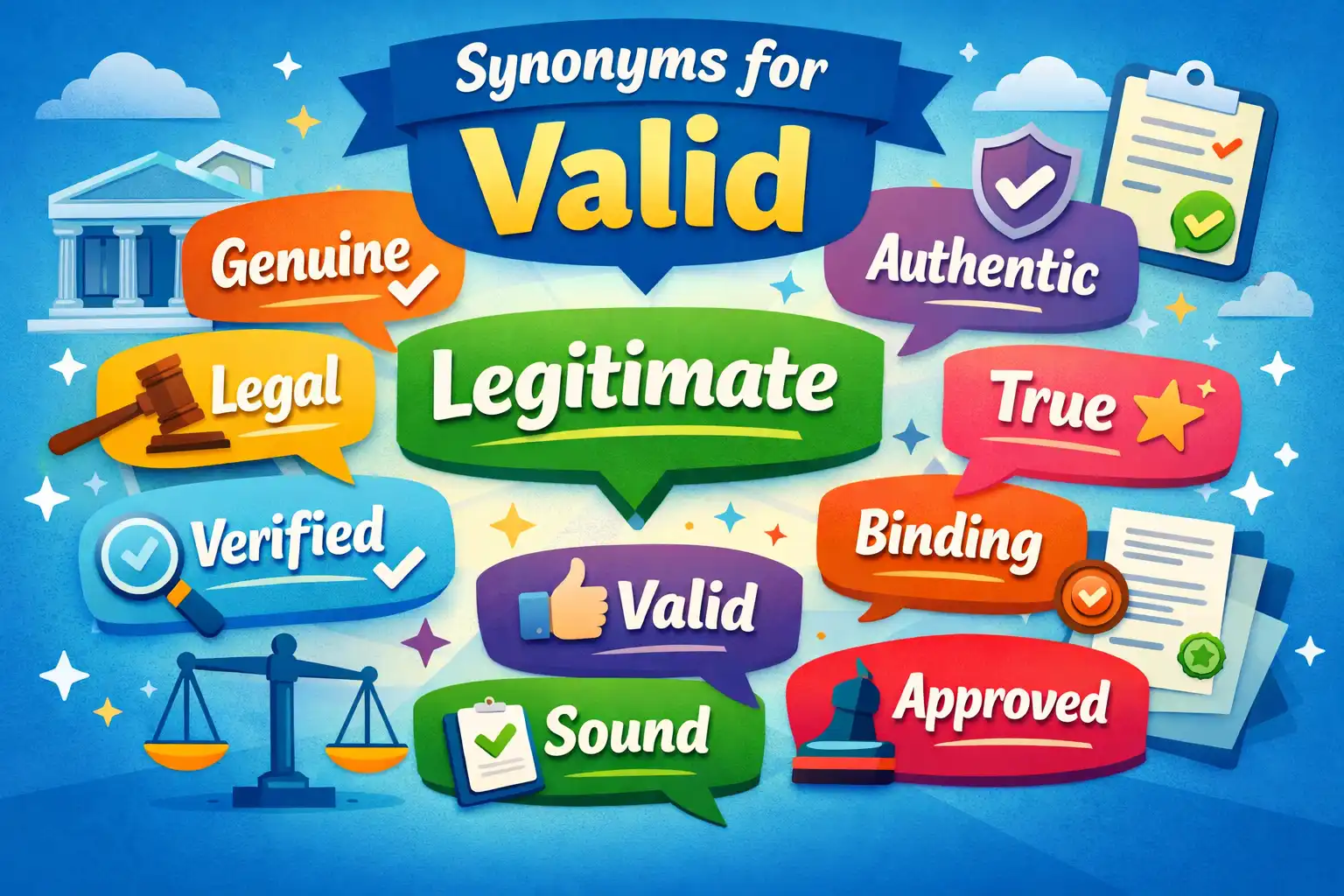
When you want to show that an idea is true, finding the best synonyms of valid can make your writing much stronger. Using clear synonyms of valid helps you explain your points clearly. If you know these synonyms of valid, you can prove your facts in school or at work without repeating yourself.
Imagine a judge looking at a signed contract. The judge nods and smiles because the paper is official, real, and correct. This paper is valid. In simple English, something is valid if it is true, follows the rules, and is based on solid facts. It works the right way.
“A valid point shines like a bright light in a dark room.”
“Choose your words with care to make your truth stand strong.”
When you speak or write, you need people to trust you. If you use the same words over and over, your ideas can look weak. Using fresh words makes your work sound professional and smart.
This special word list helps many people:
- Students: Write strong essays and get better grades on your papers.
- Bloggers: Make your posts easy to read and keep your readers happy.
- Content Writers: Rank higher on search engines with clear, strong terms.
- Daily English Users: Speak with confidence and make your points clear.
Linguistic Profile of Valid
To understand this word deeply, we can look at its history, sounds, and structure.
- Connotative Meaning: It represents truth, legality, sound logic, safety, and correctness that anyone can trust.
- Etymology:
- Root: Latin valere, which means “to be strong” or “to have worth.”
- 16th Century: Passed into French as valide, then entered English to describe strong arguments or legal papers.
- Pronunciation (US & UK): US: /ˈvæl.ɪd/ | UK: /ˈvæl.ɪd/
- Syllables: Two syllables (val-id).
- Affixation Pattern: Adjective. It can take the prefix in- to form “invalid,” the suffix -ity to form “validity,” or the suffix -ly to form “validly.”
Comparison of Key Synonyms
| Keyword | Meaning | Usage Type | Context |
|---|---|---|---|
| Valid | True, correct, and matching the rules | Professional / Formal | Laws, tests, facts, passes |
| Accurate | Having no mistakes at all | Technical / Formal | Math, science, news, clock |
| Legal | Allowed by the law of the land | Professional | Contracts, court, driving, age |
| Legitimate | Fair, real, and accepted by everyone | Formal / Daily | Business, family, excuses |
| Logical | Making sense step by step | Formal | Math, plans, smart choices |
| Sound | Strong, safe, and free from damage | Daily / Formal | Advice, buildings, arguments |
| Authentic | Real and not a fake copy | Casual / Emotional | Food, art, feelings, old coins |
“When your facts are solid, your words become your greatest shield.”
50 Synonyms of Valid
1. Accurate
Pronunciation: US: /ˈæk.jɚ.ət/ | UK: /ˈæk.jər.ət/
Meaning: The information has no mistakes and is completely correct.
Examples:
- The clock shows the accurate time.
- She gave an accurate report of the accident.
2. Legal
Pronunciation: US: /ˈliː.ɡəl/ | UK: /ˈliː.ɡəl/
Meaning: It is allowed by the official rules of the government.
Examples:
- You must have a legal permit to fish here.
- Driving past the speed limit is not legal.
3. Legitimate
Pronunciation: US: /ləˈdʒɪt̬.ə.mət/ | UK: /ləˈdʒɪt.ɪ.mət/
Meaning: It is real, fair, and accepted as correct by law or custom.
Examples:
- He has a legitimate reason to be late today.
- The shop is a legitimate business in our town.
4. Logical
Pronunciation: US: /ˈlɑː.dʒɪ.kəl/ | UK: /ˈlɒdʒ.ɪ.kəl/
Meaning: It makes good sense and follows clear thinking step by step.
Examples:
- Her plan was very logical and easy to follow.
- It is logical to wear a coat when it rains.
5. Sound
Pronunciation: US: /saʊnd/ | UK: /saʊnd/
Meaning: It is strong, safe, and built on good facts.
Examples:
- The doctor gave me some sound advice today.
- This old house still has a sound structure.
6. Authentic
Pronunciation: US: /ɑːˈθen.t̬ɪk/ | UK: /ɔːˈθen.tɪk/
Meaning: It is the real thing and not a fake copy.
Examples:
- We ate authentic Italian food at the new cafe.
- The museum has an authentic sword from the past.
7. Genuine
Pronunciation: US: /ˈdʒen.ju.ɪn/ | UK: /ˈdʒen.ju.ɪn/
Meaning: It is real and made of what it claims to be.
Examples:
- She wore a ring made of genuine gold.
- He showed genuine joy when he saw his friend.
8. True
Pronunciation: US: /truː/ | UK: /truː/
Meaning: It matches the real facts and is not a lie.
Examples:
- It is true that water freezes when cold.
- He told a true story about his wild trip.
9. Correct
Pronunciation: US: /kəˈrekt/ | UK: /kəˈrekt/
Meaning: It is right and has no errors.
Examples:
- She got the correct answer on her math test.
- Please check if this spelling is correct.
10. Official
Pronunciation: US: /əˈfɪʃ.əl/ | UK: /əˈfɪʃ.əl/
Meaning: It comes from a person in power or a government group.
Examples:
- We received an official letter from the school.
- The game started after the official whistle blew.
11. Binding
Pronunciation: US: /ˈbaɪn.dɪŋ/ | UK: /ˈbaɪn.dɪŋ/
Meaning: You must obey it because of a law or a promise.
Examples:
- The two business partners signed a binding contract.
- Her promise to help was binding in their friendship.
12. Reasonable
Pronunciation: US: /ˈriː.zən.ə.bəl/ | UK: /ˈriː.zən.ə.bəl/
Meaning: It is fair, smart, and makes sense to a normal person.
Examples:
- The price of the big red apple was reasonable.
- He gave a reasonable answer to the hard question.
13. Solid
Pronunciation: US: /ˈsɑː.lɪd/ | UK: /ˈsɒl.ɪd/
Meaning: It is strong and cannot be easily broken or argued against.
Examples:
- She had solid proof that she did not break the glass.
- The desk is made of solid oak wood.
14. Just
Pronunciation: US: /dʒʌst/ | UK: /dʒʌst/
Meaning: It is fair, right, and good for everyone.
Examples:
- The king made a just law to help poor people.
- He received a just reward for his hard work.
15. Fair
Pronunciation: US: /fer/ | UK: /feər/
Meaning: It treats everyone the same way and follows the rules.
Examples:
- It was a fair game and no one cheated.
- They shared the cake in a fair way.
16. Proper
Pronunciation: US: /ˈprɑː.pɚ/ | UK: /ˈprɒp.ər/
Meaning: It is the correct way to do something in a situation.
Examples:
- You must use the proper fork at dinner.
- He did not have the proper tools to fix the sink.
17. Good
Pronunciation: US: /ɡʊd/ | UK: /ɡʊd/
Meaning: It is high quality, useful, or still works well.
Examples:
- This ticket is still good for one more ride.
- She did a good job on her art project.
18. Acceptable
Pronunciation: US: /əkˈsep.tə.bəl/ | UK: /əkˈsep.tə.bəl/
Meaning: It is good enough to be taken or approved.
Examples:
- His work was acceptable, so he passed the class.
- Is this casual shirt acceptable for the dinner?
19. Usable
Pronunciation: US: /ˈjuː.zə.bəl/ | UK: /ˈjuː.zə.bəl/
Meaning: It is in a state that can be used right now.
Examples:
- The old computer is slow but still usable.
- Clean water is usable for cooking our food.
20. Rational
Pronunciation: US: /ˈræʃ.ən.əl/ | UK: /ˈræʃ.ən.əl/
Meaning: It is based on clear thoughts rather than wild feelings.
Examples:
- She made a rational choice to save her money.
- We need a rational plan to solve this big mess.
21. Strong
Pronunciation: US: /strɑːŋ/ | UK: /strɒŋ/
Meaning: It has a lot of power and is hard to fight.
Examples:
- He has a strong case against the store.
- The wind was very strong during the storm.
22. Fit
Pronunciation: US: /fɪt/ | UK: /fɪt/
Meaning: It is suitable or good enough for a job or use.
Examples:
- This water is not fit to drink.
- He is fit to lead the team this year.
23. Approved
Pronunciation: US: /əˈpruːvd/ | UK: /əˈpruːvd/
Meaning: It has been accepted as good by someone in charge.
Examples:
- The boss signed the approved plan today.
- Use only approved books for your class report.
24. Real
Pronunciation: US: /riːl/ | UK: /rɪəl/
Meaning: It exists in the world and is not made up.
Examples:
- The dog in the picture is a real dog.
- I want to see the real castle on the hill.
25. Actual
Pronunciation: US: /ˈæk.tʃu.əl/ | UK: /ˈæk.tʃu.əl/
Meaning: It is the exact thing that happened or exists.
Examples:
- What was the actual cost of the new shoe?
- The actual story was much longer than his note.
26. Honest
Pronunciation: US: /ˈɑː.nɪst/ | UK: /ˈɒn.ɪst/
Meaning: It is truthful, direct, and free from tricks.
Examples:
- He gave an honest answer when asked about the cup.
- She makes an honest living by painting houses.
27. Right
Pronunciation: US: /raɪt/ | UK: /raɪt/
Meaning: It is correct and matches what should happen.
Examples:
- You made the right turn at the sign.
- It is not right to take things without asking.
28. Credible
Pronunciation: US: /ˈkred.ə.bəl/ | UK: /ˈkred.ə.bəl/
Meaning: It is easy to believe because it makes sense.
Examples:
- The police found a credible witness to the event.
- That website is not a credible source of news.
29. Reliable
Pronunciation: US: /rɪˈlaɪ.ə.bəl/ | UK: /rɪˈlaɪ.ə.bəl/
Meaning: You can trust it to work well every time.
Examples:
- My old blue car is very reliable in the snow.
- He is a reliable boy who always helps his dad.
30. Trustworthy
Pronunciation: US: /ˈtrʌstˌwɜr.ði/ | UK: /ˈtrʌstˌwɜː.ði/
Meaning: Honest and reliable so that you can trust them.
Examples:
- The bank has a trustworthy staff to guard the gold.
- She is a trustworthy friend who keeps secrets.
31. Proven
Pronunciation: US: /ˈpruː.vən/ | UK: /ˈpruː.vən/
Meaning: It has been tested and shown to be true.
Examples:
- This is a proven method to grow big tomatoes.
- He has a proven skill in playing the piano.
32. Effective
Pronunciation: US: /əˈfek.tɪv/ | UK: /ɪˈfek.tɪv/
Meaning: It works well and gives you the result you want.
Examples:
- This warm tea is effective for a bad cough.
- She found an effective way to clean the rug.
33. Current
Pronunciation: US: /ˈkɝː.ənt/ | UK: /ˈkʌr.ənt/
Meaning: It is happening right now and is not old.
Examples:
- Your current pass lets you enter the park today.
- What is the current news about the big game?
34. Active
Pronunciation: US: /ˈæk.tɪv/ | UK: /ˈæk.tɪv/
Meaning: It is in use and working at this very moment.
Examples:
- He still has an active card for the gym.
- The volcano is active and might throw smoke.
35. Authorized
Pronunciation: US: /ˈɑː.θə.raɪzd/ | UK: /ˈɔː.θə.raɪzd/
Meaning: You have official permission to do or use it.
Examples:
- Only authorized people can go past this gate.
- He is an authorized dealer of these cool cars.
36. Certified
Pronunciation: US: /ˈsɝː.t̬ə.faɪd/ | UK: /ˈsɜː.tɪ.faɪd/
Meaning: It has a paper that proves it meets standard rules.
Examples:
- She is a certified teacher who works at our school.
- This certified coin is worth a lot of money.
37. Documented
Pronunciation: US: /ˈdɑː.kjə.men.t̬ɪd/ | UK: /ˈdɒk.ju.men.tɪd/
Meaning: It is written down or recorded on paper as proof.
Examples:
- The history book has documented facts about the king.
- We need a documented list of all our goods.
38. Veritable
Pronunciation: US: /ˈver.ə.t̬ə.bəl/ | UK: /ˈver.ɪ.tə.bəl/
Meaning: Used to emphasize that something is completely true or real.
Examples:
- The heavy snowstorm was a veritable wall of white.
- Her garden is a veritable paradise for bright birds.
39. Fact-based
Pronunciation: US: /fækt beɪst/ | UK: /fækt beɪst/
Meaning: It is built only on real facts and not on feelings.
Examples:
- The class watched a fact-based movie about space.
- Please write a fact-based report on this tree.
40. Weighty
Pronunciation: US: /ˈweɪ.t̬i/ | UK: /ˈweɪ.ti/
Meaning: It is very serious and has a lot of power.
Examples:
- The wise leader made a weighty choice for the town.
- He gave several weighty arguments during the talk.
41. Conclusive
Pronunciation: US: /kənˈkluː.sɪv/ | UK: /kənˈkluː.sɪv/
Meaning: It proves something completely and ends all doubts.
Examples:
- The test gave conclusive proof that the water is safe.
- Her fingerprints were conclusive evidence in the case.
42. Cogent
Pronunciation: US: /ˈkoʊ.dʒənt/ | UK: /ˈkəʊ.dʒənt/
Meaning: Clear, smart, and very easy for people to believe.
Examples:
- She made a cogent point that changed my mind.
- He wrote a cogent essay about saving our forests.
43. Well-founded
Pronunciation: US: /ˌwel ˈfaʊn.dɪd/ | UK: /ˌwel ˈfaʊn.dɪd/
Meaning: Based on good reasons, facts, or evidence.
Examples:
- His fear of the deep dark water was well-founded.
- They built their plan on well-founded facts.
44. Justifiable
Pronunciation: US: /ˌdʒʌs.təˈfaɪ.ə.bəl/ | UK: /ˌdʒʌs.tɪˈfaɪ.ə.bəl/
Meaning: There is a good reason to show that it is right.
Examples:
- Her anger at the broken toy was justifiable.
- The cost of the new roof was justifiable and fair.
45. Permissible
Pronunciation: US: /pɚˈmɪs.ə.bəl/ | UK: /pəˈmɪs.ə.bəl/
Meaning: It is allowed by the rules of the place.
Examples:
- It is permissible to take photos in this museum.
- Running is not permissible in the school halls.
46. Lawful
Pronunciation: US: /ˈlɑː.fəl/ | UK: /ˈlɔː.fəl/
Meaning: It follows the law and does not break any rules.
Examples:
- He is the lawful owner of this old red barn.
- They made a lawful request to close the street.
47. Unbiased
Pronunciation: US: /ʌnˈbaɪ.əst/ | UK: /ʌnˈbaɪ.əst/
Meaning: It is fair and does not take any sides.
Examples:
- The judge gave an unbiased choice about the game.
- We need unbiased news to know the real truth.
48. Sound-minded
Pronunciation: US: /saʊnd ˈmaɪn.dɪd/ | UK: /saʊnd ˈmaɪn.dɪd/
Meaning: Able to think in a healthy, clear, and logical way.
Examples:
- The sound-minded man made a good will for his kids.
- She stayed sound-minded during the scary event.
49. Verified
Pronunciation: US: /ˈver.ə.faɪd/ | UK: /ˈver.ɪ.faɪd/
Meaning: Someone has checked and proved that it is true.
Examples:
- He showed a verified account of the fast race.
- The store needs a verified signature to give the prize.
50. Substantive
Pronunciation: US: /ˈsʌb.stən.t̬ɪv/ | UK: /ˈsʌb.stən.tɪv/
Meaning: It is important, real, and has serious value.
Examples:
- The two countries made substantive progress toward peace.
- We had a substantive talk about our school goals.
Antonyms of Valid
To understand “valid” fully, it helps to know its opposite words. If something is not valid, it might be:
- Invalid: Not true, not legal, or no longer usable.
- False: Not matching the real facts; a lie.
- Illegal: Breaking the official laws of the land.
- Unfounded: Not built on any real facts or proof.
- Weak: Having no power to convince or stand up.
Prototype Meaning and Categorization of Valid
We can group these 50 synonyms into three easy categories to keep them clear in your mind:
- Legality and Rules (The Law Group): These words are about official rules, laws, and permissions. Words like legal, legitimate, official, binding, authorized, certified, and lawful belong here.
- Facts and Truth (The Correct Group): These words are about correctness, accuracy, and real facts. Words like accurate, genuine, true, correct, real, factual, verified, and proven fit here.
- Logic and Reason (The Thinking Group): These words are about ideas that make sense and are well-thought-out. Words like logical, sound, reasonable, rational, cogent, and well-founded go here.
Frequently Asked Questions
1. What does the word valid mean in simple terms?
In simple terms, valid means that something is true, correct, and follows the official rules. It is based on real facts, so people can trust it.
2. What is the best synonym of valid for a job resume?
The best professional synonyms of valid for a resume are proven, certified, reliable, and legitimate. These words show employers that your skills are real and tested.
3. Can I use the word “legal” as a synonym of valid?
Yes, you can! However, “legal” is only used when something follows the actual laws of the country. For general facts or ideas, words like “correct” or “sound” are better.
4. What is the difference between valid and logical?
Something is valid if it is true and correct according to facts or laws. Something is logical if it follows clear step-by-step thinking, even if the starting facts are not real.
5. How do you say the word valid in US and UK English?
In both American and British English, the word is pronounced as /ˈvæl.ɪd/. It has two simple syllables.
6. Why should content writers use different synonyms of valid?
Using a variety of words keeps your readers interested and prevents your writing from sounding boring. It also helps search engines understand your topic better, which improves your SEO rankings.
Conclusion
Learning different synonyms of valid is a wonderful way to boost your writing, blogging, and speaking skills. When you replace common words with these exciting choices, your blog posts feel much more alive. Your school essays will sound polished, and your everyday emails will be sharp and easy to understand.
Using the same word too many times can make your paragraphs feel repetitive and boring. By using these fifty choices, you give your brain new ways to describe things that are true and legal. Try to pick at least one new synonym from this list today. Use it when you write an email to a coworker, write a class paper, or talk with your friends!
“A clear mind finds the right words to speak the truth.”
“Speak with authority, and your message will change the world.”

Michael Turner is a published fiction writer and creative writing tutor with over a decade of experience helping writers find the words that make their stories breathe ( Biography ).