Introduction
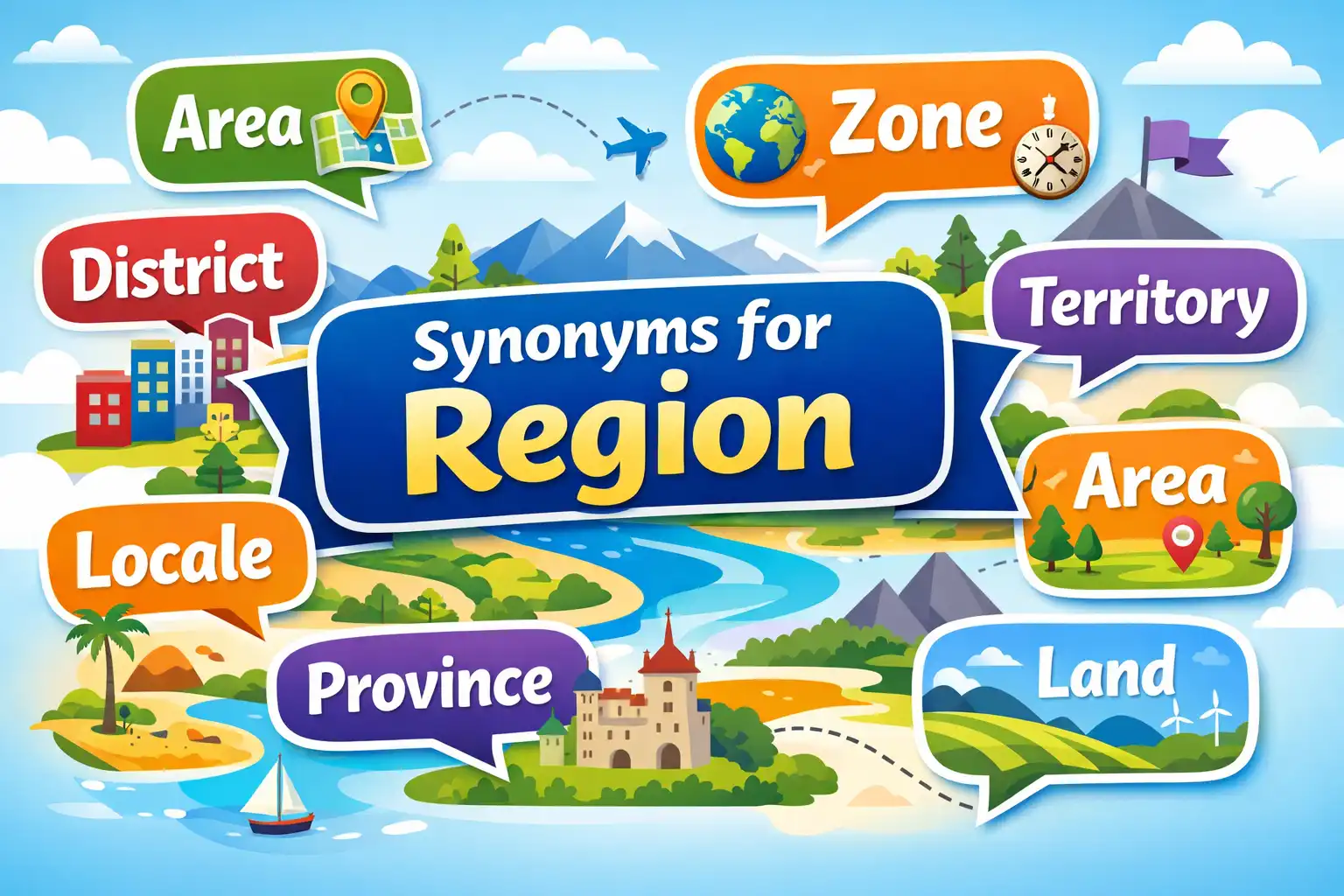
Learning synonyms for region helps you describe different places on our earth clearly. When you study synonyms for region, you can talk about land, areas, and zones with ease. Knowing several synonyms for region makes your stories and essays much more interesting to read.
Think of a wild forest where birds sing. If you only call this place a “region,” your readers might not see the magic. But if you call it a green “realm” or a quiet “expanse,” the scene comes to life. A region is simply a large area of land with special features.
Using different words is highly useful for many people:
- Students: Write better geography reports for school and get higher grades.
- Bloggers: Describe travel spots with exciting words to keep your readers reading.
- Content Writers: Explain local business markets clearly to build real trust.
- Daily English Users: Share where you live with friends without repeating yourself.
“A single word can map out an entire world of meaning.”
“To change your words is to change the way you see the land.”
Linguistic Details of “Synonyms for Region”
Let us look closely at the grammar and history of this focus word in a very simple way.
- Connotative Meaning: “Region” carries a feeling of space, geography, and official boundaries. It makes us think of weather patterns, maps, and large pieces of land.
- Etymology:
- Region comes from the Old French word region.
- This came from the Latin word regionem, which means “direction,” “boundary line,” or “territory.”
- It connects to the Latin verb regere, which means “to rule” or “to direct.”
- Pronunciation: US:
/ˈriː.dʒən/| UK:/ˈriː.dʒən/ - Syllables: re-gion (2 syllables).
- Affixation Pattern: Root word region with no prefixes or suffixes.
“The land speaks in many voices, and each place has its own name.”
Comparison Table
Here is a quick guide to help you choose the best word for your writing.
| Keyword | Meaning | Usage Type | Context |
|---|---|---|---|
| Region | A large area of land with no exact borders. | Professional / Formal | Weather maps, geography books, and government plans. |
| Area | A specific space or part of a place. | Casual / Professional | Daily talk, small neighborhoods, and shopping spots. |
| Zone | An area kept for a special activity or rule. | Professional / Casual | School zones, parking spaces, and war zones. |
| Territory | Land that belongs to a person, animal, or group. | Professional / Emotional | Animal homes, business sales, and country borders. |
| District | A division of a city or country for local work. | Formal / Professional | School districts, police areas, and voting spots. |
| Sector | A part of an area, especially in business or military. | Professional / Formal | Tech sectors, city parts, and math shapes. |
| Province | A large division of a country with its own local laws. | Formal / Professional | Canadian states, historical lands, and leadership areas. |
| Realm | A kingdom or an area of interest and study. | Emotional / Casual | Fantasy stories, book genres, and dreams. |
50 Synonyms for Region
Here is the ultimate list of 50 synonyms you can use to bring your writing to life.
1. Area
- Pronunciation: US:
/ˈer.i.ə/| UK:/ˈeə.ri.ə/ - Meaning: A particular part of a place, city, or piece of land.
- Examples:
- Children love to play in this grassy area.
- The police closed off the area near the bank.
2. Zone
- Pronunciation: US:
/zoʊn/| UK:/zəʊn/ - Meaning: An area set aside for a special purpose.
- Examples:
- Drivers must go slowly in a school zone.
- This is a quiet zone for reading books.
3. Territory
- Pronunciation: US:
/ˈter.ə.tɔːr.i/| UK:/ˈter.ɪ.tər.i/ - Meaning: Land that is owned or controlled by a group or country.
- Examples:
- Wolves protect their territory from other packs.
- The island is a small territory of the nation.
4. District
- Pronunciation: US:
/ˈdɪs.trɪkt/| UK:/ˈdɪs.trɪkt/ - Meaning: A section of a town or country marked for official use.
- Examples:
- We visited the theater district last night.
- She works for the local school district.
5. Sector
- Pronunciation: US:
/ˈsek.tɚ/| UK:/ˈsek.tər/ - Meaning: A part of an area, economy, or social group.
- Examples:
- The technology sector is growing very fast.
- Soldiers guarded the southern sector of the wall.
6. Province
- Pronunciation: US:
/ˈprɑː.vɪns/| UK:/ˈprɒv.ɪns/ - Meaning: A large division of a country that has its own government.
- Examples:
- He lives in a cold province in Canada.
- Travel laws can change from one province to another.
7. Domain
- Pronunciation: US:
/doʊˈmeɪn/| UK:/dəʊˈmeɪn/ - Meaning: An area of land or a field of knowledge ruled by someone.
- Examples:
- The king ruled over a vast mountain domain.
- History is her main domain of study.
8. Realm
- Pronunciation: US:
/relm/| UK:/relm/ - Meaning: A kingdom or an area where a specific thing is common.
- Examples:
- The knight defended the realm from dragons.
- Virtual reality opens up a new realm of fun.
9. Turf
- Pronunciation: US:
/tɝːf/| UK:/tɜːf/ - Meaning: An area that a person or group claims as their own.
- Examples:
- The local gang told outsiders to stay off their turf.
- This kitchen is the chef’s personal turf.
10. Part
- Pronunciation: US:
/pɑːrt/| UK:/pɑːt/ - Meaning: Some but not all of a place or thing.
- Examples:
- We visited a beautiful part of the forest.
- The northern part of the state gets a lot of rain.
11. Section
- Pronunciation: US:
/ˈsek.ʃən/| UK:/ˈsek.ʃən/ - Meaning: A distinct part of a larger space or book.
- Examples:
- Please sit in the front section of the bus.
- This section of the city has many old houses.
12. Place
- Pronunciation: US:
/pleɪs/| UK:/pleɪs/ - Meaning: A particular point, building, or area on earth.
- Examples:
- The park is a great place to eat lunch.
- I forgot the name of the place we visited.
13. Locality
- Pronunciation: US:
/loʊˈkæl.ə.t̬i/| UK:/ləʊˈkæl.ə.ti/ - Meaning: A small area, neighborhood, or district.
- Examples:
- Many rare birds live in this wet locality.
- The school serves kids from the immediate locality.
14. Neighborhood
- Pronunciation: US:
/ˈneɪ.bɚ.hʊd/| UK:/ˈneɪ.bə.hʊd/ - Meaning: A small section of a town where people live.
- Examples:
- Our neighborhood has very quiet streets.
- We walked around the neighborhood to look at flowers.
15. Quarter
- Pronunciation: US:
/ˈkwɔːr.t̬ɚ/| UK:/ˈkwɔː.tər/ - Meaning: A part of a town where a certain group lives or works.
- Examples:
- They walked through the busy French quarter.
- Soldiers returned to their quarters for the night.
16. Land
- Pronunciation: US:
/lænd/| UK:/lænd/ - Meaning: An area of ground or a country.
- Examples:
- The farmer owns many acres of rich land.
- They traveled across a dry and empty land.
17. Country
- Pronunciation: US:
/ˈkʌn.tri/| UK:/ˈkʌn.tri/ - Meaning: An area of land that has its own government and laws.
- Examples:
- She wants to travel to a warm country.
- This is excellent walking country for tourists.
18. Tract
- Pronunciation: US:
/trækt/| UK:/trækt/ - Meaning: A large piece of land with no clear shape.
- Examples:
- A huge tract of forest was saved from builders.
- The company bought a tract of desert land.
19. Expanse
- Pronunciation: US:
/ɪkˈspæns/| UK:/ɪkˈspæns/ - Meaning: A wide, open area of land, water, or sky.
- Examples:
- A vast expanse of blue water lay before us.
- He looked out over the flat expanse of grass.
20. Belt
- Pronunciation: US:
/belt/| UK:/belt/ - Meaning: An area that shares a certain feature or crop.
- Examples:
- We drove through the famous corn belt today.
- The country has a warm sun belt in the south.
21. Range
- Pronunciation: US:
/reɪndʒ/| UK:/reɪndʒ/ - Meaning: A line of hills or mountains, or open land for animals.
- Examples:
- The mountain range looks beautiful in the morning.
- Cows roam freely across the open range.
22. Field
- Pronunciation: US:
/fiːld/| UK:/fiːld/ - Meaning: An open area of land, or a subject of work.
- Examples:
- The cows are eating grass in the field.
- He is a famous expert in the field of science.
23. Division
- Pronunciation: US:
/dɪˈvɪʒ.ən/| UK:/dɪˈvɪʒ.ən/ - Meaning: A part into which something is divided.
- Examples:
- The state division makes local laws very simple.
- This division of land belongs to the state.
24. State
- Pronunciation: US:
/steɪt/| UK:/steɪt/ - Meaning: A part of a nation with its own local laws.
- Examples:
- Texas is a very large state in America.
- She went to college in another state.
25. County
- Pronunciation: US:
/ˈkaʊn.t̬i/| UK:/ˈkaʊn.ti/ - Meaning: A division of a state or country for local rules.
- Examples:
- He is the richest man in the county.
- The county road is covered with white snow.
26. Department
- Pronunciation: US:
/dɪˈpɑːrt.mənt/| UK:/dɪˈpɑːt.mənt/ - Meaning: An administrative region of a country like France.
- Examples:
- They live in a small department in France.
- The country is split into many separate departments.
27. Ward
- Pronunciation: US:
/wɔːrd/| UK:/wɔːd/ - Meaning: A district of a city chosen for local voting.
- Examples:
- She voted for the new leader in her ward.
- The city council represents each ward clearly.
28. Parish
- Pronunciation: US:
/ˈpær.ɪʃ/| UK:/ˈpær.ɪʃ/ - Meaning: A local area with its own church and priest.
- Examples:
- The parish church sits on top of the hill.
- Everyone in the parish helped clean the park.
29. Patch
- Pronunciation: US:
/pætʃ/| UK:/pætʃ/ - Meaning: A small area that is different from what is around it.
- Examples:
- We found a nice patch of strawberries in the woods.
- A patch of dark clouds covered the sun.
30. Locale
- Pronunciation: US:
/loʊˈkæl/| UK:/ləʊˈkɑːl/ - Meaning: A place where something special happens.
- Examples:
- The quiet lake was the perfect locale for a movie.
- The story has an exotic tropical locale.
31. Vicinity
- Pronunciation: US:
/vəˈsɪn.ə.t̬i/| UK:/vəˈsɪn.ə.ti/ - Meaning: The area around a specific point.
- Examples:
- There are three good schools in our vicinity.
- The lost dog was found in the vicinity of the park.
32. Ground
- Pronunciation: US:
/ɡraʊnd/| UK:/ɡraʊnd/ - Meaning: An area used for a special sport or work.
- Examples:
- The kids ran around the school play ground.
- This swamp is a dangerous breeding ground for bugs.
33. Space
- Pronunciation: US:
/speɪs/| UK:/speɪs/ - Meaning: An open or empty area that can be used.
- Examples:
- We need more storage space for these heavy boxes.
- The green park provides open space for the city.
34. Sphere
- Pronunciation: US:
/sfɪr/| UK:/sfɪə/ - Meaning: An area of power, control, or activity.
- Examples:
- The country expanded its sphere of influence.
- Politics is not my usual sphere of interest.
35. Block
- Pronunciation: US:
/blɑːk/| UK:/blɒk/ - Meaning: A square area in a city surrounded by four streets.
- Examples:
- She walked her dog around the block twice.
- The new toy shop is just one block away.
36. Boundary
- Pronunciation: US:
/ˈbaʊn.dər.i/| UK:/ˈbaʊn.dər.i/ - Meaning: A line that marks the edge of an area.
- Examples:
- The tall river marks the boundary of the farm.
- They put up a fence on the property boundary.
37. Enclave
- Pronunciation: US:
/ˈen.kleɪv/| UK:/ˈen.kleɪv/ - Meaning: An area inhabited by a distinct group within a larger area.
- Examples:
- The small diplomatic enclave was very safe.
- They live in a peaceful enclave in the big city.
38. Precinct
- Pronunciation: US:
/ˈpriː.sɪŋkt/| UK:/ˈpriː.sɪŋkt/ - Meaning: A division of a city for police or voting.
- Examples:
- He went to the local police precinct to get help.
- This voting precinct is very busy today.
39. Shire
- Pronunciation: US:
/ʃaɪr/| UK:/ʃaɪə/ - Meaning: An old word for a county in Britain.
- Examples:
- The family came from a quiet northern shire.
- Green hills rolled across the beautiful shire.
40. Canton
- Pronunciation: US:
/ˈkæn.tɑːn/| UK:/ˈkæn.tɒn/ - Meaning: A small division of a country like Switzerland.
- Examples:
- Each Swiss canton has its own local flag.
- They traveled from canton to canton by train.
41. Demesne
- Pronunciation: US:
/dɪˈmeɪn/| UK:/dɪˈmeɪn/ - Meaning: Land attached to a manor house or estate.
- Examples:
- The lord walked across his royal demesne.
- They kept beautiful horses on the castle demesne.
42. Jurisdiction
- Pronunciation: US:
/ˌdʒʊr.ɪsˈdɪk.ʃən/| UK:/ˌdʒʊə.rɪsˈdɪk.ʃən/ - Meaning: An area where a court or leader has power.
- Examples:
- This legal matter falls outside our jurisdiction.
- The local police have power only in this jurisdiction.
43. Borough
- Pronunciation: US:
/ˈbɝː.oʊ/| UK:/ˈbʌr.ə/ - Meaning: An official division of a very large city.
- Examples:
- Brooklyn is a famous borough of New York City.
- The local borough council meets every Tuesday.
44. Plot
- Pronunciation: US:
/plɑːt/| UK:/plɒt/ - Meaning: A small piece of land marked for building or gardening.
- Examples:
- They bought a plot of land to build a house.
- She grows red tomatoes on her small garden plot.
45. Site
- Pronunciation: US:
/saɪt/| UK:/saɪt/ - Meaning: A place where something was, is, or will be built.
- Examples:
- Workers are cleaning up the dirty construction site.
- This was the historic site of an old battle.
46. Kingdom
- Pronunciation: US:
/ˈkɪŋ.dəm/| UK:/ˈkɪŋ.dəm/ - Meaning: A country or region ruled by a king or queen.
- Examples:
- The queen ruled over the peaceful mountain kingdom.
- They traveled to a far-off kingdom across the sea.
47. Location
- Pronunciation: US:
/loʊˈkeɪ.ʃən/| UK:/ləʊˈkeɪ.ʃən/ - Meaning: A particular place or position.
- Examples:
- The phone app shows your exact location on a map.
- The shop is in a highly convenient location.
48. Fiefdom
- Pronunciation: US:
/ˈfiːf.dəm/| UK:/ˈfiːf.dəm/ - Meaning: An area controlled by a single powerful person.
- Examples:
- The boss treated the office like his personal fiefdom.
- In old times, lords ruled over each small fiefdom.
49. Empire
- Pronunciation: US:
/ˈem.paɪr/| UK:/ˈem.paɪər/ - Meaning: A group of countries or regions ruled by one leader.
- Examples:
- The Roman empire stretched across many lands.
- He built a giant business empire in a few years.
50. Environment
- Pronunciation: US:
/ɪnˈvaɪ.rən.mənt/| UK:/ɪnˈvaɪ.rən.mənt/ - Meaning: The surrounding area or conditions in which things live.
- Examples:
- We must work together to protect our environment.
- The school offers a safe learning environment for kids.
Antonyms of “Region”
When you do not want to talk about a single part of land, you use these opposite words:
- Whole: The complete amount or all of something.
- Entirety: The state of being total or complete.
- Globe: The whole earth or world.
- Universe: All of space, time, and everything in them.
- Total: The whole number or amount.
Prototype Meaning and Categorization
In grammar, synonyms for region fit under the main category of Geographical Space.
- Core Meaning (Prototype): A large, continuous part of the physical world that has some shared traits or borders.
- Semantic Category: Nouns / Naming Words.
- Cognitive Frame: A space that has a boundary, holds objects, and contains specific weather, laws, or living things.
FAQs
1. What does the word region mean in simple terms?
It means a large part of land or a place that is different from other areas because of its weather, language, or rules.
2. Why should I use synonyms for region in my blog posts?
Using different words keeps your writing fresh. It helps you avoid repeating the same word and makes your travel or local stories fun to read.
3. What is the difference between an area and a zone?
An “area” is any general place or space. A “zone” is an area with special laws or purposes, like a war zone or a parking zone.
4. Is “realm” too casual for business writing?
Yes. “Realm” is best for stories, fantasy, or creative writing. For business, you should use “sector,” “field,” or “domain.”
5. Can “territory” be used for business?
Yes. Sales workers often talk about their “sales territory,” which means the area where they sell their products.
6. What is a good casual alternative to region?
The word “area” or “place” is the best casual choice. These words are short, simple, and easy for everyone to understand.
7. How do semantic keywords help my website’s SEO?
Using related words like “district,” “territory,” and “zone” helps search engines understand your topic. This can make your page rank higher.
Conclusion
Learning to use different synonyms for region is a powerful way to make your communication much better. When you replace simple, boring words with active and clear nouns, you keep your readers interested. Your writing will look brighter and read much smoother. This is true whether you write school papers, travel blogs, business reports, or just chat with your close friends.
We invite you to practice these active words every single day. Try using a new synonym in your next email. Put a fresh word in your school essay. Use them when you describe a trip to your family. You will see that your English quickly sounds more natural, clear, and professional!
“The words we choose act as maps for the minds of our readers.”
“Never limit your writing to one border when you have a world of words to travel.”
“True mastery of language begins when we explore every corner of our vocabulary.”

Michael Turner is a published fiction writer and creative writing tutor with over a decade of experience helping writers find the words that make their stories breathe ( Biography ).