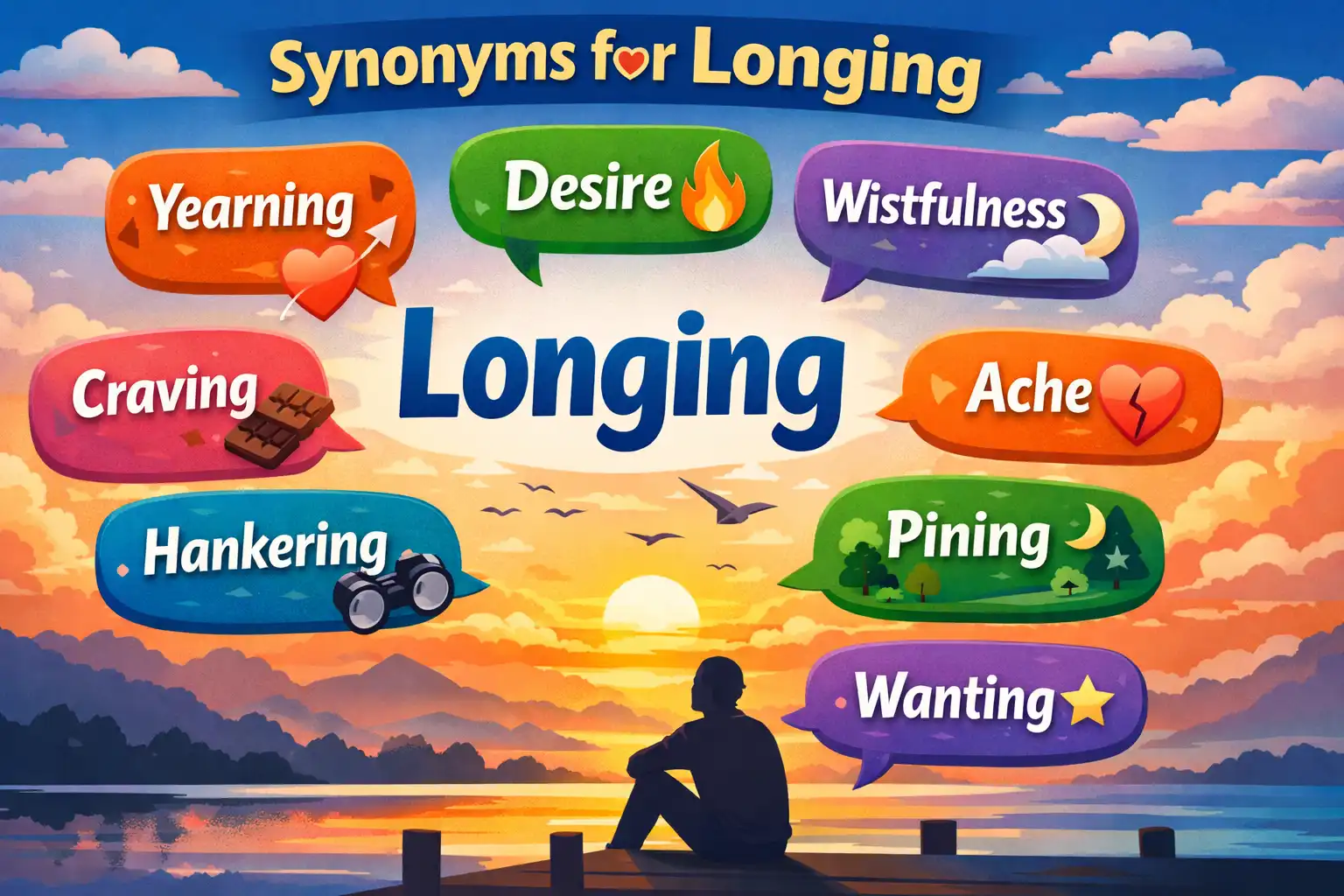
When you want to say you really want something, finding the right synonyms for longing makes your writing shine. Using different synonyms for longing allows you to show exactly how strong a feeling is. In this guide, we will explore many excellent synonyms for longing that you can use in your daily life to express deep feelings of wanting, wishing, and hoping.
Imagine sitting by a window on a rainy afternoon, holding a warm cup of tea, and thinking about an old friend you have not seen in years. That deep, quiet ache in your chest is a perfect example of longing. In simple terms, longing means having a very strong wish or need for someone or something that is far away or hard to get. Knowing different words for this feeling is extremely useful. Students can make their school essays much more exciting. Bloggers can connect deeply with their readers’ feelings. Content writers can paint clearer pictures with their words, and daily English users can share their feelings more accurately.
“The words we choose to express our deepest wants define the shape of our inner worlds.”
“Language is the key that unlocks the heart, and knowing how to describe our quietest wishes is the first step.”
Quick Reference & Technical Details of “Longing”
- Connotative Meaning: “Longing” carries a soft, emotional, and sometimes painful feeling of wanting. It is not just a quick wish; it is a deep, lasting feeling of missing something or someone that is out of reach.
- Etymology: Derived from the Old English word langian, which means “to grow long, to desire, or to ache after.”
- Pronunciation (US & UK – IPA): * US IPA: /ˈlɔŋ·ɪŋ/
- UK IPA: /ˈlɒŋ·ɪŋ/
- Syllables: Long-ing (2 syllables)
- Affixation Pattern: Root word long + suffix -ing (forming a gerund/noun representing an ongoing state).
Comparison of Key Synonyms
| Keyword | Meaning | Usage Type | Context |
|---|---|---|---|
| Longing | A strong, lasting feeling of wanting something or someone | Emotional | Relationships, poetry, personal thoughts |
| Yearning | A deep, tender, and sad desire for something | Emotional / Formal | Creative writing, deep personal reflections |
| Craving | A very strong and immediate physical or mental need | Casual / Physical | Food, habits, immediate emotional needs |
| Desire | A strong wish to have or do something | Professional / Formal | Work goals, general life wishes, relationships |
| Hankering | A casual, continuous talk or thought of wanting something | Casual | Daily life, simple cravings like food or travel |
| Nostalgia | A happy yet sad wish for the past | Emotional | Memories, old photos, childhood stories |
50 Powerful Synonyms for Longing
1. Yearning
- Pronunciation: US: /ˈjɜr·nɪŋ/, UK: /ˈjɜː·nɪŋ/
- Meaning: A very deep, tender, and sometimes sad feeling of wanting something.
- Examples:
- She felt a deep yearning to return to her childhood home.
- His heart was full of yearning for peace.
2. Craving
- Pronunciation: US: /ˈkreɪ·vɪŋ/, UK: /ˈkreɪ·vɪŋ/
- Meaning: A very strong and sudden desire for a specific thing.
- Examples:
- I have a sudden craving for sweet chocolate.
- The tired puppy had a craving for warm milk.
3. Desire
- Pronunciation: US: /dɪˈzaɪər/, UK: /dɪˈzaɪə/
- Meaning: A strong hope or wish to have or do something.
- Examples:
- He has a strong desire to learn how to swim.
- Her main desire is to travel the whole world.
4. Hankering
- Pronunciation: US: /ˈhæŋ·kər·ɪŋ/, UK: /ˈhæŋ·kər·ɪŋ/
- Meaning: A steady, mild wish for something you miss.
- Examples:
- She had a hankering for hot soup on this cold day.
- I have a real hankering to visit the beach again.
5. Hunger
- Pronunciation: US: /ˈhʌŋ·ɡər/, UK: /ˈhʌŋ·ɡə/
- Meaning: A strong need or deep lack of something important.
- Examples:
- The young students have a great hunger for knowledge.
- He worked hard to feed his hunger for success.
6. Thirst
- Pronunciation: US: /θɜrst/, UK: /θɜːst/
- Meaning: A very strong wish to get or know something.
- Examples:
- She has a deep thirst for reading books.
- His thirst for adventure took him to many wild places.
7. Pining
- Pronunciation: US: /ˈpaɪ·nɪŋ/, UK: /ˈpaɪ·nɪŋ/
- Meaning: Becoming weak or sad because you miss someone very much.
- Examples:
- The dog was pining for its owner to come home.
- She spent the long winter pining for the warm sun.
8. Yen
- Pronunciation: US: /jɛn/, UK: /jɛn/
- Meaning: A sudden, strong urge or desire to do something.
- Examples:
- I had a sudden yen to go for a run in the park.
- He has a quiet yen for some peace and quiet.
9. Itch
- Pronunciation: US: /ɪtʃ/, UK: /ɪtʃ/
- Meaning: A restless feeling of wanting to do something new.
- Examples:
- She has an itch to travel to a new city this weekend.
- My hands have an itch to paint a new picture.
10. Urge
- Pronunciation: US: /ɜrdʒ/, UK: /ɜːdʒ/
- Meaning: A sudden, strong feeling that you must do something right away.
- Examples:
- He felt a sudden urge to laugh out loud.
- She resisted the urge to buy the shiny toy.
11. Wish
- Pronunciation: US: /wɪʃ/, UK: /wɪʃ/
- Meaning: A hope for something that might not happen easily.
- Examples:
- My only wish is for everyone to be happy.
- She made a quiet wish before blowing out the candle.
12. Nostalgia
- Pronunciation: US: /nɑˈstæl·dʒə/, UK: /nɒˈstæl·dʒə/
- Meaning: A warm and slightly sad feeling when thinking of the past.
- Examples:
- Looking at old toys filled him with deep nostalgia.
- The old song brought back a wave of nostalgia.
13. Homesickness
- Pronunciation: US: /ˈhoʊmˌsɪk·nəs/, UK: /ˈhəʊmˌsɪk·nəs/
- Meaning: A sad feeling because you are far away from your home.
- Examples:
- His homesickness kept him awake during his first camp night.
- She called her mother to help cure her homesickness.
14. Coveting
- Pronunciation: US: /ˈkʌv·ɪt·ɪŋ/, UK: /ˈkʌv·ɪt·ɪŋ/
- Meaning: Wanting something very much that belongs to someone else.
- Examples:
- He sat there coveting his brother’s new bicycle.
- She tried to stop coveting her friend’s pretty dress.
15. Aching
- Pronunciation: US: /ˈeɪ·kɪŋ/, UK: /ˈeɪ·kɪŋ/
- Meaning: A dull, continuous pain caused by wanting someone.
- Examples:
- He felt an aching in his heart after they said goodbye.
- Her aching desire to see him again made her sad.
16. Melancholy
- Pronunciation: US: /ˈmɛl·ənˌkɑl·i/, UK: /ˈmɛl·ənˌkɒl·i/
- Meaning: A gentle, deep sadness that makes you look back at things.
- Examples:
- The rainy day brought a sweet melancholy over the house.
- He sat in quiet melancholy thinking of his old friends.
17. Passion
- Pronunciation: US: /ˈpæʃ·ən/, UK: /ˈpæʃ·ən/
- Meaning: An extremely strong feeling of love, liking, or excitement.
- Examples:
- Cooking is a big passion for my grandmother.
- He spoke about his art with true passion.
“When we lack the precise terms for our desires, we limit our ability to connect.”
18. Eagerness
- Pronunciation: US: /ˈi·ɡər·nəs/, UK: /ˈiː·ɡə·nəs/
- Meaning: A happy and excited state of wanting to do something.
- Examples:
- The kids showed great eagerness to open their gifts.
- Her eagerness to help made everyone smile.
19. Liking
- Pronunciation: US: /ˈlaɪ·kɪŋ/, UK: /ˈlaɪ·kɪŋ/
- Meaning: A feeling that you find something pleasant or nice.
- Examples:
- I have a strong liking for fresh apple pie.
- He grew a quick liking to his new classmate.
20. Fancy
- Pronunciation: US: /ˈfæn·si/, UK: /ˈfæn·si/
- Meaning: A sudden, light wish or liking for something.
- Examples:
- She took a quick fancy to the blue shoes.
- He has a passing fancy to learn how to play drums.
21. Inclination
- Pronunciation: US: /ˌɪn·kləˈneɪ·ʃən/, UK: /ˌɪn·klɪˈneɪ·ʃən/
- Meaning: A natural feeling that makes you want to do something.
- Examples:
- I have an inclination to take a short nap now.
- His inclination was to tell the simple truth.
22. Dream
- Pronunciation: US: /drim/, UK: /driːm/
- Meaning: A lovely hope or plan that you want to come true.
- Examples:
- Her lifelong dream is to build a small library.
- He works hard every single day to chase his dream.
23. Ambition
- Pronunciation: US: /æmˈbɪʃ·ən/, UK: /æmˈbɪʃ·ən/
- Meaning: A strong, serious desire to achieve a big goal.
- Examples:
- His high ambition is to become a kind doctor.
- She has the ambition to run her own shop.
24. Aspiration
- Pronunciation: US: /ˌæs·pəˈreɪ·ʃən/, UK: /ˌæs·pɪˈreɪ·ʃən/
- Meaning: A beautiful, high hope of achieving something great.
- Examples:
- The school supports every aspiration of its pupils.
- He spoke about his aspiration to write a book.
25. Zeal
- Pronunciation: US: /zil/, UK: /ziːl/
- Meaning: Great energy, effort, and excitement for a cause.
- Examples:
- She cleaned the park with amazing zeal.
- His zeal for saving trees inspired his whole school.
26. Avidity
- Pronunciation: US: /əˈvɪd·ɪ·ti/, UK: /əˈvɪd·ə·ti/
- Meaning: Extreme eagerness or enthusiasm to get something.
- Examples:
- The boy read his comic books with great avidity.
- She saved her pocket money with deep avidity.
27. Appetency
- Pronunciation: US: /ˈæp·ɪ·tən·si/, UK: /ˈæp·ɪ·tən·si/
- Meaning: A natural, deep craving or strong attraction.
- Examples:
- He felt a strong appetency toward beautiful music.
- The child had a natural appetency for sweet berries.
28. Heartache
- Pronunciation: US: /ˈhɑrt·eɪk/, UK: /ˈhɑːt·eɪk/
- Meaning: Deep emotional sorrow caused by missing someone.
- Examples:
- Writing letters was her only cure for heartache.
- He hid his heartache behind a bright, wide smile.
29. Predilection
- Pronunciation: US: /ˌprɛd·əlˈɛk·ʃən/, UK: /ˌpriː·dɪˈlɛk·ʃən/
- Meaning: A special liking or preference for something.
- Examples:
- She has a predilection for bright yellow flowers.
- His predilection for quiet places made him love forests.
30. Propensity
- Pronunciation: US: /prəˈpɛn·sɪ·ti/, UK: /prəˈpɛn·sə·ti/
- Meaning: A natural habit or tendency to want something.
- Examples:
- He has a funny propensity to buy old books.
- Her propensity for saving things filled her room.
31. Bent
- Pronunciation: US: /bɛnt/, UK: /bɛnt/
- Meaning: A natural skill or strong leaning toward something.
- Examples:
- She has a natural artistic bent in her drawing.
- His bent for solving puzzles made him a great gamer.
32. Leaning
- Pronunciation: US: /ˈli·nɪŋ/, UK: /ˈliː·nɪŋ/
- Meaning: A preference or tendency to choose a certain side.
- Examples:
- I have a strong leaning toward buying the green car.
- His musical leaning started when he was a baby.
33. Impulse
- Pronunciation: US: /ˈɪm·pʌls/, UK: /ˈɪm·pʌls/
- Meaning: A sudden urge to act without thinking first.
- Examples:
- On a sudden impulse, she jumped into the pool.
- He had to fight the impulse to eat all the cookies.
34. Fondness
- Pronunciation: US: /ˈfɑnd·nəs/, UK: /ˈfɒnd·nəs/
- Meaning: A warm, gentle feeling of love or liking.
- Examples:
- She looked at her old teddy bear with deep fondness.
- He has a great fondness for his grandparents.
35. Cupidity
- Pronunciation: US: /kjuːˈpɪd·ɪ·ti/, UK: /kjuːˈpɪd·ə·ti/
- Meaning: An eager, selfish desire to possess wealth.
- Examples:
- The king’s deep cupidity made him raise the taxes.
- She looked at the gold chest with quiet cupidity.
36. Covetousness
- Pronunciation: US: /ˈkʌv·ɪ·təs·nəs/, UK: /ˈkʌv·ɪ·təs·nəs/
- Meaning: A strong state of wanting what others have.
- Examples:
- He had to overcome his covetousness of his friend’s items.
- The story warned children against greed and covetousness.
37. Soft Spot
- Pronunciation: US: /sɔft spɑt/, UK: /sɒft spɒt/
- Meaning: A gentle, loving feeling toward a specific thing.
- Examples:
- She has a major soft spot for fluffy stray cats.
- He will always have a soft spot for his first guitar.
38. Anticipation
- Pronunciation: US: /ænˌtɪs·əˈpeɪ·ʃən/, UK: /æn-ˌtɪs·ɪˈpeɪ·ʃən/
- Meaning: A happy feeling of waiting for something nice.
- Examples:
- The children waited for winter with sweet anticipation.
- He smiled in anticipation of the delicious dinner.
39. Keenness
- Pronunciation: US: /ˈkin·nəs/, UK: /ˈkiːn·nəs/
- Meaning: An active, highly eager state of mind.
- Examples:
- Her extreme keenness made her the top student.
- He showed great keenness to learn the rules of chess.
40. Wistfulness
- Pronunciation: US: /ˈwɪst·fəl·nəs/, UK: /ˈwɪst·fəl·nəs/
- Meaning: A sad, thoughtful feeling of wanting things that are gone.
- Examples:
- She looked at the old photographs with soft wistfulness.
- There was a touch of wistfulness in his low voice.
41. Languishing
- Pronunciation: US: /ˈlæŋ·ɡwɪʃ·ɪŋ/, UK: /ˈlæŋ·ɡwɪʃ·ɪŋ/
- Meaning: Growing weak because you want something you do not have.
- Examples:
- The prisoner spent years languishing for absolute freedom.
- She spent days languishing in her room waiting for a letter.
42. Thirstiness
- Pronunciation: US: /ˈθɜrs·ti·nəs/, UK: /ˈθɜː·sti·nəs/
- Meaning: The physical or emotional state of wanting liquid or love.
- Examples:
- His intense thirstiness made him drink three cups of water.
- The dry plants showed their thirstiness by dropping leaves.
43. Voracity
- Pronunciation: US: /vəˈræs·ɪ·ti/, UK: /vəˈræs·ə·ti/
- Meaning: An extremely eager hunger that is hard to satisfy.
- Examples:
- She read books with a wonderful, endless voracity.
- The hungry wolves ate their meal with great voracity.
44. Pruriency
- Pronunciation: US: /ˈprʊər·i·ən·si/, UK: /ˈprʊə·ri·ən·si/
- Meaning: An restless, curious state of wanting secret details.
- Examples:
- The gossip writer fed the town’s pruriency for news.
- He watched the closed door with quiet pruriency.
45. Want
- Pronunciation: US: /wɑnt/, UK: /wɒnt/
- Meaning: A simple, direct desire to have something.
- Examples:
- Her greatest want was to have a warm jacket for winter.
- He expressed a strong want to go to sleep early.
46. Grief
- Pronunciation: US: /ɡrif/, UK: /ɡriːf/
- Meaning: Deep sadness caused by missing a loved one who is gone.
- Examples:
- Her grief was heavy after her old cat passed away.
- He turned his deep grief into beautiful, sad poems.
47. Yearningness
- Pronunciation: US: /ˈjɜr·nɪŋ·nəs/, UK: /ˈjɜː·nɪŋ·nəs/
- Meaning: The ongoing, gentle state of wanting something deeply.
- Examples:
- She spoke of her home country with a soft yearningness.
- The letters were filled with a sweet, classic yearningness.
48. Sighing
- Pronunciation: US: /ˈsaɪ·ɪŋ/, UK: /ˈsaɪ·ɪŋ/
- Meaning: Making a deep sound to show you miss something.
- Examples:
- He spent the evening sighing over old pictures.
- Her sighing stopped when her brother finally walked in.
49. Blues
- Pronunciation: US: /bluz/, UK: /bluːz/
- Meaning: A casual, sad feeling of missing happiness or home.
- Examples:
- The rainy weather always gave her a case of the blues.
- He sang a simple song to chase away his blues.
50. Wishfulness
- Pronunciation: US: /ˈwɪʃ·fəl·nəs/, UK: /ˈwɪʃ·fəl·nəs/
- Meaning: A hopeful, dreamy state of wishing for good things.
- Examples:
- Her eyes were full of sweet wishfulness as she watched the plane.
- He talked about his goals with a quiet, calm wishfulness.
Antonyms of Longing
Understanding what is opposite to longing helps you understand the word even better. Here are the main antonyms:
- Satisfaction: The happy feeling when you have everything you need.
- Contentment: A peaceful, happy state of mind where you do not want anything more.
- Indifference: Not caring at all about something.
- Dislike: A feeling of not wanting or not enjoying something.
- Apathy: A complete lack of interest, energy, or care.
Prototype Meaning and Categorization of Longing
“Longing” falls under the emotional category of Desire and Wanting.
- Core Prototype Definition: An intense, emotional, and persistent pull toward an object, person, or state that is currently absent.
- Primary Domain: Psychology and Human Emotion.
- Sub-categories: 1. Physical desires (Craving, Hunger) 2. Sentimental desires (Nostalgia, Homesickness) 3. Ambitious desires (Aspiration, Ambition)
Frequently Asked Questions (FAQ)
1. What is the difference between “longing” and “craving”?
Longing is usually a deep, soft, emotional feeling that lasts for a long time (like missing a person). A craving is a very strong, immediate physical or mental need that usually goes away once you get what you want (like wanting chocolate).
2. Can “longing” be used in a professional email?
Yes, but you should choose a more professional synonym like aspiration, desire, or eagerness. For example, write “I have a strong desire to join your team” instead of “I have a longing to join your team.”
3. Is “nostalgia” always a synonym for longing?
Yes, nostalgia is a specific type of longing. It is the longing for the past, old times, or places you used to know.
4. How do students benefit from learning these synonyms?
Learning these words helps students avoid repeating the word “want” in their essays. It makes their writing sound mature, professional, and emotionally expressive.
5. What is the most poetic synonym for longing?
Words like yearning, wistfulness, and pining are very poetic. They evoke beautiful, soft, and deep emotions in creative writing.
6. Are there negative synonyms for longing?
Yes. Synonyms like cupidity and covetousness represent greedy, selfish, or negative ways of wanting something.
Conclusion
Learning and using various synonyms for longing is one of the easiest ways to improve your English skills. When you expand your vocabulary, your writing, blogging, public speaking, and daily communication become much more lively and precise. Instead of using the same simple words over and over, you can choose the exact word that fits your heart’s true state.
We highly encourage you to start practicing these beautiful new words today. Try using them when writing casual emails to your friends, drafting school essays, or having everyday conversations with your family. The more you play with language, the more confident and expressive you will become.
“To speak with precision is to show respect to the thoughts inside our heads.”
“A rich vocabulary is a bridge that connects our silent dreams to the rest of the world.”

Michael Turner is a published fiction writer and creative writing tutor with over a decade of experience helping writers find the words that make their stories breathe ( Biography ).