The word horror appears in daily speech, movies, news, and emotional writing. It describes strong fear or shock. Learning synonyms helps you express feelings more clearly and avoid repeating the same word.
Direct Answer
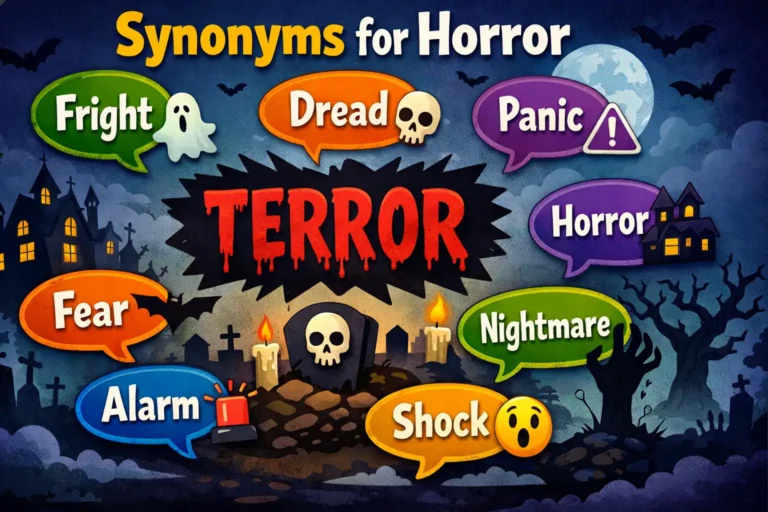
Horror means extreme fear or shock. Common synonyms include:
- terror
- fear
- dread
- fright
- panic
- alarm
- shock
- disgust
Meaning of Horror
Horror means a very strong feeling of fear, shock, or disgust.
Example:
She watched the accident in horror.
Categories of Synonyms
Physical fear
Words that describe a body reaction to danger or fear.
Emotional fear
Words that describe deep mental fear or worry.
Shock or disgust
Words used when something is disturbing or unacceptable.
Synonyms Table
| Word | Simple Meaning | Example Sentence |
| terror | extreme fear | He froze in terror. |
| dread | strong fear of something coming | She felt dread before the test. |
| fright | sudden fear | The noise gave him a fright. |
| panic | uncontrolled fear | Panic spread through the crowd. |
| alarm | fear caused by danger | The alarm was clear in her voice. |
| shock | sudden emotional hit | The news caused shock. |
| disgust | strong dislike | The scene filled him with disgust. |
Master Synonyms List (Grouped by Level)
Beginner / Simple
fear – feeling afraid
She looked at the dog with fear. (Neutral)
fright – quick sudden fear
The scream gave her a fright. (Informal)
panic – losing control from fear
He ran in panic. (Neutral)
Intermediate
terror – very strong fear
The child cried in terror. (Formal)
dread – fear of something expected
She waited in dread. (Formal)
alarm – fear mixed with warning
His voice showed alarm. (Neutral)
Advanced / Formal
shock – emotional hit or surprise
The decision caused public shock. (Formal)
disgust – strong emotional rejection
The report filled people with disgust. (Formal)
Formal vs Informal Synonyms
Use terror or dread in writing, news, or academic work.
Use fear or fright in casual conversation.
Formal synonyms sound serious. Informal ones sound natural in daily speech.
Real-Life Usage Examples
Conversation:
“That movie gave me real terror.”
Academic writing:
The event created widespread public shock.
Business writing:
The safety failure caused alarm among employees.
Blogging:
The ending scene was pure dread.
Emotional expression:
I watched in horror and could not move.
Similar Words Comparison
Horror vs Terror
Horror includes fear and disgust.
Terror focuses only on fear.
Example:
The crime caused horror.
The explosion caused terror.
Horror vs Shock
Horror is emotional fear.
Shock is surprise or emotional impact.
Example:
She reacted with horror.
He reacted with shock.
Example Sentences
- The crowd watched in horror.
- Terror filled the room.
- She stepped back in fright.
- Panic spread quickly.
- The news caused shock.
- He felt deep dread.
- Alarm rose in her voice.
- The scene created disgust.
- The child screamed in fear.
- The audience gasped in horror.
- His eyes showed terror.
- She froze in panic.
- The discovery caused public shock.
- They waited in dread.
- The smell created disgust.
Common Mistakes
- Using terror when mild fear is meant
- Confusing shock with fear
- Overusing horror in every sentence
- Choosing formal words in casual talk
- Using disgust when fear is intended
Tips / Best Practices
- Match the word to the emotion strength
- Choose formal words for writing
- Use simple words in conversation
- Avoid repeating the same synonym
- Keep tone natural and clear
- Do not overuse dramatic words
When NOT to Use Horror
Do not use horror for small problems or normal surprise.
It should describe extreme fear or emotional impact only.
Opposite Words (Antonyms)
- comfort
- calm
- relief
- peace
- safety
FAQs
What does horror mean?
Extreme fear or emotional shock.
Is horror formal or informal?
It works in both speech and writing.
How can I use it in conversation?
“I watched in horror.”
What is the best synonym for horror?
Terror for fear, shock for emotional impact.
Can horror be replaced with terror?
Yes, if the focus is strong fear.
Conclusion
Learning synonyms for horror improves writing and speaking. You can describe emotions more precisely and avoid repetition.
Try using 3 new synonyms in your next sentence to build stronger vocabulary.

Michael Turner creates simple synonym guides that help readers expand their vocabulary and choose the right word for the right context.