
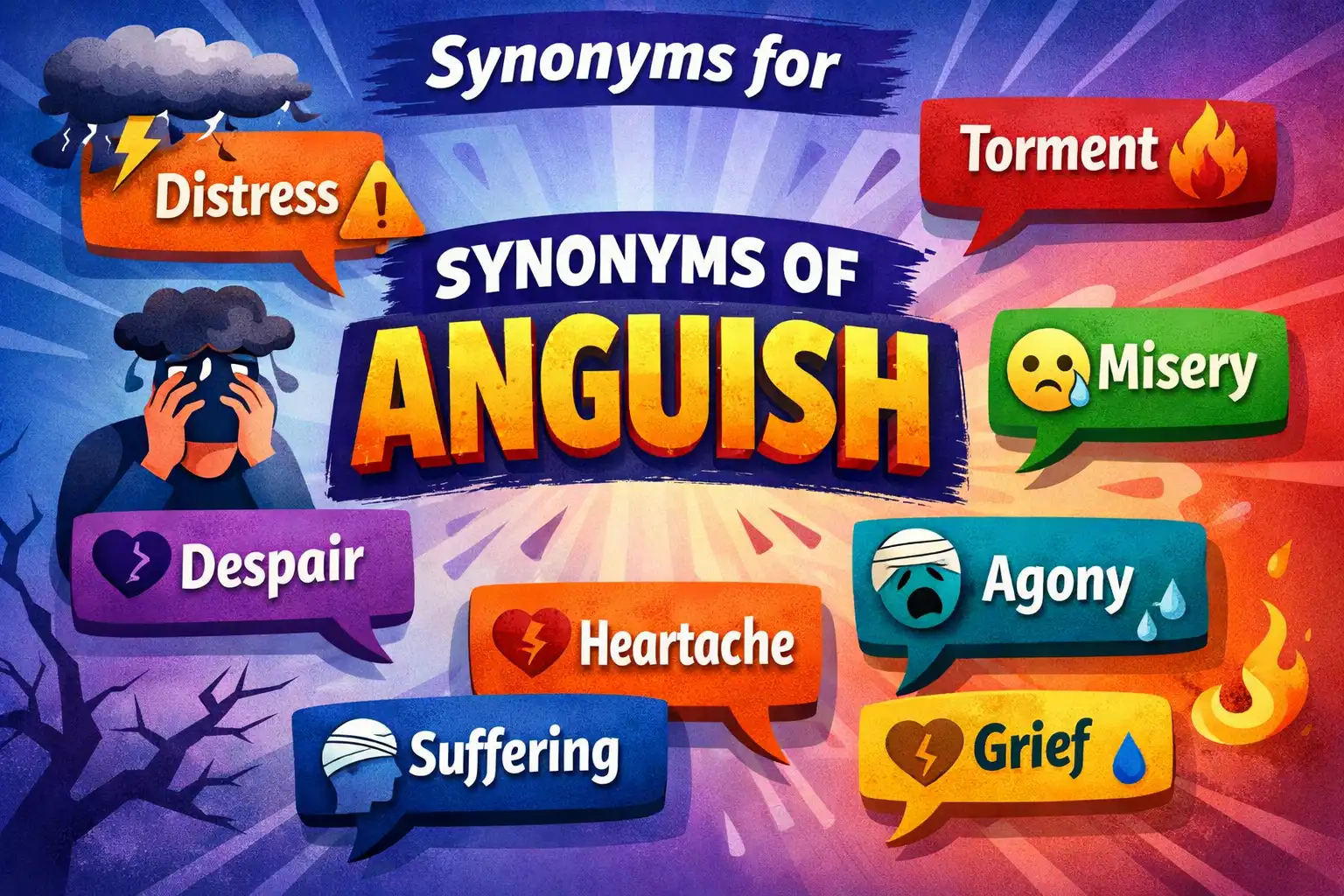
Imagine waiting for a phone call after a major storm, wondering if your family is safe. That intense, crushing mental pain is what we call anguish. Exploring the synonyms of anguish helps us describe these hard feelings when simple words like “sad” fail. By learning different synonyms of anguish, we find precise ways to share our deepest struggles with others. This search for alternative synonyms of anguish is not just an academic exercise; it is a human way to connect and heal.
“Extreme pain of mind or body is what we call anguish, and finding its right word is a gift.”
Anguish is a very big, deep feeling. It means you feel great pain in your mind or body. It is much stronger than just being sad, It is when you feel like your heart is breaking, and you do not know what to do next. For example, a person might feel this when they lose a beloved pet.
“To name our deepest pain is the first step toward healing it completely.”
Learning these words is highly useful for different people:
- Students: You can write better essays and score higher on vocabulary tests.
- Bloggers: You can touch your readers’ hearts by using strong, emotional words.
- Content Writers: You can keep readers on your page with powerful, descriptive copy.
- Daily English Users: You can share exactly how you feel with your friends and family.
Word Profile: Anguish
- Pronunciation: US: /ˈæŋ.ɡwɪʃ/ | UK: /ˈæŋ.ɡwɪʃ/
- Syllables: an-guish (2 syllables)
- Connotative Meaning: A suffocating, heavy, and trap-like emotional or physical torment. It implies a feeling of being squeezed by intense suffering.
- Affixation Pattern: Root word. It can take inflections like the suffix -ed (anguished) or -ing (anguishing).
- Etymology:
- Originates from the Latin word angustia (meaning tightness or distress).
- Derived from angere (meaning to choke or squeeze).
- Passed through Old French as angoisse before entering Middle English.
“Words can soothe a bruised heart when chosen with care and empathy.”
Comparison Table of Key Synonyms
| Keyword | Meaning | Usage Type | Context |
|---|---|---|---|
| Anguish | Severe mental or physical pain | Emotional & Formal | Personal loss, deep tragedy, or heavy physical trauma. |
| Agony | Extreme, sharp physical or mental suffering | Emotional & Casual | Sports injuries, waiting for tense news, or severe pain. |
| Grief | Deep sadness caused by someone’s death | Emotional & Personal | Funerals, losing a loved one, or major life endings. |
| Despair | The complete loss of all hope | Emotional & Professional | Financial ruin, failing a major goal, or feeling trapped. |
| Sorrow | A lingering, quiet sadness | Casual & Literary | Disappointments, everyday losses, or reflective moments. |
| Distress | Suffering caused by worry, pain, or danger | Professional & Daily | Financial trouble, emergency situations, or work stress. |
| Misery | A long state of great unhappiness or poverty | Casual & Emotional | Bad weather, living in poor conditions, or a terrible job. |
50 Synonyms of Anguish
1. Agony
- Pronunciation: US: /ˈæɡ.ə.ni/ | UK: /ˈæɡ.ə.ni/
- Meaning: This word means you are in very terrible mental or physical pain.
- Examples:
- The runner lay on the grass in total agony after twisting his ankle.
- Waiting for the doctor to call was pure agony for the family.
2. Torment
- Pronunciation: US: /ˈtɔːr.ment/ | UK: /ˈtɔː.ment/
- Meaning: This is a pain that keeps bothering you over and over.
- Examples:
- The loud noise from the street was a constant torment to him.
- She relived the memory of her mistake in quiet torment.
3. Misery
- Pronunciation: US: /ˈmɪz.ɚ.i/ | UK: /ˈmɪz.ər.i/
- Meaning: This is a state of being very unhappy for a long time.
- Examples:
- The cold rain turned our camping trip into pure misery.
- He lived in misery until he finally found a job he loved.
4. Grief
- Pronunciation: US: /ɡriːf/ | UK: /ɡriːf/
- Meaning: This is the heavy sadness you feel when you lose someone you love.
- Examples:
- She needed time alone to process her deep grief after her dog died.
- His heart was full of grief during the quiet funeral service.
5. Sorrow
- Pronunciation: US: /ˈsɑːr.oʊ/ | UK: /ˈsɒr.əʊ/
- Meaning: This is a quiet, gentle sadness about something bad that happened.
- Examples:
- He felt great sorrow for the way he treated his old friend.
- Her eyes were filled with sorrow as she said goodbye at the airport.
6. Distress
- Pronunciation: US: /dɪˈstres/ | UK: /dɪˈstres/
- Meaning: This is worry or pain caused by a bad or dangerous situation.
- Examples:
- The ship sent out a signal because it was in deep distress.
- Seeing her child cry caused the mother a lot of distress.
7. Woe
- Pronunciation: US: /woʊ/ | UK: /wəʊ/
- Meaning: This is very deep sadness or big trouble that makes you suffer.
- Examples:
- The old book tells a sad story of war and human woe.
- He shared his tales of woe over a warm cup of tea.
8. Suffering
- Pronunciation: US: /ˈsʌf.ɚ.ɪŋ/ | UK: /ˈsʌf.ər.ɪŋ/
- Meaning: This is the state of feeling bad physical or mental pain.
- Examples:
- The new medicine helped to end his long physical suffering.
- We must work together to reduce the suffering of poor animals.
9. Heartache
- Pronunciation: US: /ˈhɑːrt.eɪk/ | UK: /ˈhɑːt.eɪk/
- Meaning: This is emotional pain that makes your chest feel heavy with sadness.
- Examples:
- Leaving his home country caused him years of silent heartache.
- Time is the only thing that can heal the heartache of a breakup.
10. Heartbreak
- Pronunciation: US: /ˈhɑːrt.breɪk/ | UK: /ˈhɑːt.breɪk/
- Meaning: This is a very sharp, sudden emotional pain from losing love.
- Examples:
- She wrote a beautiful song about her recent heartbreak.
- The sudden loss of the championship game was a total heartbreak.
11. Despair
- Pronunciation: US: /dɪˈsper/ | UK: /dɪˈspeər/
- Meaning: This is the feeling that things are so bad that there is no hope left.
- Examples:
- He fell into despair when he lost his house in the fire.
- Do not give up or let despair take over your mind.
12. Torture
- Pronunciation: US: /ˈtɔːr.tʃɚ/ | UK: /ˈtɔː.tʃə/
- Meaning: This is a feeling of intense, nearly unbearable mental or physical pain.
- Examples:
- Sitting in that hot room for five hours was absolute torture.
- It was torture for him to watch his team lose the game.
13. Affliction
- Pronunciation: US: /əˈflɪk.ʃən/ | UK: /əˈflɪk.ʃən/
- Meaning: This is something that causes pain, sickness, or great trouble.
- Examples:
- Blindness is a difficult affliction, but she learned to live with it.
- He remained cheerful despite his painful physical affliction.
14. Desolation
- Pronunciation: US: /ˌdes.əˈleɪ.ʃən/ | UK: /ˌdes.əˈleɪ.ʃən/
- Meaning: This is a sad feeling of being completely alone, empty, and ruined.
- Examples:
- The empty streets after the storm gave us a sense of desolation.
- He looked around his ruined house with a feeling of deep desolation.
15. Despondency
- Pronunciation: US: /dɪˈspɑːn.dən.si/ | UK: /dɪˈspɒn.dən.si/
- Meaning: This is a low mood where you feel sad and have no energy.
- Examples:
- Her despondency lasted for weeks after she failed the big test.
- He tried to shake off his despondency by going for a walk.
16. Melancholy
- Pronunciation: US: /ˈmel.əŋ.kɑː.li/ | UK: /ˈmel.əŋ.kɒl.i/
- Meaning: This is a gentle, quiet sadness that lasts for a long time.
- Examples:
- Rain always puts me in a mood of soft melancholy.
- There was a look of melancholy in her old family photos.
17. Gloom
- Pronunciation: US: /ɡluːm/ | UK: /ɡluːm/
- Meaning: This is a dark, sad feeling where nothing seems bright or happy.
- Examples:
- The bad news cast a thick cloud of gloom over the office.
- She tried to cheer him up and drive away his deep gloom.
18. Regret
- Pronunciation: US: /rɪˈɡret/ | UK: /rɪˈɡret/
- Meaning: This is sadness you feel because you wish you did something differently.
- Examples:
- He felt deep regret for not saying goodbye to his sister.
- I have no regret about moving to this beautiful new city.
19. Bitterness
- Pronunciation: US: /ˈbɪt̬.ɚ.nəs/ | UK: /ˈbɪt.ə.nəs/
- Meaning: This is an angry, sad feeling because you think you were treated unfairly.
- Examples:
- She spoke with a lot of bitterness about her old boss.
- He let go of his bitterness so he could be happy again.
20. Anxiety
- Pronunciation: US: /æŋˈzaɪ.ə.t̬i/ | UK: /æŋˈzaɪ.ə.ti/
- Meaning: This is a painful worry or fear about what might happen next.
- Examples:
- Public speaking always fills me with a lot of anxiety.
- Deep breathing is a great way to calm your daily anxiety.
21. Dread
- Pronunciation: US: /dred/ | UK: /dred/
- Meaning: This is a very strong fear of something bad that is coming.
- Examples:
- She felt a cold dread as she walked into the principal’s office.
- He looked at the massive pile of work with a sense of dread.
22. Terror
- Pronunciation: US: /ˈter.ɚ/ | UK: /ˈter.ə/
- Meaning: This is a sudden, extreme fear that makes you freeze.
- Examples:
- The loud crash in the night filled the kids with terror.
- She ran away in pure terror when she saw the snake.
23. Horror
- Pronunciation: US: /ˈhɔːr.ɚ/ | UK: /ˈhɒr.ə/
- Meaning: This is a very strong feeling of fear and shock mixed together.
- Examples:
- We watched in horror as the car slid off the icy road.
- The scary movie was full of moments of absolute horror.
24. Apprehension
- Pronunciation: US: /ˌæp.rəˈhen.ʃən/ | UK: /ˌæp.rɪˈhen.ʃən/
- Meaning: This is a quiet, nervous feeling that something bad will happen.
- Examples:
- He opened the letter with a nervous feeling of apprehension.
- There is some apprehension about the new rules at school.
25. Unease
- Pronunciation: US: /ʌnˈiːz/ | UK: /ʌnˈiːz/
- Meaning: This is a worried feeling that stops you from relaxing.
- Examples:
- A sudden silence in the dark forest caused us great unease.
- She felt a growing unease about walking home alone.
26. Disquiet
- Pronunciation: US: /dɪsˈkwaɪ.ət/ | UK: /dɪsˈkwaɪ.ət/
- Meaning: This is a worried or anxious feeling that makes a group restless.
- Examples:
- The news of the tax hike caused much disquiet among the public.
- He felt a deep sense of disquiet about his future.
27. Hardship
- Pronunciation: US: /ˈhɑːrd.ʃɪp/ | UK: /ˈhɑːd.ʃɪp/
- Meaning: This is a difficult condition of life that causes pain or struggle.
- Examples:
- The family faced a lot of financial hardship during the winter.
- Going to college while working two jobs is a real hardship.
28. Trouble
- Pronunciation: US: /ˈtrʌb.əl/ | UK: /ˈtrʌb.əl/
- Meaning: This is a state of difficulty, worry, or pain.
- Examples:
- If you run into any trouble, just call me right away.
- He has been having some heart trouble lately and needs rest.
29. Worry
- Irregular Pronunciation: US: /ˈwɝː.i/ | UK: /ˈwʌr.i/
- Meaning: This is the act of thinking about problems or bad things that might happen.
- Examples:
- Her face was lined with worry as she waited for her son.
- Please do not waste your time on needless worry.
30. Concern
- Pronunciation: US: /kənˈsɝːn/ | UK: /kənˈsɜːn/
- Meaning: This is a feeling of worry about a situation or person.
- Examples:
- The doctor showed genuine concern for the patient’s health.
- There is growing concern about the safety of our drinking water.
31. Mourning
- Pronunciation: US: /ˈmɔːr.nɪŋ/ | UK: /ˈmɔː.nɪŋ/
- Meaning: This is the act of showing great sadness after someone dies.
- Examples:
- The whole nation was in mourning after the president passed away.
- She wore dark clothes as a sign of her deep mourning.
32. Lamentation
- Pronunciation: US: /ˌlæm.ənˈteɪ.ʃən/ | UK: /ˌlæm.ənˈteɪ.ʃən/
- Meaning: This is a loud expression of great sadness, like crying or wailing.
- Examples:
- The sounds of lamentation filled the streets after the earthquake.
- Her poem was a beautiful lamentation for her lost home.
33. Bleakness
- Pronunciation: US: /ˈbliːk.nəs/ | UK: /ˈbliːk.nəs/
- Meaning: This is a cold, empty feeling with no hope or comfort.
- Examples:
- The bleakness of the desert made us feel very lonely.
- He looked at his empty bank account and felt the bleakness of his situation.
34. Dejection
- Pronunciation: US: /dɪˈdʒek.ʃən/ | UK: /dɪˈdʒek.ʃən/
- Meaning: This is a feeling of being sad, down, and disappointed.
- Examples:
- He walked off the field in dejection after losing the match.
- Her sigh of dejection told me that she did not get the job.
35. Depression
- Pronunciation: US: /dɪˈpreʃ.ən/ | UK: /dɪˈpreʃ.ən/
- Meaning: This is a strong, heavy sadness that makes it hard to do anything.
- Examples:
- Regular exercise can help some people cope with mild depression.
- The gray weather always brings on a short phase of depression.
36. Heaviness
- Pronunciation: US: /ˈhev.i.nəs/ | UK: /ˈhev.i.nəs/
- Meaning: This is a sad, tired feeling inside your heart or mind.
- Examples:
- She felt a great heaviness in her chest when she said goodbye.
- The sad music added to the general heaviness of the room.
37. Tribulation
- Pronunciation: US: /ˌtrɪb.jəˈleɪ.ʃən/ | UK: /ˌtrɪb.jʊˈleɪ.ʃən/
- Meaning: This is a time of great trouble, testing, or suffering.
- Examples:
- The young hero had to pass through many a trial and tribulation.
- Their friendship grew stronger during that time of tribulation.
38. Travail
- Pronunciation: US: /trəˈveɪl/ | UK: /ˈtræv.eɪl/
- Meaning: This is very hard and painful work or effort.
- Examples:
- The book tells the story of the miners’ daily travail.
- After years of quiet travail, she finally finished her scientific study.
39. Pangs
- Pronunciation: US: /pæŋz/ | UK: /pæŋz/
- Meaning: These are sudden, sharp bursts of physical or mental pain.
- Examples:
- He felt sharp pangs of guilt for lying to his best friend.
- The hungry boy felt the first painful pangs of hunger.
40. Throes
- Pronunciation: US: /θroʊz/ | UK: /θrəʊz/
- Meaning: This is a state of severe struggle or active, painful change.
- Examples:
- The country is currently in the painful throes of a revolution.
- The dying plant was in its final throes before withering completely.
41. Misgiving
- Pronunciation: US: /ˌmɪsˈɡɪv.ɪŋ/ | UK: /ˌmɪsˈɡɪv.ɪŋ/
- Meaning: This is a feeling of doubt, worry, or fear about doing something.
- Examples:
- I had some serious misgivings about buying such an old car.
- She signed the contract despite her inner misgivings.
42. Chagrin
- Pronunciation: US: /ʃəˈɡrɪn/ | UK: /ˈʃæɡ.rɪn/
- Meaning: This is a feeling of annoyance and sadness because you failed.
- Examples:
- Much to his chagrin, he forgot his lines during the school play.
- She could not hide her chagrin when her rival won the race.
43. Vexation
- Pronunciation: US: /vekˈseɪ.ʃən/ | UK: /vekˈseɪ.ʃən/
- Meaning: This is a state of being annoyed, worried, or slightly hurt.
- Examples:
- He shook his head in silent vexation at the broken computer.
- The constant delays on the train became a source of great vexation.
44. Ruefulness
- Pronunciation: US: /ˈruː.fəl.nəs/ | UK: /ˈruː.fəl.nəs/
- Meaning: This is a mix of sadness and humor about a bad situation.
- Examples:
- He smiled with a bit of ruefulness as he cleaned up the spilled coffee.
- There was a touch of ruefulness in her voice when she spoke of the past.
45. Despond
- Pronunciation: US: /dɪˈspɑːnd/ | UK: /dɪˈspɒnd/
- Meaning: This is a deep state of low spirits or hopelessness.
- Examples:
- She sank into a deep despond after her business failed.
- Do not let yourself fall into the slough of despond.
46. Brokenheartedness
- Pronunciation: US: /ˌbroʊ.kənˈhɑːr.t̬ɪd.nəs/ | UK: /ˌbrəʊ.kənˈhɑː.tɪd.nəs/
- Meaning: This is the painful state of having your heart completely broken.
- Examples:
- Her brokenheartedness was clear to see when she spoke of her loss.
- He finally recovered from his brokenheartedness and started smiling again.
47. Dolor
- Pronunciation: US: /ˈdoʊ.lɚ/ | UK: /ˈdɒl.ər/
- Meaning: This is a formal word for intense, poetic mental pain.
- Examples:
- The old poet wrote many songs about love and human dolor.
- A look of heavy dolor settled over the old king’s face.
48. Anguishness
- Pronunciation: US: /ˈæŋ.ɡwɪʃ.nəs/ | UK: /ˈæŋ.ɡwɪʃ.nəs/
- Meaning: This is the continuous state of experiencing deep inner pain.
- Examples:
- The sheer anguishness of his situation made him seek help.
- She lived in a state of quiet anguishness for many years.
49. Inconsolability
- Pronunciation: US: /ɪn.kənˌsoʊ.ləˈbɪl.ə.t̬i/ | UK: /ɪn.kənˌsəʊ.ləˈbɪl.ə.ti/
- Meaning: This is the state of being so sad that nothing can make you feel better.
- Examples:
- The child’s inconsolability after losing his toy lasted all day.
- Her deep inconsolability was tough for her friends to witness.
50. Dismay
- Pronunciation: US: /dɪˈsmeɪ/ | UK: /dɪˈsmeɪ/
- Meaning: This is a feeling of shock and sadness at something unexpected.
- Examples:
- To our absolute dismay, the picnic was completely rained out.
- She looked at the messy kitchen with a look of pale dismay.
Antonyms of Anguish
To truly understand what anguish means, we can look at its opposite words. These words represent comfort, happiness, and peace:
- Ecstasy: A feeling of intense, overwhelming happiness or joyful excitement.
- Delight: Great pleasure, satisfaction, or happiness.
- Solace: Help and comfort when you are feeling sad or worried.
- Euphoria: An extremely strong feeling of happiness and excitement that usually lasts for a short time.
- Peace: A quiet, calm state of mind with no worry, fear, or pain.
Prototype Meaning and Categorization
In cognitive linguistics, words are grouped around prototype meanings.
- Prototype Core: The core idea of anguish is extreme, suffocating, and inescapable pain. Unlike simple sadness, it belongs to the category of High-Intensity Negative Emotions.
- Physical vs. Mental: It acts as a bridge between physical torment (like a broken bone) and mental torment (like losing a loved one). It fits into the same category as words like agony and torture, rather than mild emotions like unhappiness or boredom.
Frequently Asked Questions
1. What is the main difference between anguish and agony?
Anguish is usually used to describe deep, long-lasting mental or emotional pain. Agony often refers to sharp, intense physical pain, though it can also describe extreme mental suffering.
2. Can anguish be a physical feeling?
Yes. While it is mostly used for mental pain, it can also describe severe physical suffering that feels overwhelming and unbearable.
3. Is anguish a formal word?
Yes, anguish is a more formal and literary word. You will often see it in books, news reports, and serious essays rather than in casual, daily conversations.
4. How do you use the word anguish in a sentence?
You can use it to describe a deep state of pain. For example: “The parents went through deep anguish when their child was lost in the woods.”
5. What are some common idioms for anguish?
Common phrases include “writhing in agony,” “gnashing of teeth,” or having a “heavy heart.”
Conclusion
Building your vocabulary by learning the synonyms of anguish is one of the best ways to improve your communication skills. When you write, blog, or speak, using the exact right word helps your audience feel what you feel. Instead of saying you are “very sad,” using words like desolation, heartache, or gloom creates a vivid picture in the reader’s mind.
We encourage you to practice using these new words. Try incorporating them into your next email, school essay, or daily conversation. It will make your writing feel more alive and deeply human.
“A wide vocabulary is not about showing off; it is about building bridges of true understanding.”
“Expressing our inner world accurately transforms deep sorrow into beautiful art.”

Michael Turner is a published fiction writer and creative writing tutor with over a decade of experience helping writers find the words that make their stories breathe ( Biography ).