Introduction
Synonyms for conservative are words that describe someone who is cautious, traditional, or resistant to change. When you look for synonyms for conservative, you are searching for words like traditional, moderate, or old-fashioned that carry the same core idea but fit different situations better. This word shows up everywhere — in politics, in fashion, in family conversations, and even in how someone spends money. Picture your uncle at a family dinner. He refuses to try the new spicy dish. He says, “I like the old recipe.” That is a conservative choice in real life.
“Tradition is not the worship of ashes, but the preservation of fire.”
The word conservative simply means someone who prefers old, tested ways over new, risky ones. It is a Grade-3 level idea: think safe, careful, and steady. This word matters a lot for students writing essays, bloggers building content, content writers avoiding repetition, and daily English users who want to sound sharp in conversation. Knowing several synonyms for conservative helps you avoid using the same word again and again in one article.
“Words are the only things that last forever.”
By the end of this guide, you will know 50 strong alternatives, their pronunciation, and how to use each one correctly.
Connotative Meaning of Conservative
The word conservative often carries a mixed connotation. In casual conversation, it can sound positive (careful, wise, steady) or slightly negative (boring, rigid, closed-minded), depending on context.
Etymology of Conservative
- Comes from Latin conservativus, from conservare meaning “to keep, preserve, guard”
- Entered Middle French as conservatif
- Adopted into English in the 1600s with the meaning “having power to preserve”
- Gained its political meaning in the early 1800s in Britain
- Modern use expanded to describe cautious behavior, style, and money habits
Pronunciation of Conservative
- US: /kənˈsɜːrvətɪv/
- UK: /kənˈsɜːvətɪv/
Syllables
con-SER-va-tive (4 syllables)
Affixation Pattern
- Prefix: con- (together)
- Root: serv (to keep)
- Suffix: -ative (tending to)
Comparison Table: Conservative Synonyms at a Glance
| Keyword | Meaning | Usage Type | Context |
| Traditional | Following old customs | Formal/Casual | Culture, family |
| Cautious | Careful about risk | Professional | Business, decisions |
| Moderate | Not extreme | Formal | Politics, opinions |
| Reserved | Quiet, careful with emotion | Casual | Relationships |
| Right-wing | Politically conservative | Formal | Politics |
| Old-fashioned | Outdated in style | Casual | Fashion, habits |
| Prudent | Wise and careful | Professional | Finance, planning |
| Rigid | Not willing to change | Formal | Workplace |
| Reactionary | Strongly against change | Formal | Politics |
| Straitlaced | Very strict about behavior | Emotional/Casual | Family, morals |
50 Synonyms for Conservative (With Meaning & Examples)
1. Traditional
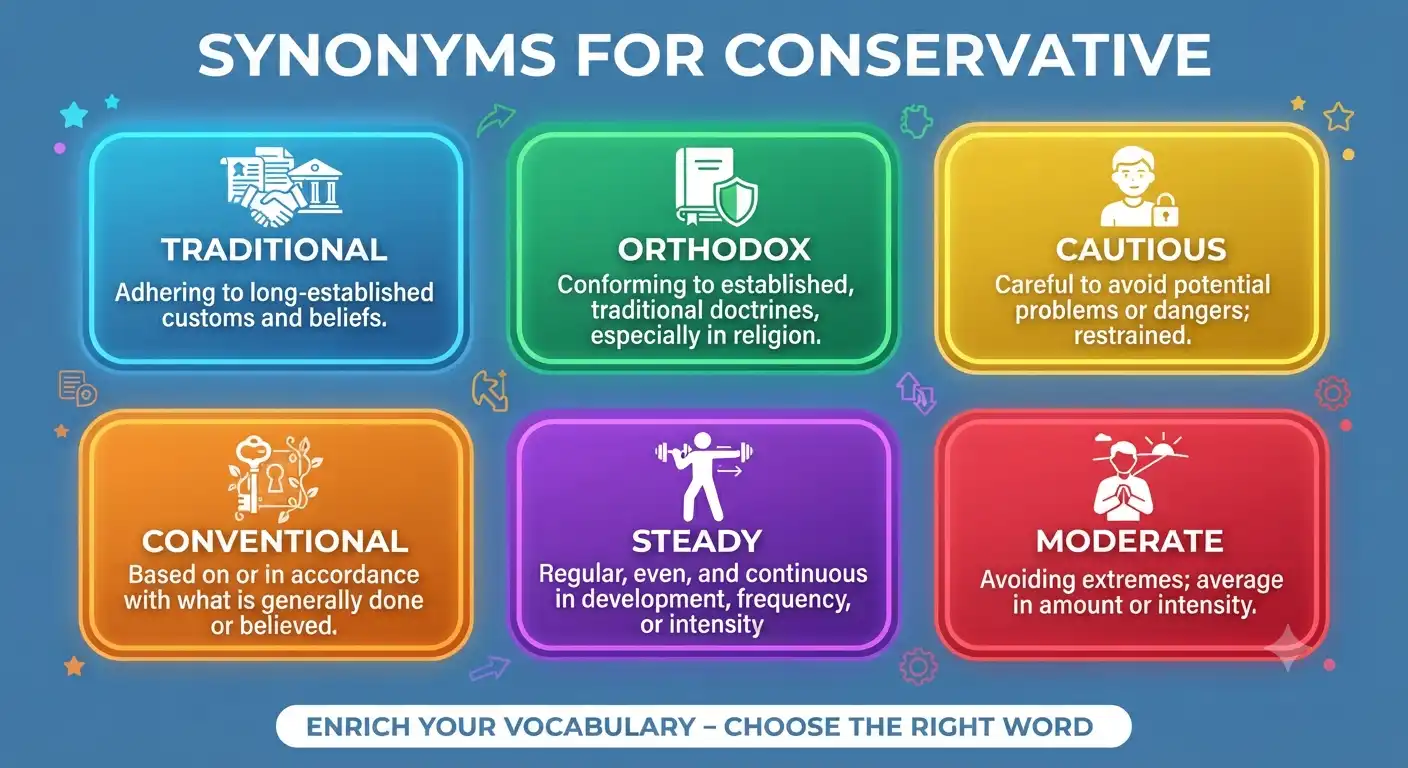
Pronunciation: US /trəˈdɪʃənəl/ – UK /trəˈdɪʃənəl/ Meaning: Traditional means following old customs and ways of doing things. Examples:
- My grandmother cooks food in a very traditional way.
- The wedding followed all the traditional steps.
2. Traditionalist
Pronunciation: US /trəˈdɪʃənəlɪst/ – UK /trəˈdɪʃənəlɪst/ Meaning: A traditionalist is a person who strongly believes in old customs. Examples:
- He is a traditionalist who never skips family rituals.
- The teacher was a traditionalist about grammar rules.
3. Conventional
Pronunciation: US /kənˈvɛnʃənəl/ – UK /kənˈvɛnʃənəl/ Meaning: Conventional means normal, common, and following usual rules. Examples:
- She wore a conventional black suit to the interview.
- His plan was safe and conventional.
4. Old-fashioned
Pronunciation: US /ˌoʊldˈfæʃənd/ – UK /ˌəʊldˈfæʃənd/ Meaning: Old-fashioned means belonging to an earlier time, not modern. Examples:
- My dad has old-fashioned ideas about phones.
- This café has an old-fashioned charm.
5. Cautious
Pronunciation: US /ˈkɔːʃəs/ – UK /ˈkɔːʃəs/ Meaning: Cautious means being careful to avoid danger or mistakes. Examples:
- He was cautious before signing the contract.
- Drivers should stay cautious in the rain.
6. Moderate
Pronunciation: US /ˈmɑːdərət/ – UK /ˈmɒdərət/ Meaning: Moderate means not extreme, staying in the middle ground. Examples:
- She holds moderate views on most topics.
- His spending habits are moderate, not wild.
7. Reserved
Pronunciation: US /rɪˈzɜːrvd/ – UK /rɪˈzɜːvd/ Meaning: Reserved means quiet and careful about showing feelings. Examples:
- My coworker is very reserved in meetings.
- She stayed reserved during the argument.
8. Orthodox
Pronunciation: US /ˈɔːrθədɑːks/ – UK /ˈɔːθədɒks/ Meaning: Orthodox means following accepted, traditional beliefs strictly. Examples:
- He follows an orthodox approach to teaching.
- Her family is orthodox in its religious practice.
9. Right-wing
Pronunciation: US /ˌraɪtˈwɪŋ/ – UK /ˌraɪtˈwɪŋ/ Meaning: Right-wing describes political beliefs that favor tradition and limited change. Examples:
- The right-wing party won the election.
- His views are known to be right-wing.
10. Prudent
Pronunciation: US /ˈpruːdənt/ – UK /ˈpruːdənt/ Meaning: Prudent means being wise and careful with decisions. Examples:
- Saving money early was a prudent choice.
- The manager gave prudent advice.
11. Guarded
Pronunciation: US /ˈɡɑːrdɪd/ – UK /ˈɡɑːdɪd/ Meaning: Guarded means careful and not fully open about thoughts. Examples:
- He gave a guarded answer to the question.
- She stayed guarded around new people.
12. Careful
Pronunciation: US /ˈkɛrfəl/ – UK /ˈkeəfəl/ Meaning: Careful means paying close attention to avoid mistakes. Examples:
- Be careful when crossing the busy road.
- She is careful with her monthly budget.
13. Sober
Pronunciation: US /ˈsoʊbər/ – UK /ˈsəʊbə/ Meaning: Sober means serious, calm, and not showing extreme emotion. Examples:
- He gave a sober speech about the future.
- Her sober tone calmed the room.
14. Restrained
Pronunciation: US /rɪˈstreɪnd/ – UK /rɪˈstreɪnd/ Meaning: Restrained means controlled and not extreme in behavior. Examples:
- His restrained style made the design look elegant.
- She gave a restrained reaction to the news.
15. Formal
Pronunciation: US /ˈfɔːrməl/ – UK /ˈfɔːməl/ Meaning: Formal means following official or traditional rules of behavior. Examples:
- The event required formal clothing.
- He spoke in a formal tone at the meeting.
16. Rigid
Pronunciation: US /ˈrɪdʒɪd/ – UK /ˈrɪdʒɪd/ Meaning: Rigid means strict and unwilling to change. Examples:
- The company has rigid rules about attendance.
- Her rigid schedule left no room for fun.
17. Strict
Pronunciation: US /strɪkt/ – UK /strɪkt/ Meaning: Strict means demanding that rules be followed exactly. Examples:
- Our teacher is strict about deadlines.
- He follows a strict diet plan.
18. Reactionary
Pronunciation: US /riˈækʃəneri/ – UK /riˈækʃənəri/ Meaning: Reactionary means strongly opposing new ideas or change. Examples:
- The reactionary group resisted the new law.
- His reactionary comments surprised everyone.
19. Old-guard
Pronunciation: US /ˌoʊldˈɡɑːrd/ – UK /ˌəʊldˈɡɑːd/ Meaning: Old-guard describes people who hold onto old systems and resist change. Examples:
- The old-guard members opposed the reform.
- She clashed with the old-guard leadership.
20. Establishment-minded
Pronunciation: US /ɪˈstæblɪʃmənt ˈmaɪndɪd/ – UK /ɪˈstæblɪʃmənt ˈmaɪndɪd/ Meaning: Establishment-minded means supporting existing systems and authority. Examples:
- Many voters are establishment-minded this year.
- His establishment-minded boss avoided big risks.
21. Staid
Pronunciation: US /steɪd/ – UK /steɪd/ Meaning: Staid means calm, serious, and a little boring in style. Examples:
- The bank has a staid, quiet office.
- His staid manner made him seem older.
22. Unadventurous
Pronunciation: US /ˌʌnədˈvɛntʃərəs/ – UK /ˌʌnədˈvɛntʃərəs/ Meaning: Unadventurous means not willing to try new or exciting things. Examples:
- He is unadventurous when it comes to food.
- Their travel plans were fairly unadventurous.
23. Modest
Pronunciation: US /ˈmɑːdɪst/ – UK /ˈmɒdɪst/ Meaning: Modest means simple, humble, and not showy. Examples:
- She lives in a modest house.
- His modest goals kept him grounded.
24. Circumspect
Pronunciation: US /ˈsɜːrkəmspɛkt/ – UK /ˈsɜːkəmspɛkt/ Meaning: Circumspect means thinking carefully before acting. Examples:
- He stayed circumspect during the negotiation.
- Her circumspect planning avoided problems.
25. Wary
Pronunciation: US /ˈwɛri/ – UK /ˈwɛəri/ Meaning: Wary means feeling cautious or suspicious about something. Examples:
- She was wary of the new online deal.
- He stayed wary around strangers.
26. Diehard
Pronunciation: US /ˈdaɪhɑːrd/ – UK /ˈdaɪhɑːd/ Meaning: Diehard means strongly loyal to old beliefs or habits. Examples:
- He is a diehard supporter of the old system.
- Her diehard loyalty to tradition never faded.
27. Hidebound
Pronunciation: US /ˈhaɪdbaʊnd/ – UK /ˈhaɪdbaʊnd/ Meaning: Hidebound means unwilling to change old rules or habits. Examples:
- The hidebound office rejected new software.
- His hidebound thinking slowed the team.
28. Hard-line
Pronunciation: US /ˈhɑːrdlaɪn/ – UK /ˈhɑːdlaɪn/ Meaning: Hard-line means having strict, firm, unchangeable views. Examples:
- The leader took a hard-line stance on the issue.
- Her hard-line rules upset the staff.
29. Right-leaning
Pronunciation: US /ˌraɪtˈliːnɪŋ/ – UK /ˌraɪtˈliːnɪŋ/ Meaning: Right-leaning means slightly favoring conservative political ideas. Examples:
- The newspaper is known as right-leaning.
- His right-leaning opinions caused debate.
30. Nonprogressive
Pronunciation: US /ˌnɑːnprəˈɡrɛsɪv/ – UK /ˌnɒnprəˈɡrɛsɪv/ Meaning: Nonprogressive means resisting new or modern ideas. Examples:
- The nonprogressive policy stayed unchanged for years.
- His nonprogressive attitude frustrated the team.
31. Old-school
Pronunciation: US /ˌoʊldˈskuːl/ – UK /ˌəʊldˈskuːl/ Meaning: Old-school means preferring older, traditional methods. Examples:
- My coach uses old-school training methods.
- She has an old-school way of writing letters.
32. Steady
Pronunciation: US /ˈstɛdi/ – UK /ˈstɛdi/ Meaning: Steady means stable and not likely to change suddenly. Examples:
- He keeps a steady job and routine.
- Her steady hands helped during surgery.
33. Sensible
Pronunciation: US /ˈsɛnsəbəl/ – UK /ˈsɛnsəbəl/ Meaning: Sensible means practical and showing good judgment. Examples:
- She made a sensible choice with her savings.
- His sensible advice helped the whole family.
34. Middle-of-the-road
Pronunciation: US /ˌmɪdl əv ðə ˈroʊd/ – UK /ˌmɪdl əv ðə ˈrəʊd/ Meaning: Middle-of-the-road means neither extreme, staying balanced. Examples:
- His politics are middle-of-the-road.
- The company took a middle-of-the-road approach.
35. Puritanical
Pronunciation: US /ˌpjʊrɪˈtænɪkəl/ – UK /ˌpjʊərɪˈtænɪkəl/ Meaning: Puritanical means very strict about morals and behavior. Examples:
- The old town had puritanical rules.
- Her puritanical views surprised her friends.
36. Straitlaced
Pronunciation: US /ˈstreɪtleɪst/ – UK /ˈstreɪtleɪst/ Meaning: Straitlaced means very strict and proper in behavior. Examples:
- He is too straitlaced to enjoy the party.
- Her straitlaced parents set early curfews.
37. Rightist
Pronunciation: US /ˈraɪtɪst/ – UK /ˈraɪtɪst/ Meaning: Rightist describes someone with strong conservative political views. Examples:
- The rightist party gained more seats.
- He identifies as a rightist voter.
38. Fundamentalist
Pronunciation: US /ˌfʌndəˈmɛntəlɪst/ – UK /ˌfʌndəˈmɛntəlɪst/ Meaning: Fundamentalist means strictly following the basic, original rules of a belief. Examples:
- The group follows a fundamentalist approach to the text.
- His fundamentalist views rarely change.
39. Insular
Pronunciation: US /ˈɪnsjələr/ – UK /ˈɪnsjʊlə/ Meaning: Insular means closed off and resistant to outside ideas. Examples:
- The small town felt insular and quiet.
- His insular thinking limited new ideas.
40. Unchanging
Pronunciation: US /ʌnˈtʃeɪndʒɪŋ/ – UK /ʌnˈtʃeɪndʒɪŋ/ Meaning: Unchanging means staying the same over time. Examples:
- Her daily routine is unchanging.
- The old shop has an unchanging menu.
41. Timid
Pronunciation: US /ˈtɪmɪd/ – UK /ˈtɪmɪd/ Meaning: Timid means shy and afraid to take risks. Examples:
- He gave a timid answer during the interview.
- Her timid approach slowed the project.
42. Time-honored
Pronunciation: US /ˈtaɪm ɑːnərd/ – UK /ˈtaɪm ɒnərd/ Meaning: Time-honored means respected because it is old and traditional. Examples:
- They followed a time-honored recipe.
- The ceremony used time-honored words.
43. Classic
Pronunciation: US /ˈklæsɪk/ – UK /ˈklæsɪk/ Meaning: Classic means traditional in style and widely respected. Examples:
- She wore a classic black dress.
- His classic approach never goes out of style.
44. Reluctant
Pronunciation: US /rɪˈlʌktənt/ – UK /rɪˈlʌktənt/ Meaning: Reluctant means unwilling or slow to do something new. Examples:
- He was reluctant to try the new app.
- She felt reluctant about changing jobs.
45. Watchful
Pronunciation: US /ˈwɑːtʃfəl/ – UK /ˈwɒtʃfəl/ Meaning: Watchful means alert and careful about possible risks. Examples:
- The watchful manager checked every report.
- Parents stayed watchful near the pool.
46. Down-to-earth
Pronunciation: US /ˌdaʊn tʊ ˈɜːrθ/ – UK /ˌdaʊn tʊ ˈɜːθ/ Meaning: Down-to-earth means practical, simple, and realistic. Examples:
- She gives down-to-earth advice to new writers.
- His down-to-earth style makes him easy to trust.
47. Levelheaded
Pronunciation: US /ˌlɛvəlˈhɛdɪd/ – UK /ˌlɛvəlˈhɛdɪd/ Meaning: Levelheaded means calm and sensible in decisions. Examples:
- The levelheaded captain kept the team calm.
- Her levelheaded thinking solved the problem fast.
48. Unprogressive
Pronunciation: US /ˌʌnprəˈɡrɛsɪv/ – UK /ˌʌnprəˈɡrɛsɪv/ Meaning: Unprogressive means resistant to new methods or ideas. Examples:
- The unprogressive rules slowed the school down.
- His unprogressive views clashed with the youth.
49. Set-in-one’s-ways
Pronunciation: US /sɛt ɪn wʌnz weɪz/ – UK /sɛt ɪn wʌnz weɪz/ Meaning: Set-in-one’s-ways means firmly attached to old habits and unwilling to change. Examples:
- My uncle is completely set-in-his-ways.
- She stayed set-in-her-ways about cooking.
50. Buttoned-up
Pronunciation: US /ˈbʌtənd ʌp/ – UK /ˈbʌtənd ʌp/ Meaning: Buttoned-up means proper, formal, and very controlled. Examples:
- The lawyer gave a buttoned-up presentation.
- His buttoned-up style suits the corporate world.
As many writers say, “The difference between the almost right word and the right word is really a large matter.” Choosing the correct synonym for conservative changes the entire tone of your sentence.
Antonyms of Conservative
Liberal, progressive, radical, modern, unconventional, adventurous, open-minded, experimental, revolutionary, flexible.
Prototype Meaning and Categorization of Conservative
The prototype meaning of conservative centers on caution and preference for tradition. It fits three main categories:
- Political category — right-wing, traditional government views
- Behavioral category — cautious, careful, steady personal choices
- Stylistic category — modest, formal, old-fashioned fashion or design
FAQ
1. What is the best synonym for conservative? Traditional and cautious are two of the most common and natural synonyms for conservative.
2. Is conservative a positive or negative word? It depends on context. It can mean wise and careful, or rigid and closed-minded.
3. What is the opposite of conservative? The main opposite is liberal or progressive.
4. Can conservative describe a person’s style? Yes. A conservative style means modest, formal, and simple clothing.
5. Is conservative only a political word? No. It also describes careful spending, cautious behavior, and traditional habits.
6. What is a casual synonym for conservative? Old-school and old-fashioned work well in casual conversation.
7. How do I use conservative synonyms in writing? Pick the synonym that matches your tone — formal words for essays, casual words for blogs.
Conclusion
Learning synonyms for conservative makes your writing, blogging, speaking, and daily communication stronger and more colorful. Instead of repeating one word, you now have 50 fresh choices that fit different situations, tones, and audiences. This skill helps your sentences feel natural instead of robotic.
Try using these words in your next email, essay, or daily conversation. Small changes like this build big confidence in your English over time.
“To learn a language is to have one more window from which to look at the world.”
“The limits of my language mean the limits of my world.”
“Vocabulary is a matter of precision and courage.”
Practice one new word each day, and soon these synonyms will feel like natural parts of your everyday English.

Michael Turner is a published fiction writer and creative writing tutor with over a decade of experience helping writers find the words that make their stories breathe ( Biography ).