Struggling to describe your characters in a way that feels vivid and original? You’re not alone. Many writers rely on the same basic descriptors—“nice,” “mean,” or “funny”—which can make characters feel flat. What you really need is a rich personality adjectives list for writers that helps you show depth, emotion, and uniqueness.
In creative writing, the right adjective can transform a character from forgettable to unforgettable. Whether you’re crafting a novel, short story, or screenplay, knowing how to choose precise personality traits will elevate your storytelling. In this guide, you’ll learn not just a list of adjectives, but how to use them effectively, when to avoid them, and how to adapt them for different tones.
As a fiction writer and tutor, I’ve seen firsthand how powerful word choice shapes reader perception. By the end of this article, you’ll have a practical toolkit to build stronger, more engaging characters.
Quick Answer:
A personality adjectives list for writers includes descriptive words like “ambitious,” “cynical,” “empathetic,” and “impulsive” that help define a character’s behavior, mindset, and emotional traits. These adjectives allow you to create nuanced, believable characters and avoid repetitive or vague descriptions in your writing.
What Does “Personality Adjectives List for Writers” Mean?
A personality adjectives list for writers is a curated collection of descriptive words used to define a character’s inner traits, behaviors, and emotional tendencies.
These adjectives go beyond physical description. Instead of telling readers what a character looks like, they reveal:
- How your character thinks
- How they react under pressure
- How they interact with others
Why It Matters in Creative Writing
In fiction, personality drives plot. A stubborn character makes different choices than a cautious one. According to storytelling frameworks used in modern fiction workshops, character traits directly influence conflict and pacing.
Writer’s Tip:
Instead of writing “She was nice,” try “She was compassionate but quietly guarded.” This adds complexity instantly.
Complete Synonyms List
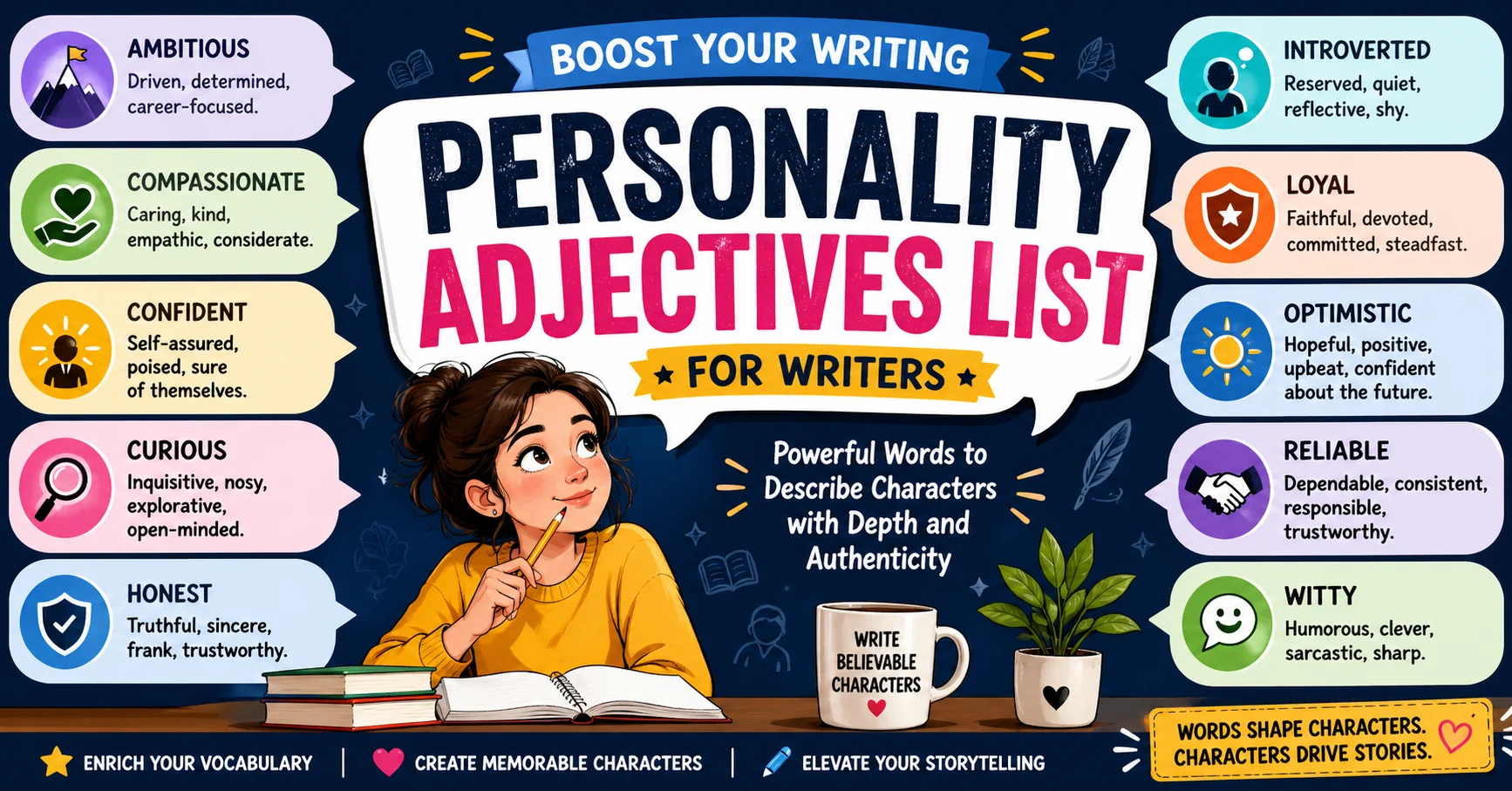
Here’s a powerful personality adjectives list for writers you can use to enrich your storytelling:
Positive Traits
- Compassionate
- Resilient
- Charismatic
- Loyal
- Thoughtful
- Optimistic
Neutral Traits
- Reserved
- Analytical
- Independent
- Practical
Negative Traits
- Arrogant
- Impulsive
- Cynical
- Manipulative
- Stubborn
- Jealous
Complex / Layered Traits
- Idealistic
- Skeptical
- Ambitious
- Introverted
- Perceptive
- Volatile
In our experience helping writers, those who use layered adjectives (like “ambitious yet insecure”) create more realistic characters than those using single traits.
Comparison Table
| Word | Simple Meaning | Best Used When | Avoid When |
| Ambitious | Driven to succeed | Showing goal-oriented characters | Overusing for every protagonist |
| Cynical | Distrustful of motives | Writing anti-heroes or realism | Light-hearted stories |
| Compassionate | Deeply caring | Emotional or empathetic scenes | Villain-focused narratives |
| Impulsive | Acts without thinking | Conflict-driven plots | Highly strategic characters |
| Reserved | Quiet and private | Introverted personalities | Action-heavy scenes |
| Charismatic | Naturally charming | Leadership roles | Shy or withdrawn characters |
Formal vs Informal Synonyms
| Formal Adjective | Informal Alternative | Usage Context |
| Altruistic | Kind-hearted | Academic or literary writing |
| Obstinate | Stubborn | Formal narration |
| Gregarious | Outgoing | Dialogue or casual tone |
| Melancholic | Sad | Emotional or poetic writing |
| Pragmatic | Practical | Analytical descriptions |
Writer’s Tip:
Formal adjectives add depth in narration, while informal ones work better in dialogue.
Real Example Sentences
Here are practical ways to use personality adjectives in your writing:
- He was ambitious, always chasing goals others feared to pursue.
- Her compassionate nature made her forgive even the harshest mistakes.
- The cynical detective trusted no one, not even his own instincts.
- She remained reserved, revealing little about her past.
- His impulsive decision changed the course of the entire story.
- The charismatic leader inspired loyalty with just a few words.
- Despite being stubborn, she eventually accepted the truth.
- His analytical mind saw patterns others missed.
Show-Don’t-Tell Example
Instead of:
- “He was arrogant.”
Try:
- “He dismissed every suggestion with a smirk, convinced he already knew better.”
When to Use vs When NOT to Use
When to Use Personality Adjectives
Use them when you need to:
- Quickly establish character traits
- Clarify motivations
- Add depth to narration
- Contrast characters in dialogue
When NOT to Use Them
Avoid overusing adjectives when:
- You can show behavior instead
- The adjective feels generic (e.g., “nice,” “bad”)
- It slows down pacing
- It repeats what’s already obvious
Writers we work with often rely too heavily on adjectives instead of action. Strong storytelling balances both.
Common Mistakes Writers Make
1. Overusing Basic Adjectives
Words like “good” or “mean” lack depth.
2. Stacking Too Many Traits
Example: “She was kind, smart, funny, generous…”
This overwhelms readers.
3. Contradictory Traits Without Context
A character can be both “kind” and “cruel,” but you must explain why.
4. Telling Instead of Showing
Adjectives should support actions, not replace them.
5. Ignoring Tone Consistency
Formal adjectives in casual dialogue feel unnatural.
Tips and Best Practices
1. Pair Adjectives for Depth
Use combinations like:
- “Confident but insecure”
- “Brave yet reckless”
2. Match Traits to Plot
Your character’s personality should influence decisions and outcomes.
3. Use Adjectives Sparingly
Let actions reveal most traits.
4. Adapt to Genre
- Fantasy: “valiant,” “ruthless”
- Romance: “passionate,” “guarded”
- Thriller: “paranoid,” “calculating”
5. Revise During Editing
In early drafts, use adjectives freely. In revision, replace weak ones with stronger, specific terms.
Writer’s Tip:
In workshops, I often ask writers to remove 50% of their adjectives. The result is sharper, more engaging prose.
Frequently Asked Questions
Q1: What are personality adjectives in writing?
A: Personality adjectives are descriptive words that define a character’s emotional traits, behaviors, and mindset. They help readers understand motivations and reactions, making characters more believable and relatable in storytelling.
Q2: How many personality adjectives should I use for a character?
A: Use 2–4 key traits to define a character clearly. Too many adjectives can confuse readers. Focus on core traits and reveal additional nuances through actions, dialogue, and character development over time.
Q3: Are personality adjectives better than showing actions?
A: No, actions are stronger. Adjectives should support, not replace, behavior. Use them sparingly to clarify traits, then reinforce them through what the character says and does.
Q4: Can I use the same adjectives for multiple characters?
A: You can, but vary context and expression. If two characters are “ambitious,” show it differently—one may be strategic, another reckless. This keeps each character unique.
Q5: What are the best personality adjectives for fiction writing?
A: Strong choices include “complex” traits like ambitious, cynical, compassionate, impulsive, and perceptive. These create layered characters and allow for conflict and growth throughout the story.
Q6: How do I make personality adjectives sound natural in dialogue?
A: Avoid formal adjectives in casual speech. Instead of “gregarious,” use “outgoing.” Match the vocabulary to the character’s voice and background to maintain authenticity and realism.
Conclusion
A strong personality adjectives list for writers is more than just vocabulary—it’s a storytelling tool. The right words shape how readers see your characters, influence plot direction, and create emotional impact.
Focus on clarity, depth, and balance. Use adjectives to guide the reader, but let actions bring your characters to life. In our experience, the best writing blends precise word choice with meaningful behavior.
You might also want to read our guide on character traits vs emotions to deepen your understanding.
Keep writing, keep refining, and let your characters speak through every word you choose.

Michael Turner is a published fiction writer and creative writing tutor with over a decade of experience helping writers find the words that make their stories breathe ( Biography ).