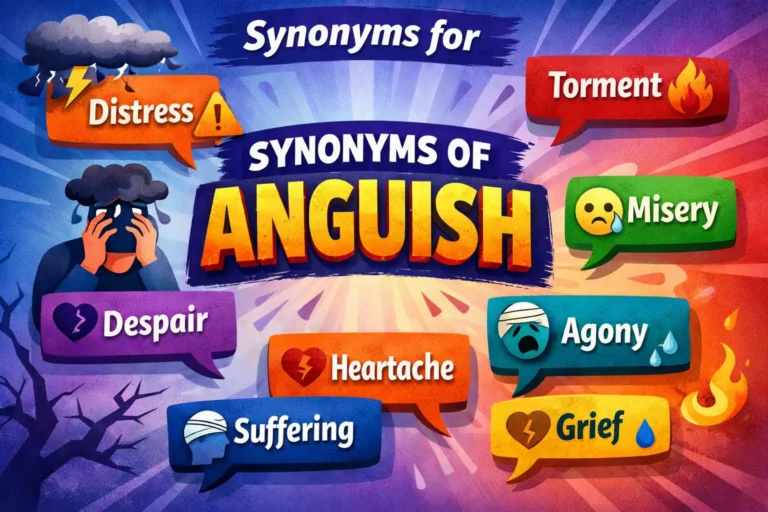
The word anguish appears in daily speech, news, books, and emotional writing. It describes strong pain or sadness. Learning synonyms helps you express feelings more clearly and avoid repeating the same word.
Direct Answer
Anguish means extreme emotional or physical suffering. It describes deep pain that feels intense and overwhelming.
Common synonyms include:
- agony
- distress
- torment
- misery
- suffering
- sorrow
- heartbreak
Meaning of Anguish
Anguish is a feeling of very strong pain, either emotional or physical. It often describes deep sadness or mental suffering.
Example:
She cried in anguish after hearing the bad news.
Categories of Synonyms
Physical discomfort
These words describe body pain or strong physical suffering.
Emotional discomfort
These synonyms focus on sadness, grief, or mental pain.
Social discomfort
These words describe suffering caused by life situations or relationships.
Synonyms Table
| Word | Simple Meaning | Example Sentence |
| agony | very strong pain | He screamed in agony after the injury. |
| distress | worry or sadness | The news caused great distress. |
| torment | ongoing suffering | The heat was pure torment. |
| misery | deep unhappiness | She lived in misery for years. |
| suffering | experiencing pain | The animal was suffering badly. |
| sorrow | deep sadness | He spoke with sorrow in his voice. |
| heartbreak | emotional pain | The breakup caused heartbreak. |
Master Synonyms List (Grouped by Level)
Beginner / Simple
misery — deep unhappiness
Example: She felt misery after losing her job. (Informal)
sorrow — strong sadness
Example: He showed sorrow at the funeral. (Neutral)
Intermediate
distress — emotional pain or worry
Example: The message caused distress among workers. (Neutral)
suffering — experiencing pain
Example: Many people are suffering from hunger. (Neutral)
Advanced / Formal
agony — extreme pain
Example: He lay in agony after the accident. (Formal)
torment — severe ongoing pain
Example: The memory remained a torment. (Formal)
heartbreak — intense emotional loss
Example: The loss brought heartbreak to the family. (Neutral/Formal)
Formal vs Informal Synonyms
Formal writing prefers words like agony, torment, and distress. Casual conversation often uses misery or heartbreak. Choose based on audience and tone. Academic writing usually avoids overly dramatic informal words.
Real-Life Usage Examples
Conversation:
“I’m in total heartbreak after the breakup.”
Academic writing:
“The event caused psychological distress among survivors.”
Business writing:
“The delay resulted in customer suffering.”
Blogging:
“She shared her misery openly online.”
Emotional expression:
“He whispered his sorrow quietly.”
Similar Words Comparison
Anguish vs agony
Anguish focuses more on emotional pain.
Agony often suggests physical pain.
Example:
She felt anguish after the loss.
He cried in agony after surgery.
Anguish vs distress
Distress is milder and more controlled.
Anguish is stronger and more intense.
Example:
The email caused distress, not panic.
The tragedy caused deep anguish.
Example Sentences
- The parents waited in anguish.
- His voice shook with sorrow.
- She lived in quiet misery.
- The injury left him in agony.
- The decision caused public distress.
- He could not hide his heartbreak.
- The heat felt like torment.
- Years of suffering changed her.
- They watched in anguish.
- The crowd reacted with sorrow.
- Her misery was visible.
- The animal’s suffering was clear.
- He spoke through heartbreak.
- The silence added torment.
- The news spread distress quickly.
Common Mistakes
- Using agony for small discomfort → sounds exaggerated
- Confusing distress with panic → distress is calmer
- Overusing dramatic words in formal writing
- Using emotional synonyms for physical pain incorrectly
- Repeating the same synonym too often
Tips / Best Practices
- Match the synonym to emotional intensity
- Consider formal vs casual tone
- Use clear words for your audience
- Avoid exaggeration
- Do not overuse dramatic vocabulary
When NOT to Use Anguish
Avoid anguish for minor sadness or everyday stress. It suggests extreme suffering. Using it too casually can sound unnatural or dramatic.
Opposite Words (Antonyms)
- joy
- relief
- comfort
- happiness
- peace
FAQs
What does anguish mean?
It means extreme emotional or physical pain.
Is anguish formal or informal?
It works in both but sounds strong and dramatic.
How can I use it in conversation?
Use it for serious emotional pain, not small problems.
What is the best synonym for anguish?
Agony for physical pain, sorrow for emotional pain.
Can anguish be replaced with misery?
Yes, but misery is slightly less intense.
Conclusion
Learning synonyms for anguish improves emotional precision in writing and speaking. It helps you express tone clearly and avoid repetition.
Try using 3 new synonyms in your next sentence.

Michael Turner creates simple synonym guides that help readers expand their vocabulary and choose the right word for the right context.