
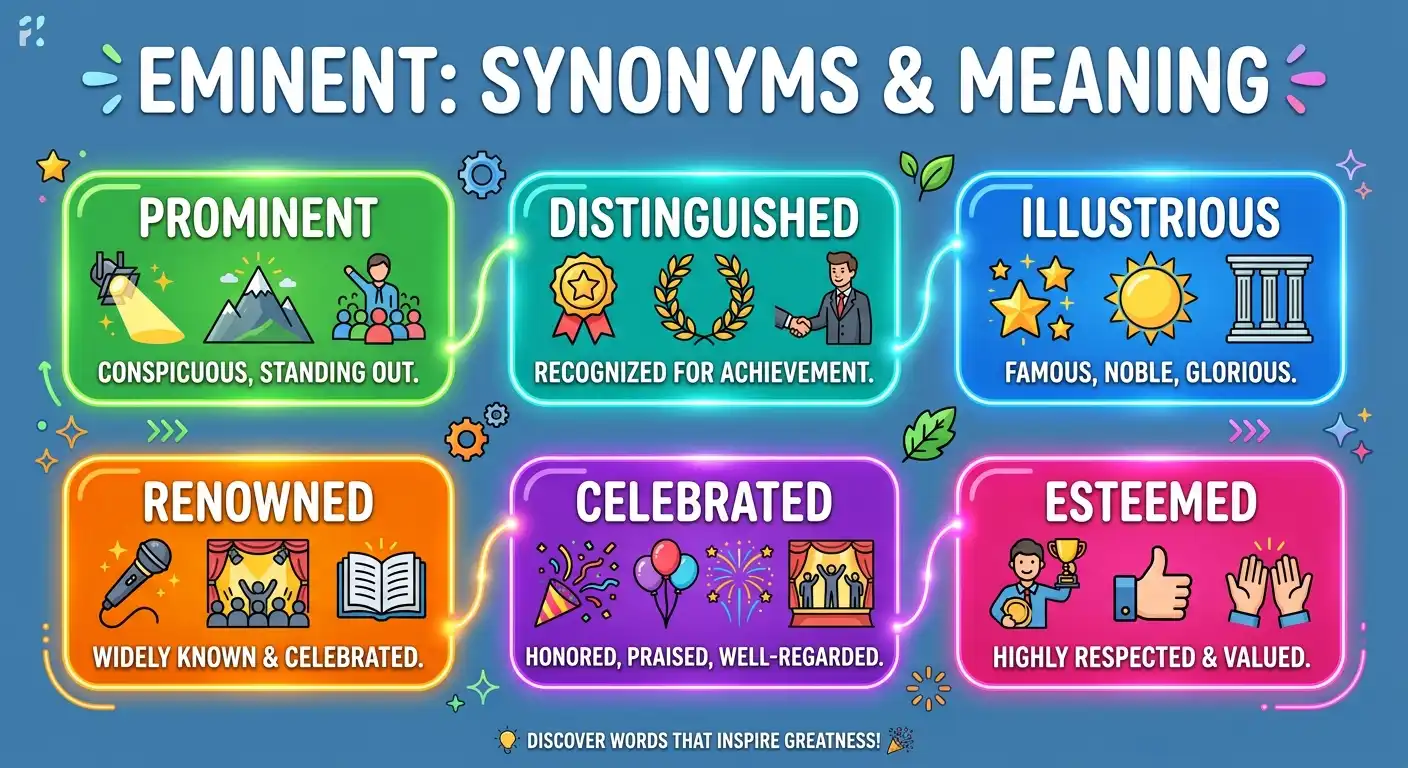
When you search for synonyms for eminent, you want to find the perfect word to describe someone who is famous, respected, or standing out in their field. Learning synonyms for eminent helps you speak and write with precision. Using the right synonyms for eminent makes your essays, blog posts, and daily emails clear, engaging, and powerful.
Imagine a top surgeon entering an operating room, or a world-class scientist receiving a Nobel Prize. These people are not just well-known; they are respected for their high achievement and skill. That is what the word eminent means. It describes someone who rises above others because of their wisdom, rank, or talent.
For example, an eminent scholar gives a speech at a university, and everyone listens carefully because of the scholar’s great reputation.
In simple terms, eminent means standing out because you are great at what you do. It refers to someone who is high in rank, respected by peers, and famous for good reasons.
“Words are the tools with which we shape our thoughts and share our respect.”
Learning alternative words for eminent is useful for many people:
- Students can boost their essay scores by using precise adjectives.
- Bloggers can keep readers hooked with fresh vocabulary.
- Content Writers can avoid repeating the same words in articles.
- Daily English Users can express respect and praise more accurately in work emails and conversations.
“Choosing the right word at the right time transforms simple writing into strong communication.”
Linguistic Breakdown of Eminent
Connotative Meaning of Eminent
The word eminent carries a very positive and formal tone. It implies high honor, deep respect, leadership, and outstanding skill. Unlike words that mean famous for bad reasons, eminent always suggests quality, wisdom, and professional achievement.
Etymology of Eminent
- Origin: Derived from the Latin word eminentem.
- Prefix: e- (a variant of ex-), meaning “out” or “up”.
- Root: minere, meaning “to jut” or “to stand out”.
- Historical Path: Passed through Middle French as éminent before entering Middle English in the 15th century.
Pronunciation of Eminent
- US (IPA): /ˈɛmənənt/
- UK (IPA): /ˈɛmɪnənt/
Syllables
- Count: 3 syllables
- Breakdown: em-i-nent
Affixation Pattern
- Base Root: min (to jut or project)
- Prefix: e- (out / away)
- Suffix: -ent (adjective-forming suffix meaning “being in a state of”)
Synonym Comparison Table
| Keyword | Meaning | Usage Type | Context |
| Eminent | High in rank, respected, and famous in a field. | Formal / Professional | Academic, professional, or high-level recognition. |
| Prominent | Easy to notice or standing out clearly. | Formal / Casual | Physical traits, public figures, or key issues. |
| Renowned | Known and praised by many people across places. | Professional / Public | Global fame, arts, science, and history. |
| Distinguished | Showing dignity, skill, and high status. | Formal / Respectful | Careers, awards, formal events, and military rank. |
| Illustrious | Admired greatly because of glorious achievements. | High Formal / Literary | Historical figures, noble titles, and legacy. |
| Preeminent | Superior to all others in a specific group. | Professional / Academic | Top experts, leaders, and supreme authority. |
| Esteemed | Held in deep respect and high regard. | Formal / Warm | Workplaces, communities, and mentorship. |
| Notable | Worthy of attention or remark. | Casual / Professional | Local news, accomplishments, and events. |
| Acclaimed | Publicly praised and celebrated by critics. | Artistic / Commercial | Books, movies, performances, and art. |
| Venerable | Respected due to great age, wisdom, or character. | Formal / Reverent | Elders, old institutions, and religious leaders. |
50 Synonyms for Eminent
1. Prominent
- Pronunciation: US: /ˈprɑːmənənt/ | UK: /ˈprɒmɪnənt/
- Meaning: Easy to see or widely known by the public.
- Examples:
- She is a prominent doctor in our city.
- The sign was placed in a prominent spot near the door.
2. Renowned
- Pronunciation: US: /rɪˈnaʊnd/ | UK: /rɪˈnaʊnd/
- Meaning: Famous and admired for special skills or achievements.
- Examples:
- He is a renowned chef who cooks delicious meals.
- The museum features artwork from renowned painters.
3. Distinguished
- Pronunciation: US: /dɪˈstɪŋɡwɪʃt/ | UK: /dɪˈstɪŋɡwɪʃt/
- Meaning: Respectable and successful over a long career.
- Examples:
- The distinguished professor won an award yesterday.
- He walked into the room with a distinguished look.
4. Illustrious
- Pronunciation: US: /ɪˈlʌstriəs/ | UK: /ɪˈlʌstriəs/
- Meaning: Very famous and impressive because of noble deeds.
- Examples:
- The general had an illustrious career in the navy.
- We read about the country’s illustrious past in history class.
5. Celebrated
- Pronunciation: US: /ˈsɛlɪˌbreɪtɪd/ | UK: /ˈsɛlɪbreɪtɪd/
- Meaning: Praised and honored by many people.
- Examples:
- She is a celebrated writer with many best-selling books.
- The town honored its most celebrated athlete today.
6. Esteemed
- Pronunciation: US: /ɪˈstiːmd/ | UK: /ɪˈstiːmd/
- Meaning: Highly valued and respected by friends or colleagues.
- Examples:
- We welcome our esteemed guest to the stage.
- Her advice is always valued by her esteemed peers.
7. Preeminent
- Pronunciation: US: /priːˈɛmənənt/ | UK: /priːˈɛmɪnənt/
- Meaning: Better than all others in a specific area.
- Examples:
- She is the preeminent expert on ocean life.
- This company is the preeminent builder of electric cars.
8. Notable
- Pronunciation: US: /ˈnoʊtəbəl/ | UK: /ˈnəʊtəbl/
- Meaning: Important enough to be noticed or remembered.
- Examples:
- There was a notable change in the weather today.
- Many notable guests attended the grand opening.
9. Acclaimed
- Pronunciation: US: /əˈkleɪmd/ | UK: /əˈkleɪmd/
- Meaning: Welcomed with loud praise and strong approval.
- Examples:
- The new movie received acclaimed reviews from critics.
- He is an acclaimed musician who plays the piano well.
10. Venerable
- Pronunciation: US: /ˈvɛnərəbəl/ | UK: /ˈvɛnərəbl/
- Meaning: Deserving respect because of age, wisdom, or history.
- Examples:
- The venerable judge made a wise decision in court.
- We visited a venerable church built hundreds of years ago.
11. Outstanding
- Pronunciation: US: /aʊtˈstændɪŋ/ | UK: /aʊtˈstændɪŋ/
- Meaning: Extremely good and standing out clearly from the rest.
- Examples:
- You did an outstanding job on your science project.
- She was named the most outstanding student of the year.
12. Prestigious
- Pronunciation: US: /prɛˈstɪdʒəs/ | UK: /prɛˈstɪdʒəs/
- Meaning: Having a high reputation that brings respect.
- Examples:
- He won a prestigious scholarship to study abroad.
- She works at a prestigious law firm downtown.
13. Respected
- Pronunciation: US: /rɪˈspɛktɪd/ | UK: /rɪˈspɛktɪd/
- Meaning: Thought of with high regard and admiration.
- Examples:
- Our teacher is deeply respected by all students.
- He gave a thoughtful speech to his respected team.
14. Well-known
- Pronunciation: US: /ˌwɛlˈnoʊn/ | UK: /ˌwɛlˈnəʊn/
- Meaning: Known by a large number of people.
- Examples:
- Pizza is a well-known food around the world.
- She is a well-known reporter on evening television.
15. Exalted
- Pronunciation: US: /ɪɡˈzɑːltɪd/ | UK: /ɪɡˈzɔːltɪd/
- Meaning: Placed in a high rank or position of honor.
- Examples:
- The king held an exalted rank in the land.
- She reached an exalted position in her business career.
16. Legendary
- Pronunciation: US: /ˈlɛdʒənˌdɛri/ | UK: /ˈlɛdʒəndri/
- Meaning: So famous that people tell famous stories about you.
- Examples:
- The coach is a legendary figure in college football.
- Her kindness is legendary among her neighbors.
17. Supreme
- Pronunciation: US: /suːˈpriːm/ | UK: /suːˈpriːm/
- Meaning: Highest in authority, power, or quality.
- Examples:
- The court made a supreme decision that became law.
- He acted with supreme confidence during his presentation.
18. Leading
- Pronunciation: US: /ˈliːdɪŋ/ | UK: /ˈliːdɪŋ/
- Meaning: Most important, top-ranked, or at the front.
- Examples:
- She is the leading scorer on our soccer team.
- They are the leading sellers of fresh organic fruit.
19. Paramount
- Pronunciation: US: /ˈpærəˌmaʊnt/ | UK: /ˈpærəmaʊnt/
- Meaning: More important than anything else.
- Examples:
- Safety is of paramount importance on this job site.
- Keeping your promise is a paramount duty.
20. Honored
- Pronunciation: US: /ˈɑːnərd/ | UK: /ˈɒnəd/
- Meaning: Treated with high respect and special privileges.
- Examples:
- The honored guest sat at the head of the dinner table.
- He felt honored to receive the community service award.
21. Superlative
- Pronunciation: US: /səˈpɜːrlətɪv/ | UK: /suːˈpɜːlətɪv/
- Meaning: Of the highest quality or degree.
- Examples:
- The singer delivered a superlative performance tonight.
- Her work shows superlative care and attention to detail.
22. Peerless
- Pronunciation: US: /ˈpɪrləs/ | UK: /ˈpɪələs/
- Meaning: Having no equal; better than all others.
- Examples:
- His skill with a paintbrush is truly peerless.
- She showed peerless courage during the storm.
23. Matchless
- Pronunciation: US: /ˈmætʃləs/ | UK: /ˈmætʃləs/
- Meaning: So good that nothing can match or compare to it.
- Examples:
- The baker creates cakes with matchless flavor.
- The team played with matchless energy and heart.
24. Top-tier
- Pronunciation: US: /ˈtɑːp.tɪr/ | UK: /ˈtɒp.tɪə/
- Meaning: Belonging to the highest level or group.
- Examples:
- She plays for a top-tier soccer team in the league.
- This university offers top-tier training for engineers.
25. Remarkable
- Pronunciation: US: /rɪˈmɑːrkəbəl/ | UK: /rɪˈmɑːkəbl/
- Meaning: Unusual or special in a way that gets noticed.
- Examples:
- The young child has a remarkable memory for numbers.
- It was a remarkable day filled with happy events.
26. Stellar
- Pronunciation: US: /ˈstɛlər/ | UK: /ˈstɛlə/
- Meaning: Exceptionally good or high-performing.
- Examples:
- He received a stellar grade on his final exam.
- Her stellar career inspired many young athletes.
27. Noteworthy
- Pronunciation: US: /ˈnoʊtˌwɜːrði/ | UK: /ˈnəʊtˌwɜːði/
- Meaning: Deserving of attention because of importance.
- Examples:
- The speaker made several noteworthy points.
- Winning three games in a row was a noteworthy feat.
28. Dominant
- Pronunciation: US: /ˈdɑːmənənt/ | UK: /ˈdɒmɪnənt/
- Meaning: Powerful, influential, or ruling over others.
- Examples:
- They are the dominant team in the basketball tournament.
- The company holds a dominant share of the market.
29. Unrivaled
- Pronunciation: US: /ʌnˈraɪvəld/ | UK: /ʌnˈraɪvəld/
- Meaning: Having no competition or equal.
- Examples:
- The view from the top of the mountain is unrivaled.
- She brings unrivaled experience to her new job.
30. World-famous
- Pronunciation: US: /ˌwɜːrldˈfeɪməs/ | UK: /ˌwɜːldˈfeɪməs/
- Meaning: Known by people across the entire globe.
- Examples:
- The Eiffel Tower is a world-famous landmark in Paris.
- He is a world-famous singer who fills large stadiums.
31. Noble
- Pronunciation: US: /ˈnoʊbəl/ | UK: /ˈnəʊbl/
- Meaning: Having fine personal qualities or high moral rank.
- Examples:
- Helping those in need is a noble goal.
- He comes from a noble family with a long history.
32. Elevated
- Pronunciation: US: /ˈɛlɪˌveɪtɪd/ | UK: /ˈɛlɪveɪtɪd/
- Meaning: Raised up to a high level or position.
- Examples:
- She holds an elevated place in the community.
- He spoke with an elevated tone of dignity.
33. Sublime
- Pronunciation: US: /səˈblaɪm/ | UK: /səˈblaɪm/
- Meaning: Of great beauty, excellence, or grand quality.
- Examples:
- The dessert tasted absolutely sublime.
- We watched a sublime sunset over the quiet lake.
34. Grand
- Pronunciation: US: /ɡrænd/ | UK: /ɡrænd/
- Meaning: Magnificent, impressive, and large in scale.
- Examples:
- The palace had a grand hallway lined with statues.
- They made grand plans for their summer vacation.
35. Formidable
- Pronunciation: US: /ˈfɔːrmədəbəl/ | UK: /ˈfɔːmɪdəbl/
- Meaning: Inspiring respect or power because of size or skill.
- Examples:
- The chess champion is a formidable player.
- They faced a formidable challenge but succeeded.
36. Famous
- Pronunciation: US: /ˈfeɪməs/ | UK: /ˈfeɪməs/
- Meaning: Known about by many people.
- Examples:
- This restaurant is famous for its fresh sourdough bread.
- She became famous after singing on TV.
37. Heroic
- Pronunciation: US: /həˈroʊɪk/ | UK: /hɪˈrəʊɪk/
- Meaning: Showing great bravery, honor, or strength.
- Examples:
- The firefighter made a heroic rescue in the burning building.
- They put up a heroic effort to win the game.
38. High-ranking
- Pronunciation: US: /ˈhaɪˌræŋkɪŋ/ | UK: /ˈhaɪˌræŋkɪŋ/
- Meaning: Holding a top position in an organization.
- Examples:
- A high-ranking officer led the safety meeting.
- She talked with a high-ranking city official today.
39. Recognized
- Pronunciation: US: /ˈrɛkəɡˌnaɪzd/ | UK: /ˈrɛkəɡnaɪzd/
- Meaning: Known and accepted as valid, talented, or official.
- Examples:
- He is a recognized leader in clean energy research.
- Her hard work was recognized at the annual party.
40. Dazzling
- Pronunciation: US: /ˈdæzlɪŋ/ | UK: /ˈdæzlɪŋ/
- Meaning: Extremely impressive, bright, or skillful.
- Examples:
- The dancer gave a dazzling show on stage.
- She has a dazzling smile that warms the room.
41. Signal
- Pronunciation: US: /ˈsɪɡnəl/ | UK: /ˈsɪɡnəl/
- Meaning: Remarkably good, important, or noticeable.
- Examples:
- Winning the award was a signal victory for her team.
- He achieved signal success in his business venture.
42. Conspicuous
- Pronunciation: US: /kənˈspɪkjuəs/ | UK: /kənˈspɪkjuəs/
- Meaning: Standing out clearly so as to be easily seen.
- Examples:
- He showed conspicuous bravery during the emergency.
- The bright red hat made her conspicuous in the crowd.
43. Prime
- Pronunciation: US: /praɪm/ | UK: /praɪm/
- Meaning: Of the best possible quality or condition.
- Examples:
- The store is in a prime location near the train station.
- This beef cut is of prime quality.
44. Majestic
- Pronunciation: US: /məˈdʒɛstɪk/ | UK: /məˈdʒɛstɪk/
- Meaning: Having grand beauty, dignity, or power.
- Examples:
- We saw a majestic eagle flying high in the sky.
- The majestic mountains were covered in fresh snow.
45. Great
- Pronunciation: US: /ɡreɪt/ | UK: /ɡreɪt/
- Meaning: Much above average in skill, size, or status.
- Examples:
- He was a great leader who cared about his people.
- She showed great patience while teaching the class.
46. Key
- Pronunciation: US: /kiː/ | UK: /kiː/
- Meaning: Extremely important or essential.
- Examples:
- She was a key speaker at the main conference.
- Hard work is a key reason for his success.
47. Chief
- Pronunciation: US: /tʃiːf/ | UK: /tʃiːf/
- Meaning: Most important or highest in authority.
- Examples:
- Honesty is her chief virtue as a team leader.
- He is the chief engineer on the new bridge project.
48. Foremost
- Pronunciation: US: /ˈfɔːrmoʊst/ | UK: /ˈfɔːməʊst/
- Meaning: Most prominent in rank, place, or position.
- Examples:
- She is one of the foremost experts on plant growth.
- Safety remains our foremost thought every day.
49. Superior
- Pronunciation: US: /suːˈpɪriər/ | UK: /suːˈpɪərɪə/
- Meaning: Higher in quality, rank, or value compared to others.
- Examples:
- This tool is made of superior materials that last long.
- She demonstrated superior skill in solving the problem.
50. Glorious
- Pronunciation: US: /ˈɡlɔːriəs/ | UK: /ˈɡlɔːrɪəs/
- Meaning: Having or bringing fame, beauty, and honor.
- Examples:
- The team had a glorious victory in the final game.
- We enjoyed a glorious sunny afternoon at the beach.
“Expanding your vocabulary gives you the exact tools you need to paint your thoughts clearly.”
Antonyms of Eminent
While eminent describes people who stand out for great reasons, antonyms describe people or things that are hidden, plain, or unknown:
- Obscure: Unknown or not widely remembered.
- Unknown: Having no fame or recognition.
- Ordinary: Average, normal, or not special in any way.
- Humble: Low in rank, modest, or simple.
- Undistinguished: Lacking special qualities or accomplishments.
- Ignoble: Lacking high social status or moral dignity.
Prototype Meaning and Categorization of Eminent
To understand the core meaning of eminent, think of its linguistic prototype:
[ Prototype Concept: High Standing & Visible Excellence ]
│
┌───────────────┴───────────────┐
▼ ▼
[ Professional Skill ] [ Social Recognition ]
(Expert, Top Surgeon) (Respected, Honored)
- Category: High-status Adjective.
- Core Feature: Standing out vertically (above peers) in skill or status.
- Application: Used primarily for people, professions, titles, and achievements.
Frequently Asked Questions (FAQ)
What is the simple meaning of eminent?
Eminent means famous, respected, and standing out because of high achievement or great skill in a field.
What is the main difference between eminent and prominent?
Eminent refers specifically to high achievement, honor, and expert respect. Prominent can mean famous, but it also simply means physically noticeable or easy to see.
How do you use “eminent” in a sentence?
You can use it to describe an expert: “The university invited an eminent scientist to speak at the ceremony.”
Is eminent a formal word?
Yes, eminent is a formal adjective. It is used mostly in professional, academic, news, and literary contexts.
Can eminent be used for negative fame?
No. Eminent is almost always used positively. If someone is famous for bad things, use the word notorious instead.
What is the noun form of eminent?
The noun form of eminent is eminence, which means high station, rank, or repute.
Conclusion
Learning synonyms for eminent is a simple way to build better language skills. When you replace overused words like “famous” or “good” with words like distinguished, renowned, or preeminent, your writing becomes richer and easier to read.
Mastering these words benefits every area of communication:
- Writing: Your essays, reports, and posts gain clarity and authority.
- Blogging: Fresh vocabulary keeps readers engaged and reading longer.
- Speaking: Using precise words builds your confidence in meetings and presentations.
- Daily English: You can express praise and respect naturally in everyday messages.
Try using two or three of these new words in your emails or writing assignments today. Practice makes these words a natural part of your vocabulary!
“A rich vocabulary opens doors to clear thinking and persuasive speech.”
“The right word carries power, respect, and lasting impact.”

Michael Turner is a published fiction writer and creative writing tutor with over a decade of experience helping writers find the words that make their stories breathe ( Biography ).