Introduction
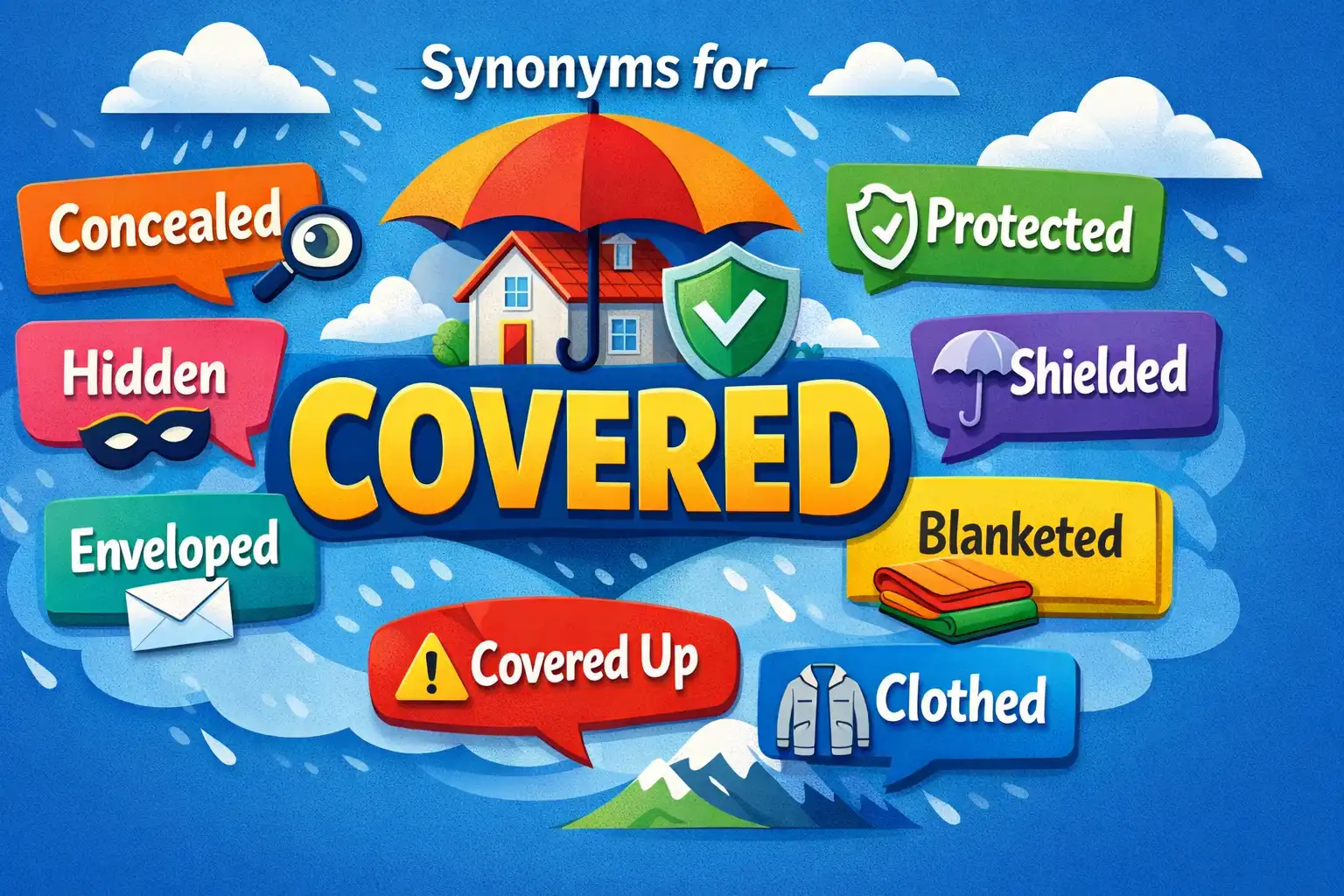
Imagine you are writing a story about a snowy day. You might write that the ground covered in white snow. If you keep using the same word over and over, your writing becomes very dry. Finding the right synonyms for covered helps you make your sentences far more interesting. Using synonyms for covered can turn a simple sentence into a beautiful picture for your readers. By exploring different synonyms for covered, you can choose words that match your exact feeling.
Let us look at a simple story. Little Anna wanted to write a book about her secret fort. She wrote that the fort covered with leaves, covered with blankets, and covered with secrets. When her mother read it, she felt sleepy because of the repeated words. Her mother showed her a list of new words. Anna changed her sentences. Suddenly, her fort “hidden under leaves,” “draped in blankets,” and “shrouded in secrets.” The story became alive and magical! This shows how a small shift in your vocabulary can make a huge difference.
These words are very helpful for different people:
- Students: You can make your school essays look smart and get higher marks.
- Bloggers: You can keep your readers excited so they stay on your page longer.
- Content Writers: You can describe products in a way that makes people want to buy them.
- Daily English Users: You can speak with more power and look confident to your friends.
“A single new word is like a fresh stroke of paint on a quiet canvas.”
“To express yourself well, you must choose your words with care and joy.”
Linguistic Details of “Covered”
To understand this word deeply, let us look at its linguistics in a simple way.
- Connotative Meaning: “Covered” usually means something placed over an object to hide, protect, or decorate it. It feels safe, closed, or complete.
- Etymology:
- It comes from the Old French word covrir, which means to hide or protect.
- Covrir comes from the Latin word cooperire, which means to cover completely.
- It entered Middle English in the 1300s as coveren.
- The past-tense suffix -ed added to show a finished action.
- Pronunciation:
- US:
/ˈkʌv.ɚd/ - UK:
/ˈkʌv.əd/
- US:
- Syllables: cov-ered (2 syllables)
- Affixation Pattern: Root word is cover + Suffix is -ed.
Comparison Table
Here is a quick guide to help you choose the best word for your writing.
| Keyword | Meaning | Usage Type | Context |
|---|---|---|---|
| Covered | Having something placed over it. | Neutral | General use, Daily life |
| Hidden | Placed out of sight so no one can see it. | Casual / Formal | Secrets, Games, Crimes |
| Protected | Kept safe from harm or damage. | Professional | Safety, Legal, Health |
| Included | Part of a larger group or price. | Formal | Business, Money, Rules |
| Spanned | Stretched across a distance from side to side. | Professional | Travel, Science, Bridges |
| Addressed | Spoken about or dealt with. | Formal | School, Meetings, News |
“Clarity in writing comes from choosing words that fit like pieces of a puzzle.”
50 Synonyms for Covered
Here is the ultimate list of 50 words you can use instead of “covered.”
1. Hidden
- Pronunciation: US:
/ˈhɪd.ən/| UK:/ˈhɪd.ən/ - Meaning: Placed out of sight so others cannot see it.
- Examples:
- The gold key is hidden under the soft rug.
- She kept her secret diary hidden in the desk.
2. Wrapped
- Pronunciation: US:
/ræpt/| UK:/ræpt/ - Meaning: Folded inside a paper or a piece of cloth.
- Examples:
- He wrapped the sweet gift in shiny blue paper.
- The baby was wrapped in a warm wool blanket.
3. Coated
- Pronunciation: US:
/ˈkoʊ.t̬ɪd/| UK:/ˈkəʊ.tɪd/ - Meaning: Covered with a thin layer of some liquid or powder.
- Examples:
- The sweet apple was coated in red candy.
- Her cold hands were coated in thick gray mud.
4. Shielded
- Pronunciation: US:
/ˈʃiːl.dɪd/| UK:/ˈʃiːl.dɪd/ - Meaning: Saved from bad weather or some danger.
- Examples:
- The tall umbrella shielded us from the heavy rain.
- He shielded his tired eyes from the bright sun.
5. Protected
- Pronunciation: US:
/prəˈtek.tɪd/| UK:/prəˈtek.tɪd/ - Meaning: Kept safe from being hurt or broken.
- Examples:
- The small bird was protected inside its nest.
- She protected her new phone with a strong case.
6. Shrouded
- Pronunciation: US:
/ˈʃraʊ.dɪd/| UK:/ˈʃraʊ.dɪd/ - Meaning: Covered up to look dark and mysterious.
- Examples:
- The high mountain top was shrouded in white mist.
- The old house was shrouded in deep secrets.
7. Veiled
- Pronunciation: US:
/veɪld/| UK:/veɪld/ - Meaning: Partially covered by a thin cloth or a cloud.
- Examples:
- The bright moon was veiled by a thin cloud.
- She walked into the room with a veiled face.
8. Cloaked
- Pronunciation: US:
/kloʊkt/| UK:/kləʊkt/ - Meaning: Covered with a loose coat to hide something.
- Examples:
- The spy walked away cloaked in the dark night.
- Their plan was cloaked to keep it a secret.
9. Masked
- Pronunciation: US:
/mæskt/| UK:/mɑːskt/ - Meaning: Hiding a face or a feeling behind something.
- Examples:
- The kid wore a masked face for the big party.
- He masked his deep sadness with a big smile.
10. Buried
- Pronunciation: US:
/ˈber.id/| UK:/ˈber.id/ - Meaning: Put deep under the ground or under a pile.
- Examples:
- The dog buried its favorite bone in the yard.
- My old toys are buried deep in the closet.
11. Camouflaged
- Pronunciation: US:
/ˈkæm.ə.flɑːʒd/| UK:/ˈkæm.ə.flɑːʒd/ - Meaning: Colored in a way that blends with the area.
- Examples:
- The green frog was camouflaged among the leaves.
- The toy soldier wore a camouflaged hat in the grass.
12. Screened
- Pronunciation: US:
/skriːnd/| UK:/skriːnd/ - Meaning: Blocked from view by a wall or a net.
- Examples:
- Our back porch is screened to keep bugs out.
- The tall trees screened the house from the road.
13. Enclosed
- Pronunciation: US:
/ɪnˈkloʊzd/| UK:/ɪnˈkləʊzd/ - Meaning: Shut inside a space with walls on all sides.
- Examples:
- She put the small letter in the enclosed paper.
- The chickens are safe in their enclosed pen.
14. Sheltered
- Pronunciation: US:
/ˈʃel.tɚd/| UK:/ˈʃel.təd/ - Meaning: Saved from cold wind, rain, or danger.
- Examples:
- We stood sheltered under the old wooden roof.
- The plants were sheltered from the freezing air.
15. Painted
- Pronunciation: US:
/ˈpeɪn.t̬ɪd/| UK:/ˈpeɪn.tɪd/ - Meaning: Covered with colored paint.
- Examples:
- The red fence was painted early this morning.
- He has painted his room a bright blue color.
16. Topped
- Pronunciation: US:
/tɑːpt/| UK:/tɒpt/ - Meaning: Having something placed on the very peak.
- Examples:
- The cold cake was topped with a sweet cherry.
- The tall mountain is topped with white snow.
17. Closed
- Pronunciation: US:
/kloʊzd/| UK:/kləʊzd/ - Meaning: Shut tightly so nothing can get inside or out.
- Examples:
- Keep the food box closed to stay fresh.
- She sat with closed eyes to listen to music.
18. Addressed
- Pronunciation: US:
/əˈdrest/| UK:/əˈdrest/ - Meaning: Spoken about or solved by a person.
- Examples:
- The hard question was addressed by our teacher.
- He addressed the big problem during the talk.
19. Tackled
- Pronunciation: US:
/ˈtæk.əld/| UK:/ˈtæk.əld/ - Meaning: Dealt with a difficult chore or issue.
- Examples:
- We tackled the messy room together today.
- She tackled her long homework list after school.
20. Discussed
- Pronunciation: US:
/dɪˈskʌst/| UK:/dɪˈskʌst/ - Meaning: Talked about with other people to share ideas.
- Examples:
- The new school book was discussed in class.
- We discussed our holiday plans during lunch.
21. Spanned
- Pronunciation: US:
/spænd/| UK:/spænd/ - Meaning: Stretched from one side of a space to the other.
- Examples:
- The long bridge spanned the wide blue river.
- His career spanned more than forty years.
22. Included
- Pronunciation: US:
/ɪnˈkluː.dɪd/| UK:/ɪnˈkluː.dɪd/ - Meaning: Made a part of something larger.
- Examples:
- The sweet drink is included with your meal.
- She was happy to be included in the game.
23. Enveloped
- Pronunciation: US:
/ɪnˈvel.əpt/| UK:/ɪnˈvel.əpt/ - Meaning: Wrapped up completely on all sides.
- Examples:
- The warm fog enveloped the tiny town.
- She enveloped her cold body in a soft quilt.
24. Draped
- Pronunciation: US:
/dreɪpt/| UK:/dreɪpt/ - Meaning: Hung loosely over something like a cloth.
- Examples:
- He draped a clean towel over the wet chair.
- Bright lights were draped around the green tree.
25. Layered
- Pronunciation: US:
/ˈleɪ.ɚd/| UK:/ˈleɪ.əd/ - Meaning: Placed in several sheets on top of each other.
- Examples:
- The sweet cake was layered with white cream.
- She wore layered clothes to stay warm outside.
26. Plated
- Pronunciation: US:
/ˈpleɪ.t̬ɪd/| UK:/ˈpleɪ.tɪd/ - Meaning: Covered with a thin layer of valuable metal.
- Examples:
- This gold-plated ring looks very shiny.
- The old silver spoon was plated with care.
27. Glazed
- Pronunciation: US:
/ɡleɪzd/| UK:/ɡleɪzd/ - Meaning: Covered with a thin, shiny layer of sugar or glass.
- Examples:
- The hot donut was glazed with sweet honey.
- The clay pot was glazed to make it smooth.
28. Sown
- Pronunciation: US:
/soʊn/| UK:/səʊn/ - Meaning: Scattered with seeds across a field.
- Examples:
- The dark soil was sown with wheat seeds.
- His farm was sown with grass for the cows.
29. Carpeted
- Pronunciation: US:
/ˈkɑːr.pɪ.t̬ɪd/| UK:/ˈkɑː.pɪ.tɪd/ - Meaning: Covered with a thick, soft rug.
- Examples:
- The bedroom floor is fully carpeted in gray.
- The forest floor was carpeted with pine leaves.
30. Dotted
- Pronunciation: US:
/ˈdɑː.t̬ɪd/| UK:/ˈdɒt.ɪd/ - Meaning: Marked with many small spots or things.
- Examples:
- The night sky was dotted with bright stars.
- The blue map was dotted with small red pins.
31. Overspread
- Pronunciation: US:
/ˌoʊ.vɚˈspred/| UK:/ˌəʊ.vəˈspred/ - Meaning: Spread completely across a surface.
- Examples:
- Dark clouds overspread the sky before the storm.
- A happy smile overspread her small face.
32. Peppered
- Pronunciation: US:
/ˈpep.ɚd/| UK:/ˈpep.əd/ - Meaning: Sprinkled with many tiny objects.
- Examples:
- The yard was peppered with small white stones.
- His face was peppered with orange freckles.
33. Sprinkled
- Pronunciation: US:
/ˈsprɪŋ.kəld/| UK:/ˈsprɪŋ.kəld/ - Meaning: Covered with small drops of liquid or powder.
- Examples:
- The sweet bread was sprinkled with white sugar.
- The dry ground was sprinkled with cool rain.
34. Studded
- Pronunciation: US:
/ˈstʌd.ɪd/| UK:/ˈstʌd.ɪd/ - Meaning: Decorated with many small, hard objects.
- Examples:
- The black belt studded with silver metal.
- The crown studded with green gems.
35. Clothed
- Pronunciation: US:
/kloʊðd/| UK:/kləʊðd/ - Meaning: Wearing garments or clothes.
- Examples:
- The children clothed in warm winter coats.
- The actor clothed as an old king.
36. Clad
- Pronunciation: US:
/klæd/| UK:/klæd/ - Meaning: Dressed in a particular type of clothing.
- Examples:
- The strong knights were clad in iron armor.
- She came to the race clad in sports gear.
37. Hooded
- Pronunciation: US:
/ˈhʊd.ɪd/| UK:/ˈhʊd.ɪd/ - Meaning: Covered with a hood over the head.
- Examples:
- He wore a hooded jacket in the cold wind.
- The hooded figure walked past us in silence.
38. Capped
- Pronunciation: US:
/kæpt/| UK:/kæpt/ - Meaning: Covered with a cap or a lid on top.
- Examples:
- Ensure the paint jar capped tightly.
- The tall towers capped with gold domes.
39. Roofed
- Pronunciation: US:
/ruːft/| UK:/ruːft/ - Meaning: Fitted with a protective cover over a building.
- Examples:
- The old barn roofed with red metal.
- The garden path roofed with green vines.
40. Undercover
- Pronunciation: US:
/ˌʌn.dɚˈkʌv.ɚ/| UK:/ˌʌn.dəˈkʌv.ə/ - Meaning: Working in secret to gather information.
- Examples:
- The undercover cop watched the busy street.
- They did some undercover work for the news.
41. Secreted
- Pronunciation: US:
/sɪˈkriː.t̬ɪd/| UK:/sɪˈkriː.tɪd/ - Meaning: Hidden away in a safe, private place.
- Examples:
- The old coins secreted inside the wall.
- She kept the documents secreted in a box.
42. Canopied
- Pronunciation: US:
/ˈkæn.ə.pid/| UK:/ˈkæn.ə.pid/ - Meaning: Covered by a high, hanging cloth or branches.
- Examples:
- The king sat on a grand, canopied bed.
- The forest path was canopied by tall trees.
43. Accounted for
- Pronunciation: US:
/əˈkaʊn.t̬ɪd fɔːr/| UK:/əˈkaʊn.tɪd fɔː/ - Meaning: Explained or included in a list of items.
- Examples:
- All the lost money now accounted for.
- Every single kid accounted for on the bus.
44. Insured
- Pronunciation: US:
/ɪnˈʃʊrd/| UK:/ɪnˈʃɔːd/ - Meaning: Protected by a company in case of damage.
- Examples:
- My new red car fully insured for a year.
- He kept his expensive watch safe and insured.
45. Guarded
- Pronunciation: US:
/ˈɡɑːr.dɪd/| UK:/ˈɡɑː.dɪd/ - Meaning: Watched over carefully to keep it safe.
- Examples:
- The castle gate guarded by two men.
- She kept her personal thoughts well guarded.
46. Secured
- Pronunciation: US:
/səˈkjʊrd/| UK:/səˈkjʊəd/ - Meaning: Fastened or locked to prevent moving or opening.
- Examples:
- He secured the boat to the wooden dock.
- The bank money secured in a large safe.
47. Blocked
- Pronunciation: US:
/blɑːkt/| UK:/blɒkt/ - Meaning: Closed off so nothing can pass through.
- Examples:
- The country road blocked by a large rock.
- He blocked the cold wind with a thick board.
48. Shaded
- Pronunciation: US:
/ˈʃeɪ.dɪd/| UK:/ˈʃeɪ.dɪd/ - Meaning: Protected from direct sunlight.
- Examples:
- We sat on a shaded bench under the oak tree.
- The room stayed cool because of shaded glass.
49. Obscured
- Pronunciation: US:
/əbˈskjʊrd/| UK:/əbˈskjʊəd/ - Meaning: Made hard to see or understand.
- Examples:
- The tall sign was obscured by growing vines.
- His real meaning was obscured by big words.
50. Overgrown
- Pronunciation: US:
/ˌoʊ.vɚˈɡroʊn/| UK:/ˌəʊ.vəˈɡrəʊn/ - Meaning: Covered with too many wild plants or weeds.
- Examples:
- The garden path was overgrown with green grass.
- They found an old, overgrown house in the woods.
Antonyms of “Covered”
If you do not want to cover an object, you might do the opposite. Here are the main antonyms for covered:
- Exposed: Left open with no protection or cover.
- Bare: Having no cover, clothes, or decoration.
- Uncovered: Having the top or cover taken off.
- Revealed: Shown clearly so everyone can see it.
- Empty: Having nothing on top or inside.
Prototype Meaning and Categorization
In the world of language, covered fits under the main category of Enclosure.
- Core Meaning (Prototype): The direct act of placing one object over another to protect, hide, or decorate it.
- Semantic Category: Verbs of Enclosure / Stative Adjectives.
- Cognitive Frame: An object (the cover) lies on top of another object (the base) to prevent eyes, weather, or harm from reaching it.
FAQs
1. What is the most common synonym for covered?
The most common word wrapped or coated. They are simple, easy to use, and fit in almost any daily conversation about objects.
2. Can I use “addressed” to mean “covered” in my school essays?
Yes! When you talk about topics or issues, “addressed” is a fantastic professional replacement. For example, “The paper addressed the main issues.”
3. Is “coated” a formal or casual word?
“Coated” is a neutral word. You can use it in casual kitchen stories (coated in sugar) or in science papers (coated in metal).
4. What is the difference between “covered” and “shrouded”?
“Covered” is just simple and direct. “Shrouded” has a sense of mystery or sadness, like a ship shrouded in deep fog.
5. Why should I use different synonyms for covered?
Using different words keeps your writing from sounding flat or repetitive. It makes your stories lively and easy to read.
6. How does “spanned” relate to “covered”?
“Spanned” used when something covers a physical distance, like a bridge spanning a river or a roof spanning a room.
Conclusion
Learning different synonyms for covered is a great way to boost your writing power. When you use different words, you keep your readers interested. This is true whether you are writing an essay, blogging online, speaking on stage, or communicating with friends.
We encourage you to practice these terms every day. Try using one new word in your next email to a friend. Put a fresh synonym in your school essay. Use them when you talk to your family at dinner. You will soon see that your English sounds much more professional and natural!
“Words are the keys that open the doors of human connection.”
“Expand your speech, and you will expand the borders of your world.”

Michael Turner is a published fiction writer and creative writing tutor with over a decade of experience helping writers find the words that make their stories breathe ( Biography ).