INTRODUCTION
Finding the right synonyms for communities helps you write clearly and express your thoughts with precision. When you search for synonyms for communities, you unlock fresh words that describe social groups, neighborhoods, and online networks. Learning synonyms for communities gives you better choices for every sentence you write.
Imagine you are writing a story about your hometown. You keep using the same word over and over again. Your text starts to feel plain and boring. By changing just one word, your writing instantly becomes lively and interesting. For example, instead of saying “our local community,” you can say “our close neighborhood” or “our friendly group.”
In simple English, a community is a group of people who live together or share common goals, interests, or values. Using distinct words for this idea keeps your language fresh and engaging.
Learning these words is very helpful for different people:
- Students: Improve school essays and build a strong vocabulary.
- Bloggers: Keep readers interested with varied word choices.
- Content Writers: Boost SEO rankings by using rich semantic keywords.
- Daily English Users: Speak and text naturally with confidence.
“Words are the leaves on the tree of language; choosing fresh ones keeps your message alive.”
“Great writers do not repeat words; they build bridges with new choices.”
Word Profile: Community
Connotative Meaning
The word community carries warm, positive feelings. It suggests safety, belonging, shared values, trust, and mutual support. In modern digital contexts, it also means shared passion and online connection.
Etymology
- Origin: Late Middle English (in the sense ‘life in common’).
- Root: From Old French comunité, coming from Latin communitas.
- Base Word: Latin communis, which means ‘common’ or ‘shared’.
Pronunciation
- US (IPA): /kəˈmjuː.nə.ti/
- UK (IPA): /kəˈmjuː.nɪ.ti/
Syllables
- Count: 4 syllables
- Breakdown: com-mu-ni-ty
Affixation Pattern
- Root: Commune
- Suffix: -ity (creates a noun meaning quality or state of being)
COMPARISON TABLE: Key Words for Communities
| Keyword | Meaning | Usage Type | Context |
| Community | People sharing location or interests | Neutral / Friendly | General, neighborhood, online |
| Society | A large structured group of people | Formal | Country, global culture, law |
| Neighborhood | People living in the same local area | Casual / Warm | Towns, cities, local streets |
| Network | Connected professionals or contacts | Professional | Career, business, digital space |
| Association | An official group with a common aim | Formal / Business | Organizations, clubs, work |
| Circle | A close group of friends or contacts | Personal / Informal | Family, friendship, personal life |
| Collective | A group working together as a team | Creative / Formal | Projects, arts, shared work |
39 SYNONYMS FOR COMMUNITIES
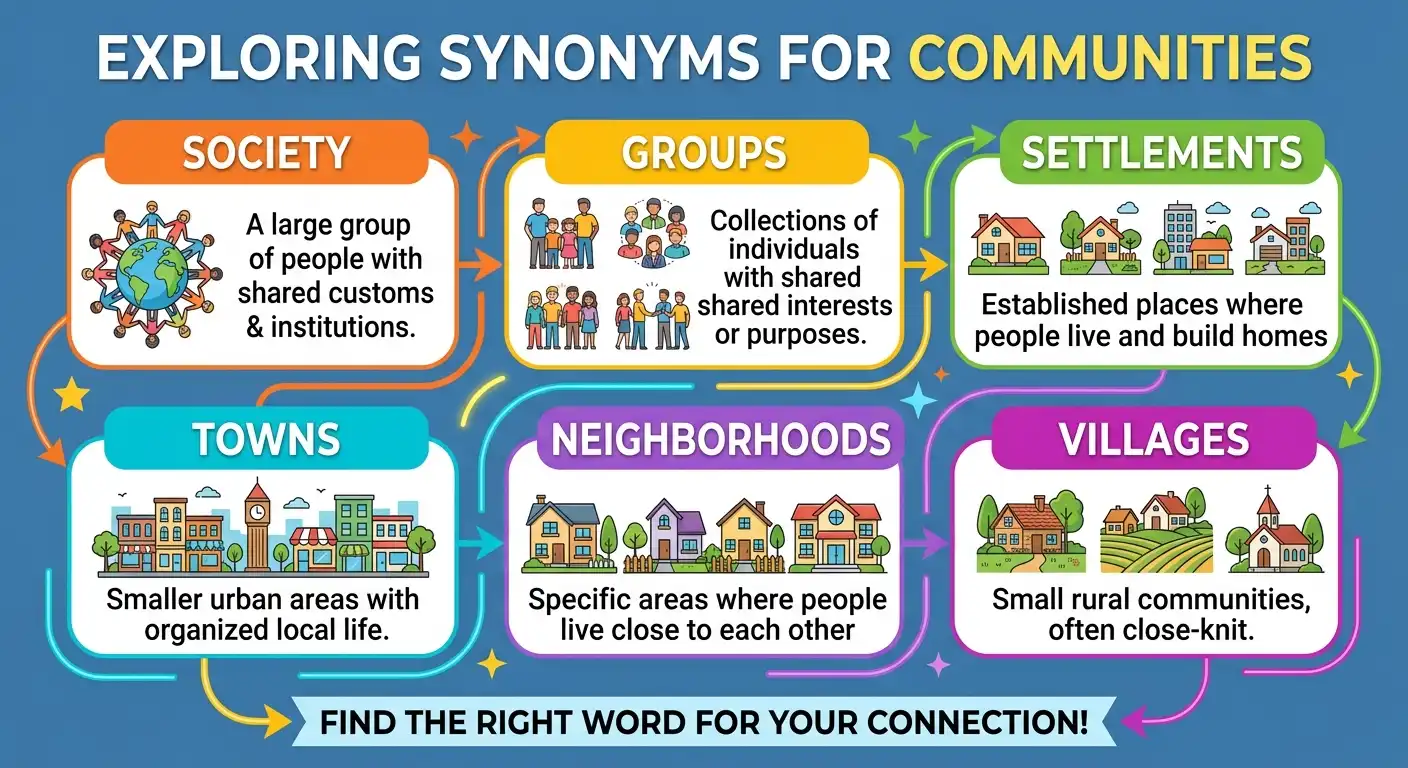
1. Groups
- Pronunciation: US /ɡruːps/ | UK /ɡruːps/
- Meaning: Collections of people who come together.
- Examples:
- Small groups met in the park today.
- She joined two study groups at school.
2. Neighborhoods
- Pronunciation: US /ˈneɪ.bɚ.hʊdz/ | UK /ˈneɪ.bə.hʊdz/
- Meaning: Local areas where people live near each other.
- Examples:
- Clean neighborhoods make people happy.
- Kids play safely in these neighborhoods.
3. Societies
- Pronunciation: US /səˈsaɪ.ə.t̬iːz/ | UK /səˈsaɪ.ə.tiːz/
- Meaning: Large groups of people living under shared rules.
- Examples:
- Modern societies value education and fairness.
- History shows how ancient societies grew.
4. Circles
- Pronunciation: US /ˈsɝː.kəlz/ | UK /ˈsɜː.kəlz/
- Meaning: Close groups of friends or trusted contacts.
- Examples:
- He has a tight circle of friends.
- She shares news with her family circle.
5. Networks
- Pronunciation: US /ˈnet.wɝːks/ | UK /ˈnet.wɜːks/
- Meaning: Connected groups of people who share information.
- Examples:
- Online networks help people find jobs fast.
- Writers join networks to share ideas.
6. Collectives
- Pronunciation: US /kəˈlek.tɪvz/ | UK /kəˈlek.tɪvz/
- Meaning: Groups of people who work together on shared goals.
- Examples:
- Art collectives share paint and tools.
- The farm is run by local collectives.
7. Associations
- Pronunciation: US /əˌsoʊ.siˈeɪ.ʃənz/ | UK /əˌsəʊ.siˈeɪ.ʃənz/
- Meaning: Official groups formed for a single purpose.
- Examples:
- The teacher association met on Monday.
- He works for a sports association.
8. Towns
- Pronunciation: US /taʊnz/ | UK /taʊnz/
- Meaning: Small cities where local people live and work.
- Examples:
- Small towns are quiet and friendly.
- Many towns held parades this week.
9. Guilds
- Pronunciation: US /ɡɪldz/ | UK /ɡɪldz/
- Meaning: Organizations of craftspeople or workers.
- Examples:
- Medieval guilds protected skilled workers.
- Game players formed strong guilds.
10. Squads
- Pronunciation: US /skwɑːdz/ | UK /skwɒdz/
- Meaning: Small teams working together on a task.
- Examples:
- The cleanup squad washed the street.
- Her sports squad won the match.
11. Clubs
- Pronunciation: US /klʌbz/ | UK /klʌbz/
- Meaning: Groups of people who share a common hobby.
- Examples:
- Book clubs read new stories every month.
- He joined two chess clubs this year.
12. Fellowships
- Pronunciation: US /ˈfel.oʊ.ʃɪps/ | UK /ˈfel.əʊ.ʃɪps/
- Meaning: Friendly groups bound by shared interests or faith.
- Examples:
- The church fellowship hosted a dinner.
- They shared strong fellowship during the trip.
13. Gatherings
- Pronunciation: US /ˈɡæð.ɚ.ɪŋz/ | UK /ˈɡæð.ər.ɪŋz/
- Meaning: Meetings of people in one place.
- Examples:
- Family gatherings are fun and loud.
- Evening gatherings happen on the beach.
14. Tribes
- Pronunciation: US /traɪbz/ | UK /traɪbz/
- Meaning: Social groups linked by family, culture, or passion.
- Examples:
- Music lovers act like a friendly tribe.
- Ancient tribes lived near the river.
15. Factions
- Pronunciation: US /ˈfæk.ʃənz/ | UK /ˈfæk.ʃənz/
- Meaning: Small subgroups inside a larger organization.
- Examples:
- Two political factions agreed on the plan.
- Small factions formed inside the club.
16. Organizations
- Pronunciation: US /ˌɔːr.ɡən.əˈzeɪ.ʃənz/ | UK /ˌɔː.ɡən.aɪˈzeɪ.ʃənz/
- Meaning: Structured groups with a business or social goal.
- Examples:
- Charity organizations help poor people.
- Large organizations employ many workers.
17. Leagues
- Pronunciation: US /liːɡz/ | UK /liːɡz/
- Meaning: Groups of sports teams or partners with shared goals.
- Examples:
- Summer sports leagues start in May.
- The two companies joined in a league.
18. Alliances
- Pronunciation: US /əˈlaɪ.ən.səz/ | UK /əˈlaɪ.ən.səz/
- Meaning: Partnerships between groups to help each other.
- Examples:
- Global alliances protect trade peace.
- Local groups formed alliances for clean air.
19. Coalitions
- Pronunciation: US /ˌkoʊ.əˈlɪʃ.ənz/ | UK /ˌkəʊ.əˈlɪʃ.ənz/
- Meaning: Temporary groups joined for a specific action.
- Examples:
- Voters built coalitions to pass the law.
- School coalitions raised money together.
20. Bodies
- Pronunciation: US /ˈbɑː.diːz/ | UK /ˈbɒd.iːz/
- Meaning: Organized groups of people acting as one unit.
- Examples:
- Student bodies vote for their leaders.
- Governing bodies write new rules.
21. Unions
- Pronunciation: US /ˈjuː.njənz/ | UK /ˈjuː.ni.ənz/
- Meaning: Groups of workers joined to protect their rights.
- Examples:
- Trade unions ask for safer workplaces.
- Worker unions met with company bosses.
22. Settlements
- Pronunciation: US /ˈset̬.əl.mənts/ | UK /ˈset.əl.mənts/
- Meaning: Small places where people build homes and live.
- Examples:
- Early settlements grew near fresh water.
- New settlements welcomed arriving families.
“A strong vocabulary turns simple ideas into memorable connections.”
23. Districts
- Pronunciation: US /ˈdɪs.trɪkts/ | UK /ˈdɪs.trɪkts/
- Meaning: Specific areas of a city or region.
- Examples:
- School districts build new playgrounds.
- Shopping districts get crowded on weekends.
24. Parishes
- Pronunciation: US /ˈpær.ɪ.ʃəz/ | UK /ˈpær.ɪ.ʃəz/
- Meaning: Small local church communities or areas.
- Examples:
- Rural parishes held annual spring fairs.
- Neighbors in local parishes help each other.
25. Communes
- Pronunciation: US /ˈkɑː.mjuːnz/ | UK /ˈkɒm.juːnz/
- Meaning: Groups of people living and sharing possessions together.
- Examples:
- They live in peaceful rural communes.
- Members of communes share cooking duties.
26. Teams
- Pronunciation: US /tiːmz/ | UK /tiːmz/
- Meaning: Groups of people working together to win or finish tasks.
- Examples:
- Great teams communicate well every day.
- Tech teams build smart phone apps.
27. Brotherhoods
- Pronunciation: US /ˈbrʌð.ɚ.hʊdz/ | UK /ˈbrʌð.ə.hʊdz/
- Meaning: Close social groups bound by strong friendship.
- Examples:
- The firefighters formed strong brotherhoods.
- Their friendship felt like true brotherhoods.
28. Sisterhoods
- Pronunciation: US /ˈsɪs.tɚ.hʊdz/ | UK /ˈsɪs.tə.hʊdz/
- Meaning: Supportive social groups of women bonded together.
- Examples:
- Local sisterhoods support women in business.
- She values her college sisterhoods.
29. Fraternities
- Pronunciation: US /frəˈtɝː.nə.t̬iːz/ | UK /frəˈtɜː.nə.tiːz/
- Meaning: Student or social clubs for men.
- Examples:
- College fraternities organize charity events.
- Old fraternities stay in touch for years.
30. Publics
- Pronunciation: US /ˈpʌb.lɪks/ | UK /ˈpʌb.lɪks/
- Meaning: Specific groups of people reached by media or news.
- Examples:
- News media speaks to distinct publics.
- Writers know how to engage different publics.
31. Populations
- Pronunciation: US /ˌpɑː.pjəˈleɪ.ʃənz/ | UK /ˌpɒp.jəˈleɪ.ʃənz/
- Meaning: All the people living in a region.
- Examples:
- City populations grow every single year.
- Island populations protect their local rivers.
32. Hubs
- Pronunciation: US /hʌbz/ | UK /hʌbz/
- Meaning: Central meeting places where social groups connect.
- Examples:
- Community hubs offer free books and internet.
- Coffee shops serve as neighborhood hubs.
33. Clusters
- Pronunciation: US /ˈklʌs.tɚz/ | UK /ˈklʌs.təz/
- Meaning: Small groups positioned closely together.
- Examples:
- Tech clusters thrive in large cities.
- Small clusters of houses line the shore.
34. Assemblages
- Pronunciation: US /əˈsem.blədʒ.əz/ | UK /əˈsem.blɪdʒ.əz/
- Meaning: Collections of people or things brought together.
- Examples:
- Large assemblages met in the main hall.
- The speaker greeted friendly assemblages.
35. Crowds
- Pronunciation: US /kraʊdz/ | UK /kraʊdz/
- Meaning: Large numbers of people gathered together.
- Examples:
- Cheering crowds filled the sports stadium.
- Peaceful crowds walked down the street.
36. Congregations
- Pronunciation: US /ˌkɑːn.ɡrəˈɡeɪ.ʃənz/ | UK /ˌkɒŋ.ɡrɪˈɡeɪ.ʃənz/
- Meaning: Groups of people gathered for religious worship.
- Examples:
- Local congregations sing every Sunday morning.
- The church welcomed new congregations.
37. Enclaves
- Pronunciation: US /ˈen.kleɪvz/ | UK /ˈen.kleɪvz/
- Meaning: Distinct social groups living inside a larger area.
- Examples:
- Cultural enclaves offer delicious food.
- Artist enclaves line the old downtown.
38. Micro-communities
- Pronunciation: US /ˈmaɪ.kroʊ kəˈmjuː.nə.tiːz/ | UK /ˈmaɪ.krəʊ kəˈmjuː.nɪ.tiːz/
- Meaning: Very small, highly focused social groups.
- Examples:
- Online forums create tight micro-communities.
- Niche hobbies form loyal micro-communities.
39. Forums
- Pronunciation: US /ˈfɔːr.əmz/ | UK /ˈfɔː.rəmz/
- Meaning: Public spaces or websites where people share ideas.
- Examples:
- Online forums answer technical questions.
- Public forums let neighbors discuss park plans.
Antonyms of Community
Knowing opposite words helps you understand meaning faster:
- Isolation: Being completely separate from others.
- Separation: Keeping groups apart from each other.
- Individualism: Focusing on single people instead of groups.
- Disunity: Lack of agreement or friendship among people.
Prototype Meaning and Categorization
The word community acts as a prototype noun for human connection. Linguists group it into three main categories:
- Geographic Units: Neighborhoods, towns, districts, settlements.
- Social & Cultural Units: Societies, circles, tribes, fellowships.
- Functional & Interest Units: Networks, clubs, associations, forums.
FREQUENTLY ASKED QUESTIONS (FAQ)
1. What is the most common synonym for community?
The most common synonym for community is group or neighborhood. People use neighborhood for local places and group for shared interests.
2. Can I use “network” instead of “community” in business?
Yes, network is a great choice for business. It sounds professional and describes connected professionals clearly.
3. What is a synonym for an online community?
Good synonyms for online communities are forums, digital networks, and micro-communities.
4. How does choosing different synonyms help my SEO?
Using synonyms creates strong semantic SEO. It helps search engines like Google understand your topic deeply without repeating the exact same word.
5. What is the difference between a society and a community?
A society is much larger and has formal laws and structures. A community is smaller and focuses on personal connection and shared feelings.
6. Are “tribe” and “community” interchangeable?
In casual modern English, yes. Tribe describes a small group of passionate people who share unique values or hobbies.
CONCLUSION
Learning synonyms for communities gives you powerful writing tools. When you vary your vocabulary, your text becomes easier to read and far more engaging.
For bloggers and content writers, using distinct terms boosts your SEO strategy naturally. Search engines reward clear, well-written content that covers ideas completely. For students, using precise words improves essay grades and shows strong English mastery, daily communicators, it helps you express feelings and ideas clearly in everyday emails and chats.
Try practicing these words every single day. Swap basic words in your emails for choices like network, circle, or collective. With a little practice, your communication will sound natural, polished, and confident!
“Carefully chosen words create lasting connections between writers and readers.”
“Expand your vocabulary daily, and your voice will naturally carry greater clarity and weight.”

Michael Turner is a published fiction writer and creative writing tutor with over a decade of experience helping writers find the words that make their stories breathe ( Biography ).