Micro Introduction
The word “vulnerability” is commonly used in both daily speech and writing to describe the state of being open to harm, criticism, or emotional pain. Learning its synonyms can help improve clarity in your communication, whether you’re speaking or writing.
Direct Answer
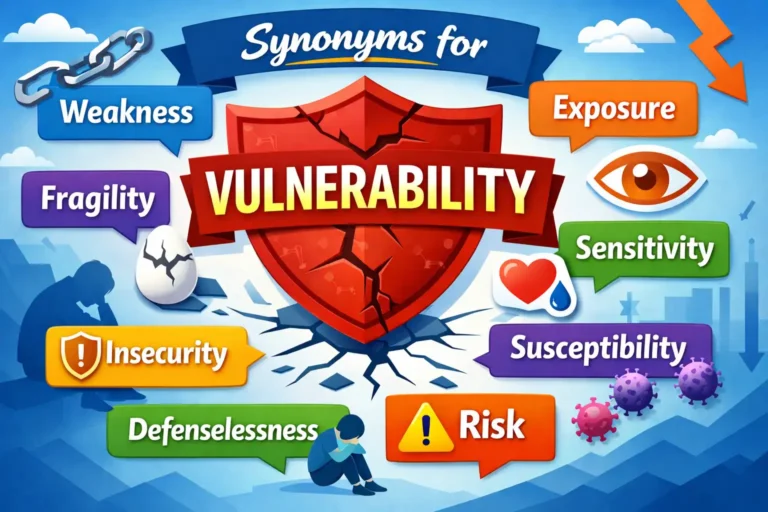
“Vulnerability” refers to being exposed to potential harm or attack, emotionally or physically. Some common synonyms are:
- Weakness
- Fragility
- Sensitivity
- Defenselessness
- Exposure
Meaning of Vulnerability
Vulnerability describes a state of being open to being harmed or attacked, whether emotionally, physically, or in any other sense. It can apply to people, situations, or even objects that are susceptible to damage or influence.
Example sentence:
The old bridge showed signs of vulnerability, with cracks visible on the surface.
Understanding Different Categories of Vulnerability Synonyms.
- Physical Discomfort: Refers to situations where one’s body is open to harm or damage.
- Emotional Discomfort: Describes emotional states where a person is susceptible to hurt or pain.
- Social Discomfort: Involves situations in which one’s social position or relationships are at risk.
Synonyms Table
| Word | Simple Meaning | Example Sentence |
| Weakness | Lack of strength or protection | Her weakness was exposed when she couldn’t defend herself. |
| Fragility | Easily broken or damaged | The fragility of the antique vase made it very valuable but delicate. |
| Sensitivity | Being easily affected or hurt emotionally | His sensitivity to criticism made it difficult for him to handle feedback. |
| Defenselessness | Lacking protection or the ability to defend | The defenselessness of the area made it a target for the invaders. |
| Exposure | Being in a position where harm can occur | The exposure to extreme temperatures caused the equipment to malfunction. |
Master Synonyms List (Grouped by Level)
Beginner / Simple
- Weakness: A lack of strength or ability.
Example sentence: He has a weakness for sweets. - Fragility: The state of being easily broken.
Example sentence: The fragility of the glass made it hard to handle.
Intermediate
- Sensitivity: The ability to be easily affected by something.
Example sentence: She showed sensitivity to the poor comments made about her dress. - Exposure: The condition of being open to harm or risk.
Example sentence: The exposure of the secret caused a lot of trouble.
Advanced / Formal
- Defenselessness: The inability to protect oneself.
Example sentence: The defenselessness of the country in the face of the invasion was alarming.
Formal vs Informal Synonyms
- Formal: Defenselessness, Exposure
- Informal: Weakness, Fragility
Use defenselessness and exposure in formal writing, such as academic essays or professional reports, while weakness and fragility are more suitable for casual or conversational contexts.
Real-Life Usage Examples
- Conversation: “She showed so much vulnerability when she spoke about her past.”
- Academic Writing: “The study explores the vulnerability of ecosystems in urban areas.”
- Business Writing: “The company’s vulnerability to market changes must be addressed.”
- Blogging: “Understanding your own vulnerability is key to personal growth.”
- Emotional Expression: “His vulnerability made him more relatable and authentic.”
Similar Words Comparison
- Vulnerability vs. Fragility:
Vulnerability refers to a broader concept of being open to harm, whereas fragility focuses specifically on something that is easily broken or damaged.
Example: “The vulnerability of the security system was evident in the breach” vs. “The fragility of the glass made it unsafe to move.” - Vulnerability vs. Weakness:
Vulnerability encompasses the possibility of emotional, social, or physical harm, while weakness often describes a lack of strength or ability.
Example: “His vulnerability to criticism affected his work performance” vs. “His weakness in dealing with stress was apparent.”
Example Sentences
- She revealed her vulnerability when she shared her childhood memories.
- The weakness in the system led to a data breach.
- The fragility of the glassware made it unsuitable for shipping.
- He showed his sensitivity to the harsh remarks from his coworkers.
- The team’s exposure to competition made them rethink their strategy.
- The defenselessness of the area was exploited by the enemy.
- The vulnerability of the system was highlighted in the security audit.
- His fragility was evident when he broke down during the conversation.
- Weakness in leadership can lead to organizational failure.
- The vulnerability of their position was exposed in the debate.
- The sensitivity of the issue made everyone approach it carefully.
- The country’s defenselessness in war made it vulnerable to attack.
- After the storm, the exposure of the village made it prone to further damage.
- She felt her vulnerability when she was far from home.
- His weakness in dealing with criticism was affecting his career.
Common Mistakes
- Overuse of “weakness”: Avoid using “weakness” when describing emotional states. “Vulnerability” is more appropriate for emotional exposure.
- Confusing “fragility” with “sensitivity”: Fragility refers to physical breakability, while sensitivity involves emotional or mental responsiveness.
- Misusing “defenselessness”: “Defenselessness” is a formal term, so it should not be used casually.
- Using “exposure” incorrectly: Don’t confuse exposure with vulnerability. Exposure refers specifically to being in a risk-prone situation, while vulnerability is a broader concept.
- Confusing formal and informal synonyms: Ensure you match the level of formality to the situation when using synonyms for “vulnerability.”
Tips / Best Practices
- Tone: Choose synonyms that match the tone of your writing—formal for academic or professional contexts, and informal for casual conversations.
- Context: Always consider the context in which you’re using the word to ensure that it fits the meaning.
- Formality: Use formal synonyms like defenselessness or exposure in academic or business contexts and informal ones like weakness or fragility for casual settings.
- Clarity: Avoid overusing synonyms in a single piece of writing to keep the meaning clear and effective.
- Avoid Keyword Stuffing: Use synonyms naturally to maintain readability and flow.
When NOT to Use Vulnerability
- In situations of complete safety: Avoid using vulnerability when the situation is secure or protected.
- Overuse in professional writing: If not relevant, overuse of vulnerability can weaken the message, especially in corporate settings.
Opposite Words (Antonyms)
- Strength
- Resilience
- Fortitude
- Protection
- Security
FAQs Section
1. What does vulnerability mean?
Vulnerability refers to being exposed to harm or attack, either emotionally or physically.
2. Is vulnerability formal or informal?
It can be used in both formal and informal contexts, but synonyms like defenselessness are more formal.
3. How can I use vulnerability in conversation?
You can say, “She showed her vulnerability by talking about her fears.”
4. What is the best synonym for vulnerability?
“Fragility” is a good synonym when referring to physical breakability, while “exposure” fits when talking about risk.
5. Can vulnerability be replaced with weakness?
Not always. Weakness focuses more on lack of strength, while vulnerability covers a broader range, including emotional and social exposure.
Conclusion
Learning synonyms for vulnerability enhances both your speaking and writing. It helps to express ideas more clearly and effectively. Try incorporating three new synonyms into your next sentence to practice!

Michael Turner creates simple synonym guides that help readers expand their vocabulary and choose the right word for the right context.