Micro Introduction
The word eerie is often used in daily speech, stories, movies, and descriptive writing. It describes a strange or slightly frightening feeling. Learning synonyms for eerie helps you express atmosphere, emotion, and mood more clearly in English.
For ESL learners and writers, knowing alternatives improves vocabulary, writing style, and communication.
Direct Answer
Meaning of Eerie
Eerie means something strange, mysterious, or slightly frightening, often because it feels unnatural or supernatural.
Common Synonyms
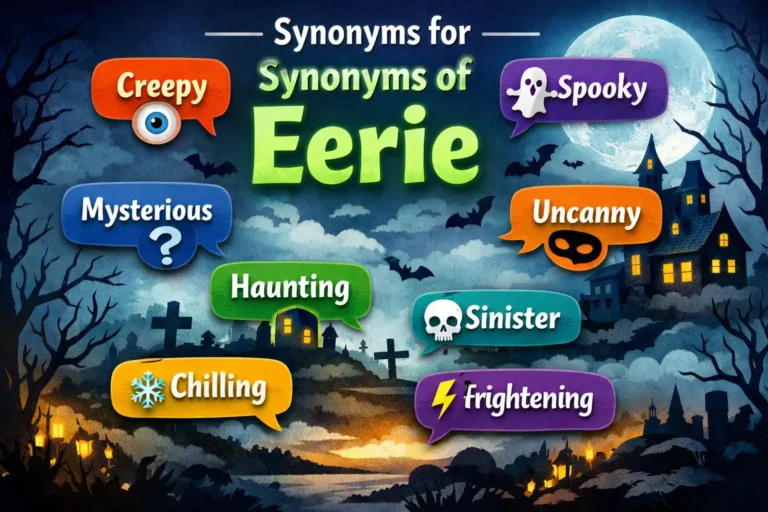
- spooky
- creepy
- scary
- haunting
- ghostly
- mysterious
- uncanny
- chilling
- weird
- sinister
These words help describe unsettling places, sounds, feelings, or situations.
Categories of Synonyms
Physical Discomfort
Some synonyms describe a physical reaction such as shivers, fear, or nervous tension. Words like chilling and scary often describe sensations people feel in frightening situations.
Emotional Discomfort
These synonyms describe an uncomfortable emotional feeling caused by something strange or unexplained. Words such as creepy, uncanny, and weird focus on how a situation feels psychologically unsettling.
Social or Atmospheric Discomfort
Some words describe an environment or atmosphere that feels unnatural or mysterious. Examples include ghostly, mysterious, sinister, and haunting. These are common in storytelling and descriptive writing.
Synonyms Table
| Word | Simple Meaning | Example Sentence |
| spooky | slightly scary or ghost-like | The abandoned house looked spooky at night. |
| creepy | causing nervous fear | The quiet hallway felt creepy. |
| scary | causing fear | The movie had several scary scenes. |
| haunting | leaving a strong mysterious feeling | The haunting music stayed in my mind. |
| ghostly | like a ghost or spirit | A ghostly figure appeared in the fog. |
| mysterious | difficult to explain | There was a mysterious light in the sky. |
| uncanny | strangely similar or unnatural | He had an uncanny ability to guess answers. |
| chilling | causing fear or shock | The story had a chilling ending. |
| weird | very strange or unusual | That sound coming from the forest was weird. |
| sinister | suggesting evil or danger | The dark alley had a sinister atmosphere. |
Master Synonyms List (Grouped by Level)
Beginner / Simple
Spooky
Simple meaning: slightly frightening in a fun or mysterious way.
Example: The old forest looked spooky at night.
Usage: Informal
Creepy
Simple meaning: causing an uncomfortable feeling of fear.
Example: That empty building feels creepy after dark.
Usage: Informal
Scary
Simple meaning: something that causes fear.
Example: The sound outside was scary.
Usage: Neutral everyday word
Weird
Simple meaning: very strange or unusual.
Example: The silence in the village felt weird.
Usage: Informal
Intermediate
Chilling
Simple meaning: causing fear or shock that makes you feel cold inside.
Example: The documentary showed chilling evidence.
Usage: Neutral
Mysterious
Simple meaning: difficult to explain or understand.
Example: A mysterious light appeared in the sky.
Usage: Neutral
Ghostly
Simple meaning: pale or similar to a ghost.
Example: The moon gave the lake a ghostly glow.
Usage: Neutral
Advanced / Formal
Uncanny
Simple meaning: strangely unnatural or difficult to explain.
Example: She had an uncanny ability to predict outcomes.
Usage: Formal / descriptive
Haunting
Simple meaning: creating a lasting emotional or mysterious effect.
Example: The singer’s voice was haunting.
Usage: Formal or literary
Sinister
Simple meaning: suggesting evil or danger.
Example: The stranger gave a sinister smile.
Usage: Formal tone
Formal vs Informal Synonyms
Choosing the right synonym depends on tone and context.
Informal synonyms are common in conversation:
- spooky
- creepy
- weird
- scary
These are easy to understand and used in everyday English.
More formal or descriptive words appear in writing, literature, or professional communication:
- haunting
- uncanny
- sinister
- mysterious
Formal synonyms often describe atmosphere in stories, essays, or analysis.
For example:
Informal:
“That place is creepy.”
Formal:
“The building has a sinister atmosphere.”
Real-Life Usage Examples
Conversation
“This house feels creepy when no one is inside.”
Academic Writing
“The novel creates a mysterious mood through dark imagery.”
Business Writing
“The report revealed a chilling pattern in the data.”
Blogging
“That abandoned amusement park has a spooky vibe.”
Emotional Expression
“The silence after the storm felt eerie and strange.”
Similar Words Comparison
Eerie vs Creepy
Both describe uncomfortable feelings, but creepy focuses more on personal discomfort.
Example:
- The empty basement felt eerie.
- That man staring at us feels creepy.
Eerie vs Uncanny
Uncanny emphasizes something strangely unnatural or surprising.
Example:
- The quiet forest felt eerie.
- Her ability to remember details was uncanny.
Example Sentences
- The village looked eerie in the thick fog.
- The hallway became spooky after the lights went out.
- I heard a creepy noise behind the door.
- The movie created a mysterious atmosphere.
- A ghostly shadow appeared on the wall.
- The forest was strangely quiet and weird.
- His calm voice had a chilling tone.
- The story ended with a haunting image.
- The old castle had a sinister appearance.
- The coincidence was almost uncanny.
- The wind made the abandoned house sound scary.
- The lake looked mysterious under the moonlight.
- The silence in the tunnel felt chilling.
- The deserted town seemed strangely spooky.
Common Mistakes
1. Using “Eerie” for Extreme Fear
Some learners use eerie to describe intense terror.
However, eerie usually means strange or unsettling, not extreme fear.
Incorrect:
“The lion attack was eerie.”
Correct:
“The quiet jungle felt eerie.”
2. Confusing “Weird” with “Scary”
Weird means unusual but not always frightening.
Incorrect:
“That math problem is eerie.”
Correct:
“That math problem is weird.”
3. Overusing “Creepy”
Many learners repeat creepy too often.
Using alternatives like chilling or sinister improves writing.
4. Using Formal Words in Casual Speech
Words like sinister may sound too formal in everyday conversation.
Example:
Casual: “That alley looks creepy.”
Formal: “The alley appears sinister.”
5. Mixing Tone in Academic Writing
Academic writing usually prefers mysterious, uncanny, or haunting rather than slang.
Tips for Choosing the Right Synonym
Consider Tone
Decide whether the situation is casual, descriptive, or formal.
Think About Context
Use different synonyms depending on the situation:
- movie atmosphere
- strange behavior
- mysterious events
Match the Level of Fear
Some words describe mild fear, others suggest danger.
Example:
- spooky = mild fear
- sinister = possible danger
Keep Writing Clear
Avoid complicated vocabulary if simple words work better.
Avoid Overuse
Repeating the same word weakens writing.
Use synonyms carefully instead of keyword stuffing.
When NOT to Use “Eerie”
Do not use eerie when describing:
- normal fear (use scary)
- simple surprise (use strange)
- physical danger (use dangerous)
Example:
Incorrect:
“The car accident was eerie.”
Better:
“The car accident was frightening.”
Eerie works best for mysterious or supernatural feelings, not real danger.
Opposite Words (Antonyms)
Antonyms describe the opposite feeling of eerie.
Common antonyms include:
- comforting
- pleasant
- cheerful
- safe
- welcoming
- reassuring
Example:
“The bright lights created a welcoming atmosphere.”
FAQs
What does eerie mean?
Eerie describes something strange, mysterious, or slightly frightening, often creating an unsettling atmosphere.
Is eerie formal or informal?
It is neutral and works in both casual conversation and descriptive writing.
How can I use eerie in conversation?
You can say: “That abandoned building feels eerie at night.”
What is the best synonym for eerie?
Common choices include spooky, creepy, uncanny, and mysterious.
Can eerie be replaced with creepy?
Yes, in many situations. Creepy emphasizes personal discomfort more than atmosphere.
Is eerie a negative word?
Usually yes. It describes uncomfortable or unsettling situations.
Is eerie used in storytelling?
Yes. Writers often use eerie to describe mysterious settings or supernatural scenes.
Can eerie describe sounds?
Yes. For example: “An eerie whisper came from the forest.”
What is a formal alternative to eerie?
Words like uncanny, haunting, or sinister work well in formal writing.
Is eerie the same as scary?
Not exactly. Scary means frightening, while eerie means strangely unsettling.
Can eerie describe places?
Yes. It is often used for forests, houses, towns, or quiet locations.
Conclusion
Learning synonyms for eerie helps improve both speaking and writing. Instead of repeating one word, you can choose alternatives like spooky, mysterious, uncanny, or sinister depending on tone and context.
A stronger vocabulary makes your English clearer and more expressive. Try using three new synonyms from this guide in your next sentence to build confidence and variety.

Michael Turner creates simple synonym guides that help readers expand their vocabulary and choose the right word for the right context.