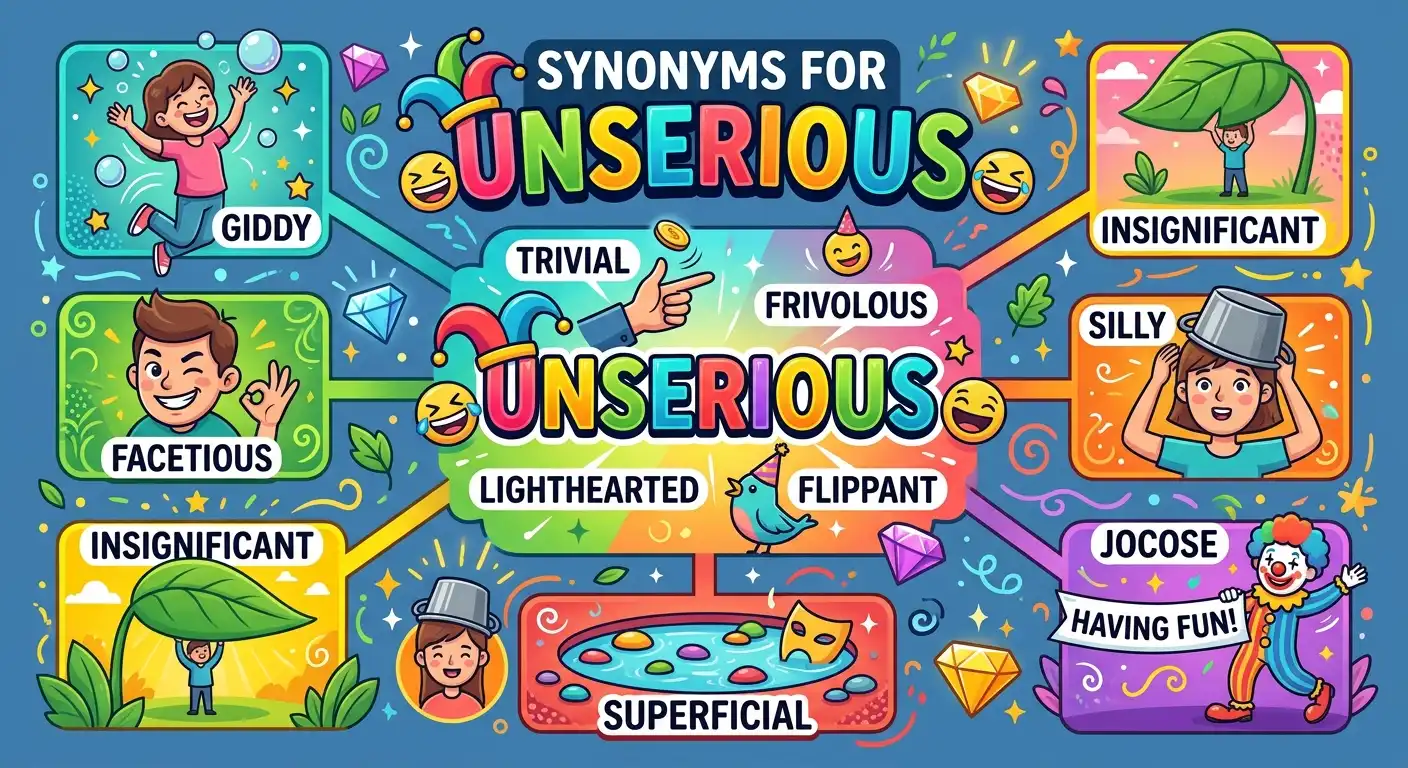
When you search for synonyms for unserious, you want simple words to replace a bland term. Finding the right synonyms for unserious helps you express humor, playful behavior, or a lack of focus. Learning synonyms for unserious makes your writing clear, vivid, and precise.
“Words shape our world, and choosing the right one changes everything.”
Imagine sitting in a quiet team meeting. Suddenly, your coworker tells a silly joke to break the silence. That behavior is unserious. The word unserious means not solemn, not serious, or acting in a funny way.
“A simple word can turn a flat sentence into an exciting thought.”
Searching for synonyms for unserious helps many people every day:
- Students write better essays without repeating basic words.
- Bloggers keep their posts fun, fresh, and easy to read.
- Content writers pick exact terms for their target audience.
- Daily English users speak clearly in chats, emails, and talks.
Connotative Meaning of Unserious
The word unserious carries different emotional tones based on context:
- Positive Tone: Playful, carefree, joyful, lighthearted, or funny.
- Negative Tone: Careless, shallow, disrespectful, lazy, or irresponsible.
- Neutral Tone: Informal, casual, non-serious, or relaxed.
Etymology of Unserious
- Prefix: un- (Old English origin meaning “not” or “opposite of”).
- Root Word: serious (From Middle English serious, via Middle French from Late Latin seriosus, from Latin serius meaning “grave” or “earnest”).
- First Combined Use: Formed in Modern English to describe things or people that lack seriousness.
Linguistic Profile of Unserious
- Pronunciation (US): /ʌnˈsɪriəs/
- Pronunciation (UK): /ʌnˈsɪərɪəs/
- Syllables: 4 (un-se-ri-ous)
- Affixation Pattern: Prefix (un-) + Root (serious)
Comparison Table of Key Synonyms
| Keyword | Meaning | Usage Type | Context |
| Unserious | Not solemn or earnest | Casual | Daily life, casual chats |
| Playful | Full of fun and good spirits | Positive / Casual | Family, friends, pets |
| Frivolous | Lacking deep purpose or value | Negative / Formal | Money, legal matters, rules |
| Flippant | Not showing proper respect | Negative / Professional | Workplace, school, meetings |
| Facetious | Treating grave issues with humor | Mixed / Casual | Conversations, debates |
| Lighthearted | Cheerful and free from care | Positive / Casual | Parties, weekends, hobbies |
| Goofy | Silly and amusingly strange | Informal / Very Casual | Kids, comedy, relaxed fun |
| Trivial | Of little worth or importance | Neutral / Academic | Facts, arguments, tasks |
“Language gives us the power to turn small ideas into lasting memories.”
1. Playful
- Pronunciation: US: /ˈpleɪfəl/ | UK: /ˈpleɪfʊl/
- Meaning: Full of fun and lively energy.
- Examples:
- The playful puppy ran across the green yard.
- She gave her brother a playful tap on the shoulder.
2. Frivolous
- Pronunciation: US: /ˈfrɪvələs/ | UK: /ˈfrɪvələs/
- Meaning: Lacking any serious purpose or real value.
- Examples:
- He spent his money on frivolous toys.
- Do not make frivolous choices with your time.
3. Flippant
- Pronunciation: US: /ˈflɪpənt/ | UK: /ˈflɪpənt/
- Meaning: Lacking proper respect or seriousness in a grave moment.
- Examples:
- His flippant answer upset the boss.
- She made a flippant remark during the test.
4. Facetious
- Pronunciation: US: /fəˈsiːʃəs/ | UK: /fəˈsiːʃəs/
- Meaning: Making jokes at a time when you should be serious.
- Examples:
- Stop being facetious and help us fix this problem.
- He gave a facetious reply to a serious question.
5. Lighthearted
- Pronunciation: US: /ˈlaɪtˌhɑːrtɪd/ | UK: /ˈlaɪtˌhɑːtɪd/
- Meaning: Cheerful and completely free from worry.
- Examples:
- We enjoyed a lighthearted chat over tea.
- The movie offered a lighthearted escape from work.
6. Goofy
- Pronunciation: US: /ˈɡuːfi/ | UK: /ˈɡuːfi/
- Meaning: Silly, foolish, or amusingly strange.
- Examples:
- He put on a goofy hat to make the baby smile.
- They loved taking goofy photos at the party.
7. Silly
- Pronunciation: US: /ˈsɪli/ | UK: /ˈsɪli/
- Meaning: Showing a lack of good sense or seriousness.
- Examples:
- The kids told silly jokes all night long.
- It is silly to worry about small mistakes.
8. Trivial
- Pronunciation: US: /ˈtrɪviəl/ | UK: /ˈtrɪvɪəl/
- Meaning: Having very little value or importance.
- Examples:
- They argued over a trivial detail in the plan.
- Do not waste time on trivial tasks today.
9. Carefree
- Pronunciation: US: /ˈkɛrˌfriː/ | UK: /ˈkeəfriː/
- Meaning: Free from anxiety or responsibility.
- Examples:
- She felt carefree while walking on the beach.
- Summer days brought carefree fun for the kids.
10. Jovial
- Pronunciation: US: /ˈdʒoʊviəl/ | UK: /ˈdʒəʊvɪəl/
- Meaning: Full of happiness and friendly humor.
- Examples:
- The jovial host welcomed every guest with a warm smile.
- His jovial laugh filled the entire room.
11. Whimsical
- Pronunciation: US: /ˈwɪmzɪkəl/ | UK: /ˈwɪmzɪkəl/
- Meaning: Unpredictable in a fun and creative way.
- Examples:
- The author wrote a whimsical story about fairies.
- She painted the room in whimsical pastel colors.
12. Casual
- Pronunciation: US: /ˈkæʒuəl/ | UK: /ˈkæʒjʊəl/
- Meaning: Relaxed and unconcerned about strict rules.
- Examples:
- They held a casual meeting in the coffee shop.
- He wore casual clothes to the park.
13. Superficial
- Pronunciation: US: /ˌsuːpərˈfɪʃəl/ | UK: /ˌsuːpəˈfɪʃəl/
- Meaning: Concerned only with what is on the surface.
- Examples:
- The report gave only a superficial look at the issue.
- He made a superficial comment about her dress.
14. Non-serious
- Pronunciation: US: /nɑːnˈsɪriəs/ | UK: /nɒnˈsɪərɪəs/
- Meaning: Not grave, dangerous, or solemn.
- Examples:
- The doctor said it was a non-serious illness.
- They shared a non-serious conversation during lunch.
15. Easygoing
- Pronunciation: US: /ˈiːziˌɡoʊɪŋ/ | UK: /ˈiːzɪˌɡəʊɪŋ/
- Meaning: Calm, relaxed, and not easily worried.
- Examples:
- My teacher has an easygoing style in class.
- He is an easygoing person who gets along with everyone.
16. Amusing
- Pronunciation: US: /əˈmjuːzɪŋ/ | UK: /əˈmjuːzɪŋ/
- Meaning: Causing laughter or entertainment.
- Examples:
- She shared an amusing story about her cat.
- The clown put on an amusing show for the children.
17. Funny
- Pronunciation: US: /ˈfʌni/ | UK: /ˈfʌni/
- Meaning: Causing laughter or amusement.
- Examples:
- He told a funny story that made everyone laugh.
- That was a very funny video on the screen.
18. Droll
- Pronunciation: US: /droʊl/ | UK: /drəʊl/
- Meaning: Amusing in an odd or dry way.
- Examples:
- He has a droll sense of humor that makes people smile.
- The actor gave a droll expression after the joke.
19. Witty
- Pronunciation: US: /ˈwɪti/ | UK: /ˈwɪti/
- Meaning: Showing quick and inventive verbal humor.
- Examples:
- Her witty response cleared the awkward silence.
- He wrote a witty reply to the email.
20. Jocular
- Pronunciation: US: /ˈdʒɑːkjələr/ | UK: /ˈdʒɒkjʊlə/
- Meaning: Fond of or characterized by joking.
- Examples:
- The manager spoke in a jocular tone during breakfast.
- His jocular mood cheered up the group.
21. Airy
- Pronunciation: US: /ˈɛri/ | UK: /ˈeəri/
- Meaning: Showing a lack of serious thought or concern.
- Examples:
- She dismissed the problem with an airy wave of her hand.
- He kept an airy attitude toward his chores.
22. Mischievous
- Pronunciation: US: /ˈmɪstʃɪvəs/ | UK: /ˈmɪstʃɪvəs/
- Meaning: Causing playful trouble or irritation.
- Examples:
- The mischievous boy hid his sister’s slippers.
- She gave a mischievous grin before revealing the secret.
23. Giddy
- Pronunciation: US: /ˈɡɪdi/ | UK: /ˈɡɪdi/
- Meaning: Excited and silly in a lighthearted way.
- Examples:
- The children felt giddy on the night before the trip.
- She gave a giddy laugh when she won the prize.
24. Impish
- Pronunciation: US: /ˈɪmpɪʃ/ | UK: /ˈɪmpɪʃ/
- Meaning: Inclined to do slightly naughty things for fun.
- Examples:
- The girl had an impish smile on her face.
- He pulled an impish prank on his best friend.
25. Shallow
- Pronunciation: US: /ˈʃæloʊ/ | UK: /ˈʃæləʊ/
- Meaning: Lacking depth of intellect or feeling.
- Examples:
- The conversation stayed on shallow topics like the weather.
- He criticized the movie for its shallow plot.
26. Tongue-in-cheek
- Pronunciation: US: /ˌtʌŋ ɪn ˈtʃiːk/ | UK: /ˌtʌŋ ɪn ˈtʃiːk/
- Meaning: Meant as a joke, even if it sounds serious.
- Examples:
- He made a tongue-in-cheek remark about his cooking skills.
- The article offered a tongue-in-cheek guide to bad advice.
27. Frolicsome
- Pronunciation: US: /ˈfrɑːlɪksəm/ | UK: /ˈfrɒlɪksəm/
- Meaning: Full of energy and playfulness.
- Examples:
- The frolicsome lambs ran across the green field.
- They enjoyed a frolicsome afternoon at the water park.
28. Breezy
- Pronunciation: US: /ˈbriːzi/ | UK: /ˈbriːzi/
- Meaning: Relaxed, informal, and cheerful.
- Examples:
- She greeted everyone with a breezy smile.
- His breezy writing style makes the blog easy to read.
29. Offhand
- Pronunciation: US: /ˌɔːfˈhænd/ | UK: /ˌɒfˈhænd/
- Meaning: Done without thought, respect, or preparation.
- Examples:
- He dismissed her idea with an offhand comment.
- She regretted her offhand response to the teacher.
30. Insouciant
- Pronunciation: US: /ɪnˈsuːsiənt/ | UK: /ɪnˈsuːsɪənt/
- Meaning: Free from worry, care, or concern.
- Examples:
- He maintained an insouciant walk through the crowded street.
- Her insouciant charm made everyone feel comfortable.
31. Puerile
- Pronunciation: US: /ˈpjʊrəl/ | UK: /ˈpjʊəraɪl/
- Meaning: Silly and childish in a negative way.
- Examples:
- The boys were punished for their puerile behavior in class.
- Avoid making puerile jokes during business calls.
32. Childish
- Pronunciation: US: /ˈtʃaɪldɪʃ/ | UK: /ˈtʃaɪldɪʃ/
- Meaning: Immature or suited only for a child.
- Examples:
- Refusing to share is childish behavior.
- He let out a childish giggle when he saw the cake.
33. Juvenile
- Pronunciation: US: /ˈdʒuːvənəl/ | UK: /ˈdʒuːvənaɪl/
- Meaning: Immature or characteristic of youth.
- Examples:
- His juvenile antics annoyed his teammates.
- They laughed at the juvenile humor in the cartoon.
34. Flighty
- Pronunciation: US: /ˈflaɪti/ | UK: /ˈflaɪti/
- Meaning: Changeable and lacking deep thought.
- Examples:
- She can be flighty when making long-term plans.
- His flighty nature made it hard to trust his word.
35. Harebrained
- Pronunciation: US: /ˈhɛrˌbreɪnd/ | UK: /ˈheəbreɪnd/
- Meaning: Foolish, impractical, or wildly unconventional.
- Examples:
- He came up with a harebrained scheme to get rich fast.
- Nobody supported her harebrained idea for the party.
36. Barmy
- Pronunciation: US: /ˈbɑːrmi/ | UK: /ˈbɑːmi/
- Meaning: Slightly crazy, silly, or eccentric.
- Examples:
- That was a barmy plan from the start.
- He had a barmy idea about building a boat in his room.
37. Lightweight
- Pronunciation: US: /ˈlaɪtˌweɪt/ | UK: /ˈlaɪtweɪt/
- Meaning: Lacking serious influence, depth, or value.
- Examples:
- The magazine was full of lightweight gossip articles.
- He was viewed as a lightweight candidate for the job.
38. Disrespectful
- Pronunciation: US: /ˌdɪsrɪˈspɛktfəl/ | UK: /ˌdɪsrɪsˈpɛktfʊl/
- Meaning: Showing a lack of respect for authority or rules.
- Examples:
- Laughing during the ceremony was disrespectful.
- He used a disrespectful tone with his supervisor.
39. Cheeky
- Pronunciation: US: /ˈtʃiːki/ | UK: /ˈtʃiːki/
- Meaning: Impudent or bold in a playful or rude way.
- Examples:
- The young boy gave a cheeky answer to his mom.
- She sent a cheeky text message to her friend.
40. Saucy
- Pronunciation: US: /ˈsɔːsi/ | UK: /ˈsɔːsi/
- Meaning: Boldly rude, lively, or playful.
- Examples:
- She gave a saucy reply to the interviewer.
- The puppy made a saucy bark at the bigger dog.
41. Glib
- Pronunciation: US: /ɡlɪb/ | UK: /ɡlɪb/
- Meaning: Speaking easily without depth or genuine thought.
- Examples:
- The politician gave a glib answer to the hard question.
- Do not trust his glib promises without proof.
42. Irreverent
- Pronunciation: US: /ɪˈrɛvərənt/ | UK: /ɪˈrɛvərənt/
- Meaning: Showing a lack of respect for serious things.
- Examples:
- The comedian gave an irreverent take on current events.
- His irreverent attitude surprised the older audience.
43. Ludic
- Pronunciation: US: /ˈluːdɪk/ | UK: /ˈluːdɪk/
- Meaning: Showing playful and game-like behavior.
- Examples:
- The app uses ludic features to help users learn grammar.
- She took a ludic approach to solving the puzzle.
44. Sportive
- Pronunciation: US: /ˈspɔːrtɪv/ | UK: /ˈspɔːtɪv/
- Meaning: Playful, lighthearted, and full of energy.
- Examples:
- The sportive kittens chased the ball around the floor.
- They engaged in sportive banter during the lunch hour.
45. Slapstick
- Pronunciation: US: /ˈslæpˌstɪk/ | UK: /ˈslæpstɪk/
- Meaning: Humor based on clumsy actions or physical mishaps.
- Examples:
- The movie relied on slapstick humor to make people laugh.
- Kids love slapstick comedy with slipping and falling.
46. Farcical
- Pronunciation: US: /ˈfɑːrsɪkəl/ | UK: /ˈfɑːsɪkəl/
- Meaning: Absurd, ridiculous, or completely unreasonable.
- Examples:
- The entire meeting turned into a farcical waste of time.
- It was a farcical attempt to fix the broken door.
47. Laughable
- Pronunciation: US: /ˈlæfəbəl/ | UK: /ˈlɑːfəbəl/
- Meaning: So foolish or silly that it deserves laughter.
- Examples:
- His offer to buy the car for ten dollars was laughable.
- She dismissed the laughable claim immediately.
48. Comic
- Pronunciation: US: /ˈkɑːmɪk/ | UK: /ˈkɒmɪk/
- Meaning: Causing or intended to cause laughter.
- Examples:
- The actor had great comic timing on stage.
- He told a comic tale about his missed train.
49. Comical
- Pronunciation: US: /ˈkɑːmɪkəl/ | UK: /ˈkɒmɪkəl/
- Meaning: Amusing or strange in a way that makes you laugh.
- Examples:
- The dog looked comical wearing a raincoat.
- His comical expressions entertained the whole group.
50. Entertaining
- Pronunciation: US: /ˌɛntərˈteɪnɪŋ/ | UK: /ˌɛntəˈteɪnɪŋ/
- Meaning: Providing amusement or enjoyment to people.
- Examples:
- The speaker gave an entertaining talk about travel.
- We spent an entertaining evening playing board games.
Antonyms of Unserious
To fully master vocabulary, it helps to know the exact opposites of unserious:
- Serious: Showing deep thought or careful effort.
- Solemn: Formal, grave, and dignified.
- Earnest: Sincere, focused, and determined.
- Grave: Requiring serious thought and concern.
- Thoughtful: Showing careful consideration for others or tasks.
Prototype Meaning and Categorization
The word unserious sits at the center of several vocabulary categories:
- Humor-Based: Playful, goofy, silly, comic, amusing.
- Attitude-Based: Carefree, lighthearted, easygoing, insouciant.
- Disrespect-Based: Flippant, facetious, puerile, glib, irreverent.
- Value-Based: Frivolous, trivial, shallow, lightweight.
Frequently Asked Questions (FAQ)
What is the best synonym for unserious in formal writing?
In formal writing, the best choices are frivolous, flippant, or trivial, depending on your context.
Is unserious a real word in the English language?
Yes, unserious is a recognized English adjective defined in standard dictionaries like Merriam-Webster and Collins.
What is the difference between playful and flippant?
Playful has a positive tone meaning fun and cheerful. Flippant has a negative tone meaning disrespectful during a serious situation.
Can unserious be used as a slang term?
Yes, in modern speech, people often say someone is “unserious” to mean they are being goofy, trolling, or not taking life seriously.
How do I pick the right synonym for my essay?
Check the tone of your sentence. Use lighthearted for fun topics and frivolous for serious debates about money, laws, or decisions.
Conclusion
Expanding your vocabulary by exploring synonyms for unserious makes a massive difference in your daily communication. When you learn exact terms like lighthearted, flippant, or frivolous, your writing becomes clearer and far more expressive.
Using diverse words strengthens your blogging performance, upgrades your student essays, and improves your professional emails. Instead of relying on basic terms, picking precise words keeps your readers engaged and interested. Start practicing these words in your chats, articles, and daily speeches today.
“Clear writing comes from clear words, and great words spark great minds.”
“Expand your vocabulary today, and your voice will carry power tomorrow.”

Michael Turner is a published fiction writer and creative writing tutor with over a decade of experience helping writers find the words that make their stories breathe ( Biography ).