Have you ever talked to someone who showed no emotion or concern?
Maybe they did not react to good news or bad news.
The word uncaring is often used in daily speech, social media, and writing to describe this behavior.
Learning its synonyms helps you express feelings more clearly and sound more natural in English.
Direct Answer
Uncaring means not showing concern, kindness, or sympathy for others.
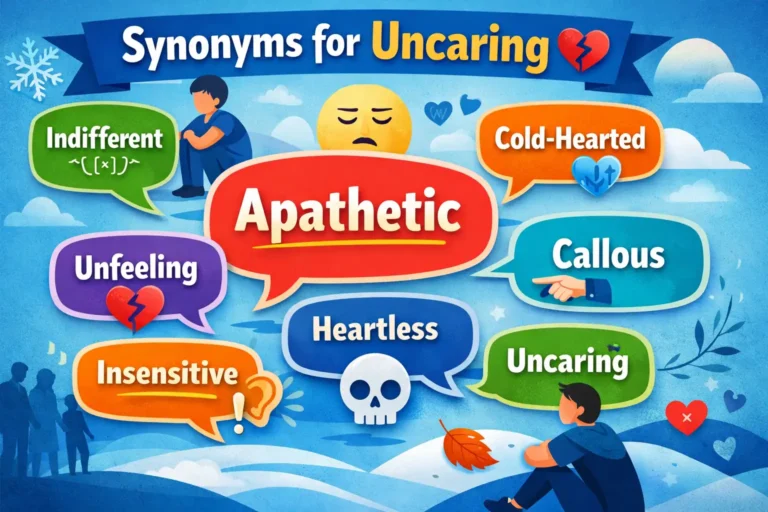
Common Synonyms for Uncaring:
- indifferent
- cold
- heartless
- insensitive
- callous
- detached
- unsympathetic
- aloof
- apathetic
- unfeeling
Meaning of Uncaring
Uncaring describes a person who does not show interest, concern, or compassion for others.
Example:
She seemed uncaring when her friend shared bad news.
Categories of Synonyms
Emotional Coldness
These words describe a lack of warmth or kindness in feelings. The person may seem emotionally hard or distant.
Examples:
- heartless (She made a heartless comment.)
- cold (He gave a cold response.)
- unfeeling (Her reply sounded unfeeling.)
Lack of Interest
These words describe someone who does not care enough to react or get involved. The focus is on low concern or motivation.
Examples:
- indifferent (He was indifferent to the argument.)
- apathetic (Students felt apathetic about the rule.)
- insensitive (That joke was insensitive.)
Social Distance
These words describe someone who keeps emotional space from others. The person may seem reserved or not supportive.
Examples:
- detached (She remained detached during the discussion.)
- aloof (He stayed aloof at the event.)
- unsympathetic (The manager was unsympathetic to complaints.)
Synonyms Table of Uncaring
| Word | Simple Meaning | Example Sentence |
| indifferent | not interested or concerned | He was indifferent to the problem. |
| cold | not warm or friendly | She gave him a cold reply. |
| heartless | without kindness | That was a heartless decision. |
| insensitive | not aware of others’ feelings | His comment was insensitive. |
| callous | emotionally hard | The manager seemed callous. |
| detached | emotionally distant | She sounded detached. |
| unsympathetic | not showing support | He was unsympathetic about her loss. |
| aloof | distant and not friendly | He remained aloof at the party. |
| apathetic | not caring at all | Many voters felt apathetic. |
| unfeeling | not showing emotion | The response felt unfeeling. |
Master Synonyms List (Grouped by Level)
Beginner / Simple
1. Indifferent
Simple meaning: not interested
Example: She was indifferent to his apology.
2. Cold
Simple meaning: not friendly
Example: He gave a cold look.
3. Unfeeling
Simple meaning: without emotion
Example: The message sounded unfeeling.
Intermediate
4. Insensitive
Simple meaning: not thinking about others’ feelings
Example: It was insensitive to joke about it.
5. Unsympathetic
Simple meaning: not supportive
Example: The teacher seemed unsympathetic.
6. Aloof
Simple meaning: distant and reserved
Example: She stayed aloof during the meeting.
7. Apathetic
Simple meaning: lacking interest or care
Example: Many students felt apathetic about politics.
Advanced / Formal
8. Callous (Formal)
Simple meaning: emotionally hardened
Example: The company made a callous choice.
9. Detached (Formal)
Simple meaning: emotionally removed
Example: He sounded detached in the interview.
10. Heartless (Strong tone)
Simple meaning: cruel and without kindness
Example: It was a heartless reaction.
Formal vs Informal Synonyms
- Formal writing: callous, detached, unsympathetic
- Neutral everyday English: indifferent, insensitive, apathetic
- Strong emotional tone: heartless, cold
Choose based on tone and situation.
Real-Life Usage Examples
Conversation
“I told him I was sick, but he sounded indifferent and changed the subject.”
“When she shared her good news, his cold reaction made the room feel awkward.”
Academic Writing
The research suggests that prolonged stress can lead to an apathetic attitude toward social responsibility.
The author describes the leader as detached, showing little emotional engagement with the community.
Business Writing
Customers viewed the company’s unsympathetic response to complaints as unprofessional and damaging to its reputation.
The manager’s callous decision to cut staff without notice reduced employee trust.
Blogging
Many readers feel that insensitive online comments create a toxic environment in digital spaces.
Some influencers appear aloof, which can make their audience feel disconnected.
Emotional Expression
His heartless words during the argument deeply hurt her feelings.
She felt that his unfeeling silence was worse than an honest disagreement.
Similar Words Comparison
Uncaring vs Indifferent
- Uncaring focuses on lack of kindness.
- Indifferent focuses on lack of interest.
Example:
She was uncaring about his feelings.
She was indifferent to the topic.
Uncaring vs Callous
- Uncaring is general.
- Callous suggests emotional hardness from experience.
Example:
He seemed uncaring.
He became callous after years in the job.
Example Sentences (Varied Structures)
- Although she was upset, he remained indifferent and did not offer support.
- His cold tone made everyone uncomfortable during the meeting.
- It was heartless of them to laugh at someone’s mistake.
- Instead of apologizing, she gave an unfeeling response.
- Many citizens have become apathetic about local elections.
- The manager, who seemed detached from daily problems, rarely spoke to staff.
- What surprised me most was his insensitive remark during such a serious moment.
- Even after hearing the bad news, he stayed aloof and avoided eye contact.
- Because of years in a high-pressure job, she grew callous toward complaints.
- If you sound unsympathetic, people may stop sharing their concerns with you.
- Rather than showing empathy, he offered a cold shrug.
- Her indifferent attitude toward teamwork affected the whole group.
- Though the issue was important, the public response felt apathetic.
- The email came across as detached, lacking warmth or understanding.
- Being insensitive in difficult situations can damage close relationships.
Common Mistakes
- Using “heartless” for small issues
It sounds very strong. Use carefully. - Confusing “indifferent” with “uncaring”
Indifferent means not interested, not always unkind. - Overusing strong words
Words like callous or heartless can sound dramatic. - Using formal words in casual talk
Detached may sound too formal in conversation.
Tips for Choosing the Right Synonym
- Match the tone (neutral, strong, formal).
- Think about context (work, school, friends).
- Keep clarity first.
- Avoid repeating the same word too often.
- Do not overuse strong emotional words.
When NOT to Use Uncaring
Do not use uncaring when someone is simply quiet or shy.
It also should not describe temporary distraction.
Choose a softer word if the situation is minor.
Opposite Words (Antonyms)
- caring
- compassionate
- kind
- sympathetic
- thoughtful
- considerate
FAQs
What does uncaring mean?
It means not showing concern, kindness, or interest in someone’s feelings or problems.
Is uncaring formal or informal?
It is neutral. You can use it in everyday conversation, academic writing, or business communication.
How can I use it in conversation?
You can describe behavior. For example: “He seemed uncaring when I asked for help.”
What is the best synonym for uncaring?
Indifferent is the most common neutral synonym. It works in both speaking and writing.
Can uncaring be replaced with indifferent?
Sometimes, yes. However, indifferent focuses more on lack of interest, while uncaring suggests lack of kindness.
What is another word for uncaring personality? (LSI Keyword)
You can say cold personality, emotionally detached person, or apathetic attitude, depending on the situation.
What is the difference between uncaring and insensitive?
Uncaring means not showing concern. Insensitive means not understanding or thinking about others’ feelings.
Conclusion
Understanding synonyms for uncaring helps you describe behavior more clearly and accurately. Instead of repeating one word, you can choose a synonym that matches the tone, emotion, and context.
Stronger vocabulary leads to better writing, clearer speaking, and more natural communication. Start today—try using three new synonyms in your next conversation or paragraph and notice the difference in impact.

Michael Turner creates simple synonym guides that help readers expand their vocabulary and choose the right word for the right context.