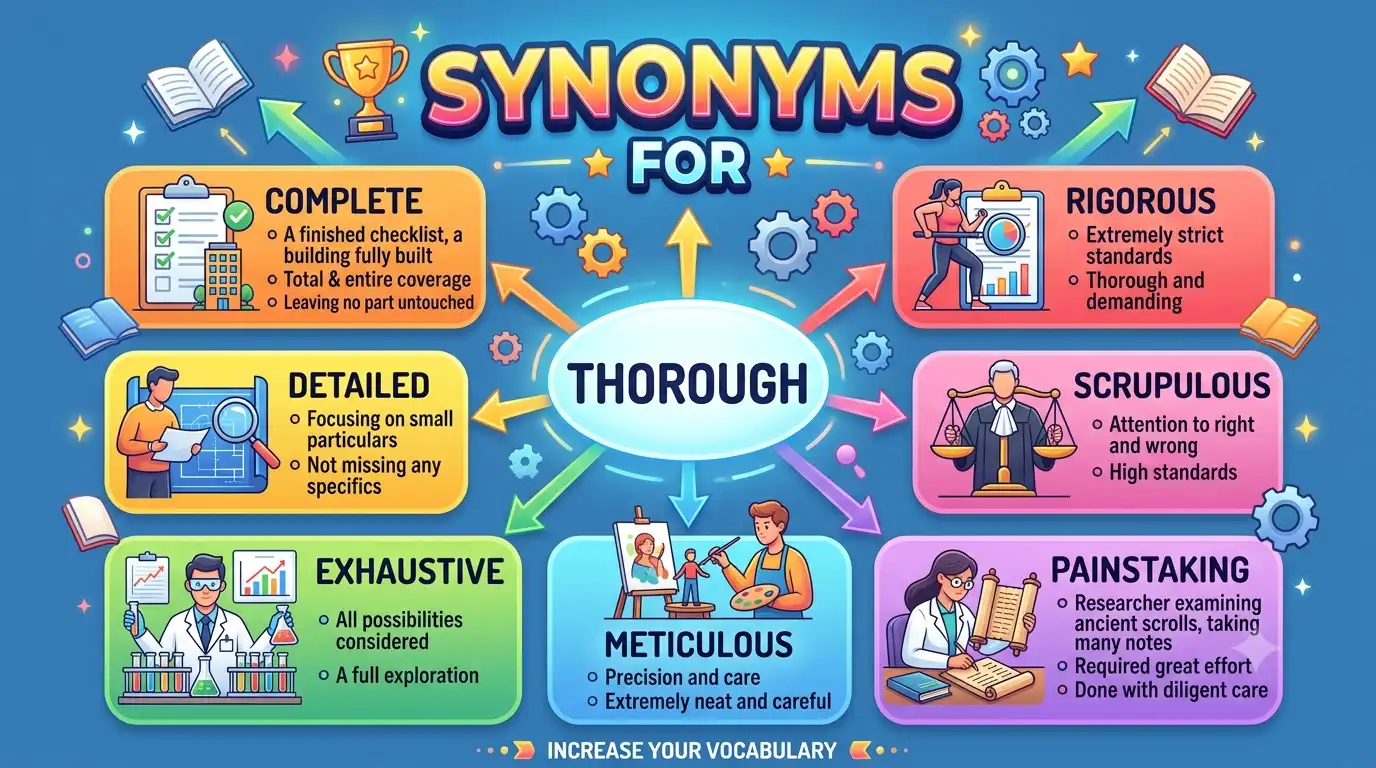
Learning synonyms for thorough helps you choose better words for your writing. When you search for synonyms for thorough, you discover simple ways to describe complete work, careful research, or deep study. Using clear synonyms for thorough makes your emails, essays, and stories accurate and easy to read.
Imagine washing a dirty car before a long family road trip. You do not just spray water on the doors and walk away. You clean the wheels, wipe the glass, and vacuum every seat until no dust remains. That careful and complete effort is what it means to be thorough.
The word thorough means doing something with great care, leaving out no detail, and finishing a job completely. It comes from an old word that means passing all the way through a space. When a person is thorough, they check every step so nothing goes wrong.
Mastering these descriptive words gives everyone a clear advantage:
- Students can write stronger essays and earn top grades.
- Bloggers can explain complex ideas clearly to their readers.
- Content writers can make product guides and reviews informative.
- Daily English users can communicate with total confidence at work or home.
“Careful words show clear thinking, and clear thinking creates great writing.”
“A rich vocabulary helps you express every small detail with perfect ease.”
Linguistic Breakdown of Thorough
Connotative Meaning
The word thorough carries a strong, positive, and reliable feeling. It suggests honesty, deep care, hard work, and high quality. It shows that someone takes pride in doing a complete job without taking shortcuts.
Etymology
- Origin: Old English word þurh (meaning “through”).
- Original Meaning: Passing completely through from one side to the other.
- Evolution: Shifted in Middle English to describe doing a job completely from start to finish.
Pronunciation (US & UK)
- US IPA: /ˈθɝː.oʊ/ or /ˈθɝː.ə/
- UK IPA: /ˈθʌr.ə/
Syllables & Structure
- Syllables: 2 (thor-ough)
- Base Word: Thorough (Adjective)
- Affixation: Derived historically from the preposition through. Can take suffixes like -ly (thoroughly) or -ness (thoroughness).
Comparison Table
| Keyword | Meaning | Usage Type | Context |
| Thorough | Done with great care and total detail | Professional & Casual | Cleaning, reports, safety checks |
| Meticulous | Very careful about small details | Professional & Academic | Science, editing, artwork |
| Rigorous | Strict, hard, and extremely careful | Professional & Academic | Testing, rules, exercise |
| Comprehensive | Including all parts or details | Professional & Academic | Reviews, guides, insurance |
| Detailed | Giving many specific facts | Casual & Professional | Directions, descriptions, plans |
| Careful | Taking care to avoid mistakes | Casual & Daily Use | Driving, handling glass, writing |
| Complete | Finished with no missing parts | Casual & Professional | Homework, sets, lists |
| Systematic | Following a fixed plan or order | Professional & Technical | Searches, organizing, coding |
1. Meticulous
- Pronunciation: /məˈtɪk.jə.ləs/ (UK & US)
- Meaning: Very careful about every tiny detail.
- Examples:
- She kept meticulous notes during the science lesson.
- The artist painted the picture with meticulous care.
2. Complete
- Pronunciation: /kəmˈpliːt/ (UK & US)
- Meaning: Having all necessary parts with nothing missing.
- Examples:
- He gave a complete report about the project.
- Please fill out the complete form before leaving.
3. Rigorous
- Pronunciation: /ˈrɪɡ.ər.əs/ (UK) | /ˈrɪɡ.ɚ.əs/ (US)
- Meaning: Done with strict rules and great care.
- Examples:
- Athletes go through rigorous training every morning.
- The doctor conducted a rigorous check of the equipment.
4. Comprehensive
- Pronunciation: /ˌkɒm.prɪˈhen.sɪv/ (UK) | /ˌkɑːm.prəˈhen.sɪv/ (US)
- Meaning: Covering all facts or ideas completely.
- Examples:
- The book provides a comprehensive guide to history.
- We took a comprehensive tour of the old castle.
5. Exhaustive
- Pronunciation: /ɪɡˈzɔː.stɪv/ (UK) | /ɪɡˈzɑː.stɪv/ (US)
- Meaning: Testing or checking every single possibility.
- Examples:
- Police made an exhaustive search of the forest.
- She wrote an exhaustive list of farm animals.
6. Detailed
- Pronunciation: /ˈdiː.teɪld/ (UK) | /dɪˈteɪld/ (US)
- Meaning: Packed with many small facts and points.
- Examples:
- The map shows a detailed view of city streets.
- He gave us detailed instructions for the game.
7. Painstaking
- Pronunciation: /ˈpeɪnzˌteɪ.kɪŋ/ (UK & US)
- Meaning: Needing great effort and careful work.
- Examples:
- Fixing the old clock took painstaking effort.
- She spent painstaking hours sewing the dress.
8. Careful
- Pronunciation: /ˈkeə.fəl/ (UK) | /ˈker.fəl/ (US)
- Meaning: Giving full attention to avoid mistakes.
- Examples:
- Be careful when you walk on slippery ice.
- He is a careful driver on busy roads.
9. Systematic
- Pronunciation: /ˌsɪs.təˈmæt.ɪk/ (UK & US)
- Meaning: Done according to a neat, organized plan.
- Examples:
- They used a systematic method to sort books.
- She made a systematic check of all rooms.
10. In-depth
- Pronunciation: /ˌɪnˈdepθ/ (UK & US)
- Meaning: Done with deep thought and total coverage.
- Examples:
- The reporter did an in-depth interview today.
- Students had an in-depth study of space.
11. Methodical
- Pronunciation: /məˈθɒd.ɪ.kəl/ (UK) | /məˈθɑː.dɪ.kəl/ (US)
- Meaning: Working step by step in an orderly way.
- Examples:
- The detective used a methodical plan to find clues.
- She cleaned the kitchen in a methodical order.
12. Exact
- Pronunciation: /ɪɡˈzækt/ (UK & US)
- Meaning: Completely correct with no mistakes.
- Examples:
- Measure the exact amount of milk for the cake.
- He gave the exact time the bus arrived.
13. Attentive
- Pronunciation: /əˈten.tɪv/ (UK & US)
- Meaning: Watching and listening with great focus.
- Examples:
- Attentive students listen closely to teachers.
- The waiter was very attentive to our needs.
14. Scrupulous
- Pronunciation: /ˈskruː.pjə.ləs/ (UK & US)
- Meaning: Extremely honest and careful about rules.
- Examples:
- She is scrupulous about keeping her desk clean.
- The builder was scrupulous about safety steps.
15. Precise
- Pronunciation: /prɪˈsaɪs/ (UK & US)
- Meaning: Very accurate and clear in detail.
- Examples:
- Cut the paper into precise square shapes.
- He used precise words to explain his idea.
16. Uncompromising
- Pronunciation: /ʌnˈkɒm.prə.maɪ.zɪŋ/ (UK) | /ʌnˈkɑːm.prə.maɪ.zɪŋ/ (US)
- Meaning: Demanding high quality without accepting errors.
- Examples:
- The manager holds uncompromising standards for quality.
- She has an uncompromising focus on truth.
17. Full
- Pronunciation: /fʊl/ (UK & US)
- Meaning: Complete with everything included.
- Examples:
- We enjoyed a full view of the ocean.
- The doctor gave a full explanation of the test.
18. Intensive
- Pronunciation: /ɪnˈten.sɪv/ (UK & US)
- Meaning: Involving strong focus and deep effort.
- Examples:
- Farmers use intensive care to grow healthy crops.
- She took an intensive English course in summer.
19. Searching
- Pronunciation: /ˈsɜː.tʃɪŋ/ (UK) | /ˈsɝː.tʃɪŋ/ (US)
- Meaning: Examining things closely to find hidden truth.
- Examples:
- The teacher asked searching questions about the story.
- He gave the old map a searching look.
20. Conscientious
- Pronunciation: /ˌkɒn.ʃiˈen.ʃəs/ (UK) | /ˌkɑːn.ʃiˈen.ʃəs/ (US)
- Meaning: Working hard to do things correctly and well.
- Examples:
- A conscientious worker always double-checks work.
- She is conscientious about doing her homework.
21. Deep
- Pronunciation: /diːp/ (UK & US)
- Meaning: Going far below the surface in detail.
- Examples:
- They had a deep talk about world history.
- He has a deep knowledge of plant care.
22. Strict
- Pronunciation: /strɪkt/ (UK & US)
- Meaning: Following rules or details without breaking them.
- Examples:
- The school follows a strict safety plan.
- She maintains a strict schedule for study time.
23. Thoroughgoing
- Pronunciation: /ˌθʌr.əˈɡəʊ.ɪŋ/ (UK) | /ˌθɝː.oʊˈɡoʊ.ɪŋ/ (US)
- Meaning: Complete in every way possible.
- Examples:
- The town made a thoroughgoing change to park rules.
- He gave the room a thoroughgoing cleanup.
24. All-inclusive
- Pronunciation: /ˌɔːl.ɪnˈkluː.sɪv/ (UK & US)
- Meaning: Including every item, detail, or cost.
- Examples:
- We booked an all-inclusive hotel for vacation.
- The guide gives an all-inclusive list of tools.
25. Sweeping
- Pronunciation: /ˈswiː.pɪŋ/ (UK & US)
- Meaning: Wide in range and covering many areas.
- Examples:
- The governor announced sweeping improvements for roads.
- She made a sweeping check of the garden.
26. Punctilious
- Pronunciation: /pʌŋkˈtɪl.i.əs/ (UK & US)
- Meaning: Very careful about proper manners or small points.
- Examples:
- He is punctilious about replying to emails.
- She gave punctilious attention to her dress.
27. Diligent
- Pronunciation: /ˈdɪl.ɪ.dʒənt/ (UK & US)
- Meaning: Showing constant care and steady work.
- Examples:
- Diligent students study every single day.
- She made a diligent effort to fix the computer.
28. Particular
- Pronunciation: /pəˈtɪk.jə.lər/ (UK) | /pɚˈtɪk.jə.lɚ/ (US)
- Meaning: Choosing things carefully and watching small details.
- Examples:
- He is very particular about his shoes.
- She wants a particular style of paint for walls.
29. Fastidious
- Pronunciation: /fæsˈtɪd.i.əs/ (UK & US)
- Meaning: Giving too much care to small details or neatness.
- Examples:
- The cat is fastidious about keeping clean.
- He is fastidious when arranging his bookshelf.
30. Extensive
- Pronunciation: /ɪkˈsten.sɪv/ (UK & US)
- Meaning: Covering a large area or large amount of information.
- Examples:
- The farm covers an extensive area of land.
- She did extensive research on ocean life.
31. Penetrating
- Pronunciation: /ˈpen.ɪ.treɪ.tɪŋ/ (UK & US)
- Meaning: Seeing through problems with quick understanding.
- Examples:
- The judge offered a penetrating look at the evidence.
- He wrote a penetrating report on the news.
32. Assiduous
- Pronunciation: /əˈsɪd.ju.əs/ (UK) | /əˈsɪd.ju.əs/ (US)
- Meaning: Showing hard work and steady attention over time.
- Examples:
- The scientist made assiduous efforts to find a fix.
- She spent assiduous hours practicing the piano.
33. Total
- Pronunciation: /ˈtəʊ.təl/ (UK) | /ˈtoʊ.t̬əl/ (US)
- Meaning: Complete and including every part.
- Examples:
- The storm caused total quiet in the city.
- He gave his total focus to the test.
“Precision in speech creates clarity in thought, turning simple ideas into powerful results.”
34. Thorough-paced
- Pronunciation: /ˌθʌr.əˈpeɪst/ (UK) | /ˌθɝː.oʊˈpeɪst/ (US)
- Meaning: Fully trained or complete in skills.
- Examples:
- He is a thorough-paced worker who finishes fast.
- She proved to be a thorough-paced scholar.
35. Unsparing
- Pronunciation: /ʌnˈspeə.rɪŋ/ (UK) | /ʌnˈsper.ɪŋ/ (US)
- Meaning: Giving total effort without holding back.
- Examples:
- The team showed unsparing effort during the game.
- She gave unsparing help to her neighbors.
36. Wholehearted
- Pronunciation: /ˌhəʊlˈhɑː.tɪd/ (UK) | /ˌhoʊlˈhɑːr.t̬ɪd/ (US)
- Meaning: Done with complete energy and true interest.
- Examples:
- We gave our wholehearted support to the plan.
- She has a wholehearted love for music.
37. Rigid
- Pronunciation: /ˈrɪdʒ.ɪd/ (UK & US)
- Meaning: Fixed and checked with absolute care.
- Examples:
- The factory follows rigid quality checks.
- He kept a rigid eye on safety steps.
38. Solid
- Pronunciation: /ˈsɒl.ɪd/ (UK) | /ˈsɑː.lɪd/ (US)
- Meaning: Strong, well-made, and dependable.
- Examples:
- The student gave a solid answer to the question.
- She built a solid plan for her savings.
39. Broad
- Pronunciation: /brɔːd/ (UK & US)
- Meaning: Covering many general topics or areas.
- Examples:
- The class offers a broad view of science.
- He has broad experience in sales.
40. Deep-seated
- Pronunciation: /ˌdiːpˈsiː.tɪd/ (UK & US)
- Meaning: Strongly fixed far below the surface.
- Examples:
- The tree has deep-seated roots in soil.
- She has a deep-seated belief in kindness.
41. Out-and-out
- Pronunciation: /ˌaʊt.ənˈaʊt/ (UK & US)
- Meaning: Complete and total in nature.
- Examples:
- The project was an out-and-out success.
- He gave an out-and-out effort on the field.
42. Fully-fledged
- Pronunciation: /ˌfʊl.iˈflebdʒd/ (UK & US)
- Meaning: Completely trained or fully developed.
- Examples:
- She is now a fully-fledged doctor.
- The idea grew into a fully-fledged business.
43. Radical
- Pronunciation: /ˈræd.ɪ.kəl/ (UK & US)
- Meaning: Affecting the most basic parts of a system.
- Examples:
- The company made radical changes to rules.
- He proposed a radical fix for traffic jams.
44. Minute
- Pronunciation: /maɪˈnjuːt/ (UK) | /maɪˈnuːt/ (US)
- Meaning: Looking at tiny parts with close attention.
- Examples:
- He noticed a minute flaw in the glass.
- She gave minute attention to detail.
45. Critical
- Pronunciation: /ˈkrɪt.ɪ.kəl/ (UK & US)
- Meaning: Looking carefully to judge good and bad points.
- Examples:
- Readers gave a critical review of the novel.
- We need critical thinking to solve puzzles.
46. Analytical
- Pronunciation: /ˌæn.əlˈɪt.ɪ.kəl/ (UK & US)
- Meaning: Examining facts by breaking them into parts.
- Examples:
- She has an analytical mind for math problems.
- They used analytical steps to study data.
47. All-out
- Pronunciation: /ˌɔːlˈaʊt/ (UK & US)
- Meaning: Using all power, energy, and effort possible.
- Examples:
- Workers made an all-out effort to fix pipes.
- The team won after an all-out struggle.
48. Sound
- Pronunciation: /saʊnd/ (UK & US)
- Meaning: Free from flaws, safe, and well-thought-out.
- Examples:
- The lawyer offered sound advice to his client.
- She has a sound understanding of grammar.
49. Accurate
- Pronunciation: /ˈæk.jə.rət/ (UK & US)
- Meaning: Correct and free from any mistakes.
- Examples:
- The clock gives accurate time every day.
- She gave an accurate count of voters.
50. Well-rounded
- Pronunciation: /ˌwelˈraʊn.dɪd/ (UK & US)
- Meaning: Balanced and complete in many skills or facts.
- Examples:
- The school produces well-rounded students.
- He has a well-rounded education in science.
Antonyms of Thorough
Understanding opposite words builds a complete understanding of meaning:
- Careless: Done without attention or effort.
- Incomplete: Missing key steps or essential parts.
- Superficial: Only touching the surface without deep thought.
- Cursory: Done quickly without looking at details.
- Hasty: Done in a hurry, often leading to mistakes.
- Sloppy: Untidy, messy, and poorly executed.
Prototype Meaning & Categorization of Thorough
Prototype Meaning
The core image of thorough is a worker carefully inspecting every single part of a machine before turning it on. It represents total attention, complete execution, and zero missed steps.
Semantic Categories
- Quality of Action: Meticulous, rigorous, painstaking, exact, precise.
- Scope & Completeness: Comprehensive, exhaustive, complete, total, all-inclusive.
- Method & Work Style: Systematic, methodical, structured, organized.
- Personal Character: Conscientious, diligent, attentive, scrupulous, assiduous.
Frequently Asked Questions (FAQs)
1. What is the best synonym for thorough in a job resume?
The top terms for resumes are meticulous, diligent, conscientious, and rigorous. These words show employers that you perform high-quality work with attention to detail.
2. Is there a difference between thorough and complete?
Yes. Complete means having all parts present. Thorough means doing the work with deep care, attention, and effort from start to finish.
3. Can thorough be used as an adverb?
The word thorough is an adjective. To use it as an adverb, add -ly to make thoroughly (e.g., “She thoroughly cleaned the room.”).
4. What is the difference between thorough and meticulous?
Thorough focuses on not missing any steps. Meticulous focuses on paying extreme attention to tiny, specific details.
5. How do I use synonyms for thorough in essay writing?
Replace generic terms with specific words based on context. Use comprehensive for research papers, meticulous for experiments, and systematic for steps.
6. What is the main antonym of thorough?
The direct opposites are cursory, careless, superficial, and incomplete.
Conclusion
Learning synonyms for thorough is a simple way to elevate your communication. Expanding your vocabulary allows you to describe work, research, and daily tasks with greater precision. When you avoid repeating the same basic words, your writing becomes engaging, clear, and professional.
Using varied vocabulary helps bloggers improve reader engagement and search rankings. Students score higher on academic essays when they demonstrate precise word choices. Professionals build trust by communicating complex updates clearly in emails and reports.
Start applying these new words in your daily writing today. Practice using terms like meticulous, rigorous, comprehensive, and diligent in your emails, study notes, and conversations. Consistent vocabulary practice builds lasting confidence and clear expression.
“Words are the tools of thought; choosing the right tool makes every sentence stronger.”
“A rich vocabulary empowers you to share ideas with clarity, elegance, and impact.”

Michael Turner is a published fiction writer and creative writing tutor with over a decade of experience helping writers find the words that make their stories breathe ( Biography ).