The word pretentious is common in daily conversation, reviews, and academic writing.
It often describes people, behavior, art, or language.
Learning synonyms for pretentious helps you speak and write more clearly and naturally.
Definition of Pretentious (Simple Explanation)
Pretentious describes someone who tries to seem more important, intelligent, or cultured than they really are.
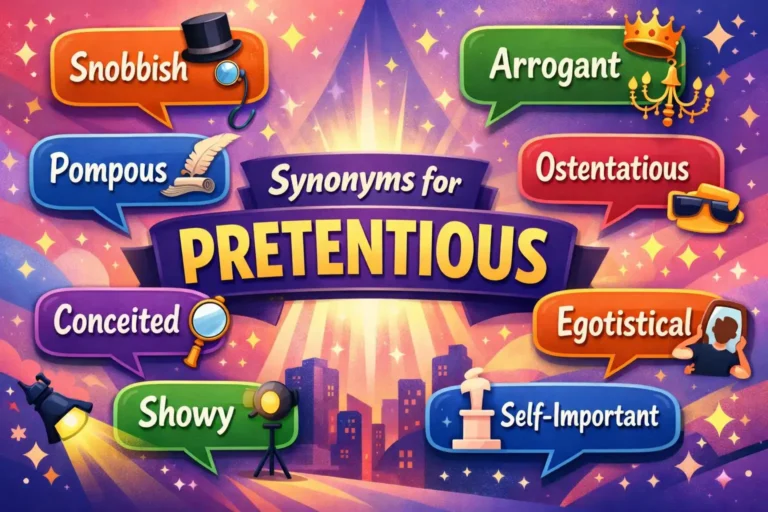
Common synonyms include:
- Arrogant
- Showy
- Affected
- Pompous
- Snobbish
- Conceited
- Overblown
- Self-important
- Grandiose
- High-flown
Meaning of Pretentious
Pretentious means trying to impress others by acting more important, smarter, or richer than you really are.
Example:
He used long, complicated words to sound smart, but everyone thought he was pretentious.
Types of Pretentious Synonyms by Context
Understanding context helps you choose the right synonym. Below are the main types of pretentious synonyms based on how they are used.
1. Personality-Based (Attitude)
These words describe a person’s character or mindset. They suggest someone believes they are superior or more important than others.
Examples: arrogant, conceited, self-important, snobbish
2. Behavior or Appearance
These words describe how someone acts, dresses, or presents themselves in an exaggerated or artificial way.
Examples: showy, affected
3. Speech or Writing Style
These words describe language that sounds overly formal, dramatic, or exaggerated.
Examples: pompous, grandiose, high-flown, overblown
By choosing the correct type based on context, your writing will sound more precise and natural.
Synonyms for Pretentious Table (Clear Meanings and Examples)
| Word | Simple Meaning | Example Sentence |
| Arrogant | Thinking you are better than others | He sounded arrogant during the meeting. |
| Showy | Trying to attract attention | She wore a showy outfit to impress others. |
| Affected | Artificial or not natural | His accent sounded affected. |
| Pompous | Self-important and formal | The speaker gave a pompous speech. |
| Snobbish | Acting superior to others | She made snobbish comments about the restaurant. |
| Conceited | Too proud of yourself | He is conceited about his success. |
| Overblown | Too exaggerated | The movie review was overblown. |
| Self-important | Believing you are very important | He made self-important remarks. |
| Grandiose | Impressively large but unrealistic | They had grandiose plans for the project. |
| High-flown | Using very formal or dramatic language | The essay was full of high-flown phrases. |
Master Synonyms List: Easy to Advanced Synonyms for Pretentious
Beginner / Simple
Arrogant
Simple meaning: Thinking you are better than others
Example: She sounded arrogant when she talked about her job.
(Formal & Informal)
Showy
Simple meaning: Trying to impress people
Example: He bought a showy car to attract attention.
(Neutral)
Conceited
Simple meaning: Too proud of yourself
Example: He is conceited about his talents.
(Neutral)
Intermediate
Snobbish
Simple meaning: Acting superior to others
Example: She seemed snobbish at the party.
(Neutral)
Affected
Simple meaning: Not natural; pretending
Example: His laugh sounded affected.
(Formal)
Self-important
Simple meaning: Acting like you are very important
Example: He gave a self-important speech.
(Neutral)
Advanced / Formal
Pompous
Simple meaning: Too serious and self-important
Example: The professor sounded pompous in his lecture.
(Formal)
Grandiose
Simple meaning: Impressively big but unrealistic
Example: They shared grandiose ideas about changing the world.
(Formal)
Overblown
Simple meaning: Too exaggerated
Example: The article made overblown claims.
(Neutral)
High-flown
Simple meaning: Very formal and dramatic language
Example: The poem used high-flown language.
(Formal)
Formal vs Informal Synonyms
- Formal writing: pompous, grandiose, high-flown, affected
- Everyday conversation: arrogant, conceited, snobbish, showy
- Professional settings: self-important, overblown
Choose based on tone. Academic writing usually prefers more precise and formal words.
Real-Life Usage Examples of Synonyms for Pretentious
Below are practical examples showing how synonyms for pretentious are used in different real-life contexts.
Conversation
“He sounds arrogant, not confident.”
“I think that restaurant feels a bit snobbish.”
Academic Writing
“The author’s grandiose claims lack supporting evidence.”
“The essay relies on high-flown language instead of clear arguments.”
Business Writing
“The proposal includes overblown projections.”
“His self-important tone did not impress the clients.”
Blogging
“Some luxury brands use showy marketing to appear exclusive.”
“The review criticized the film for being pompous.”
Emotional Expression
“I don’t like when people act conceited.”
“Her affected accent made the conversation uncomfortable.”
Similar Words Comparison
Pretentious vs Arrogant
- Pretentious focuses on trying to impress.
- Arrogant focuses on believing you are better.
Example:
He used big words to sound smart (pretentious).
He believed he was smarter than everyone (arrogant).
Pretentious vs Pompous
- Pretentious can describe behavior or style.
- Pompous often describes speech that sounds overly serious.
Example:
The art show felt pretentious.
The speaker gave a pompous introduction.
Example Sentences (Natural Usage)
- His writing style is too pretentious for casual readers.
- She gave a pretentious explanation of a simple idea.
- The restaurant had a pretentious atmosphere.
- He wore a showy watch to impress clients.
- Her tone sounded snobbish and unfriendly.
- The speech was unnecessarily pompous.
- That movie felt overblown and dramatic.
- His accent sounded affected.
- The plan seemed grandiose but unrealistic.
- She made self-important comments during the meeting.
- He avoided sounding arrogant in interviews.
- The article used high-flown language.
- His behavior seemed conceited.
- Some luxury brands appear pretentious.
Common Mistakes
- Confusing pretentious with confident
Confidence is positive; pretentious has a negative meaning. - Using pompous for casual behavior
Pompous usually describes formal speech. - Overusing arrogant
Arrogant is stronger than pretentious. Use carefully. - Using grandiose for people only
It often describes plans or ideas.
Tips for Choosing the Right Synonym
- Think about tone: Is it serious or casual?
- Consider the context: Person, speech, plan, or style?
- Match the formality level.
- Choose the clearest word.
- Avoid overusing one synonym repeatedly.
When NOT to Use Pretentious
Do not use pretentious for:
- Someone who is truly knowledgeable.
- Formal writing that is naturally technical.
- Confident but humble behavior.
It suggests artificial or exaggerated importance.
Opposite Words (Antonyms)
- Humble
- Modest
- Down-to-earth
- Genuine
- Unassuming
FAQs
What does pretentious mean?
It means trying to seem more important or intelligent than you really are.
Is pretentious formal or informal?
It is neutral and can be used in both conversation and writing.
How can I use it in conversation?
You can say, “That movie felt pretentious.”
What is the best synonym for pretentious?
It depends on context. Arrogant is common for people. Pompous is common for speech.
Can pretentious be replaced with arrogant?
Sometimes, but arrogant focuses more on attitude than trying to impress.
Conclusion
Understanding synonyms for pretentious helps you describe people, writing, and behavior more clearly. Instead of repeating one word, you can choose from alternatives like arrogant, pompous, conceited, grandiose, or self-important depending on tone and context.
Expanding your vocabulary improves both speaking and writing. It also helps you sound more natural and precise in conversations, academic essays, business communication, and online content.
To build stronger vocabulary skills, you can also explore guides on:
- synonyms for arrogant
- synonyms for snobbish
- synonyms for confident
- words that describe personality traits
Try using three new synonyms for pretentious in your next paragraph to improve clarity and variety in your English.

Michael Turner creates simple synonym guides that help readers expand their vocabulary and choose the right word for the right context.