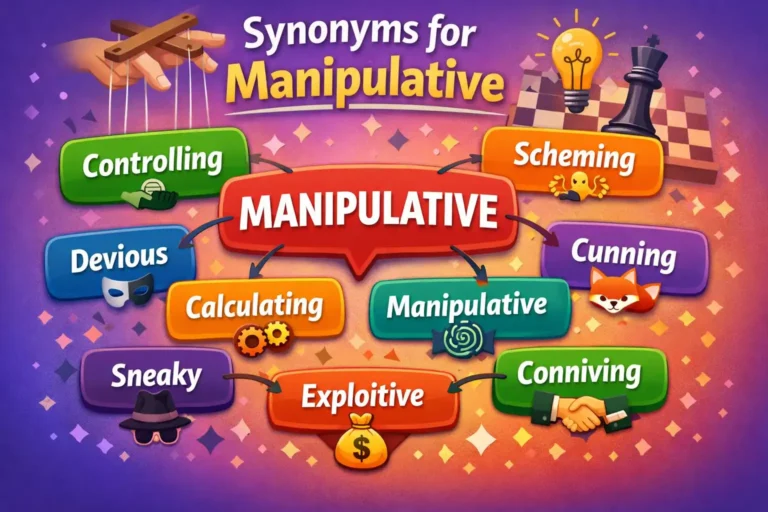
The word manipulative is common in daily conversation, psychology, and relationship discussions.
It often describes someone who tries to control others unfairly.
Learning synonyms for manipulative helps you speak more clearly and avoid repeating the same word.
Direct Answer
Manipulative describes a person who controls or influences others in a dishonest or unfair way.
Common synonyms for manipulative:
- Controlling
- Deceptive
- Cunning
- Calculating
- Crafty
- Scheming
- Exploitative
- Dishonest
- Strategic
- Persuasive
Meaning of Manipulative
Manipulative means trying to control or influence someone unfairly, usually for personal benefit. It often involves dishonesty, emotional pressure, or hidden motives.
In psychology and relationship contexts, a manipulative person may use guilt, fear, flattery, or lies to control another person’s thoughts or actions.
Example (relationship context):
He was manipulative and made her feel guilty whenever she disagreed with him.
Example (workplace context):
The manager used manipulative tactics to pressure employees into working overtime.
Categories of Synonyms
1. Control-Based Behavior
These words focus on power, dominance, and directing others’ actions.
Examples: controlling, strategic
Example sentence:
He became controlling and decided who she could talk to.
2. Dishonest Behavior
These words highlight lying, misleading actions, or hidden intentions.
Examples: deceptive, dishonest, scheming
Example sentence:
The deceptive email made customers believe the offer was real.
3. Clever but Self-Serving Behavior
These words describe intelligence used for personal gain, often without caring about others.
Examples: cunning, calculating, crafty, exploitative, persuasive
Example sentence:
Her calculating response showed she was thinking only about her own benefit.
Synonyms Table
| Word | Simple Meaning | Example Sentence |
| Controlling | Trying to dominate others | He is controlling in relationships. |
| Deceptive | Misleading or dishonest | The advertisement was deceptive. |
| Cunning | Clever in a tricky way | The fox was cunning in the story. |
| Calculating | Acting with careful selfish planning | She made a calculating decision. |
| Crafty | Smart but sneaky | He gave a crafty smile. |
| Scheming | Secretly planning something bad | The scheming partner hid the truth. |
| Exploitative | Using others unfairly | The company was exploitative. |
| Dishonest | Not truthful | He was dishonest about the money. |
| Strategic | Carefully planned | It was a strategic move. |
| Persuasive | Good at influencing others | She is persuasive in debates. |
Master Synonyms List (Grouped by Level)
Below is a refined list with clear differences in tone and usage. Each synonym has a short meaning and one natural example sentence.
Beginner / Simple
Controlling
Meaning: Wanting to direct or dominate others
Example: He is controlling and decides everything for his partner.
Tone: Neutral to negative
Dishonest
Meaning: Not telling the truth
Example: The dishonest reply caused confusion.
Tone: Neutral
Deceptive
Meaning: Misleading or giving false information
Example: The deceptive advertisement tricked buyers.
Tone: Neutral
Intermediate
Cunning
Meaning: Clever in a tricky or sneaky way
Example: The cunning negotiator hid his real plan.
Tone: Slightly negative
Calculating
Meaning: Cold and carefully planning for personal gain
Example: Her calculating decision ignored everyone else’s feelings.
Tone: Formal / Negative
Crafty
Meaning: Skillful but slightly sneaky
Example: He made a crafty excuse to avoid blame.
Tone: Informal
Scheming
Meaning: Secretly planning something dishonest
Example: The scheming partner spread false rumors.
Tone: Negative
Advanced / Formal
Exploitative
Meaning: Using others unfairly for benefit
Example: The exploitative contract favored only one side.
Tone: Formal / Strong
Strategic
Meaning: Carefully planned to gain advantage
Example: It was a strategic move during the negotiation.
Tone: Neutral to formal
Persuasive
Meaning: Able to influence others effectively
Example: Her persuasive argument convinced the audience.
Tone: Neutral (can be positive)
Formal vs Informal Synonyms
Understanding tone is important when choosing synonyms for manipulative. Some words sound strong and professional. Others feel casual or emotional.
Formal Synonyms
These are better for academic, professional, or serious discussions:
- Exploitative
- Calculating
- Strategic (depends on context)
- Deceptive
Use these in:
- Academic essays
- Business reports
- Psychology discussions
- News articles
Example (formal writing):
The study examined exploitative leadership patterns in corporate environments.
Note: Strategic is not always negative. It becomes similar to manipulative only if the intent is unfair.
Neutral Synonyms
These work in both speech and writing:
- Dishonest
- Controlling
- Persuasive (can be positive or negative)
Example (neutral tone):
His controlling behavior affected the team’s morale.
These words are clear and widely understood.
Informal Synonyms
These are more common in everyday conversation:
- Crafty
- Scheming
- Cunning (often used in stories or casual speech)
Use them in:
- Conversations
- Blogs
- Storytelling
- Social media
Example (casual conversation):
That was a crafty way to get what you wanted.
Important Nuance
- Manipulative usually implies unfair influence.
- Persuasive can be positive and honest.
- Strategic often sounds professional and neutral unless context makes it negative.
- Exploitative is stronger and more serious than manipulative.
Always consider:
- Audience
- Context
- Emotional intensity
- Professional setting
Choosing the correct level of formality makes your communication clearer and more effective.
Real-Life Usage Examples
Below are expanded examples showing how manipulative can be used in different real-world contexts.
1. Conversation (Everyday Speech)
In daily conversation, the word often describes personal behavior.
Example 1:
“I feel like he’s being manipulative when he brings up old mistakes to win arguments.”
Example 2:
“That sounds manipulative. He’s trying to make you feel guilty so you’ll agree.”
Here, the word expresses emotional pressure or unfair influence in relationships.
2. Academic Writing
In academic contexts, manipulative is used in psychology, sociology, and communication studies.
Example 1:
“The research explores manipulative communication patterns in unhealthy relationships.”
Example 2:
“The study identified manipulative leadership styles that reduce employee trust.”
In academic writing, the tone is objective and analytical, not emotional.
3. Business Writing
In professional settings, the word is used carefully because it carries strong negative meaning.
Example 1:
“The company was criticized for using manipulative marketing strategies.”
Example 2:
“The report warns against manipulative sales tactics that pressure customers.”
In business contexts, it often refers to unethical persuasion or misleading practices.
4. Blogging and Online Content
Bloggers often use manipulative when discussing relationships, media, or advertising.
Example 1:
“Watch out for manipulative language that pushes you to buy quickly.”
Example 2:
“Some reality shows edit scenes in a manipulative way to create drama.”
Here, the word highlights influence that feels unfair or intentional.
5. Emotional Expression
When expressing feelings, the word often describes hurt or frustration.
Example 1:
“I didn’t realize how manipulative that behavior was until later.”
Example 2:
“It hurts when someone you trust becomes manipulative.”
In emotional contexts, the word signals broken trust and unfair control.
Key Takeaway
In all situations, manipulative suggests influence with hidden motives or unfair advantage.
The context—personal, academic, or professional—determines how strong or formal the word sounds.
Similar Words Comparison
Manipulative vs Controlling
- Manipulative often involves dishonesty.
- Controlling focuses more on power and dominance.
Example:
He was manipulative and lied to her.
He was controlling and chose her friends.
Manipulative vs Persuasive
- Manipulative suggests unfair influence.
- Persuasive can be positive and honest.
Example:
The manipulative salesman hid the facts.
The persuasive speaker shared clear evidence.
Example Sentences
Here are varied and natural example sentences using manipulative in different contexts and structures:
- She recognized his manipulative behavior after talking to a counselor.
- It was manipulative of him to pretend he was upset just to get attention.
- Many people leave jobs where leadership feels manipulative.
- The article explains how manipulative language can influence public opinion.
- I don’t like how manipulative that request sounded.
- Teachers should avoid manipulative techniques that shame students.
- Her friends slowly noticed the manipulative patterns in her relationships.
- Some online ads are designed to be subtly manipulative.
- He apologized for being manipulative during the disagreement.
- A manipulative apology often shifts blame instead of accepting it.
- The documentary exposed manipulative tactics used in political campaigns.
- Children can sometimes develop manipulative habits to avoid punishment.
- That comment felt slightly manipulative, even if it was said jokingly.
- Experts warn that manipulative communication damages long-term trust.
- She set clear boundaries after realizing how manipulative the situation had become.
These sentences vary in tone, grammar structure, and context to show flexible and accurate usage.
Common Mistakes
- Using manipulative for positive influence
Persuasive can be positive. Manipulative is usually negative. - Confusing controlling with manipulative
Controlling is about power. Manipulative often includes dishonesty. - Overusing the word
Use synonyms to avoid repetition. - Using it without evidence
Calling someone manipulative is strong. Be careful in formal writing.
Tips / Best Practices
Choosing the right synonym for manipulative requires attention to tone, context, and clarity. Below are practical and more specific guidelines.
1. Check the Intention Behind the Behavior
Ask yourself:
Is the influence dishonest, unfair, or simply persuasive?
- Use manipulative when there is hidden motive or emotional control.
- Use persuasive when the influence is honest and based on facts.
- Use exploitative when someone benefits unfairly from others.
Being precise prevents exaggeration.
2. Match the Emotional Strength
Some synonyms are stronger than others.
- Exploitative sounds serious and harmful.
- Controlling focuses on dominance.
- Crafty sounds lighter and more casual.
Choose a word that matches how serious the situation is.
3. Consider Professional Risk
In business or academic writing, calling someone manipulative can sound accusatory.
Instead of writing:
“The manager was manipulative.”
You might write:
“The manager used deceptive communication strategies.”
This sounds more objective and professional.
4. Avoid Overuse in Personal Conflicts
Using strong words repeatedly can weaken your message.
Instead of saying:
“He’s manipulative, manipulative, manipulative.”
Vary your language with:
- controlling
- calculating
- deceptive
This improves clarity and credibility.
5. Focus on Behavior, Not Labels
It is often better to describe actions rather than label a person.
Less effective:
“He is manipulative.”
More precise:
“He uses guilt to influence decisions.”
Describing behavior sounds more balanced and thoughtful.
6. Think About Cultural and Social Context
In some cultures, direct influence is normal and not considered negative.
Be careful before labeling behavior as manipulative without understanding context.
7. Avoid Keyword Overuse in Writing
If you are writing for SEO or blogging, avoid repeating manipulative too often.
Use synonyms naturally to improve readability and prevent keyword stuffing.
Quick Checklist
Before choosing a synonym, ask:
- Is the tone formal or casual?
- Is the influence dishonest or just strong?
- How serious is the situation?
- Will this word sound too emotional?
Careful word choice improves clarity, credibility, and impact.
When NOT to Use Manipulative
Do not use manipulative for:
- Positive leadership
- Honest persuasion
- Neutral strategic planning
It usually implies unfair or dishonest behavior.
Opposite Words (Antonyms)
- Honest
- Sincere
- Genuine
- Transparent
- Straightforward
FAQs
Below are common long-tail questions learners and writers ask about manipulative and its synonyms.
What does manipulative mean in simple words?
Manipulative means trying to control or influence someone unfairly, often by using guilt, lies, or emotional pressure.
What does manipulative mean in a relationship?
In relationships, manipulative describes behavior where one person uses emotional tactics—like guilt, silent treatment, or blame—to control their partner.
Is manipulative a negative word?
Yes, manipulative usually has a negative meaning. It suggests dishonesty, hidden motives, or unfair control.
Is manipulative formal or informal English?
Manipulative is neutral in formality. It can be used in conversation, psychology discussions, academic writing, and business contexts.
What is the best synonym for manipulative in psychology?
Common psychology-related synonyms include deceptive, controlling, and exploitative. The best choice depends on whether the focus is dishonesty, dominance, or unfair gain.
What is a professional word for manipulative behavior?
In professional or academic writing, you can use exploitative, calculating, or deceptive communication instead of manipulative.
Can manipulative be replaced with persuasive?
Not always. Persuasive can be positive and honest. Manipulative usually implies unfair or dishonest influence.
What are common examples of manipulative tactics?
Examples include:
- Using guilt to change someone’s decision
- Hiding important information
- Playing the victim to gain sympathy
- Giving false praise to gain advantage
How do you use manipulative in a sentence?
Example:
“The manager used manipulative tactics to pressure employees into agreeing.”
What is the difference between manipulative and controlling?
Manipulative often includes hidden motives or deception.
Controlling focuses more on dominance and limiting someone’s choices.
These answers help clarify meaning, usage, tone, and common search questions related to synonyms for manipulative.
Conclusion
Learning synonyms for manipulative improves your writing and speaking.
It helps you describe behavior more clearly and accurately.
Try using 3 new synonyms in your next sentence.

Michael Turner creates simple synonym guides that help readers expand their vocabulary and choose the right word for the right context.