The word cunning is common in daily speech, books, and movies. It often describes a person who is clever in a tricky or secret way.
Learning synonyms for cunning helps you speak and write more clearly. It also improves your vocabulary for school, business, and everyday conversation.
Direct Answer
Cunning means being clever in a tricky or sometimes dishonest way to get what you want.
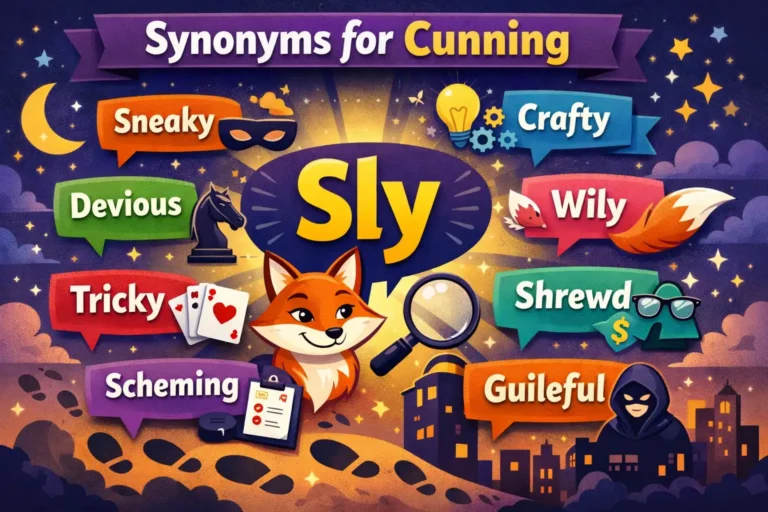
Common synonyms include:
- Clever
- Crafty
- Sly
- Shrewd
- Devious
- Sneaky
- Wily
- Scheming
- Manipulative
- Calculating
Meaning of Cunning
Cunning describes someone who uses intelligence and planning to achieve a goal, often in a secret or slightly dishonest way.
Example:
The fox was cunning and escaped the trap.
Categories of Synonyms (By Meaning Type)
1. Positive Intelligence (Smart Strategy)
These words describe clever thinking, often in business or planning.
- Shrewd
- Calculating
- Wily
2. Secretive or Tricky Behavior
These words suggest hidden plans or mild dishonesty.
- Crafty
- Sly
- Devious
3. Negative or Manipulative Behavior
These words show unfair control or selfish planning.
- Sneaky
- Scheming
- Manipulative
Synonyms Table
| Word | Simple Meaning | Example Sentence |
| Clever | Smart and quick-thinking | She made a clever plan to win. |
| Crafty | Smart in a tricky way | The crafty thief avoided the cameras. |
| Sly | Secretly clever | He gave me a sly smile. |
| Shrewd | Smart in business or decisions | She is a shrewd investor. |
| Devious | Dishonest and indirect | That was a devious trick. |
| Sneaky | Doing things secretly | He made a sneaky move. |
| Wily | Experienced and tricky | The wily lawyer won the case. |
| Scheming | Always making secret plans | The scheming villain failed. |
| Manipulative | Controlling others unfairly | She is manipulative in arguments. |
| Calculating | Planning carefully for advantage | He gave a calculating look. |
Master Synonyms List (Grouped by Level)
Beginner / Simple
1. Clever
Simple meaning: Smart and quick-thinking
Example: Clever students solve problems fast.
(Formal & Informal)
2. Sneaky
Simple meaning: Secret in a dishonest way
Example: That was a sneaky decision.
(Informal)
3. Sly
Simple meaning: Secretly smart
Example: He made a sly comment.
(Informal)
Intermediate
4. Crafty
Simple meaning: Smart in a tricky way
Example: The crafty fox found food easily.
(Neutral)
5. Shrewd
Simple meaning: Smart in judgment
Example: She made a shrewd business deal.
(Formal)
6. Wily
Simple meaning: Clever from experience
Example: The wily politician avoided the question.
(Formal)
Advanced / Formal
7. Devious
Simple meaning: Dishonest and indirect
Example: He used devious methods to win.
(Formal, Negative)
8. Scheming
Simple meaning: Secretly planning something bad
Example: The scheming character lied to everyone.
(Negative)
9. Manipulative
Simple meaning: Controlling others unfairly
Example: A manipulative leader can harm a team.
(Formal, Negative)
10. Calculating
Simple meaning: Planning carefully for gain
Example: She gave him a calculating stare.
(Formal)
Formal vs Informal Synonyms
- Use shrewd, calculating, and devious in academic or business writing.
- Use sneaky and sly in casual conversation.
- Use manipulative when discussing psychology or serious behavior.
Choosing the wrong tone can sound rude or too dramatic.
Real-Life Usage Examples
Conversation
“That was a sneaky move!”
Academic Writing
“The leader used devious strategies to maintain power.”
Business Writing
“She made a shrewd investment decision.”
Blogging
“The villain is cunning and unpredictable.”
Emotional Expression
“I felt manipulated by his calculating behavior.”
Similar Words Comparison
Cunning vs Clever
- Cunning often suggests trickiness or mild dishonesty.
- Clever usually has a positive meaning.
Example:
She is clever at math.
He was cunning in hiding the truth.
Cunning vs Shrewd
- Cunning may suggest secrecy.
- Shrewd suggests smart judgment, especially in business.
Example:
The cunning spy escaped.
The shrewd manager saved money.
Example Sentences (12–15)
- The cunning fox avoided the hunters.
- She gave a sly wink.
- He made a clever excuse.
- That was a crafty solution.
- The politician was wily in debates.
- She is a shrewd negotiator.
- His devious plan failed.
- The sneaky child took a cookie.
- The scheming villain lost in the end.
- He had a calculating expression.
- She acted manipulative during the meeting.
- The general was cunning in battle.
- His crafty tricks surprised everyone.
- The manager made a shrewd decision.
Common Mistakes
- Using clever instead of cunning
Clever is positive. Cunning can suggest dishonesty. - Using manipulative for small tricks
Manipulative is strong and serious. - Overusing sneaky in formal writing
Sneaky sounds informal. - Confusing shrewd with rude
Shrewd means smart, not impolite.
Tips / Best Practices
- Choose based on tone: positive or negative?
- Consider context: business, conversation, storytelling.
- Match formality: academic or casual?
- Avoid repeating the same word too often.
- Do not overuse cunning in every sentence.
Clear writing always sounds more natural.
When NOT to Use Cunning
Do not use cunning when you mean simple intelligence.
For example, in school reports, use clever or intelligent instead.
Cunning may sound negative in professional settings.
Opposite Words (Antonyms)
- Honest
- Innocent
- Naive
- Straightforward
- Trusting
FAQs
What does cunning mean?
It means being clever in a tricky or sometimes dishonest way.
Is cunning formal or informal?
It is neutral but often slightly negative.
How can I use it in conversation?
You can say, “That was a cunning move.”
What is the best synonym for cunning?
It depends on context. Shrewd works in business. Sneaky works in casual speech.
Can cunning be replaced with clever?
Sometimes yes, but clever is more positive.
Conclusion
Learning synonyms for cunning improves your speaking and writing. It helps you choose the right tone and meaning in different situations.
A stronger vocabulary gives you clearer communication and better confidence.
Try using 3 new synonyms in your next sentence.

Michael Turner creates simple synonym guides that help readers expand their vocabulary and choose the right word for the right context.