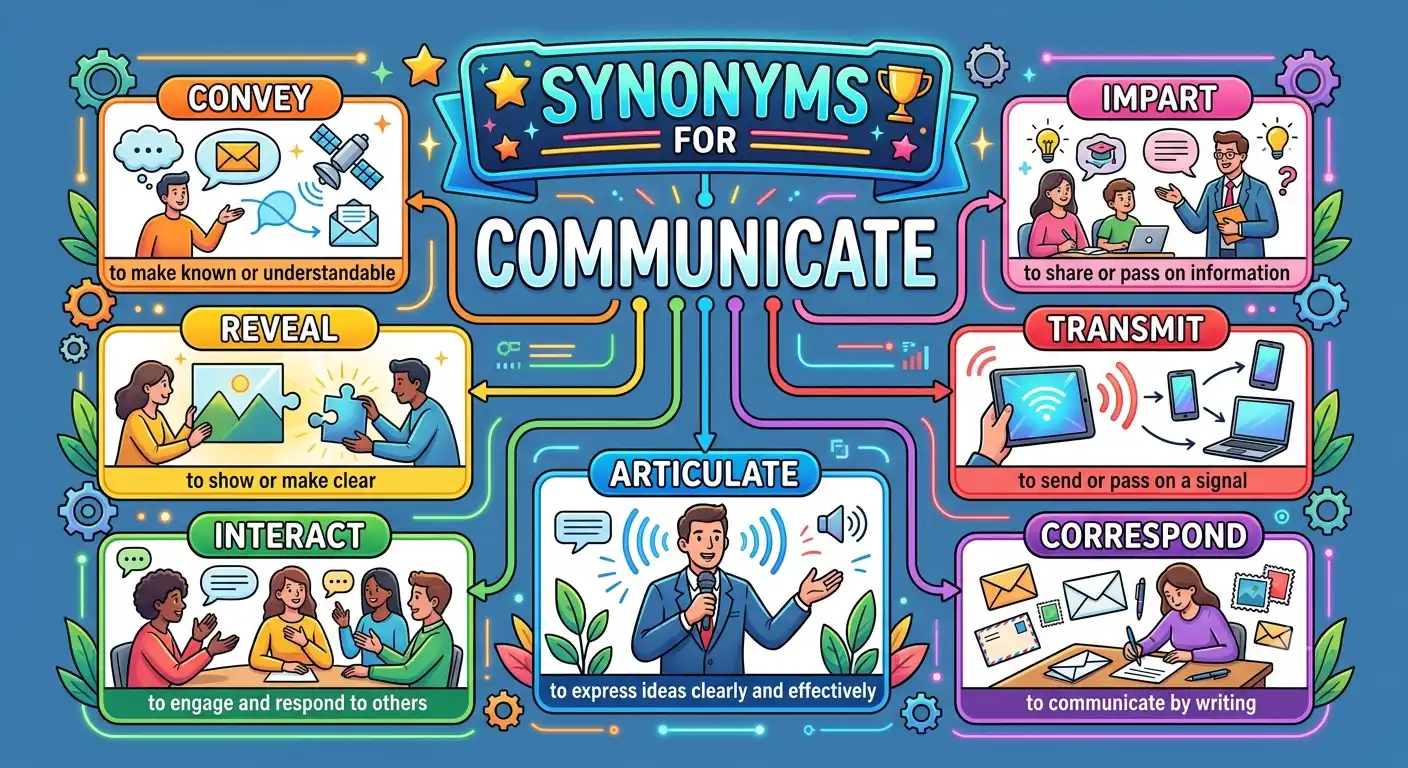
Exploring synonyms for communicate helps you express your thoughts with complete clarity. Finding strong synonyms for communicate keeps your speaking and writing fresh every day. Using varied synonyms for communicate allows you to choose the perfect word for emails, speeches, and everyday conversations.
A young team manager noticed that her weekly project emails sounded dry and repetitive. Instead of using the word “communicate” five times in one paragraph, she used words like “convey,” “share,” and “articulate.” Her team understood the goals faster, and project sales grew quickly. Simple word choices turn ordinary messages into clear actions.
The word communicate means to share information, ideas, or feelings with other people.
This vocabulary guide helps many people:
- Students can write clear essays that get top marks.
- Bloggers can connect deeply with their online audience.
- Content writers can craft persuasive articles for brands.
- Daily English users can express thoughts with easy confidence.
Learning new words is simple when you practice a little each day. Fresh vocabulary helps you share ideas without sounding repetitive or boring.
“Clear words open doors to great opportunities.”
Choosing exact terms saves time and makes your message stand out. It gives your words real power and purpose.
“Good communication is the bridge between confusion and clarity.”
Connotative Meaning of Communicate
The word communicate carries different emotional tones based on context:
- Positive Connotation: Connection, understanding, openness, collaboration, and sharing wisdom.
- Negative Connotation: Over-sharing, blunt talking, commanding, or delivering bad news.
- Neutral Connotation: Transmitting data, sending messages, or passing along basic information.
Etymology of Communicate
- Latin Origin: Comes from communicare, which means to share, impart, or make common.
- Latin Root: Based on communis, meaning shared, public, or common to many.
- Middle English: Entered the English language in the 15th century as a term for sharing thoughts.
- Historical Growth: Evolved from religious sharing to general speaking, writing, and digital interaction.
Pronunciation, Syllables, and Affixation Pattern
- US Pronunciation (IPA): /kəˈmjuː.nə.keɪt/
- UK Pronunciation (IPA): /kəˈmjuː.nɪ.keɪt/
- Syllable Count: 4 syllables (com-mu-ni-cate)
- Root Word: Communicate
- Affixation Patterns:
- Prefixes:
- Mis- (Miscommunicate – To communicate poorly)
- Inter- (Intercommunicate – To communicate mutually)
- Suffixes:
- -ion (Communication – The act of sharing information)
- -or (Communicator – A person who shares ideas)
- -ive (Communicative – Willing to speak open-heartedly)
- Prefixes:
Word Comparison Table
| Keyword | Meaning | Usage Type | Context |
| Communicate | Share thoughts or information | General / Flexible | Daily life, workplace, schools |
| Convey | Carry an idea across clearly | Formal / Professional | Speeches, presentations, essays |
| Express | Put feelings or thoughts into words | Emotional / Personal | Relationships, art, discussions |
| Impart | Pass knowledge or news to others | Warm / Educational | Teaching, mentoring, storytelling |
| Disclose | Reveal secret or private facts | Official / Legal | News releases, business, court |
| Articulate | State complex ideas with precision | Professional / Academic | Debates, job interviews, lectures |
| Broadcast | Send a message out to many people | Public / Technical | Media, announcements, podcasts |
50 Synonyms for Communicate
1. Express
- Pronunciation: US: /ɪkˈspres/ | UK: /ɪkˈspres/
- Meaning: Show your feelings or thoughts using words or actions.
- Examples:
- She used simple words to express her happiness.
- Art helps children express their deep emotions.
2. Convey
- Pronunciation: US: /kənˈveɪ/ | UK: /kənˈveɪ/
- Meaning: Carry a message or meaning so others understand it clearly.
- Examples:
- This chart will convey our main test results.
- He tried to convey his thanks in a quick note.
3. Impart
- Pronunciation: US: /ɪmˈpɑːrt/ | UK: /ɪmˈpɑːt/
- Meaning: Pass along knowledge or facts to another person.
- Examples:
- Teachers impart useful skills to their students.
- Wise leaders impart valuable lessons during meetings.
4. Share
- Pronunciation: US: /ʃer/ | UK: /ʃeə/
- Meaning: Tell other people about your ideas or stories.
- Examples:
- Please share your daily plans with the team.
- I want to share a fun story with you.
5. Disclose
- Pronunciation: US: /dɪsˈkloʊz/ | UK: /dɪsˈkləʊz/
- Meaning: Make new or secret information known to the public.
- Examples:
- The officer will disclose the final project facts.
- She refused to disclose her private password.
6. Reveal
- Pronunciation: US: /rɪˈviːl/ | UK: /rɪˈviːl/
- Meaning: Show something hidden or make a surprise clear to all.
- Examples:
- The author will reveal the book title tomorrow.
- Bright lights reveal every small detail in the room.
7. Declare
- Pronunciation: US: /dɪˈkler/ | UK: /dɪˈkleə/
- Meaning: State something firmly and clearly in front of others.
- Examples:
- The referee will declare the winner of the game.
- She decided to declare her bold plans to her friends.
8. State
- Pronunciation: US: /steɪt/ | UK: /steɪt/
- Meaning: Say or write something in a direct and clear way.
- Examples:
- Please state your full name for the record.
- The rules state that visitors must sign in.
9. Voice
- Pronunciation: US: /vɔɪs/ | UK: /vɔɪs/
- Meaning: Speak your thoughts or worries out loud to people.
- Examples:
- Workers can voice their ideas during the forum.
- Do not fear to voice your honest opinion today.
10. Transmit
- Pronunciation: US: /trænzˈmɪt/ | UK: /trænzˈmɪt/
- Meaning: Send signals or news from one place to another.
- Examples:
- Radio towers transmit news across the big city.
- Computers transmit safe data in a few seconds.
11. Pass
- Pronunciation: US: /pæs/ | UK: /pɑːs/
- Meaning: Give news or messages from one person to another.
- Examples:
- Please pass this helpful news to your team.
- He will pass the safety instructions down the line.
12. Announce
- Pronunciation: US: /əˈnaʊns/ | UK: /əˈnaʊns/
- Meaning: Make a public statement about important plans or news.
- Examples:
- The principal will announce the holiday date today.
- They plan to announce their new shop opening soon.
13. Connect
- Pronunciation: US: /kəˈnekt/ | UK: /kəˈnekt/
- Meaning: Build a friendly relationship through talking and understanding.
- Examples:
- Good speakers connect quickly with their listeners.
- Social events help friends connect after work hours.
14. Speak
- Pronunciation: US: /spiːk/ | UK: /spiːk/
- Meaning: Say words out loud to communicate with others.
- Examples:
- She learned to speak English with great style.
- Please speak clearly into the desk microphone.
15. Talk
- Pronunciation: US: /tɔːk/ | UK: /tɔːk/
- Meaning: Have a conversation or say words to someone.
- Examples:
- We can talk about the new project tomorrow.
- They like to talk during their lunch break.
16. Relate
- Pronunciation: US: /rɪˈleɪt/ | UK: /rɪˈleɪt/
- Meaning: Tell a story or report facts in a clear order.
- Examples:
- He will relate his exciting travel stories tonight.
- She tried to relate the event facts accurately.
17. Signal
- Pronunciation: US: /ˈsɪɡ.nəl/ | UK: /ˈsɪɡ.nəl/
- Meaning: Send a message using light, motion, or physical signs.
- Examples:
- The driver will signal before turning left.
- A warm wave can signal a friendly welcome.
18. Broadcast
- Pronunciation: US: /ˈbrɑːd.kæst/ | UK: /ˈbrɔːd.kɑːst/
- Meaning: Send out information by radio, television, or internet.
- Examples:
- Stations will broadcast the game live tonight.
- They broadcast emergency news to every home.
19. Inform
- Pronunciation: US: /ɪnˈfɔːrm/ | UK: /ɪnˈfɔːm/
- Meaning: Give official facts or news to a person or group.
- Examples:
- We must inform customers about price changes.
- The sign will inform drivers about road work.
20. Detail
- Pronunciation: US: /dɪˈteɪl/ | UK: /ˈdiː.teɪl/
- Meaning: List or explain every small part of an idea.
- Examples:
- The guide will detail all project steps clearly.
- She will detail her plans in a short written report.
21. Outline
- Pronunciation: US: /ˈaʊt.laɪn/ | UK: /ˈaʊt.laɪn/
- Meaning: Give the main points of an idea without small details.
- Examples:
- The coach will outline the game strategy now.
- Let me outline the basic rules for this game.
22. Mention
- Pronunciation: US: /ˈmen.ʃən/ | UK: /ˈmen.ʃən/
- Meaning: Speak or write briefly about a topic without long detail.
- Examples:
- Did she mention the time of the meeting?
- I will mention your great idea to the boss.
23. Articulate
- Pronunciation: US: /ɑːrˈtɪk.jə.leɪt/ | UK: /ɑːˈtɪk.jə.leɪt/
- Meaning: Express ideas clearly using exact and fitting words.
- Examples:
- Good writers articulate complex thoughts easily.
- He can articulate his goals in simple terms.
24. Explain
- Pronunciation: US: /ɪkˈspleɪn/ | UK: /ɪkˈspleɪn/
- Meaning: Make an idea clear by giving more details or reasons.
- Examples:
- Please explain how to use this new software.
- Simple charts help explain hard math problems.
25. Report
- Pronunciation: US: /rɪˈpɔːrt/ | UK: /rɪˈpɔːt/
- Meaning: Give information about something you saw, heard, or studied.
- Examples:
- Journalists report daily events on television.
- The team will report their weekly progress today.
“When words carry truth and kindness, every message builds lasting trust.”
26. Publish
- Pronunciation: US: /ˈpʌb.lɪʃ/ | UK: /ˈpʌb.lɪʃ/
- Meaning: Print or post information online for everyone to read.
- Examples:
- Authors publish new books every single year.
- Writers publish fresh stories on their blogs.
27. Proclaim
- Pronunciation: US: /prəˈkleɪm/ | UK: /prəˈkleɪm/
- Meaning: Announce important news publicly in an official way.
- Examples:
- Leaders proclaim national holidays for the people.
- Banners proclaim the big discount at the store.
28. Discuss
- Pronunciation: US: /dɪˈskʌs/ | UK: /dɪˈskʌs/
- Meaning: Talk about a topic with others to share opinions.
- Examples:
- We will discuss the new work rules today.
- Friends discuss their favorite movies together.
29. Converse
- Pronunciation: US: /kənˈvɝːs/ | UK: /kənˈvɜːs/
- Meaning: Have an easy and friendly talk with another person.
- Examples:
- They like to converse over warm morning tea.
- Travelers converse with local people on trips.
30. Correspond
- Pronunciation: US: /ˌkɔːr.əˈspɑːnd/ | UK: /ˌkɒr.ɪˈspɒnd/
- Meaning: Communicate by writing letters, messages, or emails.
- Examples:
- Pen pals correspond across long distances.
- Partners correspond regularly by secure email.
31. Contact
- Pronunciation: US: /ˈkɑːn.tækt/ | UK: /ˈkɒn.tækt/
- Meaning: Reach out to someone by phone, message, or visit.
- Examples:
- Please contact us if you need extra support.
- I will contact the manager first thing tomorrow.
32. Reach
- Pronunciation: US: /riːtʃ/ | UK: /riːtʃ/
- Meaning: Get in touch with a person to share news or ask questions.
- Examples:
- You can reach me on my personal phone.
- Sales teams reach new clients through email.
33. Advise
- Pronunciation: US: /ədˈvaɪz/ | UK: /ədˈvaɪz/
- Meaning: Share helpful suggestions or official warnings with someone.
- Examples:
- Doctors advise patients to drink fresh water.
- Experts advise workers on safety rules.
34. Chat
- Pronunciation: US: /tʃæt/ | UK: /tʃæt/
- Meaning: Talk in an easy, friendly, and informal way.
- Examples:
- We sat on the porch to chat about our day.
- Neighbors chat over the garden fence daily.
35. Air
- Pronunciation: US: /er/ | UK: /eə/
- Meaning: Express your opinions or complaints publicly to others.
- Examples:
- Meetings let workers air their project concerns.
- She used the forum to air her fresh ideas.
36. Vent
- Pronunciation: US: /vent/ | UK: /vent/
- Meaning: Express strong feelings or frustration to feel relief.
- Examples:
- Close friends let you vent after a hard day.
- He needed to vent his feelings about the news.
37. Leak
- Pronunciation: US: /liːk/ | UK: /liːk/
- Meaning: Secretly give private information to the press or public.
- Examples:
- Insiders might leak news about the new phone.
- Someone tried to leak confidential documents online.
38. Divulge
- Pronunciation: US: /daɪˈvʌldʒ/ | UK: /daɪˈvʌldʒ/
- Meaning: Tell a secret or private fact that was kept hidden.
- Examples:
- She promised not to divulge the surprise party plan.
- The company will not divulge client details.
39. Unveil
- Pronunciation: US: /ʌnˈveɪl/ | UK: /ʌnˈveɪl/
- Meaning: Show or introduce a new product or plan to the public.
- Examples:
- Designers will unveil the new dress line today.
- The city will unveil a park statue this weekend.
40. Formulate
- Pronunciation: US: /ˈfɔːr.mjə.leɪt/ | UK: /ˈfɔː.mjə.leɪt/
- Meaning: Put an idea into carefully chosen words or plans.
- Examples:
- She tried to formulate a clear reply to the note.
- Teams work to formulate a strong sales strategy.
41. Present
- Pronunciation: US: /prɪˈzent/ | UK: /prɪˈzent/
- Meaning: Show or explain an idea formally to an audience.
- Examples:
- He will present his project slides to the class.
- Teams present their weekly wins every Friday.
42. Pitch
- Pronunciation: US: /pɪtʃ/ | UK: /pɪtʃ/
- Meaning: Present a business idea quickly to persuade others.
- Examples:
- Creators pitch new movie ideas to directors.
- Founders pitch their apps to new investors.
43. Message
- Pronunciation: US: /ˈmes.ɪdʒ/ | UK: /ˈmes.ɪdʒ/
- Meaning: Send a digital or written note directly to a person.
- Examples:
- I will message you when the bus arrives.
- She tried to message the support team for help.
44. Cable
- Pronunciation: US: /ˈkeɪ.bəl/ | UK: /ˈkeɪ.bəl/
- Meaning: Send a message quickly using electrical telegraph wires.
- Examples:
- Offices used to cable urgent news across seas.
- Ships would cable arrival times back to port.
45. Telephone
- Pronunciation: US: /ˈtel.ə.foʊn/ | UK: /ˈtel.ɪ.fəʊn/
- Meaning: Call someone on the phone to speak with them.
- Examples:
- Please telephone the front desk for clean towels.
- She will telephone her family every weekend.
46. Email
- Pronunciation: US: /ˈiː.meɪl/ | UK: /ˈiː.meɪl/
- Meaning: Send a digital written message through the internet.
- Examples:
- You can email your homework to the teacher.
- Please email the completed form back today.
47. Gesture
- Pronunciation: US: /ˈdʒes.tʃɚ/ | UK: /ˈdʒes.tʃə/
- Meaning: Use hand or body movements to show a clear meaning.
- Examples:
- Drivers gesture to signal that you can cross.
- Speakers gesture with hands to show energy.
48. Sign
- Pronunciation: US: /saɪn/ | UK: /saɪn/
- Meaning: Use silent body signals or sign language to talk.
- Examples:
- She learned to sign so she could talk with her friend.
- The referee will sign that the goal was good.
49. Telegraph
- Pronunciation: US: /ˈtel.ə.ɡræf/ | UK: /ˈtel.ɪ.ɡrɑːf/
- Meaning: Send messages over long distances using wire signals.
- Examples:
- History books show how people used to telegraph news.
- Operators would telegraph coded messages quickly.
50. Write
- Pronunciation: US: /raɪt/ | UK: /raɪt/
- Meaning: Form words on paper or screens to share ideas.
- Examples:
- She likes to write long stories in her journal.
- Please write your address on this top line.
Antonyms of Communicate
Learning opposite terms gives you complete command over the language:
- Conceal: Hide facts or feelings away from other people.
- Suppress: Keep thoughts or news locked down quietly.
- Withhold: Refuse to share needed information with others.
- Ignore: Pay no attention to incoming messages or words.
- Silence: Stop someone from speaking or expressing ideas.
- Muffle: Deadened sound or make a message hard to hear.
Prototype Meaning and Categorization of Communicate
The core prototype of communicate sits at the center of Human Interaction and Information Sharing.
Conceptual Categories:
- Formal & Official Speaking: Declare, state, announce, proclaim, articulate, present.
- Personal & Emotional Sharing: Express, voice, share, converse, chat, vent, relate.
- Information & Data Transfer: Transmit, convey, inform, report, pass, broadcast.
- Digital & Direct Contact: Email, message, telephone, contact, reach, correspond.
Frequently Asked Questions (FAQs)
1. What is the most popular synonym for communicate?
The most common synonym for communicate is convey. It means to carry an idea, feeling, or message across clearly so that others understand it right away.
2. How does “express” differ from “communicate”?
“Express” focuses heavily on sharing internal feelings, artistic thoughts, or personal opinions. “Communicate” is a broader term that covers all types of data sharing, news delivery, and talking.
3. Can I use “articulate” instead of “communicate” in a job resume?
Yes! “Articulate” is a great professional word. Use it when describing how you present complex technical ideas, lead meetings, or explain project goals clearly.
4. What is a formal synonym for communicate?
Formal synonyms for communicate include convey, articulate, disclose, impart, and transmit.
5. Why is using synonyms for communicate helpful in writing?
Using synonyms prevents repetitive phrasing in your essays and emails. It gives your text exact clarity, holds reader interest, and improves SEO search scores.
6. Is “vent” an appropriate synonym for communicate in business writing?
“Vent” is best reserved for casual or personal contexts. It specifically means to release strong frustration out loud. In business writing, use terms like air concerns or state feedback instead.
Conclusion
Learning synonyms for communicate brings strong power, clarity, and variety to your vocabulary. Replacing repetitive words gives your daily writing a sharp, professional finish that connects easily with any audience.
For students, using precise action verbs creates outstanding essays that earn top marks from teachers, bloggers and content writers, exact vocabulary keeps readers engaged on your pages longer and improves search rankings, daily English speakers, picking exact words builds deep confidence during job interviews, public talks, and business chats.
Start using these fresh terms in your routine today:
- Write a clear workplace email using convey or outline.
- Use articulate or impart in your next resume or cover letter.
- Swap out “communicate” for share or chat in daily social conversations.
“Clear expression is the foundation of every strong connection.”
Practice one or two new terms every single day. Your vocabulary will grow fast, and your message will always hit its mark.
“To choose the right word is to give your thought its truest form.”

Michael Turner is a published fiction writer and creative writing tutor with over a decade of experience helping writers find the words that make their stories breathe ( Biography ).