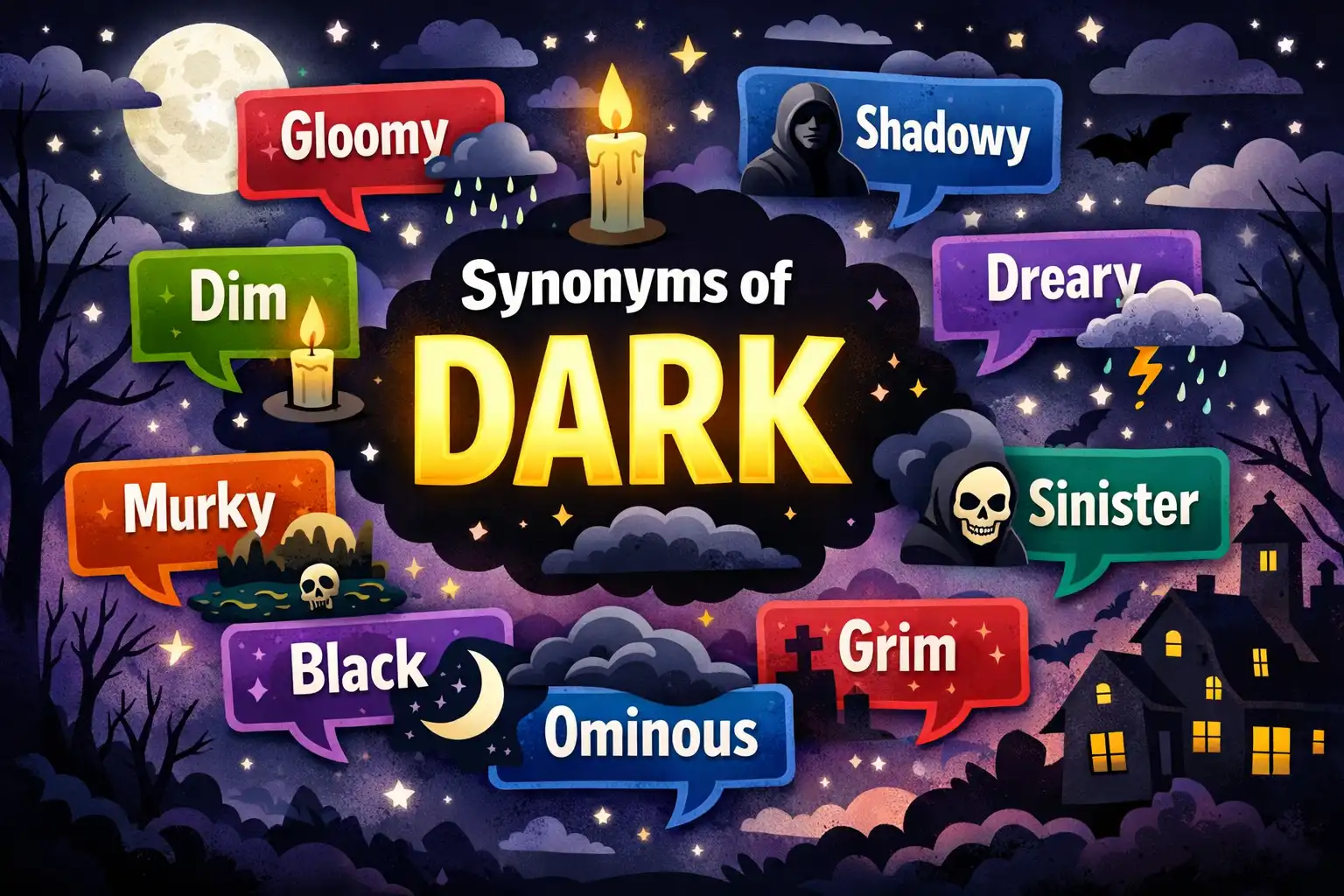
Finding the best synonyms of dark helps us write better. When we look for synonyms of dark, we want words that describe things without light. Learning these synonyms of dark makes our daily language exciting and clear.
Imagine you walk into a deep, quiet forest late at night. The round moon hides behind a big cloud, and you cannot see your own hands. You feel a cold chill as you step into the quiet woods. This simple feeling shows what it means when something is without light, hope, or warmth. We see this happen all the time with spooky movies, deep caves, or even sad days. Knowing other ways to say this word is very helpful for different people:
- Students: It helps you write school essays without repeating the same boring words over and over.
- Bloggers: It keeps your readers happy with fresh, catchy sentences that stand out.
- Content Writers: It improves your SEO work so your great ideas are never left behind.
- Daily English Users: It helps you explain your deep feelings clearly when you feel sad or scared.
“The deepest darkness is not the absence of light, but the failure to see.”
“To choose the perfect word is to paint a vivid picture in the mind.”
Linguistic Profile of Dark
To master this focus keyword, we must look at how it is built, how to say it, and where it comes from.
- Connotative Meaning: It carries a sad, spooky, cold, quiet, or mysterious feeling. It often suggests that something is hidden or hard to see.
- Etymology:
- Formed in Old English (around 900 AD) as deorc.
- Comes from a West Germanic word meaning “to hide” or “to cover.”
- Originally meant “without light” or “not clear.”
- Shifted to mean “sad” or “evil” by the 1300s.
- Pronunciation:
- US IPA:
/dɑːrk/ - UK IPA:
/dɑːk/
- US IPA:
- Syllables: One syllable (dark).
- Affixation Pattern: This is a root word. It does not have any prefix or suffix.
Comparison Table of Key Synonyms
This quick table shows how different words change their meaning based on tone and where you use them.
| Keyword | Meaning | Usage Type | Context |
|---|---|---|---|
| Dark | Has no light or very little light | Neutral | Outdoors, rooms, colors |
| Gloomy | Dark in a sad and heavy way | Emotional | Weather, mood, old houses |
| Dim | Has only a tiny bit of light | Casual | Restaurants, computer screens |
| Murky | Dark and dirty, hard to see through | Physical | Muddy water, thick fog |
| Shadowy | Full of dark shapes or hiding things | Mysterious | Back alleys, forests at dusk |
| Somber | Serious, dark, and sad | Formal | Funerals, dark clothing, speeches |
| Obscure | Hidden in darkness or hard to understand | Professional | Old books, night skies, laws |
“A single word can turn a dim room into a bright parlor.”
50 Best Synonyms for Dark
Here is the complete list of 50 amazing words you can use instead of “dark” to make your writing shine.
1. Dim
- Pronunciation: US
/dɪm/| UK/dɪm/ - Meaning: This word describes a space with very little light.
- Examples:
- The cozy restaurant had dim lights.
- I could barely read in the dim room.
2. Gloomy
- Pronunciation: US
/ˈɡluːmi/| UK/ˈɡluːmi/ - Meaning: Dark in a way that makes you feel sad.
- Examples:
- The rain made it a gloomy day.
- He sat alone in the gloomy cabin.
3. Shadowy
- Pronunciation: US
/ˈʃædoʊi/| UK/ˈʃædəʊi/ - Meaning: Filled with dark shapes that are hard to see.
- Examples:
- A shadowy figure walked down the street.
- We ran through the shadowy woods.
4. Murky
- Pronunciation: US
/ˈmɜːrki/| UK/ˈmɜːki/ - Meaning: Dark and dirty, making it hard to see through.
- Examples:
- The lake water was cold and murky.
- The fish swam deep in the murky pond.
5. Somber
- Pronunciation: US
/ˈsɑːmbər/| UK/ˈsɒmbə/ - Meaning: Dark, plain, and very serious.
- Examples:
- He wore a somber black suit to the funeral.
- The room had a somber mood after the bad news.
6. Obscure
- Pronunciation: US
/əbˈskjʊr/| UK/əbˈskjʊə/ - Meaning: Covered in darkness or hard to find.
- Examples:
- The stars were obscure behind the thick clouds.
- They lived in an obscure little village.
7. Black
- Pronunciation: US
/blæk/| UK/blæk/ - Meaning: The darkest color of all, like the night sky.
- Examples:
- She wore a beautiful black dress.
- The power went out and the house was black.
8. Pitch-black
- Pronunciation: US
/ˌpɪtʃ ˈblæk/| UK/ˌpɪtʃ ˈblæk/ - Meaning: Completely dark with no light at all.
- Examples:
- The cave was pitch-black and scary.
- I woke up in the pitch-black night.
9. Cloudy
- Pronunciation: US
/ˈklaʊdi/| UK/ˈklaʊdi/ - Meaning: Covered with grey clouds that block the sun.
- Examples:
- We could not see the sun on that cloudy day.
- The sky looked cloudy and cold.
10. Overcast
- Pronunciation: US
/ˌoʊvərˈkæst/| UK/ˌəʊvəˈkɑːst/ - Meaning: A sky fully covered in grey, dark clouds.
- Examples:
- The overcast weather made us want to stay inside.
- It was a cold, overcast morning.
11. Sunless
- Pronunciation: US
/ˈsʌnləs/| UK/ˈsʌnləs/ - Meaning: Having no bright sunlight at all.
- Examples:
- They walked through the deep, sunless canyon.
- Winter days can be cold and sunless.
12. Shady
- Pronunciation: US
/ˈʃeɪdi/| UK/ˈʃeɪdi/ - Meaning: Safe from the bright, hot sun under a cover.
- Examples:
- We sat down on the shady grass under the tree.
- This side of the street is cool and shady.
13. Inky
- Pronunciation: US
/ˈɪŋki/| UK/ˈɪŋki/ - Meaning: Dark black like writing ink.
- Examples:
- The cat had soft, inky black fur.
- He stared out into the inky night.
14. Coal-black
- Pronunciation: US
/ˌkoʊl ˈblæk/| UK/ˌkəʊl ˈblæk/ - Meaning: A very deep, solid black color like coal.
- Examples:
- The steam train blew coal-black smoke.
- She has shiny, coal-black hair.
15. Ebony
- Pronunciation: US
/ˈebəni/| UK/ˈebəni/ - Meaning: A hard, dark black wood or color.
- Examples:
- He played a song on the ebony piano keys.
- Her eyes were a beautiful ebony color.
16. Grim
- Pronunciation: US
/ɡrɪm/| UK/ɡrɪm/ - Meaning: Dark, harsh, and without any cheer.
- Examples:
- The old prison was a grim place.
- He had a grim look on his face.
17. Drab
- Pronunciation: US
/dræb/| UK/dræb/ - Meaning: Dull, dark grey, and not exciting.
- Examples:
- The office walls were painted a drab color.
- She wore a drab brown coat in the rain.
18. Dreary
- Pronunciation: US
/ˈdrɪri/| UK/ˈdrɪəri/ - Meaning: Boring, dark, and sad all at once.
- Examples:
- I do not like this dreary rainy weather.
- We walked through the dreary, empty town.
19. Bleak
- Pronunciation: US
/bliːk/| UK/bliːk/ - Meaning: Cold, windy, dark, and empty.
- Examples:
- The wild hilltop looked bleak in winter.
- They faced a bleak and cold wind.
20. Lightless
- Pronunciation: US
/ˈlaɪtləs/| UK/ˈlaɪtləs/ - Meaning: Having absolutely no light source.
- Examples:
- He fell down into a deep, lightless hole.
- The old lightless attic was full of dust.
21. Dusky
- Pronunciation: US
/ˈdʌski/| UK/ˈdʌski/ - Meaning: Slightly dark like the sky at sunset.
- Examples:
- The room was quiet in the dusky light.
- We saw a dusky path through the grass.
22. Rayless
- Pronunciation: US
/ˈreɪləs/| UK/ˈreɪləs/ - Meaning: Without any rays of light.
- Examples:
- They stood in the rayless depths of the cave.
- The deep ocean is cold and rayless.
23. Starless
- Pronunciation: US
/ˈstɑːrləs/| UK/ˈstɑːləs/ - Meaning: A night sky with no shining stars.
- Examples:
- We walked home under a starless sky.
- The night was completely black and starless.
24. Moonless
- Pronunciation: US
/ˈmuːnləs/| UK/ˈmuːnləs/ - Meaning: A night with no moon in the sky.
- Examples:
- It was a dark, moonless night in the forest.
- The sailors could not see in the moonless dark.
25. Midnight
- Pronunciation: US
/ˈmɪdnaɪt/| UK/ˈmɪdnaɪt/ - Meaning: As dark as the middle of the night.
- Examples:
- She painted the walls a deep midnight blue.
- The cat had midnight black fur.
26. Tenebrous
- Pronunciation: US
/ˈtenəbrəs/| UK/ˈtenɪbrəs/ - Meaning: Dark, shadowy, and hard to see through.
- Examples:
- The castle had long, tenebrous hallways.
- I felt lost in the tenebrous woods.
27. Stygian
- Pronunciation: US
/ˈstɪdʒiən/| UK/ˈstɪdʒɪən/ - Meaning: Extremely dark and gloomy.
- Examples:
- The deep cave had a Stygian darkness.
- They stepped into the Stygian night.
28. Shaded
- Pronunciation: US
/ˈʃeɪdɪd/| UK/ˈʃeɪdɪd/ - Meaning: Blocked from direct, bright light.
- Examples:
- We sat in the shaded garden to read.
- Her eyes were shaded by a large hat.
29. Cloaked
- Pronunciation: US
/kloʊkt/| UK/kləʊkt/ - Meaning: Covered or hidden by something dark.
- Examples:
- The mountain peak was cloaked in thick fog.
- He walked away, cloaked in the shadows.
30. Veiled
- Pronunciation: US
/veɪld/| UK/veɪld/ - Meaning: Hidden behind a thin, dark cover.
- Examples:
- The sun was veiled behind thin clouds.
- She gave him a veiled, mysterious look.
31. Hidden
- Pronunciation: US
/ˈhɪdn/| UK/ˈhɪdn/ - Meaning: Put out of sight in a dark spot.
- Examples:
- He found a hidden path in the trees.
- The key was hidden in a dark corner.
32. Dimmed
- Pronunciation: US
/dɪmd/| UK/dɪmd/ - Meaning: Made less bright than before.
- Examples:
- She dimmed the lights to watch the film.
- The car headlights dimmed in the heavy rain.
33. Low-lit
- Pronunciation: US
/loʊ lɪt/| UK/ləʊ lɪt/ - Meaning: Kept dark on purpose with soft lights.
- Examples:
- They enjoyed dinner in the low-lit cafe.
- The museum had low-lit rooms for old books.
34. Dull
- Pronunciation: US
/dʌl/| UK/dʌl/ - Meaning: Not bright, shiny, or clear.
- Examples:
- The sky was a dull grey color today.
- His old boots looked dull and dirty.
35. Hazy
- Pronunciation: US
/ˈheɪzi/| UK/ˈheɪzi/ - Meaning: Dark and unclear due to dust or heat.
- Examples:
- We could not see the hills on this hazy afternoon.
- The air was warm and hazy near the fire.
36. Foggy
- Pronunciation: US
/ˈfɔːɡi/| UK/ˈfɒɡi/ - Meaning: Dark and thick with wet grey mist.
- Examples:
- It was too foggy to drive safely.
- The cold, foggy morning felt very quiet.
37. Misty
- Pronunciation: US
/ˈmɪsti/| UK/ˈmɪsti/ - Meaning: Slightly dark and wet with tiny water drops.
- Examples:
- They walked through the cool, misty fields.
- Her breath made the window misty.
38. Darkened
- Pronunciation: US
/ˈdɑːrkənd/| UK/ˈdɑːkənd/ - Meaning: Made dark or black by someone.
- Examples:
- We sat in the darkened theater waiting for the show.
- The storm quickly darkened the afternoon sky.
39. Faint
- Pronunciation: US
/feɪnt/| UK/feɪnt/ - Meaning: Very weak and hard to see.
- Examples:
- We saw a faint light far away.
- The star was faint in the night sky.
40. Muddy
- Pronunciation: US
/ˈmʌdi/| UK/ˈmʌdi/ - Meaning: Dark, dirty, and mixed with wet soil.
- Examples:
- His boots were covered in muddy water.
- The river looked brown and muddy after the storm.
41. Stormy
- Pronunciation: US
/ˈstɔːrmi/| UK/ˈstɔːmi/ - Meaning: Dark with heavy wind, rain, and clouds.
- Examples:
- The ship sailed into stormy waters.
- We watched the stormy sky from our window.
42. Solemn
- Pronunciation: US
/ˈsɑːləm/| UK/ˈsɒləm/ - Meaning: Dark, quiet, and serious in mood.
- Examples:
- The church was quiet and solemn.
- He spoke in a very solemn voice.
43. Melancholy
- Pronunciation: US
/ˈmelənkɑːli/| UK/ˈmelənkəli/ - Meaning: Dark and sad in a quiet, sweet way.
- Examples:
- She listened to a melancholy song.
- The old house had a melancholy feel.
44. Morose
- Pronunciation: US
/məˈroʊs/| UK/məˈrəʊs/ - Meaning: Dark, unhappy, and silent.
- Examples:
- He was morose and did not want to talk.
- She sat in a morose mood all day.
45. Depressing
- Pronunciation: US
/dɪˈpresɪŋ/| UK/dɪˈpresɪŋ/ - Meaning: So dark and sad that it ruins your day.
- Examples:
- The empty streets looked cold and depressing.
- I stopped reading that depressing story.
46. Sinister
- Pronunciation: US
/ˈsɪnɪstər/| UK/ˈsɪnɪstə/ - Meaning: Dark and scary, looking like something evil.
- Examples:
- There was a sinister noise in the basement.
- The old house had a sinister look.
47. Mysterious
- Pronunciation: US
/mɪˈstɪriəs/| UK/mɪˈstɪərɪəs/ - Meaning: Dark and strange, keeping a secret.
- Examples:
- A mysterious box sat in the dark hallway.
- We saw a mysterious light in the woods.
48. Pitchy
- Pronunciation: US
/ˈpɪtʃi/| UK/ˈpɪtʃi/ - Meaning: Dark and sticky like pine tar.
- Examples:
- The path was pitchy and hard to see.
- They ran through the pitchy darkness of the cave.
49. Sable
- Pronunciation: US
/ˈseɪbl/| UK/ˈseɪbl/ - Meaning: A rich, deep black color.
- Examples:
- The queen wore a warm sable coat.
- Night fell like a heavy sable curtain.
50. Ebon
- Pronunciation: US
/ˈebən/| UK/ˈebən/ - Meaning: Completely black like dark wood.
- Examples:
- The bird had shiny, ebon wings.
- She had long, ebon curls framing her face.
Antonyms of Dark
If something is not dark, it gets a lot of light and cheer. Here are the top opposites:
- Bright: Full of light or shining.
- Light: Easy to see and not dark.
- Luminous: Glowing softly in the dark.
- Clear: Pure, easy to see through, and bright.
- Cheerful: Bright and full of happy feelings.
Prototype Meaning and Categorization
In linguistics, we place “dark” into specific categories based on how we use it.
- The Sensory Sense (The Sight): This is when our eyes cannot see light. For example, a room with the lamps turned off.
- The Emotional Sense (The Feeling): This is when a situation or mood feels sad, heavy, or scary. For example, feeling down on a rainy day.
- The Cognitive Sense (The Mind): This is when an idea or text is hard to understand or hidden. For example, a secret code or an old law.
Frequently Asked Questions (FAQ)
1. What is the most common synonym for dark?
The most common word is dim or gloomy. People use them to show that there is very little light in a room or sky.
2. Can dark mean mysterious?
Yes! In storytelling, a dark character or place is often mysterious and full of secrets.
3. How do you use “murky” instead of dark?
Use murky when you talk about liquid or air that is dirty and hard to see through, like river mud or thick fog.
4. What is the difference between dark and bleak?
Dark means there is no light. Bleak means a place is cold, windy, empty, and sad, like a mountain top in winter.
5. Is dark always a negative word?
No! It can be nice and cozy. For example, a dark theater is perfect for watching movies.
6. What does “tenebrous” mean?
It is a formal word for dark and shadowy. It is great for writing spooky stories or descriptions.
Conclusion
Learning a rich list of synonyms improves our writing, blogging, and daily speaking. When we use fresh words, our texts become fun to read. We no longer sound like robots repeating the same simple terms. Instead, our messages carry clear feelings that make people want to keep reading.
We encourage you to practice these new words starting today. Use them in your school essays, your work emails, or your daily chats with friends. The more you use them, the easier they will flow from your mind.
“A rich vocabulary is the key that opens every door of expression.”
“Do not let your best thoughts remain dark; speak them clearly to the world.”

Michael Turner is a published fiction writer and creative writing tutor with over a decade of experience helping writers find the words that make their stories breathe ( Biography ).