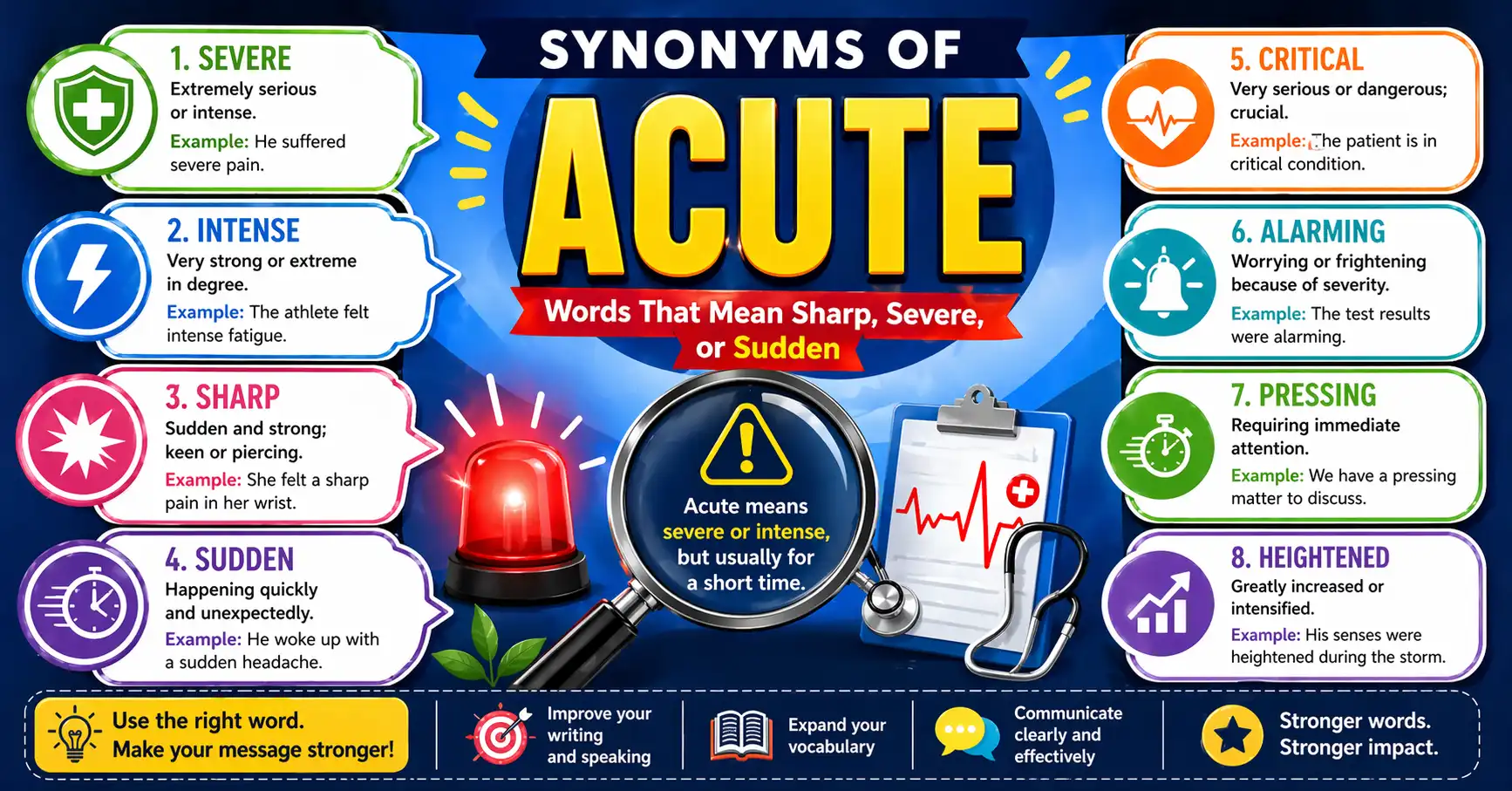
When you look for synonyms of acute, you find words that mean sharp, smart, or very serious. Learning synonyms of acute helps you describe a fast-changing pain or a brilliant mind. Knowing these synonyms of acute makes your writing clear and easy to read.
Imagine you are a doctor who needs to explain a sudden, sharp pain. Or imagine you are a teacher praising a child who solves a hard puzzle in seconds. You need the perfect word to describe these moments. Standard words like “smart” or “painful” can feel a bit dull. Using better words makes your message stand out. Many situations in life need a specific word to show how strong or quick something is.
“The right word can turn a simple thought into a beautiful picture.”
“A sharp mind is like a clean tool; it cuts through work with ease.”
Learning different words for this idea is super helpful:
- Students: It helps you write school essays that get high grades.
- Bloggers: It keeps your online readers happy and excited.
- Content Writers: It helps your articles rank high on Google search pages.
- Daily English Users: It helps you speak to your family in a clear, nice way.
Linguistic Profile of Acute
To master this focus keyword, we must look at how it is built, how to say it, and where it comes from.
- Connotative Meaning: It represents things that are very sharp, severe, or intellectually bright. It suggests a high level of intensity or quick thinking.
- Etymology:
- Comes from the Latin word acutus.
- Rooted in the Latin verb acuere, which means “to sharpen”.
- Historically used to describe sharp tools and sharp minds.
- Pronunciation:
- US IPA:
/əˈkjuːt/ - UK IPA:
/əˈkjuːt/
- US IPA:
- Syllables: Two syllables (a-cute).
- Affixation Pattern: It is a base word with no extra prefixes or suffixes.
Comparison Table of Key Synonyms
This quick table shows how different words change their meaning based on tone and where you use them.
| Keyword | Meaning | Usage Type | Context |
|---|---|---|---|
| Acute | Very sharp, severe, or smart | Neutral | Medical, school, daily life |
| Sharp | Having a thin edge or quick mind | Casual | Knife, thoughts, pain |
| Severe | Very bad, harsh, or serious | Professional | Weather, illness, rules |
| Keen | Highly eager, sharp, or sensitive | Creative | Senses, minds, interest |
| Astute | Clever and quick to understand | Formal | Business, plans, choices |
| Critical | Extremely important or dangerous | Professional | Hospital, business, timing |
| Intense | Very strong or extreme | Emotional | Feelings, heat, light |
| Piercing | Cutting through like a cold wind | Creative | Cold, screams, eyes |
| Grave | Serious and causing worry | Formal | News, health, mistakes |
| Clever | Quick at learning and thinking | Casual | Kids, animals, ideas |
50 Best Synonyms of Acute
Here is the complete list of 50 amazing words you can use instead of “acute” to make your writing shine.
1. Sharp
- Pronunciation: US
/ʃɑːrp/| UK/ʃɑːp/ - Meaning: This word describes something that can cut easily or is very smart.
- Examples:
- She felt a sharp pain in her leg.
- The boy has a sharp mind for math.
2. Severe
- Pronunciation: US
/sɪˈvɪr/| UK/sɪˈvɪə/ - Meaning: This word describes something that is very bad, harsh, or hard.
- Examples:
- A severe storm hit the little town.
- He had a severe headache last night.
3. Keen
- Pronunciation: US
/kiːn/| UK/kiːn/ - Meaning: This word describes having a very sharp sense or being highly eager.
- Examples:
- Dogs have a keen sense of smell.
- She has a keen interest in learning art.
4. Astute
- Pronunciation: US
/əˈstuːt/| UK/əˈstjuːt/ - Meaning: This word describes being very clever and quick to understand things.
- Examples:
- The astute businessman made a great deal.
- Her astute guess proved to be correct.
5. Critical
- Pronunciation: US
/ˈkrɪtɪkl/| UK/ˈkrɪtɪkl/ - Meaning: This word describes a situation that is extremely important or dangerous.
- Examples:
- The patient is in a critical state.
- We reached a critical point in the game.
6. Intense
- Pronunciation: US
/ɪnˈtens/| UK/ɪnˈtens/ - Meaning: This word describes something that is very strong, deep, or extreme.
- Examples:
- The hot sun gave off intense heat.
- She felt intense joy when she won.
7. Piercing
- Pronunciation: US
/ˈpɪrsɪŋ/| UK/ˈpɪəsɪŋ/ - Meaning: This word describes something that cuts through like a loud sound or cold air.
- Examples:
- A piercing scream woke up the neighbors.
- The cold wind felt piercing on my face.
8. Grave
- Pronunciation: US
/ɡreɪv/| UK/ɡreɪv/ - Meaning: This word describes a matter that is very serious and causes worry.
- Examples:
- The leader spoke of a grave danger.
- He made a grave mistake on his test.
9. Clever
- Pronunciation: US
/ˈklevər/| UK/ˈklevə/ - Meaning: This word describes someone who is quick to learn and has smart ideas.
- Examples:
- The clever monkey opened the wooden box.
- That was a clever way to fix the toy.
10. Penetrating
- Pronunciation: US
/ˈpenətreɪtɪŋ/| UK/ˈpenɪtreɪtɪŋ/ - Meaning: This word describes a look or mind that sees right through things.
- Examples:
- He gave her a deep, penetrating look.
- She has a penetrating mind for science.
11. Urgent
- Pronunciation: US
/ˈɜːrdʒənt/| UK/ˈɜːdʒənt/ - Meaning: This word describes something that needs fast action right now.
- Examples:
- I have an urgent message for my boss.
- The dry plants need urgent water.
12. Crucial
- Pronunciation: US
/ˈkruːʃl/| UK/ˈkruːʃl/ - Meaning: This word describes something that is necessary for success.
- Examples:
- Water is crucial for our lives.
- We made a crucial choice today.
13. Extreme
- Pronunciation: US
/ɪkˈstriːm/| UK/ɪkˈstriːm/ - Meaning: This word describes something that is very great or far from normal.
- Examples:
- They climbed in extreme cold weather.
- The runner felt extreme pain at the end.
14. Incisive
- Pronunciation: US
/ɪnˈsaɪsɪv/| UK/ɪnˈsaɪsɪv/ - Meaning: This word describes thinking that is sharp, clear, and direct.
- Examples:
- The teacher made an incisive comment.
- His incisive questions helped us think.
15. Discerning
- Pronunciation: US
/dɪˈsɜːrnɪŋ/| UK/dɪˈsɜːnɪŋ/ - Meaning: This word describes being able to see and judge things clearly.
- Examples:
- The discerning buyer chose the best fruit.
- He has a discerning eye for good art.
16. Quick
- Pronunciation: US
/kwɪk/| UK/kwɪk/ - Meaning: This word describes doing something fast or learning in a short time.
- Examples:
- She is a quick learner in school.
- He gave a quick answer to the question.
17. Sensitive
- Pronunciation: US
/ˈsensətɪv/| UK/ˈsensətɪv/ - Meaning: This word describes being able to feel small changes very easily.
- Examples:
- Her teeth are sensitive to cold water.
- The camera has a sensitive lens.
18. Shrewd
- Pronunciation: US
/ʃruːd/| UK/ʃruːd/ - Meaning: This word describes being smart in a practical, protective way.
- Examples:
- A shrewd planner saves money early.
- He made a shrewd guess about the score.
19. Perceptive
- Pronunciation: US
/pərˈseptɪv/| UK/pəˈseptɪv/ - Meaning: This word describes noticing things that other people miss.
- Examples:
- The perceptive nurse saw he was tired.
- She made a very perceptive comment on my paper.
20. Fierce
- Pronunciation: US
/fɪrs/| UK/fɪəs/ - Meaning: This word describes something that is very strong, angry, or wild.
- Examples:
- They faced a fierce wind on the mountain.
- The dog gave a fierce bark at the gate.
21. Subtle
- Pronunciation: US
/ˈsʌtl/| UK/ˈsʌtl/ - Meaning: This word describes something that is quiet and hard to notice.
- Examples:
- There is a subtle change in the air.
- He noticed a subtle difference in the taste.
22. Deep
- Pronunciation: US
/diːp/| UK/diːp/ - Meaning: This word describes feelings or thoughts that are very strong and serious.
- Examples:
- She felt a deep sadness inside.
- He fell into a deep sleep after work.
23. Strong
- Pronunciation: US
/strɔːŋ/| UK/strɒŋ/ - Meaning: This word describes something with great power, force, or effect.
- Examples:
- A strong wind blew the leaves away.
- She felt a strong urge to call home.
24. Fine
- Pronunciation: US
/faɪn/| UK/faɪn/ - Meaning: This word describes something that is highly detailed, thin, or sharp.
- Examples:
- The pen has a very fine point.
- He has a fine sense of hearing.
25. Sudden
- Pronunciation: US
/ˈsʌdn/| UK/ˈsʌdn/ - Meaning: This word describes something that happens fast and without warning.
- Examples:
- A sudden rain made us run inside.
- The car made a sudden stop.
“A sudden light can show the path, but a steady mind keeps you on it.”
26. Serious
- Pronunciation: US
/ˈsɪriəs/| UK/ˈsɪəriəs/ - Meaning: This word describes something that is not safe, light, or funny.
- Examples:
- He is dealing with a serious illness.
- They had a serious talk about money.
27. Violent
- Pronunciation: US
/ˈvaɪələnt/| UK/ˈvaɪələnt/ - Meaning: This word describes using strong, sudden physical force.
- Examples:
- The storm caused a violent wave.
- He had a violent shake from the cold.
28. Pointed
- Pronunciation: US
/ˈpɔɪntɪd/| UK/ˈpɔɪntɪd/ - Meaning: This word describes something with a sharp tip or a very clear meaning.
- Examples:
- The pencil has a pointed end.
- She made a pointed remark about the late guest.
29. Alert
- Pronunciation: US
/əˈlɜːrt/| UK/əˈlɜːt/ - Meaning: This word describes being fully awake and ready to act.
- Examples:
- An alert guard saw the open door.
- The coffee made him feel very alert.
30. Bright
- Pronunciation: US
/braɪt/| UK/braɪt/ - Meaning: This word describes someone who is smart or something with lots of light.
- Examples:
- The bright student got all the answers right.
- She had a bright idea for the school show.
31. Dangerous
- Pronunciation: US
/ˈdeɪndʒərəs/| UK/ˈdeɪndʒərəs/ - Meaning: This word describes something that can easily hurt or kill you.
- Examples:
- It is dangerous to play near the road.
- They lived through a dangerous storm.
32. Drastic
- Pronunciation: US
/ˈdræstɪk/| UK/ˈdræstɪk/ - Meaning: This word describes an action that is very strong, fast, and severe.
- Examples:
- We need to make a drastic change.
- The doctor took drastic steps to save him.
33. Cutting
- Pronunciation: US
/ˈkʌtɪŋ/| UK/ˈkʌtɪŋ/ - Meaning: This word describes words or cold weather that hurt your feelings or body.
- Examples:
- His cutting words made her cry.
- The cutting wind blew across the ice.
34. Harsh
- Pronunciation: US
/hɑːrʃ/| UK/hɑːʃ/ - Meaning: This word describes things that are rough, cruel, or unpleasant.
- Examples:
- The desert has a harsh climate.
- She spoke in a harsh voice.
35. Bitter
- Pronunciation: US
/ˈbɪtər/| UK/ˈbɪtə/ - Meaning: This word describes extremely cold weather or very angry feelings.
- Examples:
- They walked through the bitter cold snow.
- The two enemies had a bitter fight.
36. Vital
- Pronunciation: US
/ˈvaɪtl/| UK/ˈvaɪtl/ - Meaning: This word describes something that you absolutely must have to live or succeed.
- Examples:
- Sleep is vital for your health.
- The team made a vital play to win.
37. Pressing
- Pronunciation: US
/ˈpresɪŋ/| UK/ˈpresɪŋ/ - Meaning: This word describes a problem that needs your attention right away.
- Examples:
- We have a pressing need for food.
- The boss has a pressing issue to solve.
38. Smart
- Pronunciation: US
/smɑːrt/| UK/smɑːt/ - Meaning: This word describes being quick at learning or clean and neat.
- Examples:
- The smart child finished the puzzle.
- He wears smart clothes to his job.
39. Intelligent
- Pronunciation: US
/ɪnˈtelɪdʒənt/| UK/ɪnˈtelɪdʒənt/ - Meaning: This word describes having a great ability to design, learn, and think.
- Examples:
- Dolphins are very intelligent animals.
- She wrote an intelligent answer on the paper.
40. Brainy
- Pronunciation: US
/ˈbreɪni/| UK/ˈbreɪni/ - Meaning: This word describes a person who is highly smart, especially at school.
- Examples:
- My brainy sister won the spelling test.
- He is a brainy guy who loves books.
41. Discriminating
- Pronunciation: US
/dɪˈskrɪmɪneɪtɪŋ/| UK/dɪˈskrɪmɪneɪtɪŋ/ - Meaning: This word describes choosing only things of the very highest quality.
- Examples:
- The discriminating reader loves good stories.
- She has a discriminating taste in music.
42. Razor-sharp
- Pronunciation: US
/ˌreɪzər ˈʃɑːrp/| UK/ˌreɪzə ˈʃɑːp/ - Meaning: This word describes something as sharp as a small shaving blade.
- Examples:
- The chef used a razor-sharp knife.
- The speaker had a razor-sharp wit.
43. Quick-witted
- Pronunciation: US
/ˌkwɪk ˈwɪtɪd/| UK/ˌkwɪk ˈwɪtɪd/ - Meaning: This word describes being able to think and reply in a split second.
- Examples:
- The quick-witted boy made everyone laugh.
- She is quick-witted and always wins debates.
44. Sage
- Pronunciation: US
/seɪdʒ/| UK/seɪdʒ/ - Meaning: This word describes showing deep wisdom that comes from long experience.
- Examples:
- The old grandfather gave sage advice.
- She has a sage look in her eyes.
45. Wise
- Pronunciation: US
/waɪz/| UK/waɪz/ - Meaning: This word describes making good choices because you understand life.
- Examples:
- It is wise to save some money every week.
- The wise teacher helped the sad kid.
46. Observant
- Pronunciation: US
/əbˈzɜːrvənt/| UK/əbˈzɜːvənt/ - Meaning: This word describes being quick to see details around you.
- Examples:
- An observant child saw the tiny bird.
- She is observant and knows when plans change.
47. Troublesome
- Pronunciation: US
/ˈtrʌblsəm/| UK/ˈtrʌblsəm/ - Meaning: This word describes something that causes worry, pain, or difficulty.
- Examples:
- He has a troublesome cough that will not go away.
- The old car is very troublesome to start.
48. Splitting
- Pronunciation: US
/ˈsplɪtɪŋ/| UK/ˈsplɪtɪŋ/ - Meaning: This word describes a pain that feels like it is breaking your head.
- Examples:
- She went to bed with a splitting headache.
- The loud music gave me a splitting pain.
49. Overpowering
- Pronunciation: US
/ˌoʊvərˈpaʊərɪŋ/| UK/ˌəʊvəˈpaʊərɪŋ/ - Meaning: This word describes a feeling or force that is too strong to fight.
- Examples:
- The smell of flowers was overpowering.
- He felt an overpowering need to rest.
50. Demanding
- Pronunciation: US
/dɪˈmændɪŋ/| UK/dɪˈmɑːndɪŋ/ - Meaning: This word describes work or people that need a lot of your time and power.
- Examples:
- Climbing the high hill is a demanding job.
- He has a very demanding boss.
Antonyms of Acute
If we look at what is opposite to “acute,” we find words that mean slow, gentle, or not sharp:
- Dull: Not sharp, slow to feel, or not smart.
- Mild: Gentle, weak, or not severe.
- Chronic: Lasting for a long time and slow-moving.
- Obtuse: Not quick to understand things, slow-minded, or an angle wider than 90 degrees.
- Minor: Small, not important, and easy to handle.
Prototype Meaning and Categorization of Acute
In linguistics, we categorize the word “acute” into three primary areas:
- The Physical Area (Senses & Pain): This describes a physical state. It is a sudden, sharp pain or highly sensitive senses, like a dog’s ears hearing a whistle.
- The Mental Area (Mind & Wisdom): This describes human intelligence. It shows a mind that is sharp, clever, and quick to find answers.
- The Situational Area (Problems & Crisis): This describes critical events. It is a severe problem or an urgent lack of food or water.
Frequently Asked Questions (FAQ)
1. What is the most common synonym for acute?
The most common synonym is sharp. People use it to talk about both physical pain and smart minds.
2. Can acute mean smart?
Yes, acute can mean very smart. When you say someone has an acute mind, it means they are clever and quick to learn.
3. What is the difference between acute and chronic?
Acute means a pain or event is sudden and very strong. Chronic means a situation lasts for a very long time and moves slowly.
4. Is “astute” a formal word?
Yes, astute is a formal word. It is often used in business, politics, and school papers to describe clever choices.
5. Why do writers use synonyms of acute?
Writers use these synonyms to make their sentences clear. It keeps readers interested because the words match the exact feeling of the story.
6. Can you use “splitting” for things other than headaches?
Mostly, “splitting” is used for headaches or very loud noises that hurt your ears. It is a casual word for severe pain.
Conclusion
Learning different synonyms of acute is a great way to boost your daily communication. When you know more words, you can express your thoughts with great clarity. You will not have to repeat the same basic words over and over. Instead, you can choose the exact word that fits your mood. This makes your writing and speaking much more interesting to others. It helps you connect with people in a deeper way.
Writing a blog post or sharing a story becomes much easier when you have many words ready. Good bloggers and writers use varied vocabulary to keep readers hooked. If you use the same word ten times, readers will get bored. But when you switch between words like sharp, severe, and keen, your text comes alive. It shows you have a deep grasp of the English language.
We encourage you to practice these new words starting today. Try using them in your daily emails, school essays, or casual chats with friends. The more you use these words, the easier they will flow from your mind. You will find that your confidence grows every time you speak. Your vocabulary is a powerful tool, so use it well!
“To speak with the right words is to build a golden bridge between minds.”
“A rich vocabulary is a quiet power that opens many closed doors.”

Michael Turner is a published fiction writer and creative writing tutor with over a decade of experience helping writers find the words that make their stories breathe ( Biography ).