Introduction
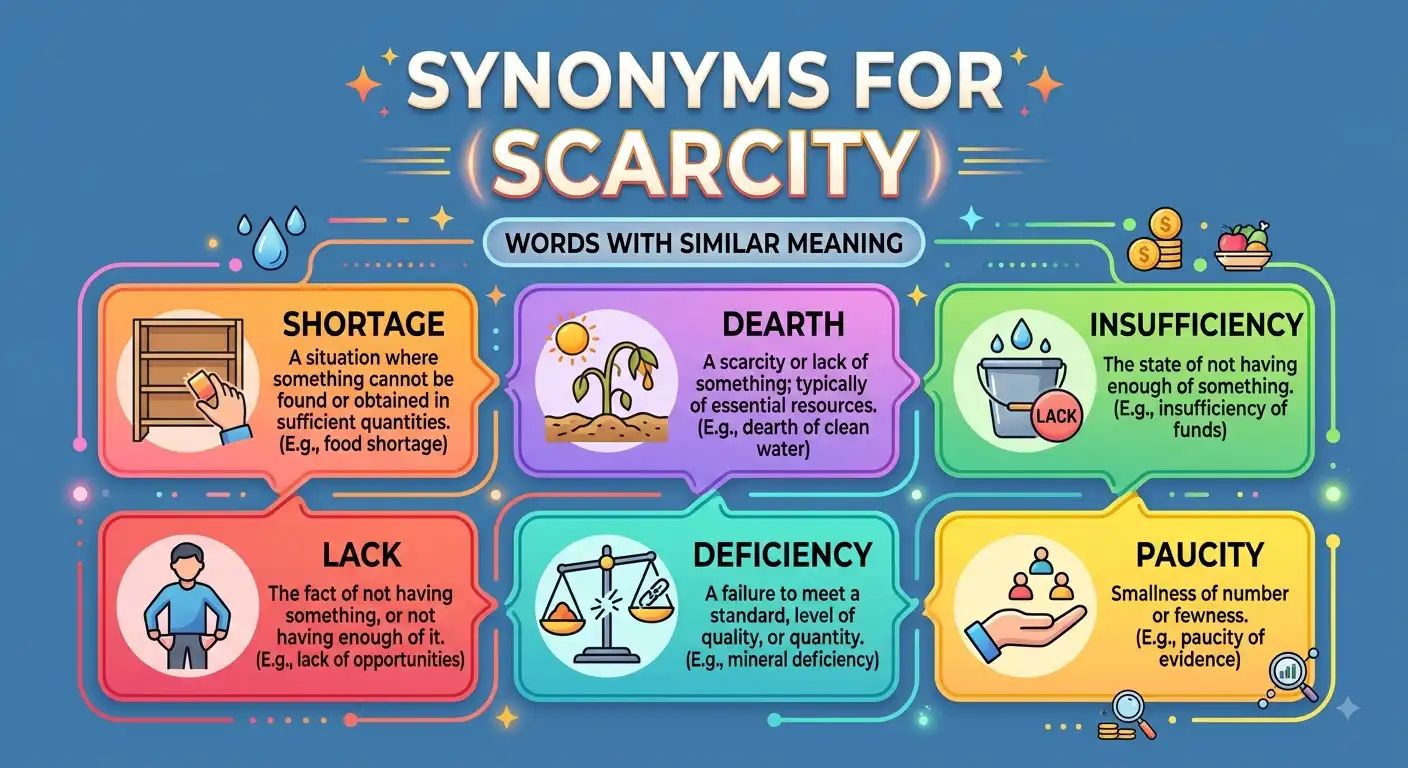
Finding the right synonyms for scarcity helps you express a lack of resources clearly. When you learn synonyms for scarcity, your vocabulary grows quickly and your writing becomes sharp. Understanding different synonyms for scarcity allows you to choose the exact word for any situation.
Imagine walking into a grocery store during a heavy winter storm. You look at the shelves and notice that fresh milk is completely gone. That missing supply is a simple example of scarcity in everyday life.
Learning words that mean the same thing as scarcity is very helpful for many people:
- Students can write better essays and avoid repeating words.
- Bloggers can create engaging headers and keep readers interested.
- Content Writers can craft urgent marketing headlines that drive action.
- Daily English Users can speak with confidence in workplace meetings.
“Words are the key to unlocking clear human communication.”
“Choosing the right word at the right moment changes everything.”
Linguistic and Semantic Profile of Scarcity
Connotative Meaning
Scarcity carries a strong negative to neutral tone. It suggests a serious shortage, hard times, or a limited supply of essential items like water, money, or time.
Etymology (Origin)
- Origin: Late Middle English (1300–1350).
- Old French: Derived from escarceté (meaning stinginess or shortness).
- Medieval Latin: Related to scarsus (meaning rare or scarce).
Pronunciation (IPA Format)
- US IPA: /ˈskɛər.sə.ti/
- UK IPA: /ˈskeə.sə.ti/
Syllables and Affixation Pattern
- Syllable Breakdown: scar-ci-ty (3 Syllables)
- Root Word: Scarce (Adjective)
- Suffix: -ity (Forms an abstract noun meaning quality or state)
Comparison Table of Key Scarcity Synonyms
| Keyword / Synonym | Simple Meaning | Usage Type | Context |
| Scarcity | A state of not having enough of something. | Formal / General | Economics, news, daily life |
| Shortage | A situation where demand is higher than supply. | Casual / Professional | Workplace, shopping, weather |
| Lack | The condition of being without something needed. | Daily / Casual | Relationships, skills, daily tasks |
| Dearth | A rare or very small amount of something good. | Formal / Literary | Books, research, essays |
| Deficiency | A missing amount that causes a health or quality problem. | Technical / Medical | Science, health, quality control |
| Paucity | A formal term for a tiny or small quantity. | Formal / Academic | Academic papers, legal documents |
50 Best Synonyms for Scarcity
1. Shortage
- Pronunciation: US: /ˈʃɔːr.t̬ɪdʒ/ | UK: /ˈʃɔː.tɪdʒ/
- Meaning: A situation where there is not enough of something people need.
- Examples:
- The city faced a water shortage this summer.
- We had a shortage of staff at the office today.
2. Lack
- Pronunciation: US: /læk/ | UK: /læk/
- Meaning: The state of missing something important or helpful.
- Examples:
- His project failed due to a lack of money.
- She showed a lack of interest in the game.
3. Dearth
- Pronunciation: US: /dɝːθ/ | UK: /dɜːθ/
- Meaning: A small amount of something useful or valuable.
- Examples:
- There is a dearth of good jobs in the town.
- The reporter found a dearth of facts in the report.
4. Deficiency
- Pronunciation: US: /dɪˈfɪʃ.ən.si/ | UK: /dɪˈfɪʃ.ən.si/
- Meaning: A lack of something that your body or system needs.
- Examples:
- Eating fruits prevents a vitamin deficiency.
- The inspector found a deficiency in the plan.
5. Insufficiency
- Pronunciation: US: /ˌɪn.səˈfɪʃ.ən.si/ | UK: /ˌɪn.səˈfɪʃ.ən.si/
- Meaning: An amount that is too small for a specific purpose.
- Examples:
- The project stopped due to an insufficiency of funds.
- There was an insufficiency of seats for guests.
6. Paucity
- Pronunciation: US: /ˈpɑː.sə.ti/ | UK: /ˈpɔː.sə.ti/
- Meaning: A very small amount of something.
- Examples:
- The judge noted a paucity of evidence.
- We were surprised by the paucity of options.
7. Deficit
- Pronunciation: US: /ˈdef.ə.sɪt/ | UK: /ˈdef.ɪ.sɪt/
- Meaning: The amount by which a total falls short.
- Examples:
- The company showed a budget deficit this year.
- Our team had a two-point deficit at halftime.
8. Drought
- Pronunciation: US: /draʊt/ | UK: /draʊt/
- Meaning: A long period without rain or useful supply.
- Examples:
- The farm suffered from a long drought.
- The team ended their scoring drought today.
9. Famine
- Pronunciation: US: /ˈfæm.ɪn/ | UK: /ˈfæm.ɪn/
- Meaning: An extreme lack of food in a region.
- Examples:
- Aid groups sent help during the famine.
- The crop failure caused a severe famine.
10. Sparsity
- Pronunciation: US: /ˈspɑːr.sə.ti/ | UK: /ˈspɑː.sə.ti/
- Meaning: The quality of being spread out in thin amounts.
- Examples:
- The sparsity of trees made the land look empty.
- Drivers noticed a sparsity of traffic at night.
11. Scantiness
- Pronunciation: US: /ˈskæn.t̬i.nəs/ | UK: /ˈskæn.ti.nəs/
- Meaning: A state of being very small or limited.
- Examples:
- The scantiness of details made us curious.
- He complained about the scantiness of his meal.
12. Meagerness
- Pronunciation: US: /ˈmiː.ɡɚ.nəs/ | UK: /ˈmiː.ɡə.nəs/
- Meaning: The condition of being small or thin in quantity.
- Examples:
- The meagerness of his pay made life hard.
- We were sad about the meagerness of supplies.
13. Deprivation
- Pronunciation: US: /ˌdep.rəˈveɪ.ʃən/ | UK: /ˌdep.rɪˈveɪ.ʃən/
- Meaning: A condition where basic needs are missing.
- Examples:
- Sleep deprivation makes it hard to focus.
- The family suffered from food deprivation.
14. Inadequacy
- Pronunciation: US: /ɪnˈæd.ə.kwə.si/ | UK: /ɪnˈæd.ɪ.kwə.si/
- Meaning: The state of not being enough or good enough.
- Examples:
- The team realized the inadequacy of their tools.
- She worried about the inadequacy of her prep.
15. Absence
- Pronunciation: US: /ˈæb.səns/ | UK: /ˈæb.səns/
- Meaning: The state of something not being present at all.
- Examples:
- In the absence of rain, plants wither fast.
- His absence was felt by everyone in class.
16. Undersupply
- Pronunciation: US: /ˌʌn.dɚ.səˈplaɪ/ | UK: /ˌʌn.də.səˈplaɪ/
- Meaning: A supply that is smaller than needed.
- Examples:
- The store faced an undersupply of popular toys.
- An undersupply of housing raised home prices.
17. Rarity
- Pronunciation: US: /ˈrer.ə.ti/ | UK: /ˈreə.rə.ti/
- Meaning: The state of being uncommon or hard to find.
- Examples:
- Finding a gold coin in the dirt is a rarity.
- Snow is a absolute rarity in this warm valley.
18. Rareness
- Pronunciation: US: /ˈrer.nəs/ | UK: /ˈreə.nəs/
- Meaning: The quality of happening very seldom.
- Examples:
- The rareness of the bird made birdwatchers happy.
- She loved the rareness of old stamps.
19. Penury
- Pronunciation: US: /ˈpen.jə.ri/ | UK: /ˈpen.jʊə.ri/
- Meaning: The state of having almost no money or goods.
- Examples:
- The old story describes a life of total penury.
- They worked hard to rise out of penury.
20. Want
- Pronunciation: US: /wɑːnt/ | UK: /wɒnt/
- Meaning: A lack of basic life resources.
- Examples:
- The poor family lived in extreme want.
- No child should grow up in want of safety.
21. Need
- Pronunciation: US: /niːd/ | UK: /niːd/
- Meaning: A state where something necessary is missing.
- Examples:
- The clinic helps people in urgent need.
- There is a great need for clean water here.
22. Exiguity
- Pronunciation: US: /ˌeɡ.zɪˈɡjuː.ə.ti/ | UK: /ˌek.sɪˈɡjuː.ə.ti/
- Meaning: The quality of being very small or scanty.
- Examples:
- The exiguity of our budget limited choices.
- He noticed the exiguity of facts in the news.
23. Privation
- Pronunciation: US: /praɪˈveɪ.ʃən/ | UK: /praɪˈveɪ.ʃən/
- Meaning: A lack of comfort and basic belongings.
- Examples:
- Soldiers survived winter despite great privation.
- Years of privation taught him to save money.
24. Shortfall
- Pronunciation: US: /ˈʃɔːrt.fɑːl/ | UK: /ˈʃɔːt.fɔːl/
- Meaning: The gap between what is needed and what exists.
- Examples:
- The charity met its goal after a small shortfall.
- We had a shortfall of five votes today.
25. Unavailability
- Pronunciation: US: /ˌʌn.ə.veɪ.ləˈbɪl.ə.ti/ | UK: /ˌʌn.ə.veɪ.ləˈbɪl.ə.ti/
- Meaning: The condition of not being reachable or obtainable.
- Examples:
- The unavailability of parts delayed the repair.
- Drivers complained about the unavailability of fuel.
26. Infrequency
- Pronunciation: US: /ɪnˈfriː.kwən.si/ | UK: /ɪnˈfriː.kwən.si/
- Meaning: The fact that something happens rarely.
- Examples:
- The infrequency of buses made commuting hard.
- We liked the infrequency of loud noises here.
27. Limitedness
- Pronunciation: US: /ˈlɪm.ɪ.t̬ɪd.nəs/ | UK: /ˈlɪm.ɪ.tɪd.nəs/
- Meaning: The state of having clear boundaries or small amounts.
- Examples:
- The limitedness of our time was a problem.
- He understood the limitedness of his power.
28. Tightness
- Pronunciation: US: /ˈtaɪt.nəs/ | UK: /ˈtaɪt.nəs/
- Meaning: A condition where supply is restricted and hard to get.
- Examples:
- The tightness of oil supply raised gas prices.
- We felt the tightness of our schedule.
29. Emptiness
- Pronunciation: US: /ˈemp.ti.nəs/ | UK: /ˈemp.ti.nəs/
- Meaning: The state of containing nothing inside.
- Examples:
- The emptiness of the box surprised the boy.
- She looked at the total emptiness of the room.
30. Scarceness
- Pronunciation: US: /ˈskers.nəs/ | UK: /ˈskeəs.nəs/
- Meaning: The property of being rare or hard to find.
- Examples:
- The scarceness of fresh fruit made prices rise.
- We noticed the scarceness of rain this year.
31. Sparseness
- Pronunciation: US: /ˈspɑːrs.nəs/ | UK: /ˈspɑːs.nəs/
- Meaning: The state of being thinly scattered.
- Examples:
- The sparseness of crowd made the room feel big.
- Maps show the sparseness of towns in deserts.
32. Deficient Supply
- Pronunciation: US: /dɪˈfɪʃ.ənt səˈplaɪ/ | UK: /dɪˈfɪʃ.ənt səˈplaɪ/
- Meaning: A supply that does not meet the basic need.
- Examples:
- The camp suffered from a deficient supply of milk.
- Farmers struggled with a deficient supply of seed.
33. Inadequate Supply
- Pronunciation: US: /ɪnˈæd.ə.kwət səˈplaɪ/ | UK: /ɪnˈæd.ɪ.kwət səˈplaɪ/
- Meaning: An amount of goods that is not enough.
- Examples:
- The store closed early due to an inadequate supply.
- Ships brought help to fix the inadequate supply.
34. Limited Supply
- Pronunciation: US: /ˈlɪm.ɪ.t̬ɪd səˈplaɪ/ | UK: /ˈlɪm.ɪ.tɪd səˈplaɪ/
- Meaning: A small fixed amount of goods available.
- Examples:
- Concert tickets are sold in limited supply.
- The shop has a limited supply of fresh bread.
35. Tight Supply
- Pronunciation: US: /taɪt səˈplaɪ/ | UK: /taɪt səˈplaɪ/
- Meaning: Market conditions where goods are hard to buy.
- Examples:
- Tight supply caused prices to go up quickly.
- Factories faced a tight supply of steel.
36. Under-supply
- Pronunciation: US: /ˌʌn.dɚ.səˈplaɪ/ | UK: /ˌʌn.də.səˈplaɪ/
- Meaning: A failure to supply enough products.
- Examples:
- The under-supply of electric cars hurt sales.
- Towns dealt with an under-supply of clean water.
37. Low Availability
- Pronunciation: US: /loʊ əˌveɪ.ləˈbɪl.ə.ti/ | UK: /ləʊ əˌveɪ.ləˈbɪl.ə.ti/
- Meaning: A situation where items are hard to obtain.
- Examples:
- Low availability of rental rooms frustrated travelers.
- The doctor noted low availability of beds.
38. Restricted Supply
- Pronunciation: US: /rɪˈstrɪk.tɪd səˈplaɪ/ | UK: /rɪˈstrɪk.tɪd səˈplaɪ/
- Meaning: A supply that is strictly controlled by rules.
- Examples:
- The government placed a restricted supply on medicine.
- Restricted supply kept product prices high.
39. Sparse Supply
- Pronunciation: US: /spɑːrs səˈplaɪ/ | UK: /spɑːs səˈplaɪ/
- Meaning: A supply that is thin and spread far apart.
- Examples:
- Small islands often have a sparse supply of fresh meat.
- The region survived on a sparse supply of rain.
40. Reduced Availability
- Pronunciation: US: /rɪˈduːst əˌveɪ.ləˈbɪl.ə.ti/ | UK: /rɪˈdjuːst əˌveɪ.ləˈbɪl.ə.ti/
- Meaning: A drop in the amount of goods on sale.
- Examples:
- Storms caused reduced availability of fresh fish.
- Shoppers noticed reduced availability of butter.
41. Limited Quantity
- Pronunciation: US: /ˈlɪm.ɪ.t̬ɪd ˈkwɑːn.t̬ə.ti/ | UK: /ˈlɪm.ɪ.tɪd ˈkwɒn.tə.ti/
- Meaning: A small counted number of items.
- Examples:
- Only a limited quantity of shoes remain on shelves.
- We made a limited quantity of cookies today.
42. Low Quantity
- Pronunciation: US: /loʊ ˈkwɑːn.t̬ə.ti/ | UK: /ləʊ ˈkwɒn.tə.ti/
- Meaning: An overall small measurement of goods.
- Examples:
- The recipe uses a low quantity of salt.
- A low quantity of rain fell last week.
43. Hardship
- Pronunciation: US: /ˈhɑːrd.ʃɪp/ | UK: /ˈhɑːd.ʃɪp/
- Meaning: Difficult conditions caused by lack of resources.
- Examples:
- Cold weather caused severe hardship for the poor.
- They faced financial hardship during winter.
44. Poverty
- Pronunciation: US: /ˈpɑː.vɚ.ti/ | UK: /ˈpɒv.ə.ti/
- Meaning: The condition of lacking money and goods.
- Examples:
- Education helps families escape poverty.
- The country works hard to reduce poverty.
45. Imperfection
- Pronunciation: US: /ˌɪm.pɚˈfek.ʃən/ | UK: /ˌɪm.pəˈfek.ʃən/
- Meaning: A flaw caused by missing pieces or quality.
- Examples:
- The lack of polish created an imperfection.
- She accepted the minor imperfection on the rug.
46. Gap
- Pronunciation: US: /ɡæp/ | UK: /ɡæp/
- Meaning: A space where something required is missing.
- Examples:
- There is a gap in our current knowledge.
- The missing worker left a gap in our team.
47. Lessness
- Pronunciation: US: /ˈles.nəs/ | UK: /ˈles.nəs/
- Meaning: The condition of being diminished or reduced.
- Examples:
- The lessness of noise helped him fall asleep.
- We observed a lessness of enthusiasm today.
48. Smallness
- Pronunciation: US: /ˈsmɑːl.nəs/ | UK: /ˈsmɔːl.nəs/
- Meaning: The state of being small in size or amount.
- Examples:
- The smallness of the room surprised guests.
- The smallness of our budget meant simple meals.
49. Short Measure
- Pronunciation: US: /ʃɔːrt ˈmeʒ.ɚ/ | UK: /ʃɔːt ˈmeʒ.ər/
- Meaning: An amount given that is less than expected.
- Examples:
- The buyer complained about a short measure of flour.
- Customers dislike getting a short measure.
50. Thinness
- Pronunciation: US: /ˈθɪn.nəs/ | UK: /ˈθɪn.nəs/
- Meaning: The quality of being sparse or low in density.
- Examples:
- The thinness of mountain air makes breathing hard.
- We noticed the thinness of the crowd.
Antonyms of Scarcity
While scarcity means a lack of resources, its antonyms describe a state of having more than enough:
- Abundance: A very large quantity of something good.
- Surplus: An extra amount beyond what is needed.
- Plenty: A full or complete supply.
- Excess: More than the usual or necessary amount.
- Profusion: An extremely large and rich supply.
- Sufficiency: An adequate amount to meet all needs.
Prototype Meaning and Categorization of Scarcity
Scarcity works in several different real-world contexts:
- Economic Scarcity: Unlimited human wants meeting limited physical goods (e.g., fuel shortages, gold reserves).
- Psychological/Marketing Scarcity: A tactic used in sales to create urgency (e.g., “Only 3 items left in stock!”).
- Resource Depletion: A natural lack of life essentials (e.g., water shortages, drought).
- Social/Skill Paucity: A lack of trained experts or talent in a community (e.g., shortage of doctors).
“Scarcity drives human value, but clarity drives human thought.”
Frequently Asked Questions (FAQ)
What is the best synonym for scarcity in business writing?
The word shortage or deficit works best in business writing because both terms sound professional, clear, and direct.
What is the main difference between scarcity and shortage?
Scarcity is a permanent economic fact that natural resources are limited. A shortage is a temporary market situation where demand is higher than current supply.
How do marketers use scarcity?
Marketers use scarcity by showing limited stock or time limits. This encourages buyers to act quickly before items run out.
What is a formal synonym for scarcity?
Paucity and dearth are formal synonyms ideal for academic papers, legal documents, and research reports.
Can scarcity refer to feelings or ideas?
Yes, you can use scarcity to describe non-physical things like a scarcity of hope, a scarcity of time, or a scarcity of good ideas.
Conclusion
Building a strong vocabulary by learning synonyms for scarcity enhances your writing, blogging, speaking, and daily communication skills. When you select precise words like shortage, dearth, or paucity, your message becomes much clearer to your audience. Writers and bloggers can create more compelling headlines, while professionals can compose crisp, persuasive emails.
We encourage you to practice using these fifty words in your daily emails, school essays, and conversations. Substituting plain words with specific alternatives boosts your confidence and improves your clarity. Keep exploring new vocabulary to make your language engaging and expressive every day!
“A rich vocabulary gives voice to clear thoughts and strong actions.”
“Practice changing simple words today to build powerful writing tomorrow.”

Michael Turner is a published fiction writer and creative writing tutor with over a decade of experience helping writers find the words that make their stories breathe ( Biography ).