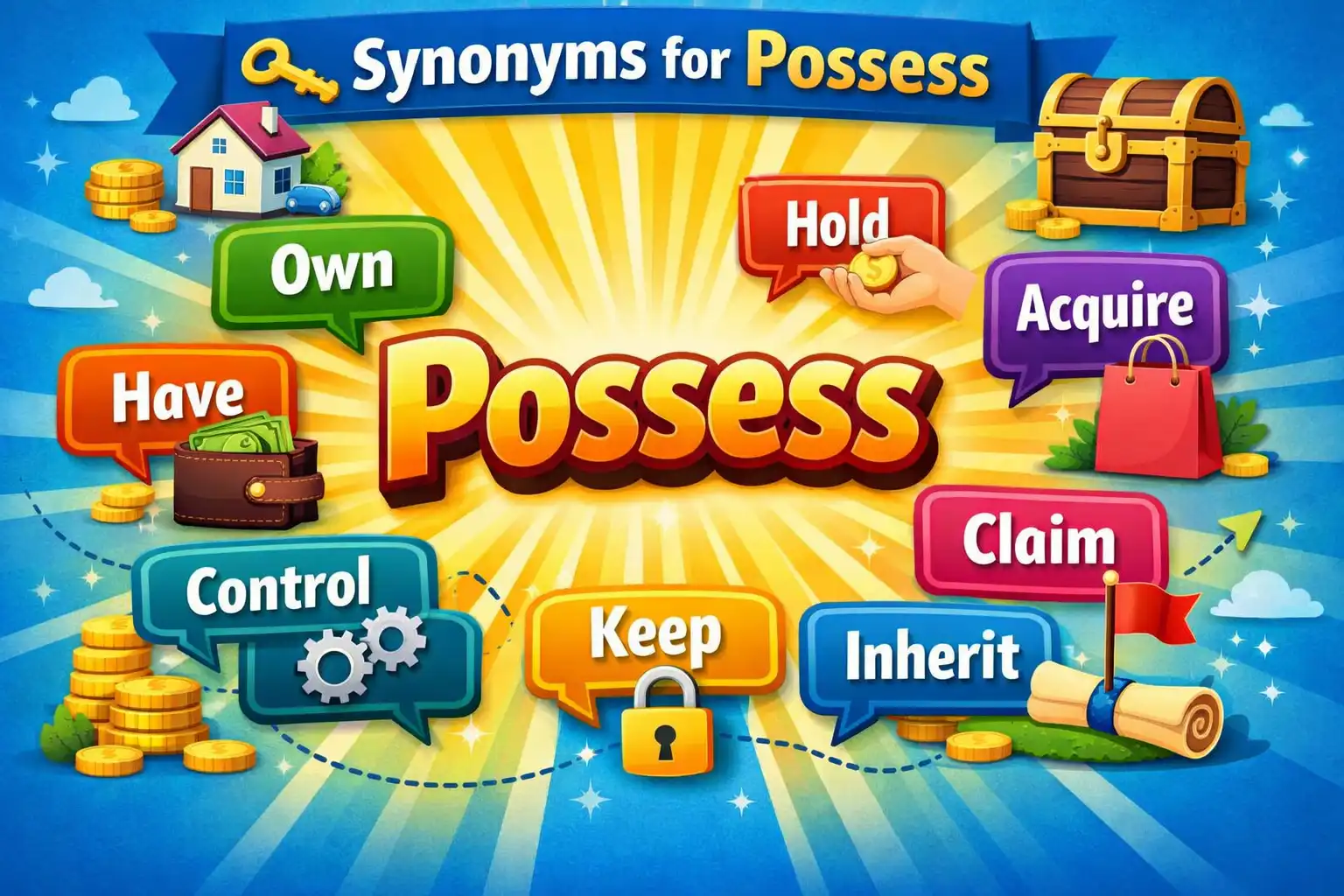
When you sit down to write, choosing the right words can change how people hear your message. Finding the perfect synonyms for possess is one of the easiest ways to make your writing sound clean and strong. If you use the same basic words again and again, your reader might lose interest. Knowing different synonyms for possess gives you fresh choices to express your ideas with perfect clarity. If you want to show that someone owns a house, holds a secret, or has a special skill, the right synonyms for possess will help you say it perfectly.
Imagine a little child who has a shiny blue marble. He squeezes it tight in his fist because he wants to keep it safe. This simple act of having or holding something is what it means to possess. In very simple words, to possess means to have something that belongs to you or is a part of who you are.
“To possess something is to hold a small piece of the world in your hands.”
For students, these words make school essays sound much smarter. Bloggers and content writers can use them to keep readers hooked with a warm and varied voice. Even in daily English, changing your words makes your conversations more fun and lively.
“The words we possess shape the thoughts we can share.”
Linguistic Profile of “Possess”
Before we jump into our big list, let us look at how the word possess is built, pronounced, and understood in English.
Connotative Meaning
While the literal meaning of possess is to own or hold something, its feelings go much deeper. It suggests control, safe keeping, pride, and sometimes a strong mental grip. It can mean owning a physical toy, having a beautiful talent, or even being controlled by a strong feeling.
Etymology
- Origin: Old French possesser (to possess)
- Latin Root: possidere (to hold, occupy, or own)
- Prefix & Base: From potis (able or powerful) + sedere (to sit) — literally meaning “to sit as a powerful master over something.”
Pronunciation & Properties
- US Pronunciation (IPA): /pəˈzes/
- UK Pronunciation (IPA): /pəˈzes/
- Syllables: pos-sess (2 syllables)
- Affixation Pattern: Root word possess (no active prefixes or suffixes in its base form).
Word Comparison Table
This quick comparison table shows how different words related to possess fit into different everyday situations.
| Keyword | Meaning | Usage Type | Context |
|---|---|---|---|
| Possess | To own or have a quality. | Professional / Formal | Laws, qualities, skills, properties |
| Own | To have legal right to something. | Daily Use / Legal | Houses, cars, pets, items |
| Hold | To keep in your hands or mind. | Casual / Physical | Objects, hands, ideas, meetings |
| Retain | To keep something you already have. | Professional | Customer data, memory, heat |
| Cherish | To hold something close with love. | Emotional | Memories, old photos, friendships |
| Monopolize | To take all of something for yourself. | Professional / Social | Conversations, markets, toys |
| Seize | To grab something quickly by force. | Action / Dramatic | Opportunities, land, control |
“True wealth is not what you possess, but what you enjoy.”
50 Powerful Synonyms for Possess
Here is your ultimate list of 50 powerful words you can use instead of “possess.”
1. Own
- Pronunciation: US: /oʊn/ | UK: /əʊn/
- Meaning: To have legal right to an object or property.
- Examples:
- I own a fast red bicycle.
- They own a nice house by the lake.
2. Have
- Pronunciation: US: /hæv/ | UK: /hæv/
- Meaning: To hold or experience something as a part of you.
- Examples:
- We have three cute cats.
- I have a tiny bit of homework left.
3. Hold
- Pronunciation: US: /hoʊld/ | UK: /həʊld/
- Meaning: To grasp something physically or keep an idea in your mind.
- Examples:
- Please hold my bag for a second.
- The small box can hold ten coins.
4. Keep
- Pronunciation: US: /kiːp/ | UK: /kiːp/
- Meaning: To store something safely so you do not lose it.
- Examples:
- You can keep this pen as a gift.
- I always keep my room neat.
5. Retain
- Pronunciation: US: /rɪˈteɪn/ | UK: /rɪˈteɪn/
- Meaning: To continue to have or hold onto something over time.
- Examples:
- This warm coat will retain your body heat.
- The company wants to retain its best workers.
6. Command
- Pronunciation: US: /kəˈmænd/ | UK: /kəˈmɑːnd/
- Meaning: To have power, respect, or control over a situation.
- Examples:
- The great king can command a giant army.
- She can command attention when she enters a room.
7. Control
- Pronunciation: US: /kənˈtroʊl/ | UK: /kənˈtrəʊl/
- Meaning: To have direct power to direct or run something.
- Examples:
- Use the remote to control the toy car.
- You must learn to control your temper.
8. Bear
- Pronunciation: US: /ber/ | UK: /beə/
- Meaning: To carry a physical load or hold a visible mark.
- Examples:
- The old trees bear sweet red apples.
- This envelope does bear the official school stamp.
9. Feature
- Pronunciation: US: /ˈfiː.tʃɚ/ | UK: /ˈfiː.tʃə/
- Meaning: To have something as a main or special part.
- Examples:
- The new phones feature a very bright screen.
- Our local park will feature a giant slide.
10. Exhibit
- Pronunciation: US: /ɪɡˈzɪb.ɪt/ | UK: /ɪɡˈzɪb.ɪt/
- Meaning: To show a quality or object clearly for others to see.
- Examples:
- Dogs exhibit great loyalty to their human families.
- The young artist will exhibit her art tomorrow.
11. Occupy
- Pronunciation: US: /ˈɑː.kjə.paɪ/ | UK: /ˈɒk.jʊ.paɪ/
- Meaning: To fill a specific space, time, or position.
- Examples:
- We occupy the seats in the front row.
- Cute toys occupy most of the shelf space.
12. Dominate
- Pronunciation: US: /ˈdɑː.mə.neɪt/ | UK: /ˈdɒm.ɪ.neɪt/
- Meaning: To have total control or power over others.
- Examples:
- The strong team will dominate the game today.
- Big trees dominate the small forest path.
13. Master
- Pronunciation: US: /ˈmæs.tɚ/ | UK: /ˈmɑː.stə/
- Meaning: To learn a skill so well that you control it perfectly.
- Examples:
- It takes time to master the piano keys.
- I want to master the art of baking bread.
14. Maintain
- Pronunciation: US: /meɪnˈteɪn/ | UK: /meɪnˈteɪn/
- Meaning: To keep something in good condition or state.
- Examples:
- We must maintain a safe speed on this road.
- They try to maintain a friendly relationship.
15. Guard
- Pronunciation: US: /ɡɑːrd/ | UK: /ɡɑːd/
- Meaning: To protect your belongings or people from harm.
- Examples:
- The big dog will guard the yard.
- Please guard this secret with your life.
16. Harbor
- Pronunciation: US: /ˈhɑːr.bɚ/ | UK: /ˈhɑː.bə/
- Meaning: To keep thoughts or feelings hidden deep in your mind.
- Examples:
- Do not harbor bad thoughts about your classmates.
- I harbor a deep hope for our future.
17. Cherish
- Pronunciation: US: /ˈtʃer.ɪʃ/ | UK: /ˈtʃer.ɪʃ/
- Meaning: To hold an object or memory close with deep love.
- Examples:
- I will cherish this gold ring forever.
- We cherish the sweet time spent with grandma.
18. Treasure
- Pronunciation: US: /ˈtreʒ.ɚ/ | UK: /ˈtreʒ.ə/
- Meaning: To treat something as highly valuable and precious.
- Examples:
- I treasure the card you sent me.
- We treasure our long walks in the park.
19. Reserve
- Pronunciation: US: /rɪˈzɜːrv/ | UK: /rɪˈzɜːv/
- Meaning: To keep or save something for a specific person or time.
- Examples:
- We must reserve three seats at the front.
- Please reserve some energy for the final run.
20. Monopolize
- Pronunciation: US: /məˈnɑː.pəl.aɪz/ | UK: /məˈnɒp.əl.aɪz/
- Meaning: To take up all the control or space so others get none.
- Examples:
- Try not to monopolize the conversation tonight.
- He likes to monopolize the best playground swing.
21. Hog
- Pronunciation: US: /hɑːɡ/ | UK: /hɒɡ/
- Meaning: To take or keep more than your share of something.
- Examples:
- Do not hog all the blankets on the bed.
- She did hog the computer games all day.
22. Seize
- Pronunciation: US: /siːz/ | UK: /siːz/
- Meaning: To take hold of something quickly and with force.
- Examples:
- You must seize the chance to study abroad.
- The soldiers tried to seize the wooden fort.
23. Grasp
- Pronunciation: US: /ɡræsp/ | UK: /ɡrɑːsp/
- Meaning: To hold something tightly in your hand or understand an idea.
- Examples:
- Grasp the rope tightly so you do not fall.
- I cannot grasp this hard math problem yet.
24. Grip
- Pronunciation: US: /ɡrɪp/ | UK: /ɡrɪp/
- Meaning: To hold onto something with a very firm physical squeeze.
- Examples:
- Put on gloves to grip the cold steering wheel.
- Fear began to grip the lost hikers in the woods.
25. Secure
- Pronunciation: US: /səˈkjʊr/ | UK: /sɪˈkjʊə/
- Meaning: To get hold of something so it is safe and stable.
- Examples:
- We must secure the tent before the wind starts.
- He managed to secure a ticket to the game.
26. Acquire
- Pronunciation: US: /əˈkwaɪɚ/ | UK: /əˈkwaɪə/
- Meaning: To get or buy something to add to your collection.
- Examples:
- I hope to acquire a rare stamp today.
- You will acquire new skills at your school.
27. Obtain
- Pronunciation: US: /əbˈteɪn/ | UK: /əbˈteɪn/
- Meaning: To get something through plan, work, or request.
- Examples:
- You can obtain a free map at the desk.
- He worked hard to obtain his college degree.
28. Gain
- Pronunciation: US: /ɡeɪn/ | UK: /ɡeɪn/
- Meaning: To get something useful, like weight, speed, or knowledge.
- Examples:
- The train will gain speed on the flat track.
- You will gain a lot of wisdom from books.
29. Inherit
- Pronunciation: US: /ɪnˈher.ɪt/ | UK: /ɪnˈher.ɪt/
- Meaning: To receive money, items, or traits from your family.
- Examples:
- I might inherit my grandfather’s old pocket watch.
- The children inherit their father’s bright blue eyes.
30. Adopt
- Pronunciation: US: /əˈdɑːpt/ | UK: /əˈdɒpt/
- Meaning: To take something as your own, like a pet or a plan.
- Examples:
- We decided to adopt a puppy from the shelter.
- The school will adopt a new dress code.
31. Claim
- Pronunciation: US: /kleɪm/ | UK: /kleɪm/
- Meaning: To state clearly that something belongs to you.
- Examples:
- You can claim your lost keys at the office.
- I want to claim the top spot on the team.
32. Contain
- Pronunciation: US: /kənˈteɪn/ | UK: /kənˈteɪn/
- Meaning: To have something held inside its structure.
- Examples:
- These small jars contain fresh sweet honey.
- The dark box might contain a big surprise.
33. Include
- Pronunciation: US: /ɪnˈkluːd/ | UK: /ɪnˈkluːd/
- Meaning: To make someone or something a part of a larger group.
- Examples:
- Please include my name on the sign-up sheet.
- The party price will include food and drinks.
34. Host
- Pronunciation: US: /hoʊst/ | UK: /həʊst/
- Meaning: To hold an event or carry organisms within.
- Examples:
- Our school will host the science fair.
- The old tree acts as a host to many birds.
35. Inhabit
- Pronunciation: US: /ɪnˈhæb.ɪt/ | UK: /ɪnˈhæb.ɪt/
- Meaning: To live inside or occupy a specific natural place.
- Examples:
- Wild bears inhabit the deep mountain woods.
- Many small fish inhabit the shallow pond.
36. Display
- Pronunciation: US: /dɪˈspleɪ/ | UK: /dɪˈspleɪ/
- Meaning: To show your items or feelings openly to the public.
- Examples:
- The museum will display the old gold crown.
- He did display great courage during the storm.
37. Carry
- Pronunciation: US: /ˈkær.i/ | UK: /ˈkær.i/
- Meaning: To support and move a physical item from place to place.
- Examples:
- Please carry this heavy box to the truck.
- Most shops carry these popular types of shoes.
38. Boast
- Pronunciation: US: /boʊst/ | UK: /bəʊst/
- Meaning: To possess a very proud, impressive feature.
- Examples:
- Our cool hotel can boast a heated indoor pool.
- The bright city does boast many fun parks.
39. Save
- Pronunciation: US: /seɪv/ | UK: /seɪv/
- Meaning: To keep something safe so you can use it later.
- Examples:
- I will save some cake for my little brother.
- We must save our money for a new car.
40. Preserve
- Pronunciation: US: /prɪˈzɜːrv/ | UK: /prɪˈzɜːv/
- Meaning: To keep something in its original, safe state.
- Examples:
- We use cold ice to preserve the fresh fish.
- Try to preserve your energy for the big run.
41. Store
- Pronunciation: US: /stɔːr/ | UK: /stɔː/
- Meaning: To put things in a safe place for future use.
- Examples:
- You can store your winter boots in the closet.
- Squirrels store brown nuts for the cold months.
42. Hoard
- Pronunciation: US: /hɔːrd/ | UK: /hɔːd/
- Meaning: To collect and keep a massive pile of secret items.
- Examples:
- Do not hoard all the sweet candy in your drawer.
- Some birds hoard seeds under the tree bark.
43. Pocket
- Pronunciation: US: /ˈpɑː.kɪt/ | UK: /ˈpɒk.ɪt/
- Meaning: To take something and slip it into your bag or pocket.
- Examples:
- He decided to pocket the shiny coin he found.
- She will pocket the money from her small sale.
44. Corner
- Pronunciation: US: /ˈkɔːr.nɚ/ | UK: /ˈkɔː.nə/
- Meaning: To get full control of a market or supply.
- Examples:
- They want to corner the local lemonade market.
- He tried to corner all the best baseball cards.
45. Manage
- Pronunciation: US: /ˈmæn.ɪdʒ/ | UK: /ˈmæn.ɪdʒ/
- Meaning: To control or run a business, team, or resource.
- Examples:
- She will manage the small bakery down the street.
- You must learn to manage your time wisely.
46. Rule
- Pronunciation: US: /ruːl/ | UK: /ruːl/
- Meaning: To have complete power and control over a country.
- Examples:
- The queen will rule her land with kindness.
- Do not let bad habits rule your daily life.
47. Enjoy
- Pronunciation: US: /ɪnˈdʒɔɪ/ | UK: /ɪnˈdʒɔɪ/
- Meaning: To have and use a benefit or advantage happily.
- Examples:
- He can enjoy good health by eating apples.
- We enjoy a beautiful view from our window.
48. Take
- Pronunciation: US: /teɪk/ | UK: /teɪk/
- Meaning: To lay hold of something with your hands.
- Examples:
- Please take a warm cookie from the plate.
- I will take this bus to the city center.
49. Clasp
- Pronunciation: US: /klæsp/ | UK: /klɑːsp/
- Meaning: To hold something tightly with your fingers or a buckle.
- Examples:
- Clasp the necklace around your neck carefully.
- She did clasp her hands together in excitement.
50. Cling
- Pronunciation: US: /klɪŋ/ | UK: /klɪŋ/
- Meaning: To hold on tightly to an object, person, or belief.
- Examples:
- Wet clothes will cling to your skin.
- Young monkeys cling to their mothers when afraid.
Antonyms of “Possess”
If you want to know the opposite of having or owning, here is a quick list of antonyms:
- Lack: To be without something you need or want.
- Lose: To have something taken away or misplaced.
- Need: To require something because you do not have it.
- Surrender: To give up your ownership or control to someone else.
- Release: To let go of something you were holding.
Prototype Meaning and Categorization of “Possess”
In linguistics, we study words using basic models. Let us see how the word possess is classified:
- Prototype Meaning: The physical act of holding an item in your hand or keeping it inside your own house where others cannot take it.
- Grammatical Category: Transitive Verb (it must have an object after it, e.g., “I possess knowledge“).
- Semantic Domain: Ownership, Control, Having Traits, and Location.
- Syntactic Patterns: Subject + Verb + Object (e.g., “The library possesses rare books”).
Frequently Asked Questions
1. What is the most common synonym for possess?
The most common synonym is have. It is used in almost every casual and formal talk to show that you own or hold something.
2. When should I use “own” instead of “possess”?
Use own when you talk about legal property, like a car, house, or land. Use possess when you talk about natural talents, deep feelings, or invisible qualities like peace.
3. Is “hold” a good replacement in a formal essay?
Yes. Hold works very well when talking about power, opinions, or physical items. For example, “They hold strong beliefs” sounds very professional.
4. What is a fancy word for possess?
A formal, fancy word is retain or be endowed with. These words are great for business letters, resumes, or smart school essays.
5. Can animals possess things?
Yes. Animals can possess territory, physical traits like sharp claws, or items like food and nests.
6. How do I choose the best synonym for my resume?
For a resume, use strong action verbs like command, master, manage, or secure. These show leadership and active skills.
Conclusion
Learning different synonyms for possess is a beautiful way to grow your language power. It helps you write essays, create blogs, speak in public, and communicate your thoughts clearly. Instead of repeating the word “possess” or “have” many times, you can now use smart words like “retain,” “command,” “cherish,” or “master.”
We encourage you to practice these new terms when you write your next school essay, send an email to a friend, or talk in class. Swapping simple words for rich vocabulary is the best way to sound like an English expert!
“A person who controls their words controls their path.”
“True freedom belongs to those who own a rich mind.”
“The gift of speech is the greatest tool we can ever keep.”

Michael Turner is a published fiction writer and creative writing tutor with over a decade of experience helping writers find the words that make their stories breathe ( Biography ).