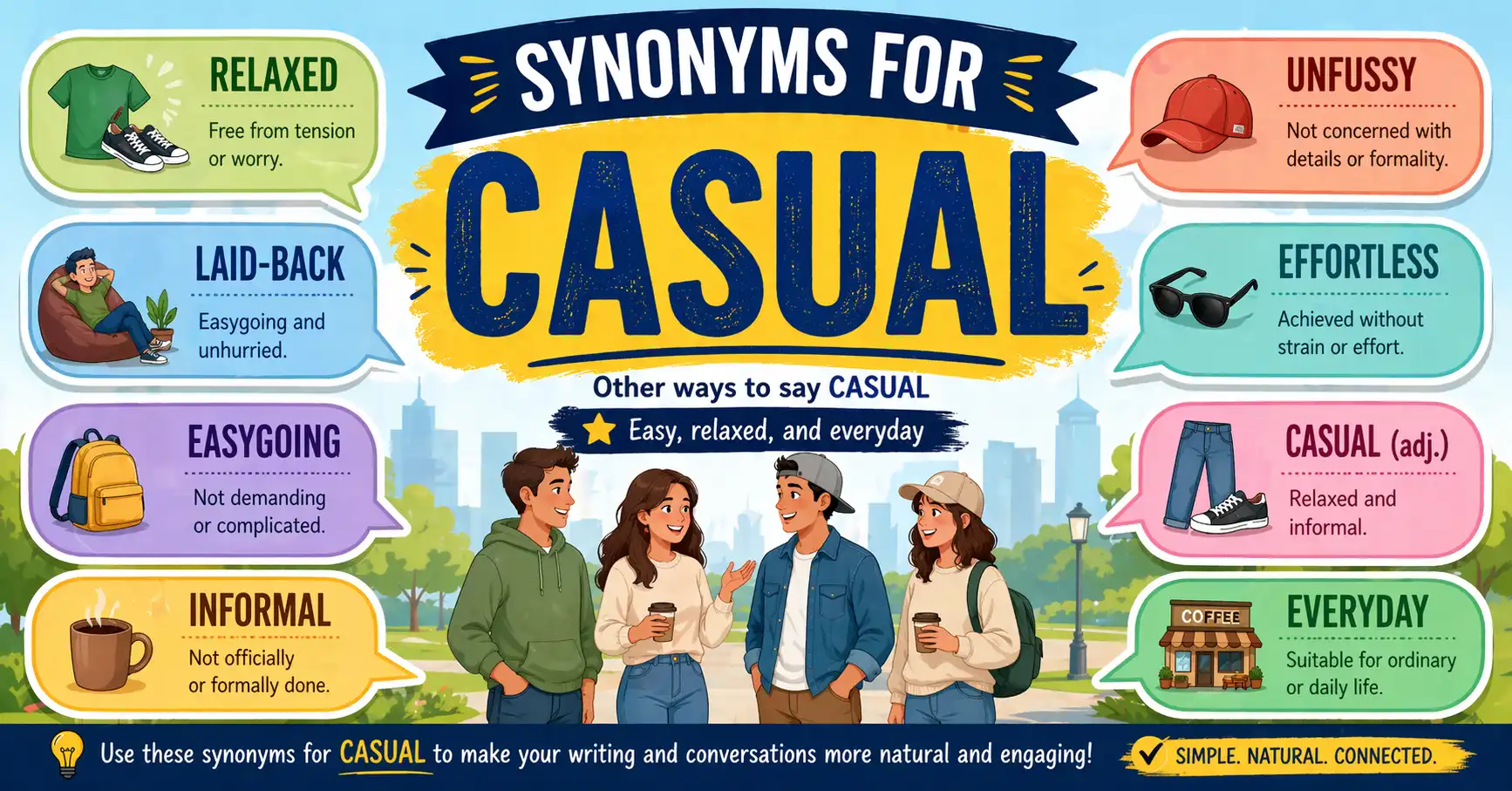
We all use the word “casual” when we talk about clothes, meetings, or relaxed days. Imagine writing an essay or a blog post and repeating the same word over and over. It gets boring fast. In simple terms, casual means relaxed, informal, or not planned. Learning synonyms for casual helps students get better grades, helps bloggers keep readers hooked, and helps content writers rank higher on Google. It also makes your daily English sound much more natural and expressive.
1. Informal
Meaning: This word describes things that are not official or strict.
Examples:
- We had an informal meeting in the kitchen.
- Her informal dress was perfect for the beach party.
2. Relaxed
Meaning: This means free from tension, worry, or strict rules.
Examples:
- The office has a very relaxed dress code.
- He had a relaxed look on his face today.
3. Laid-back
Meaning: This describes a person or atmosphere that is very calm and carefree.
Examples:
- My new boss is surprisingly laid-back.
- We enjoyed a laid-back afternoon by the pool.
4. Easygoing
Meaning: This means relaxed and not easily upset by everyday problems.
Examples:
- She has an easygoing attitude about her work.
- They love traveling with such easygoing friends.
5. Unceremonious
Meaning: This describes something done quickly without any formal or polite behavior.
Examples:
- He gave an unceremonious wave and left the room.
- The old chairs had an unceremonious move to the garage.
6. Nonchalant
Meaning: This means looking or feeling calm and completely unconcerned.
Examples:
- She gave a nonchalant shrug when I asked about the news.
- He walked into the big meeting in a nonchalant way.
7. Breezy
Meaning: This describes a style or mood that is bright, light, and relaxed.
Examples:
- Her breezy chat made everyone feel welcome.
- The writer has a breezy style that is easy to read.
8. Low-key
Meaning: This means quiet, simple, and not trying to get much attention.
Examples:
- We are planning a low-key dinner at home.
- The party was a very low-key event.
9. Offhand
Meaning: This describes something said or done without thinking or planning ahead.
Examples:
- He made an offhand comment about the weather.
- Her offhand remark actually hurt his feelings.
10. Accidental
Meaning: This means happening by chance and not on purpose.
Examples:
- It was an accidental meeting at the grocery store.
- She made an accidental discovery in the old library.
11. Random
Meaning: This describes something done without a clear plan or pattern.
Examples:
- He gave me a random book from the shelf.
- They made a few random stops during the road trip.
12. Incidental
Meaning: This means happening as a minor part of something else.
Examples:
- You might find some incidental costs on your trip.
- The music was just an incidental part of the show.
13. Everyday
Meaning: This describes things that are ordinary and used for normal days.
Examples:
- Put on your everyday shoes for the walk.
- This plate is for everyday use, not for parties.
14. Ordinary
Meaning: This means normal and not special in any way.
Examples:
- It was just an ordinary Tuesday at the office.
- He wears ordinary clothes to match the crowd.
15. Unplanned
Meaning: This means done without preparation or thinking before.
Examples:
- We took an unplanned trip to the lake.
- The sudden change led to an unplanned break.
16. Spontaneous
Meaning: This describes a natural action done without outside planning.
Examples:
- The crowd gave a spontaneous cheer for the team.
- We made a spontaneous decision to go out for ice cream.
17. Carefree
Meaning: This means having no worries, heavy duties, or deep stress.
Examples:
- She misses the carefree days of her childhood.
- They had a carefree holiday in the mountains.
18. Comfortable
Meaning: This describes things that make you feel physically relaxed and easy.
Examples:
- I love wearing comfortable pants when I work from home.
- This couch provides a comfortable spot for a nap.
19. Unstudied
Meaning: This means natural and not forced or practiced.
Examples:
- She wins people over with her unstudied grace.
- The room had an unstudied charm that felt cozy.
20. Off-the-cuff
Meaning: This describes a speech or remark made without any preparation.
Examples:
- He gave an off-the-cuff talk at the dinner.
- Her off-the-cuff answers were surprisingly accurate.
21. Temporary
Meaning: This means lasting for only a short and limited time.
Examples:
- He found a temporary job for the summer.
- This tent is our temporary home for the weekend.
22. Occasional
Meaning: This describes something that happens only now and then.
Examples:
- We make occasional visits to our old hometown.
- He enjoys an occasional game of chess.
23. Passing
Meaning: This means lasting for only a very short moment.
Examples:
- It was just a passing thought, so do not worry.
- She cast a passing glance at the shop window.
24. Cursory
Meaning: This means done quickly without looking at the details.
Examples:
- He gave the newspaper a cursory look this morning.
- The guard made a cursory check of our bags.
25. Superficial
Meaning: This describes looking only at the surface instead of deep details.
Examples:
- The car only has superficial damage from the bump.
- They had a superficial talk about sports.
26. Perfunctory
Meaning: This means done quickly as a duty without real care or interest.
Examples:
- She gave a perfunctory nod as she walked past.
- He finished his homework in a perfunctory way.
27. Loose
Meaning: This means not tight or strict in shape or rules.
Examples:
- I prefer a loose fit for my shirts.
- The team has a loose structure with no real boss.
28. Soft
Meaning: This describes things or tones that are gentle and not harsh.
Examples:
- The room was filled with soft light from the lamp.
- He spoke in a soft tone to calm the baby.
29. Unofficial
Meaning: This means not approved by an authority or formal leader.
Examples:
- This is the unofficial result of the school vote.
- We got some unofficial news about the holiday.
30. Natural
Meaning: This means normal and coming from nature without artificial force.
Examples:
- Smile in a natural way for the camera.
- Her natural talent for music was clear to everyone.
31. Easy
Meaning: This describes something that requires little effort or worry.
Examples:
- He has an easy way of making friends.
- We took an easy walk down the lane.
32. Simple
Meaning: This means plain, clear, and not complex or fancy.
Examples:
- She wore a simple dress to the dinner.
- The directions were simple enough for a child.
33. Plain
Meaning: This describes something with no decoration or extra features.
Examples:
- He likes plain food without heavy sauces.
- The letter was written on plain white paper.
34. Homely
Meaning: This means simple, cozy, and fitting for a regular home.
Examples:
- The hotel room had a very homely feel.
- We enjoyed some good, homely cooking tonight.
35. Unpretentious
Meaning: This means simple and not trying to impress other people.
Examples:
- The restaurant serves great, unpretentious meals.
- She is a famous writer but stays completely unpretentious.
36. Direct
Meaning: This means going straight to the point without extra steps.
Examples:
- He gave a direct answer to my simple question.
- We took a direct route to avoid the traffic.
37. Free
Meaning: This describes being able to move or act without strict rules.
Examples:
- You are free to choose your own seat.
- The artist has a free style with his brush.
38. Flexible
Meaning: This means able to change easily to fit new situations.
Examples:
- Our travel plans are flexible if it rains.
- The company offers flexible hours for parents.
39. Open
Meaning: This describes something that is honest, clear, and not hidden.
Examples:
- They had an open chat about their worries.
- The job is open to anyone who wants to try.
40. Calm
Meaning: This means peaceful, quiet, and free from heavy excitement.
Examples:
- The sea was calm during our boat ride.
- Keep a calm mind when you take the test.
41. Quiet
Meaning: This describes making very little noise or having little activity.
Examples:
- We had a quiet night in watching movies.
- It is a quiet street with almost no cars.
42. Smooth
Meaning: This means happening easily without sudden breaks or problems.
Examples:
- The flight was smooth from start to finish.
- He has a smooth way of speaking to crowds.
43. Cool
Meaning: This describes a calm and controlled attitude during a busy time.
Examples:
- She stayed cool even during the big argument.
- His cool reaction surprised the whole team.
44. Mellow
Meaning: This means soft, warm, and completely relaxed from age or mood.
Examples:
- The room filled with mellow music from the radio.
- He became more mellow as he grew older.
45. Amicable
Meaning: This describes a friendly relationship without any angry fighting.
Examples:
- The two neighbors came to an amicable agreement.
- They had an amicable chat to settle the dispute.
46. Familiar
Meaning: This means friendly and close, like people who know each other well.
Examples:
- He spoke to the clerk in a familiar tone.
- She gave me a familiar wave from across the room.
47. Folk
Meaning: This describes traditional things made by and for regular people.
Examples:
- We listened to old folk music by the fire.
- The museum has a collection of beautiful folk art.
48. Sporty
Meaning: This describes clothes or styles that look active, bright, and easy.
Examples:
- She likes wearing sporty clothes on weekends.
- He bought a sporty jacket for the trip.
49. Workaday
Meaning: This means ordinary, practical, and relating to regular workdays.
Examples:
- He focuses on the workaday tasks of the office.
- These are my workaday boots for the garden.
50. Inattentive
Meaning: This means not giving deep attention or serious focus to something.
Examples:
- He gave the long presentation an inattentive look.
- Her inattentive driving almost caused an accident.
Conclusion
Learning synonyms for casual changes the way you share your ideas. It expands your writing, scales up your blogging, and sharpens your speaking. When you mix up your words, your communication becomes much more interesting to follow. Try practicing these new words today. Use them in your work emails, school essays, and daily conversations to build your confidence fast.

Michael Turner is a published fiction writer and creative writing tutor with over a decade of experience helping writers find the words that make their stories breathe ( Biography ).