
Featured Snippet Answer
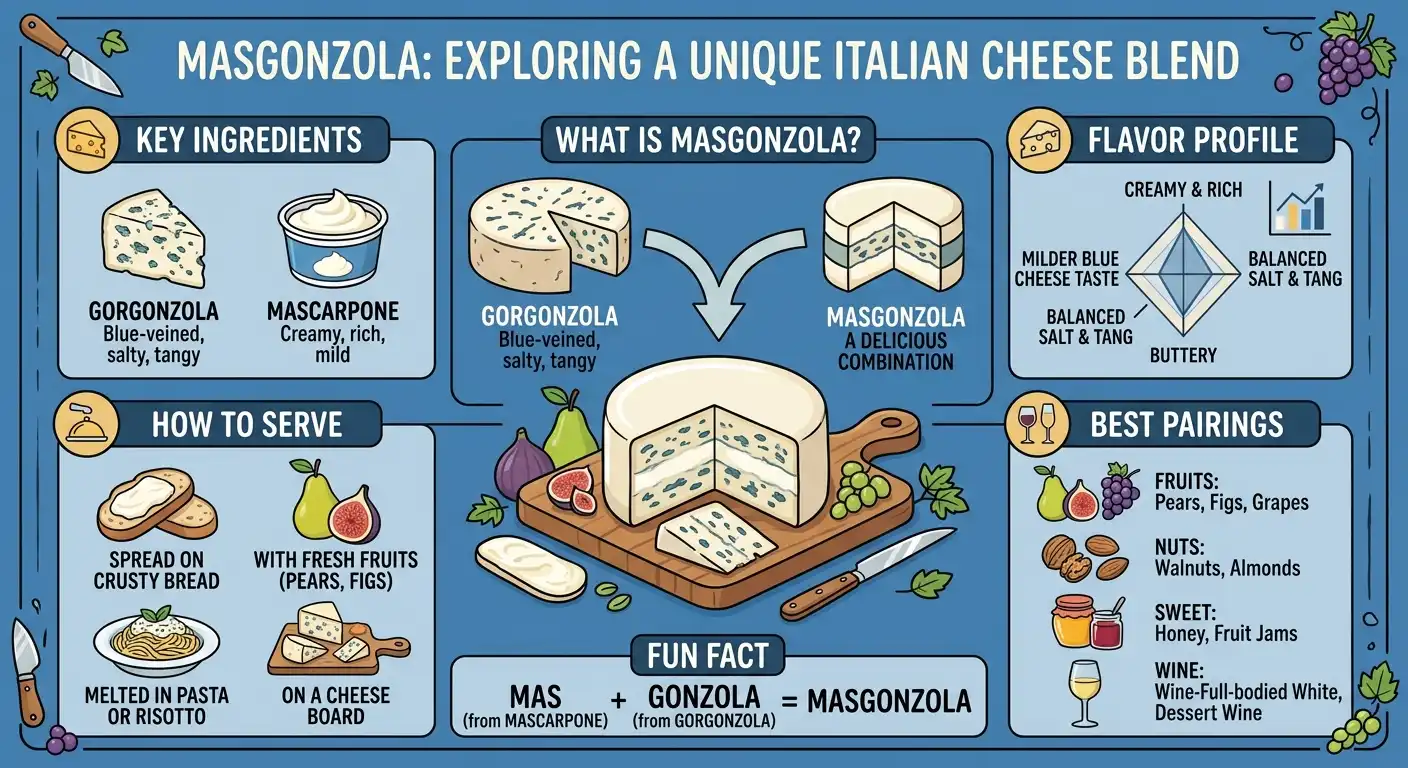
Masgonzola is a creamy dairy specialty made by combining Gorgonzola blue cheese with rich mascarpone. The name blends mascarpone and Gorgonzola. Rather than being a standalone, protected cheese variety, Masgonzola is a culinary preparation that offers a milder, sweeter, and more spreadable blue-cheese experience.
Key Takeaways
- Two Cheese Combination: Masgonzola pairs tangy Italian Gorgonzola with buttery, mild mascarpone.
- Milder Flavor: The mascarpone softens the sharp bite of traditional blue cheese, making it approachable for subtle palates.
- Versatile Consistency: Available in layered or blended forms, it melts effortlessly into sauces and spreads easily on bread.
- Culinary Convenience: It eliminates the need to buy and mix separate tubs of Gorgonzola and mascarpone for recipes.
What Is Masgonzola? Understanding the Unique Specialty
If you have encountered the word masgonzola on a restaurant menu, in a European recipe book, or on a specialty food label, you might assume it refers to an ancient Italian cheese from a remote alpine region. However, Masgonzola is actually a modern portmanteau and culinary term for a pre-mixed or layered combination of two famous Italian cheeses: mascarpone and Gorgonzola.
This cheese preparation was created to give cheese lovers the deep, earthy character of blue cheese in a softer, smoother, and far less pungent form. While traditional blue cheese can sometimes overpower delicate dishes, combining it with sweet cream cheese yields a balanced dairy specialty.
MASGONZOLA
MASCARPONE + GORGONZOLA
(Rich, Mild, Buttery) , (Sharp, Tangy)
= Creamy, Spreadable Blue Cheese Specialty
The Name Origin: A Culinary Portmanteau
The name masgonzola directly reflects its two core components:
- “Mas-“ comes from mascarpone, a rich, triple-cream Italian dairy product.
- “-gonzola” comes from Gorgonzola, the classic blue-veined cow’s milk cheese from Northern Italy.
In commercial markets and recipe collections—such as those published by Swiss culinary group Betty Bossi—you may see this combination listed as Masgonzola, Gorgonzola e Mascarpone, or Gorgonzola-Mascarpone.
Is Masgonzola a Traditional Protected Cheese?
No. Unlike Gorgonzola, which holds a European Union Protected Designation of Origin (PDO) status with strict geographic and production guidelines, Masgonzola does not have an official legal designation.
It is better understood as a specialty preparation or commercial blend. Cheesemakers craft individual batches of Gorgonzola and mascarpone first according to standard dairy methods, then combine them before packaging.
Ingredients and How Masgonzola Is Prepared
The charm of Masgonzola lies in how two contrasting dairy ingredients complement each other.
[ Whole Cow’s Milk ]
[ Gorgonzola ] [ Mascarpone ]
(Curded & (High-fat cream
Aged with acidified with
Penicillium) citric acid)
[ Blended or Layered ]
[ MASGONZOLA ]
Gorgonzola: Providing the Tangy Blue Character
Gorgonzola made from pasteurized whole cow’s milk and inoculated with harmless mold spores (Penicillium roqueforti). As it matures, characteristic blue-green veins form inside the wheel. Gorgonzola contributes:
- Deep savory depth (umami)
- Salty, tangy notes
- Earthy mushroom undertones
- Classic blue cheese aroma
Mascarpone: Delivering Smooth Creaminess
Mascarpone produced by heating high-fat heavy cream and acidifying it with lemon juice or citric acid. The curd solidifies into a dense, velvety paste without aging. Mascarpone contributes:
- High butterfat richness (often 40% to 50% fat)
- Subtle natural sweetness
- Ultra-smooth texture
- A mild dairy flavor that cushions sharp spices and molds
Blended vs. Layered Styles
Producers usually craft Masgonzola in one of two distinct visual styles:
- Layered (Torta Style): Alternating horizontal layers of white mascarpone and blue-veined Gorgonzola are packed into a container or cut into wedges. This creates a striking visual contrast on cheese platters.
- Blended Style: The two cheeses are folded together until homogenous. This version has a pale, pastel-green hue with soft flecks of blue mold throughout. It is especially convenient for dipping and spreading.
Flavor Profile, Texture, and Visual Appearance
Masgonzola provides a rounded taste experience. Instead of the sharp, stinging bite that can come with aged blue cheese, the first sensation on the palate is sweet, buttery creaminess. As the cheese melts in your mouth, the salty, tangy blue notes emerge gently in the finish.
| Characteristic | Description |
| Flavor | Rich, buttery, mildly salty, and tangy with subtle blue-cheese notes |
| Texture | Ultra-soft, dense, spreadable, and velvety |
| Aroma | Gentle dairy sweetness combined with a faint earthy blue mold aroma |
| Color | Ivory white to pale cream intermingled with blue-green veining |
Masgonzola vs. Gorgonzola vs. Mascarpone: Side-by-Side Comparison
To understand how Masgonzola functions in cooking and eating, it helps to compare it directly to its two foundation cheeses.
| Feature | Masgonzola | Gorgonzola (PDO) | Mascarpone |
| Primary Ingredient | Gorgonzola + Mascarpone | Cow’s milk & mold cultures | Heavy cream & natural acid |
| Flavor Intensity | Medium (balanced, sweet & tangy) | Strong (salty, sharp, pungent) | Very Mild (sweet, buttery) |
| Texture | Soft, velvety, and spreadable | Creamy (Dolce) to Firm/Crumbly (Piccante) | Thick, smooth, spoonable cream |
| Best Uses | Spreads, mild sauces, fruit pairings | Salads, bold sauces, cheese boards | Tiramisu, desserts, rich soups |
| PDO Status | None (Specialty preparation) | Yes (Protected Italian origin) | None |
How to Use Masgonzola in Cooking and Entertaining
Masgonzola is an exceptionally user-friendly cheese because its soft consistency eliminates the extra step of blending cream with blue cheese to make a sauce or dip.
MASGONZOLA CULINARY USES
1. APPETIZERS –> Spread on Crostini, Stuffed Dates & Figs
2. PASTA SAUCE –> Melt into Hot Gnocchi, Pappardelle, Ravioli
3. FLATBREADS –> Top with Pear Slices, Walnuts & Honey
4. CHEESEBOARD –> Pair with Fresh Grapes, Apples & White Wine
Simple Cheese Boards and Fruit Pairings
Because Masgonzola balances saltiness and creaminess, it pairs exceptionally well with sweet foods. Add a wedge or small bowl of Masgonzola to a platter alongside:
- Fresh Fruit: Sliced Bartlett pears, crisp Honeycrisp apples, fresh figs, or green grapes.
- Dried Fruit: Medjool dates, dried apricots, or figs.
- Nuts: Toasted walnuts, pecans, or marcona almonds.
- Drizzles: Raw wildflower honey or aged balsamic glaze.
Creamy Sauces for Pasta, Gnocchi, and Risotto
Making a luxurious blue cheese pasta sauce usually requires careful temperature control so the cheese doesn’t separate. Masgonzola’s high mascarpone content makes melting foolproof.
- Cook potato gnocchi or fresh pappardelle in salted boiling water.
- In a pan over low heat, add 3 to 4 tablespoons of Masgonzola and a splash of starchy pasta water.
- Stir gently until it forms a silky sauce.
- Toss with the drained pasta, cracked black pepper, and toasted pine nuts.
Gourmet Appetizers and Pizza Toppings
- Stuffed Dates: Slice Medjool dates open, remove the pit, dollop a spoonful of Masgonzola inside, and top with a walnut half.
- Crostini: Toast baguette slices, coat them generously with cold Masgonzola, and finish with fresh thyme and a drizzle of honey.
- White Pizza: Spread Masgonzola over stretched pizza dough as a base, top with sliced pear, caramelized onions, and mozzarella, then bake until golden.
Nutritional Facts and Dietary Considerations
Because Masgonzola contains mascarpone (a high-fat cream product), it is a calorie-dense food. It offers a good source of calcium and protein, but portion control is recommended.
Estimated Nutritional Values (Per 30g / 1 oz Serving)
- Calories: ~110–120 kcal
- Total Fat: 10–11 g
- Saturated Fat: 7–8 g
- Protein: 3–4 g
- Carbohydrates: 1–1.5 g
- Sodium: 180–220 mg
Allergen & Dietary Information
- Milk Allergen: Masgonzola is 100% dairy. It is unsafe for individuals with milk allergies or severe lactose intolerance.
- Pregnancy Warning: Soft cheeses and blue-veined products made from unpasteurized milk can carry risks. Ensure the package states that pasteurized milk was used.
- Vegetarian Status: Gorgonzola traditionally utilizes animal rennet during coagulation. Strict vegetarians should verify the label for plant-based or microbial enzymes.
How to Buy, Store, and Handle Masgonzola
Shopping Tips
Look for Masgonzola in the specialty cheese section of well-stocked supermarkets, Italian delis, or cheese shops. It may be sold under various names:
- Masgonzola
- Gorgonzola e Mascarpone
- Gorgonzola Dolce with Mascarpone
Select containers that show clear white and blue contrast without excessive pooling of liquid (whey).
Storage Guidelines
- Refrigeration: Keep Masgonzola stored between 35°F and 40°F (1°C–4°C).
- Wrapping: Once opened, wrap the cheese tightly in wax paper or parchment paper, then place it inside a sealed plastic container or reusable silicone bag. Avoid wrapping soft cheese tightly in plastic wrap for extended periods, as it needs to breathe.
- Shelf Life: Unopened containers last until the package expiration date. Once opened, consume within 5 to 7 days for maximum freshness.
- Freezing: Freezing is not recommended. Freezing destroys the delicate emulsion of mascarpone, causing the cheese to separate and become grainy upon thawing.
Frequently Asked Questions (FAQs)
What is masgonzola cheese made of?
Masgonzola cheese is made by combining two Italian cheeses: Gorgonzola (a blue-veined cow’s milk cheese) and mascarpone (a soft, triple-cream dairy product made from heavy cream).
Is masgonzola milder than regular Gorgonzola?
Yes. Because mascarpone is very mild, sweet, and rich, mixing it with Gorgonzola dilutes the blue cheese’s saltiness and sharp tang, resulting in a significantly milder flavor.
Can you substitute masgonzola for Gorgonzola in recipes?
Yes, but keep in mind that Masgonzola contains extra fat and cream. If a recipe calls for crumbled Gorgonzola on top of a salad, Masgonzola will be too soft to crumble. However, for melting into sauces, soups, or spreading on bread, it makes an excellent substitute.
How long does masgonzola last in the refrigerator?
Once opened, Masgonzola should be wrapped tightly and stored in the refrigerator for up to 5 to 7 days. Always check for off odors or unwanted mold growth before consuming.
Does masgonzola melt easily?
Yes. Masgonzola melts quickly and smoothly over gentle heat thanks to the high butterfat content in the mascarpone component, making it ideal for fast pasta sauces and dips.

Michael Turner is a published fiction writer and creative writing tutor with over a decade of experience helping writers find the words that make their stories breathe ( Biography ).