Quick Intro
The word agony is commonly used in daily speech, literature, and emotional writing. It describes very strong pain or suffering. Learning synonyms for agony helps writers and learners express feelings more clearly and avoid repeating the same word too often.
Understanding similar words also improves communication in conversation, essays, and professional writing.
Direct Answer
Meaning of Agony
Agony means extremely intense physical pain or deep emotional suffering.
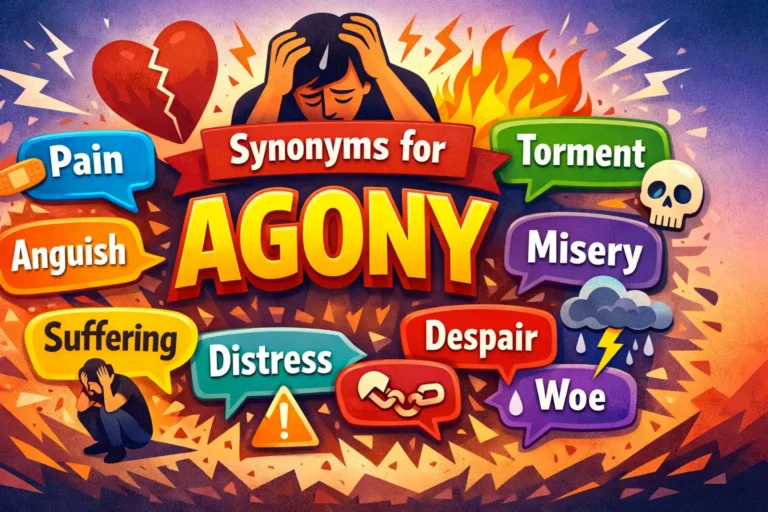
Common synonyms for agony include:
- Pain
- Suffering
- Misery
- Torment
- Distress
- Anguish
- Hurt
- Torture
- Despair
- Heartache
Categories of Synonyms
Physical Discomfort
These words describe strong bodily pain or injury. They are often used in medical situations, accidents, or illness.
Examples include pain, torture, and hurt.
Emotional Discomfort
These synonyms describe mental suffering or deep sadness. They appear often in emotional writing or personal conversations.
Examples include anguish, despair, and heartache.
Social Discomfort
These words describe stress caused by situations, pressure, or embarrassment. They are common in social or professional contexts.
Examples include distress and misery.
Synonyms Table
| Word | Simple Meaning | Example Sentence |
| Pain | Strong physical discomfort | The athlete felt intense pain after the injury. |
| Suffering | Long-lasting pain or hardship | Many people experience suffering during difficult times. |
| Misery | Extreme sadness or unhappiness | Losing the job caused months of misery. |
| Torment | Severe mental or physical pain | The loud noise became a daily torment. |
| Distress | Emotional suffering or anxiety | The news caused great distress to the family. |
| Anguish | Deep emotional pain | She cried in anguish after hearing the news. |
| Hurt | Physical or emotional pain | His words caused deep hurt. |
| Torture | Extreme and unbearable pain | The burning heat felt like torture. |
| Despair | Complete loss of hope | He looked at the results with despair. |
| Heartache | Emotional pain from loss or sadness | The breakup left her with deep heartache. |
Master Synonyms List (Grouped by Level)
Beginner / Simple
Pain
Meaning: physical discomfort or injury
Example: He felt pain in his leg after the fall.
Hurt
Meaning: physical or emotional pain
Example: Her comments caused hurt feelings.
Misery
Meaning: extreme unhappiness
Example: The cold weather made the trip pure misery.
Intermediate
Distress
Meaning: anxiety or emotional suffering
Example: The family showed clear distress after the accident.
Suffering
Meaning: long-lasting pain or hardship
Example: The patient experienced suffering during recovery.
Heartache
Meaning: emotional pain caused by loss
Example: The song describes the heartache of losing someone.
Advanced / Formal
Anguish (Formal)
Meaning: very deep emotional pain
Example: She screamed in anguish after hearing the tragic news.
Torment (Formal)
Meaning: severe mental or physical suffering
Example: The constant worry became a form of torment.
Despair (Formal)
Meaning: a feeling of complete hopelessness
Example: He looked at the situation with despair.
Torture (Formal/Strong)
Meaning: unbearable pain or suffering
Example: Sitting through the long meeting felt like torture.
Formal vs Informal Synonyms
Some synonyms for agony are casual and suitable for everyday conversation, while others are more formal and better for writing or serious situations.
Informal words include pain, hurt, and misery. These are commonly used in daily speech.
Formal or stronger words include anguish, torment, despair, and torture. These appear more often in literature, academic writing, or dramatic descriptions.
Choosing the correct tone helps your message sound natural and appropriate.
Real-Life Usage Examples
Conversation
“I was in real pain after that workout.”
Academic Writing
“The patient reported severe suffering during the recovery process.”
Business Writing
“The company experienced financial distress during the recession.”
Blogging
“Travel delays can turn excitement into complete misery.”
Emotional Expression
“She felt deep heartache after the sudden loss of her pet.”
Similar Words Comparison
Agony vs Pain
Agony describes extremely intense pain.
Pain is a broader word and can refer to mild or severe discomfort.
Example:
- He was in pain after the surgery.
- He screamed in agony when the injury happened.
Agony vs Anguish
Agony can describe both physical and emotional pain.
Anguish usually focuses on deep emotional suffering.
Example:
- The broken bone caused terrible agony.
- She cried in anguish after the loss.
Example Sentences
- The athlete collapsed in agony after twisting his ankle.
- Years of financial trouble caused deep misery.
- The injury left him in constant pain.
- She felt intense heartache after the breakup.
- The patient experienced serious suffering during treatment.
- His mistake caused great distress for the entire team.
- The loud alarm became a daily torment.
- He looked at the empty house with despair.
- The burn caused unbearable pain.
- She cried in anguish after hearing the tragic news.
- Losing the competition felt like emotional torture.
- The cold weather brought weeks of misery.
- The sudden accident caused severe agony.
- The memory still brings heartache today.
- The situation filled him with deep distress.
Common Mistakes
Using Strong Synonyms for Small Problems
Words like torture or agony should not describe minor inconvenience.
Incorrect: The homework was agony.
Better: The homework was difficult.
Mixing Physical and Emotional Context
Some words focus more on emotions.
Example: anguish usually describes emotional suffering, not physical injury.
Overusing the Same Synonym
Repeating one word like pain too often makes writing weaker.
Instead, use variations like misery, suffering, or distress.
Using Formal Words in Casual Conversation
Words like torment or despair may sound too dramatic in everyday speech.
Tips for Choosing the Right Synonym
- Check the tone of your writing or conversation.
- Consider the context (physical pain or emotional suffering).
- Match the formality level of your audience.
- Choose clear words instead of overly dramatic ones.
- Avoid repeating the same word too often.
Using varied vocabulary improves readability and makes writing stronger.
When NOT to Use Agony
The word agony should not be used for minor discomfort or simple inconvenience.
Example misuse:
“I felt agony waiting in line.”
Better alternatives might be annoyance or frustration.
Reserve agony for situations involving very intense pain or suffering.
Opposite Words (Antonyms)
Common antonyms include:
- Comfort
- Relief
- Pleasure
- Happiness
- Ease
- Joy
These words describe the absence of pain or suffering.
FAQs
What does agony mean?
Agony means extremely intense physical pain or deep emotional suffering.
Is agony formal or informal?
Agony can be used in both everyday speech and formal writing, but it usually describes very strong pain.
How can I use agony in conversation?
You can say, “He was in agony after the accident.”
What is the best synonym for agony?
Common alternatives include pain, anguish, misery, torment, and suffering.
Can agony be replaced with pain?
Yes, but pain is a broader term and may describe milder discomfort.
Is anguish stronger than agony?
Anguish usually focuses on emotional pain, while agony can describe both emotional and physical suffering.
Is agony used in medical language?
Yes, doctors sometimes use it to describe extreme pain.
Can agony describe emotional feelings?
Yes. It can describe heartbreak, grief, or deep sadness.
What is the difference between misery and agony?
Misery usually describes long-lasting unhappiness, while agony refers to intense pain.
Is agony a negative word?
Yes. It always describes severe pain or suffering.
Conclusion
Learning synonyms for agony helps improve both speaking and writing. It allows you to describe physical pain, emotional suffering, and difficult experiences with greater precision.
By choosing the right synonym, your communication becomes clearer and more natural. Try using three new synonyms in your next sentence to expand your vocabulary.

Michael Turner creates simple synonym guides that help readers expand their vocabulary and choose the right word for the right context.